Amir Suhail Wani
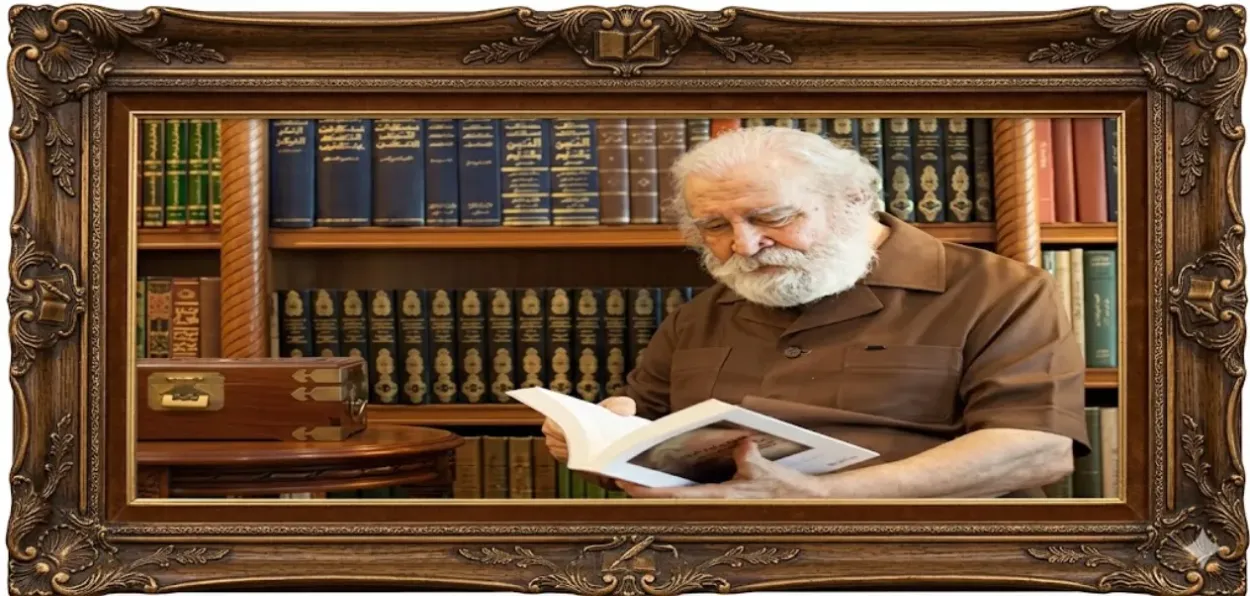
Syed Muhammad Naquib al-Attas is among the most influential Muslim intellectuals of the twentieth century, particularly in debates about knowledge, civilisation, and education in the modern Muslim world. His work is all the more relevant at a time when many Muslim societies were grappling with the intellectual consequences of colonialism, secularisation, and the expansion of Western scientific and educational paradigms.
Although rooted in the Malay-Muslim intellectual tradition, al-Atta’s ideas possess a broader relevance that extends across the Muslim world, including South Asia and India. His thought addresses questions that remain urgent in the Indian context: the relationship between religion and knowledge, the cultural impact of Western modernity, and the possibility of building an educational framework that integrates spiritual and intellectual life.
Born in 1931, al-Attas came from a distinguished lineage tracing back to the Hadhrami sayyid tradition. His early life exposed him to multiple intellectual worlds. On the one hand, he was trained in traditional Islamic learning through madrasa education; on the other, he received modern schooling within British colonial structures in Southeast Asia. This dual exposure played a formative role in shaping his intellectual orientation.
As a young man, he also underwent military training before turning to scholarship. He pursued higher studies at the University of Malaya and subsequently at institutions such as McGill University in Canada, where he engaged with leading scholars of Islamic studies and comparative religion. These experiences made him observe the intellectual assumptions underlying Western academic traditions while remaining deeply rooted in Islamic metaphysical thought. The encounter between these worlds became the central theme of his intellectual project.
Al-Attas’s early writings already reveal a scholar concerned with civilizational questions rather than merely technical academic issues. His work on Malay Sufism and Islamic intellectual history sought to demonstrate that Islam had produced sophisticated traditions of philosophy, literature, and metaphysics in Southeast Asia. Yet his interests soon expanded into broader reflections on modernity. He became convinced that the crisis facing Muslim societies was not merely political or economic but fundamentally intellectual.
According to him, colonialism had introduced into Muslim lands a worldview shaped by assumptions that separated knowledge from spiritual meaning. The consequence was a deep confusion within Muslim educational institutions, where Western scientific disciplines were adopted wholesale without examining their underlying philosophical premises.
One of al-Attas’s most influential contributions is the concept known as the “Islamization of knowledge.” Contrary to some simplistic interpretations, this idea did not mean merely adding religious references to modern academic subjects. Rather, it referred to a profound intellectual task: freeing knowledge from interpretations grounded in secular ideologies and restoring its orientation toward divine truth.
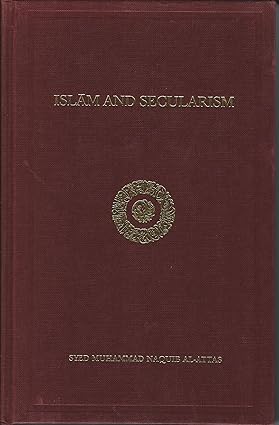
Al-Attas argued that knowledge ultimately comes from God and therefore must be understood within a framework that acknowledges revelation as a legitimate source of understanding. In his view, modern Western civilisation had gradually detached knowledge from metaphysical and ethical foundations, producing a worldview that emphasised material progress while neglecting spiritual meaning.
For al-Attas, the problem was not the empirical sciences themselves but the philosophical assumptions embedded within modern intellectual culture. Western modernity often presented knowledge as value-neutral and purely objective, yet he believed that all knowledge is shaped by underlying cultural and metaphysical assumptions. When Muslim societies adopt Western scientific frameworks uncritically, they risk absorbing secular ideas about human nature, ethics, and the purpose of life. According to al-Attas, such adoption leads to a state of intellectual confusion in which Muslims participate in modern knowledge production but remain uncertain about their own civilisational identity.
To address this crisis, al-Attas emphasised the importance of restoring the Islamic worldview as the foundation of education. This worldview, rooted in the concept of tawhid (the unity of God), views reality as a coherent order in which physical, intellectual, and spiritual dimensions are interconnected. Knowledge is therefore not merely a tool for technological progress but a means of recognising the divine order embedded in creation. When knowledge is pursued without this orientation, al-Attas warned, it may lead to moral and ecological crises, because humanity begins to treat nature and society as objects of domination rather than signs pointing toward higher meaning.
A central concept in his educational philosophy is adab, which he understood as the proper ordering of knowledge and behaviour. For al-Attas, education should not simply transmit information or technical skills; it should cultivate individuals who recognise the correct place of things within the hierarchy of existence. This cultivation of intellectual and moral discipline he described as ta’dib, a form of education that integrates ethical formation with intellectual training. Without adab, he argued, knowledge becomes fragmented and potentially destructive. The aim of education is therefore to produce individuals who possess wisdom and balance rather than mere technical competence.
Closely related to this vision was al-Attas’s emphasis on language and conceptual clarity. He believed that the crisis of Muslim thought partly resulted from confusion in key intellectual terms. Words such as “religion,” “science,” and “secularism” carried meanings shaped by Western historical experiences, particularly the conflict between church and state in Europe. When these terms were translated directly into Muslim intellectual contexts, they often distorted the meanings of Islamic concepts. Al-Attas argued that intellectual renewal required careful attention to language, terminology, and the conceptual structure of knowledge itself. In his view, the re-articulation of key Islamic concepts was a prerequisite for any genuine intellectual revival.
Al-Attas’s ideas also had an institutional dimension. He believed that universities play a crucial role in shaping civilisation because they determine how knowledge is organised and transmitted. Modern universities in many Muslim societies, he observed, often reproduced Western academic models that separated religious studies from other fields of knowledge. This division reinforced the assumption that religion belongs only to the private sphere, while science and public life operate independently of spiritual values. Al-Attas sought to challenge this structure by advocating a model of the Islamic university in which the unity of knowledge is preserved, and disciplines are integrated within a coherent metaphysical framework.
These ideas materialised partly in the establishment of the International Institute of Islamic Thought and Civilisation (ISTAC) in Malaysia. The institute aimed to create an environment where scholars could engage with both classical Islamic scholarship and modern disciplines without succumbing to the dichotomy between “religious” and “secular” knowledge. Through this project, al-Attas attempted to demonstrate that intellectual revival requires not only theoretical ideas but also institutions capable of nurturing new generations of scholars.
The relevance of al-Attas’s thought becomes particularly striking when considered in the Indian context. India possesses one of the largest Muslim populations in the world and has historically been a major centre of Islamic scholarship. Yet the intellectual landscape of Indian Muslims has long been shaped by the legacy of colonial education systems, which introduced Western epistemologies while marginalising traditional forms of knowledge. Institutions such as madrasas preserved classical Islamic learning, while modern universities often adopted secular frameworks that excluded religious perspectives. This division produced the very dichotomy that al-Attas criticised: a separation between religious scholarship and modern intellectual life.
In India, debates about education frequently revolve around how Muslim communities can participate fully in modern knowledge economies without losing their intellectual and cultural identity. Al-Attas’s critique of secular epistemology offers a framework for addressing this challenge. His approach does not reject modern science or rational inquiry; instead, it insists that these forms of knowledge should be interpreted within a broader ethical and metaphysical horizon. For Indian Muslim scholars seeking to bridge the gap between traditional seminaries and modern universities, al-Attas’s ideas provide a conceptual vocabulary for thinking about integration rather than separation.
Furthermore, the Indian intellectual tradition itself contains resources that resonate with al-Attas’s vision. Classical Islamic scholarship in South Asia, represented by figures such as Shah Waliullah and later reformist scholars, often emphasised the unity of religious and rational sciences. The decline of this integrated approach during the colonial period mirrors the process that al-Attas identified in other Muslim societies. His call for intellectual renewal through conceptual clarity and educational reform, therefore, echoes concerns already present in the Indian tradition.
Another dimension of al-Attas’s relevance to India lies in the broader debate about civilisation and modernity. India is a deeply plural society in which multiple religious and cultural traditions coexist. Within such a context, the question of how communities engage with modernity while preserving their intellectual heritage becomes particularly complex. Al-Attas’s critique of Western secularism is not merely defensive; it encourages a confident engagement with modern knowledge while remaining rooted in one’s own metaphysical framework. This perspective can contribute to a more balanced intellectual dialogue in which Muslim scholars participate in global academic debates without abandoning their civilisational identity.
ALSO READ: Shama Mohammad: Battling patriarchy and breaking barriers
In many ways, al-Attas’s work represents an attempt to restore intellectual confidence within the Muslim world. He believed that Muslim societies had inherited a rich tradition of philosophy, theology, and scientific inquiry but had lost the conceptual coherence that once unified these disciplines. By recovering the metaphysical foundations of Islamic thought, he argued, Muslims could engage creatively with modern knowledge rather than simply imitating Western models. This vision of civilisational renewal places the responsibility for intellectual reform not only on political leaders or institutions but on scholars and educators who shape the intellectual horizons of society.
Ultimately, the legacy of Syed Muhammad Naquib al-Attas lies in his insistence that knowledge cannot be separated from questions of meaning, ethics, and civilisation. His work reminds us that education is never neutral: it always reflects a particular understanding of reality and the human purpose within it. In societies such as India, where debates about identity, education, and modernity remain deeply intertwined, his ideas continue to offer a powerful framework for rethinking the relationship between tradition and modern intellectual life.

.webp "Union Home Minister Amit Shah")