 ManitThakur
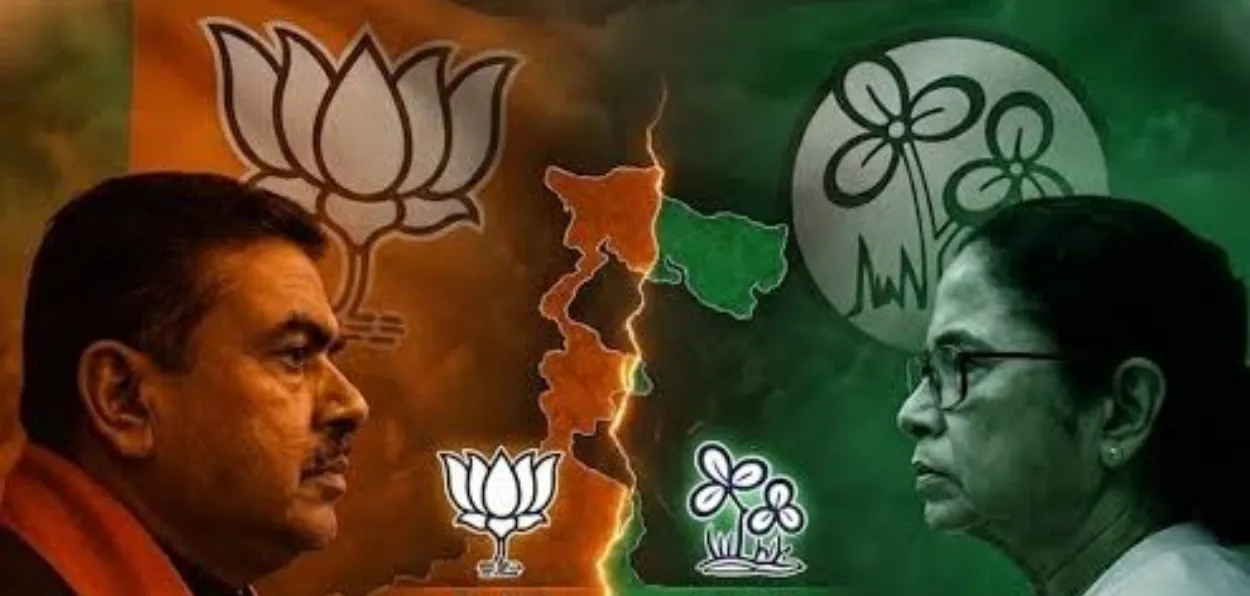
The first phase of the West Bengal Assembly elections is more than a routine electoral exercise—it is a referendum on competing narratives of identity, governance, and development. As voters head to the booths, the outcome will offer crucial signals not just for the state’s political future, but for the national landscape as well.
The phase of voting, covering 152 of the state’s 294 Assembly seats, is a make-or-break contest for several key players and political parties.
The constituencies going to the polls in this phase represent a culturally and geographically diverse landscape. For analytical clarity, they can be divided into three key regions—North Bengal, Jangal Mahal, and South Bengal.
North Bengal
Voting in 54 seats across districts such as Cooch Behar, Alipurduar, Jalpaiguri, Darjeeling, Malda, and the two Dinajpurs will be closely watched. The BJP dominated this region in the 2021 Assembly elections, and early indicators suggest it is seeking to retain its edge by pushing narratives around the “separate development of North Bengal” and implementation of the CAA.
#WATCH | West Bengal Elections 2026 | Long queues of voters formed outside a polling station in Birbhum as polling for the first phase of State Assembly elections begins. pic.twitter.com/3g0WBwSV6L
— ANI (@ANI) April 23, 2026
However, Chief Minister Mamata Banerjee is not ceding ground easily. Welfare measures like the Chai Sundari scheme and wage hikes for tea garden workers are part of a calibrated attempt to regain lost territory.
Jangal Mahal: A quiet storm
Polling in 42 seats across Purulia, Bankura, Jhargram, and West Medinipur will test the political pulse of Jangal Mahal—a region where identity and development intersect sharply.
Traditionally a swing zone, Jangal Mahal remains crucial to any party’s path to power. The apparent calm during campaigning may conceal deeper undercurrents, possibly signaling a silent shift in voter sentiment.
PM Narendra Modi's 'jhalmuri moment' in Jhangram during the election campaign that went viral on social media:
#WATCH | Jhargram, West Bengal: PM Narendra Modi stopped at a local shop to have jhalmuri and interacted with locals in Jhargram. pic.twitter.com/M7N2o0gkMn
— ANI (@ANI) April 19, 2026
Once a Left bastion and later a hotspot of Maoist insurgency, the region saw the Trinamool Congress (TMC) consolidate power in 2011 on promises of peace and development. The BJP disrupted this dominance in the 2019 Lok Sabha elections, but Mamata Banerjee staged a comeback in 2021, winning a majority of Assembly seats. More recent trends from the 2024 Lok Sabha elections suggest the TMC has further strengthened its position, making this phase a battle between consolidation and resurgence.
Identity Politics and the Kurmi Factor
Identity politics is central to the contest here. Prime Minister Narendra Modi has foregrounded “tribal respect,” accusing the state government of slighting President Droupadi Murmu during her visit to a Santhal gathering—an allegation Mamata Banerjee has rejected while highlighting her government’s welfare initiatives.
Simultaneously, the Kurmi community has emerged as a decisive force. Their long-standing demand for Scheduled Tribe status and recognition of the Kurmali language has added a new dimension to the electoral contest. The BJP has strategically fielded leaders associated with the Kurmi movement, while opposition from existing tribal groups, particularly Santhals, has further complicated the equation.
Development vs Appeasement Narrative
The BJP has framed the contest as one of “development versus appeasement,” alleging corruption and land usurpation under TMC rule. In response, the TMC has leaned heavily on its narrative of restoring peace and ending Maoist violence.
Chief Minister Mamata Banerjee who is seeking a forth consecutive term during the campaigning:
Today, at the public meetings in Murarai, Khardaha, Beleghata, and Maniktala, I was deeply moved by the affection, blessings, and love of the people. The spontaneous participation, enthusiasm, and energy of the masses made it abundantly clear that the victory of Maa-Mati-Manush… pic.twitter.com/BQDjyA0XUD
— Mamata Banerjee (@MamataOfficial) April 20, 2026
Unlike other parts of the state, Jangal Mahal has remained relatively insulated from controversies such as voter list revisions, making this a contest driven more by social dynamics than administrative disputes.
Women voters benefiting from schemes like Lakshmi Bhandar, alongside youth mobilization around identity issues, add further layers to an already complex electoral battleground.
South Bengal: Fluid Equations
In South Bengal, 56 seats across Purba Medinipur, West Bardhaman, and Murshidabad will go to the polls. While the Congress once held sway here, the TMC has emerged dominant in recent years.
However, the Congress-Left alliance could play a spoiler, particularly in Murshidabad and Malda. A stronger showing by this alliance could cut into the TMC’s vote share and indirectly benefit the BJP.
Key Battlegrounds and Issues
Nandigram remains the most high-profile seat in this phase, symbolizing a prestige battle. Voters here appear split between local identity considerations and the appeal of welfare schemes.
#WATCH | West Bengal | Security tightened in polling booths, authorities in Murshidabad district have ramped up surveillance measures, deploying Static Surveillance Teams (SST) and establishing multiple naka check-posts across key locations, particularly in the Behrampur assembly… pic.twitter.com/KZ9V0yn6nm
— ANI (@ANI) April 22, 2026
Murshidabad could emerge as an X-factor, where the consolidation or division of minority votes may significantly influence outcomes across multiple constituencies.
At the ground level, four major issues dominate voter concerns: First is the Welfare Schemes. With schemes like Lakshmi Bhandar Mamata Baneree has created a strong support base among women, potentially offsetting anti-incumbency.
Corruption charges as in the teacher recruitment scam and investigations by central agencies such as the ED and CBI resonate particularly in urban and semi-urban areas have become a major election issue.
CAA and Identity Politics is dominating the campaign narrative as the Act’s implications for communities like the Matuas and Rajbanshis remain a polarizing issue.
READ MORE: ACP Najma Farooqi's authority stems from empathy, integrity
With over 850 companies of central forces deployed, security remains a critical concern given Bengal’s history of poll-related violence.
Traditionally, high voter turnout is interpreted as a sign of anti-incumbency. However, in West Bengal—where turnout often ranges between 75 and 80 percent—such assumptions may not hold. A significant turnout of women voters, in particular, could reinforce the ruling party’s position.
The author is Editor, Awaz-the Voice, AV, and author of Bengal mein BJP (BJP in Bengal) published by Penguine Swadesh

.webp "Representational Image")







.webp "Kassim Ahmad")