




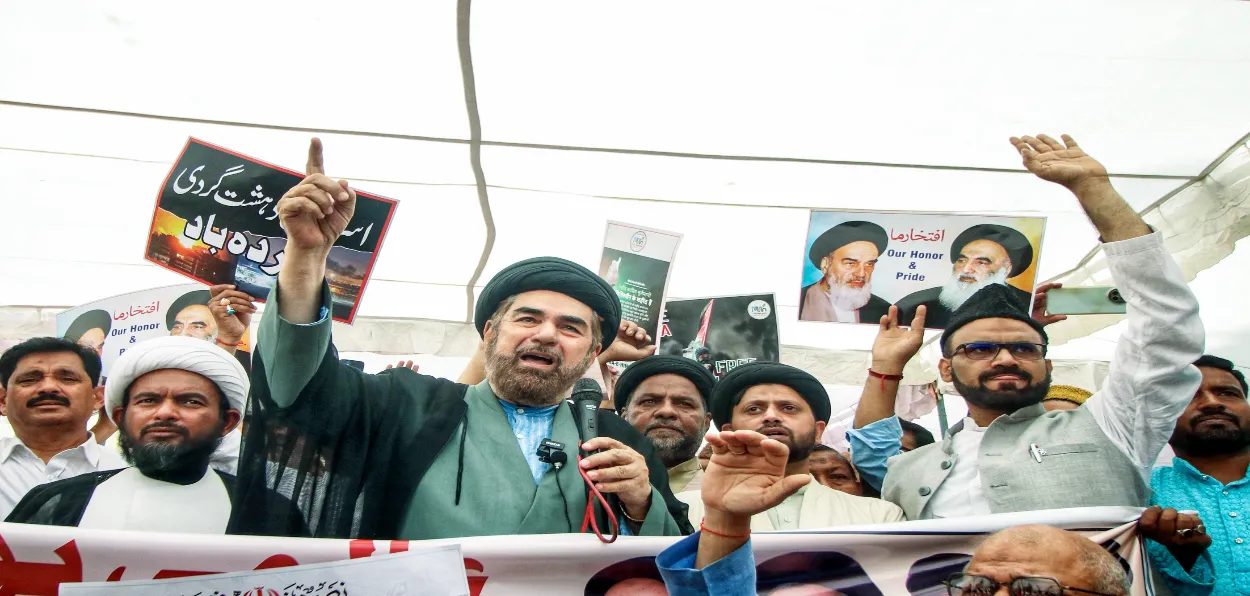
Amir Suhail Wani
From the beginning, Islam recognised the truth found in other religions and ideologies, and it never shied away from appreciating and elevating that truth which existed beyond its borders. Quran, being explicit on the subject matter, says, “believers (Muslims), Jews, Christians, and Sabians—whoever truly believes in Allah and the Last Day and does good deeds—will receive their reward from their Lord, without fear or grief”. This verse explicitly maintains that salvation and guidance are not restricted to Islam, but exist everywhere, where the word of God has reached before Islam.
Long Read
Al-Ghazali’s primary work addressing the salvation of those outside Islam is Faysal al-Tafriqa bayna al-Islam wa-l-Zandaqa (The Decisive Criterion for Distinguishing Islam from Masked Infidelity). In this book, he presents a relatively tolerant and optimistic view regarding the fate of non-Muslims, arguing that God’s mercy is vast and that many who are not Muslim in this life may still attain salvation.
With Islam’s transition to the modern world and its face-off with modern political realities, some Muslim thinkers diluted the religious and spiritual nuances of Islam by misplaced political and military interpretations. The religion, which had always been seen as a means of establishing man’s relationship with God, came to be seen as a political ideology meant to establish a state and political system for its followers.
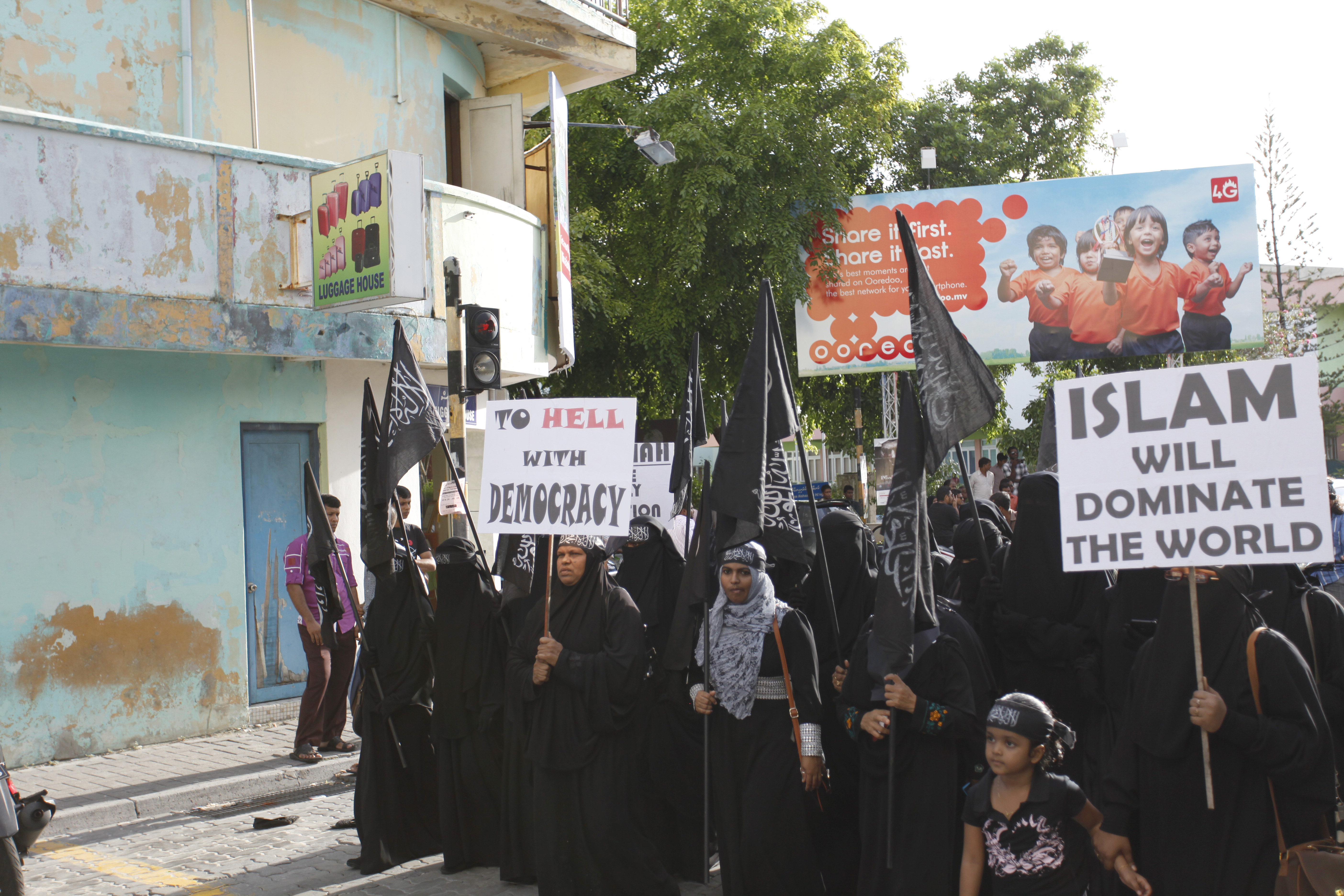 Muslims protestsing in Maldives
The religion that inspired acts of beauty and justice throughout history came to inspire acts of violence, hatred and friction across the globe in the 20th and 21st centuries. With accidents like the destruction of the Bamiyan Buddha in Afghanistan, the collapse of the World Trade Centre, the scourge of Al-Qaeda, and the sex-slavery unleashed by ISIS, Islam came to be seen as a barbaric force, antithetical to all the modern values of humanity and civilisation.
However, this was not something intrinsically wrong with Islam, but this inversion came because a group of extremists, politically oriented fanatics, came to sabotage the religion of peace and love and re-packaged it as a religion of war and hatred. How this transformation came about and what factors conspired to promote this unholy version of Islam is an interesting and rattling story of individuals and states.
The modern political view of Islam was formulated and popularised by Abul A‘la Maududi, Syed Qutb, and their many ideological contemporaries and followers. This “Politicisation of religion” marks a significant distortion in Muslim history without any academic or pragmatic precedent. This inversion, which turned Islam on its head, was not just flawed; it was deeply absurd, counterproductive and regressive.
This coup d'état attempted to reshape Islam—a moral, spiritual, and civilisational tradition—into a modern political framework with full-fledged military as well as militant arms. In trying to reclaim Muslim dignity from colonial oppression and historical decline, political Islam ended up trapping Islam within the very structure of modern power it professed to oppose. It reduced transcendence to governance, spirit to state, faith to fanaticism, ideal to ideology and moral depth to political claims.
Writers like Abul A’ala Maududi believed that political Islam represented a step towards original Islam preached and propagated during the life and times of the Prophet and his companions. However, this political leap does not return to tradition in reality; it’s a modern Western idea of totalitarianism and fascism mixed with the theology of chauvinism and Muslim exclusivism.
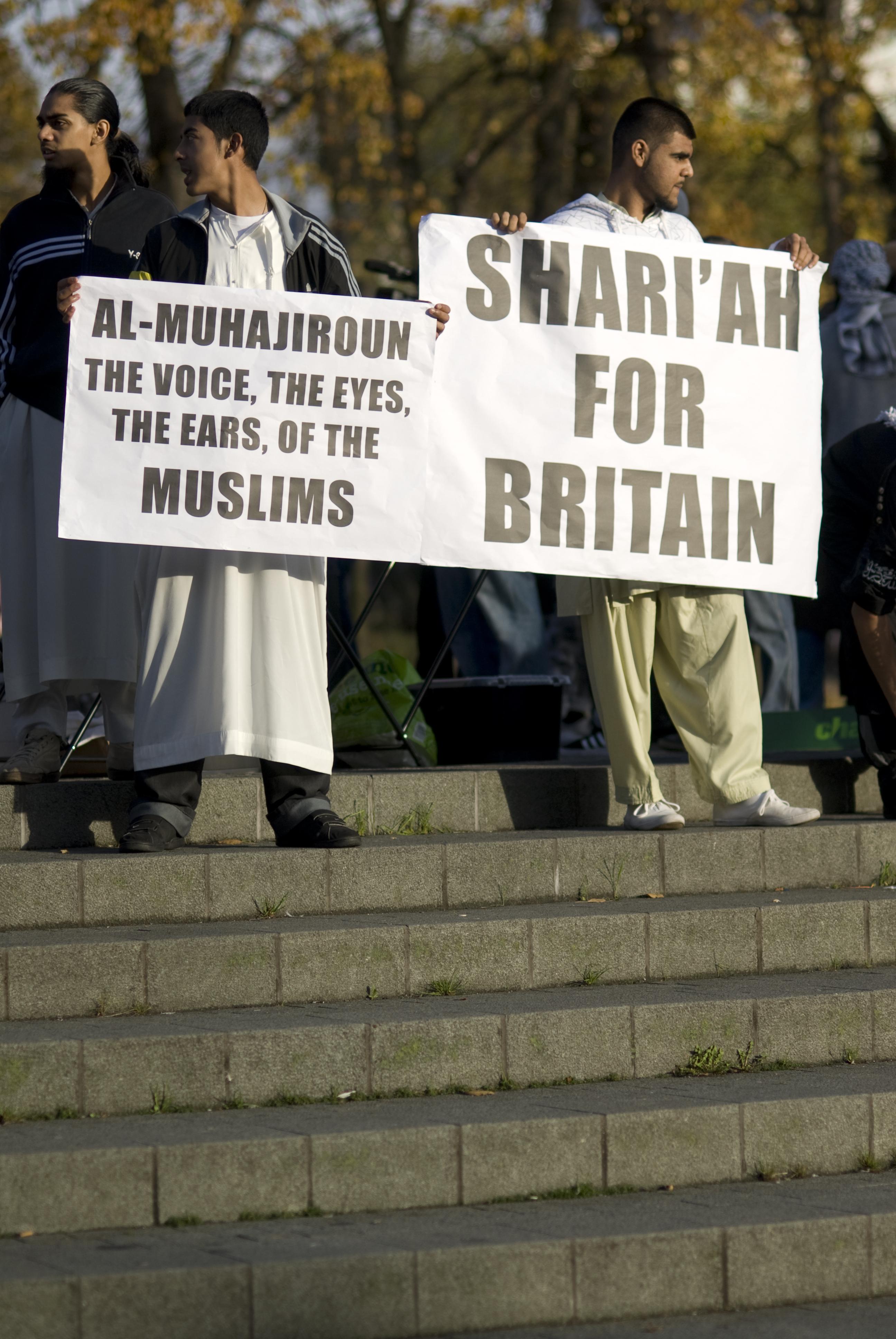 Muslims protesting in Britain
Scholars like Abou El Fadl have shown how the German fascist writer Carl Schmitt, in framing their respective ideas of political Islam, influenced Maududi and Syed Qutb. invention.
Classical Islam did not see itself as an "ism," a closed system in competition with other ideologies or a system with exclusive proprietary rights to salvation and world order. Instead, it operated as a moral guide, a spiritual journey, and a civilizational spirit capable of taking many political forms and not necessarily manifesting as a rigid theological or political monolith, as is claimed by modern-day Islamic writers who espouse religious totalitarianism.
Pre-modern Muslim scholars always maintained a distance from courts and political dabbling. They realised the corrupting and corrugating influence of power and state and saw their role as nothing more than the gatekeepers of piety and ethics. They offered counsel and advice to rulers on justice, equality and moving towards a state of peace, as opposed to modern-day Muslim political writers. They had no political ambitions.
The classical Muslim jurists, theologians and religious authorities emphasised justice, ethical responsibility, mercy, and human flaws and were always hesitant to sanctify any specific political arrangement. The modern Islamist agenda inverted this traditional hierarchy by declaring that Islam is fundamentally a political system needing state power for its realisation.
Philosophically, this shift aligns with the larger malaise of ideology, which Terry Eagleton, Slavoj Zizek and Hannah Arendt identified as a problem of ideological thinking. For these thinkers, ideology is not simply a set of political beliefs; it is a totalizing, authoritarian and dictatorial framework that claims to explain all reality from one monolithic premise and perspective. Once embraced, ideology removes the need for moral judgment, replacing ethical reasoning with firm conclusions. Maududi’s idea of hakimiyyah—divine sovereignty as an all-encompassing political principle—operates in this way. So do Syed Qutub’s political ambitions and his reformulation of “the age of ignorance” posit Islam and modernity against one another. From this concept springs a complete worldview: law, society, culture, economics, and even personal conscience are subordinated to a set political logic.
Islam ceases to be a lived moral struggle and spiritual aspiration aimed at God; it transforms into an ideology that demands political submission not only to divine authority but also to a specific human interpretation of that authority. Syed Qutb intensified this ideological framework by using the concept of jahiliyyah. Originally, jahiliyyah described a state of ignorance before prophets. Qutb turned it into a widespread political critique of modern society. Whole civilisations—both Muslim and non-Muslim—were deemed illegitimate for not aligning with his vision of divine sovereignty. This divide reflects what Arendt termed the ideological split between the enlightened few and the morally fallen many.
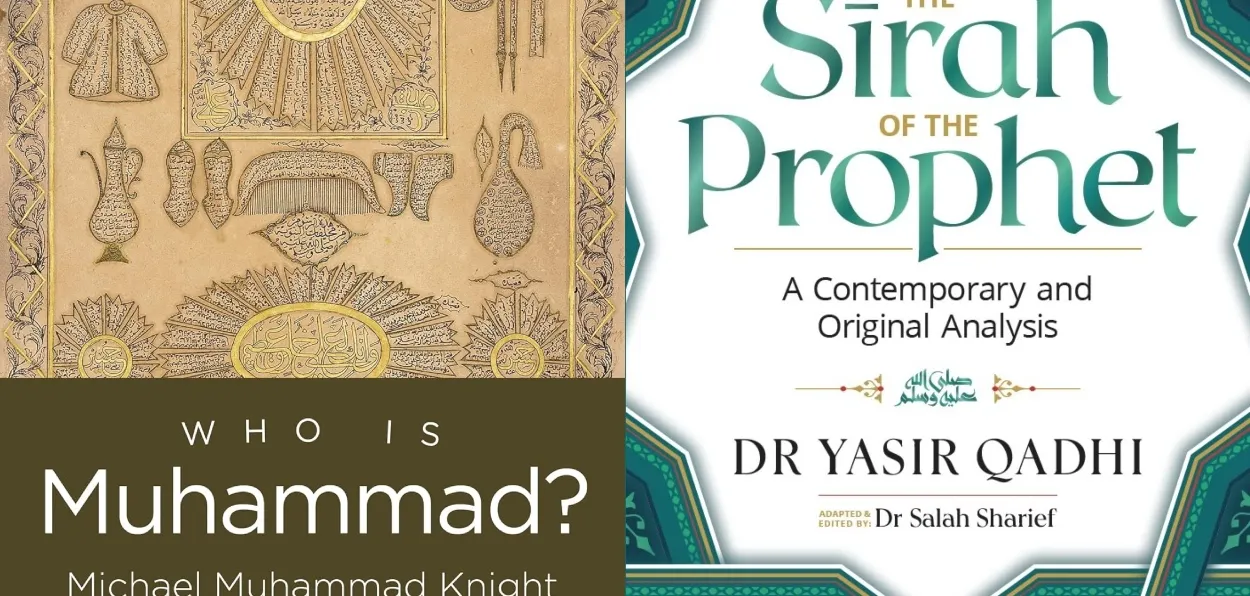
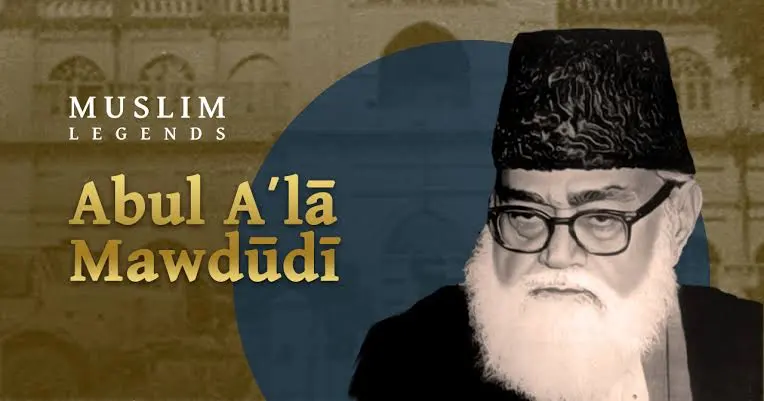 Cover of a Book on Maulana Abul A’ala Maududi
 Accepting such a division encourages exclusion as virtue, coercion as obligation, and violence as purifying. Islam’s universal moral call is thereby transformed into a politics of continuous hostility. Eric Voegelin’s critique of modern political movements sharpens this insight. He argued that many modern ideologies aim to "immanentise the eschaton"—to force a transcendent salvation into historical and political reality.
Political Islam exemplifies this mistake with alarming clarity. The Qur’an's moral vision, which is focused on the Hereafter and accountability to God, is reshaped into a plan for earthly domination. Salvation loses its divine mystery, shaped by ethical effort; it turns into a political result tied to establishing a specific state.
Divine judgment merges with human control. Theologically, this represents a major misstep. Classical Islam instinctively avoided this trap. Al-Ghazali, writing during a time of political turmoil and moral unease, did not sanctify power. For him, political authority was a practical tool to prevent chaos, not an avenue for salvation. He frequently warned that religion starts to corrupt when scholars confuse coercion with guidance and equate outward conformity with inner change.
Ethical growth, not political power, was central to religious life.
According to Ghazali, the state could limit injustice, but it could never create virtue. Ibn Taymiyyah—often selectively quoted by modern Islamists—was even clearer. He famously claimed that God might allow a just non-Muslim society to last longer than an unjust Muslim one. Justice, rather than ideological correctness, was the measure of divine favour.
Political Islam flips this logic, placing formal sovereignty above real justice. Voegelin would recognise this as the loss of transcendence: when divine standards merge with political systems, injustice becomes legitimised instead of addressed. The mystical and philosophical strands of Islam offer a powerful counter-narrative to the claims of political Islam. Ibn ʿArabi challenged the metaphysical bases that support ideological absolutism. His idea of divine unity (wahdat al-wujud) stressed that God reveals Himself in endless forms and that our access to truth is always partial, situated, and ethically demanding. Any claim to monopolise truth—especially through political means—was a sign of spiritual immaturity for Ibn ʿArabi.
While Qutb saw a division between hakimiyyah and jahiliyyah, Ibn ʿArabi perceived divine signs across humanity that could not be reduced to political loyalty. Rumi translated this metaphysical openness into a deeply human ethical perspective. His version of Islam was inclusive, joyful, and wary of strict boundaries. Love, not law, was central to spiritual life; transformation, not control, was its aim.
Islam's inclusive recognition of truth in other religions
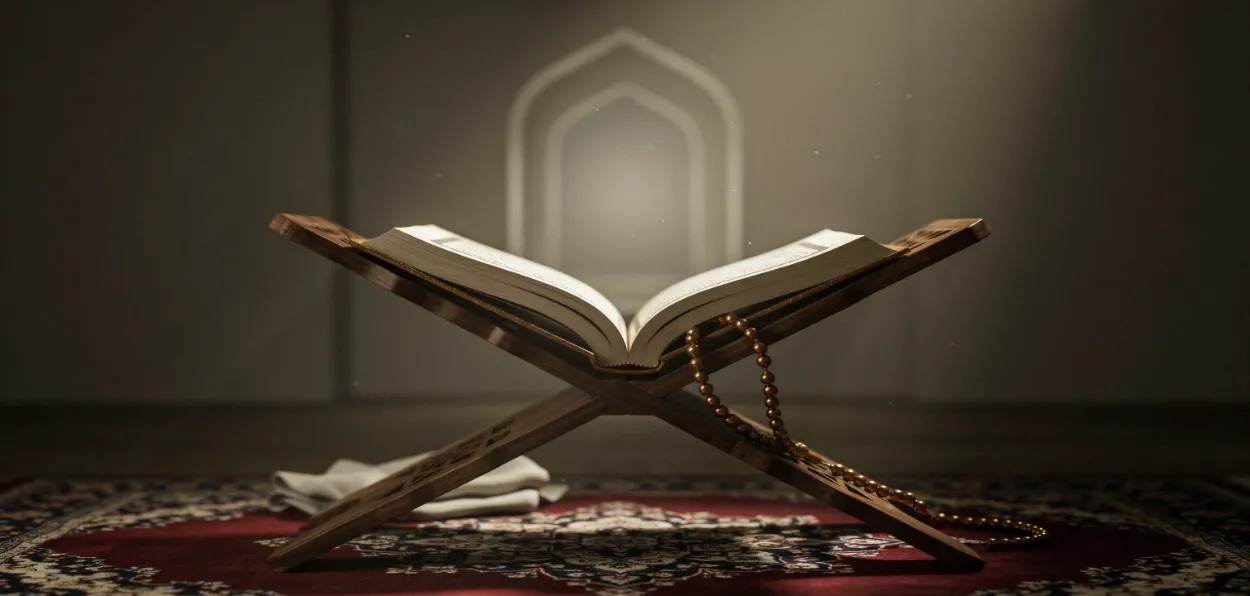
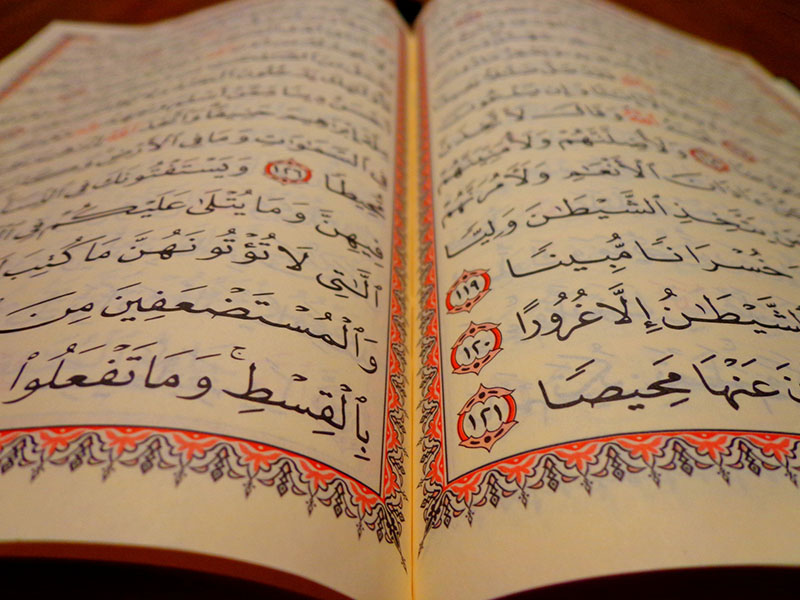 The Holy Quran
Rumi’s refusal to absolutise identity—be it religious, cultural, or political—was not a form of relativism but a belief that moral depth cannot be diluted to institutional conformity. In contrast, political Islam begins with control and leads to spiritual emptiness. Shah Waliullah of Delhi represents an essential counterpoint in the Indian context. He was deeply committed to Islamic law and prophetic tradition, yet he viewed law as a moral backdrop rather than a political weapon. He acknowledged historical changes, cultural variety, and contextual reasoning as vital to Islamic thought. His focus was on ethical balance, social harmony, and spiritual renewal—not on creating a uniform political system.
Misreading Maududi through Shah Waliullah means confusing moral philosophy with political engineering. The Qur’an itself strongly supports this traditional restraint. It repeatedly rejects turning faith into a political test. “There is no compulsion in religion” (2:256) is not just a strategic concession; it is a key theological principle. “Had God willed, He could have made you one community” (5:48) recognises plurality as part of divine intention, not a sign of historical failure.
The Qur’an consistently emphasises justice, mercy, trust, and consultation while remaining silent on endorsing a specific political system. This silence mirrors a moral vision that values ethical guidance over institutional format. Talal Asad’s study of Islam highlights why political Islam signifies a break rather than a revival. Historically, Islam served as a lived, engaged ethical tradition—shaped by teaching, rituals, interpretations, and moral cultivation.
Political Islam distils this dynamic tradition into a rigid system, stripping it of spiritual richness. Law becomes strict enforcement instead of development; belief turns into ideological loyalty; community transforms into a political faction. Instead of resisting modernity, political Islam reflects the bureaucratic mindset of the modern nation-state.
In India, the fallout from this ideological shift has been especially damaging. Indian Islam has traditionally evolved as a deeply rooted, culturally rich tradition influenced by Sufism, local languages, shared social lives, and ethical coexistence. It was an Islam of taʿaruf—mutual understanding—instead of constant opposition. Introducing Maududian and Qutbian ideas disrupted this natural blend, prompting Muslims to see themselves as a beleaguered ideological minority rather than moral contributors to a diverse society.
This has led to social alienation without empowerment and political anxiety, lacking spiritual depth. Globally, political Islam has also had dire consequences. It has provided extremist groups with theological legitimacy, offered authoritarian regimes religious justification, and given Islamophobes harmful stereotypes. When Islam is mainly viewed as a political ideology, Muslims are often seen as political suspects.
The tragic irony is that those who aimed to restore Muslim dignity inadvertently strengthened global scepticism toward Islam itself. Ultimately, political Islam's failure is metaphysical before it becomes political. It confuses power with truth, control with guidance, and ideology with faith. Arendt warned that ideology erases moral judgment; Voegelin cautioned that trying to force transcendent ideals into historical contexts leads to spiritual disaster; Asad reminds us that traditions thrive through lived experience, not mere abstraction. Classical Islam recognised this inherently.
ALSO READ: Amir Khusrau is a big icon of plural India
It kept political theory sparse while developing ethics in detail. Islam does not have to dominate the world to be valid. It must illuminate conscience, foster virtue, and accompany people in their fragile moral journeys. Restoring Islam’s dignity—especially in India—means letting go of ideological constraints and reclaiming a faith confident enough to exist without overriding others and deep enough to belong without excluding.
_(1)_(1).webp "Khanqah Emadia Qalandaria, Patna, Bihar")






.webp)
.webp)