 Aditi Bhaduri
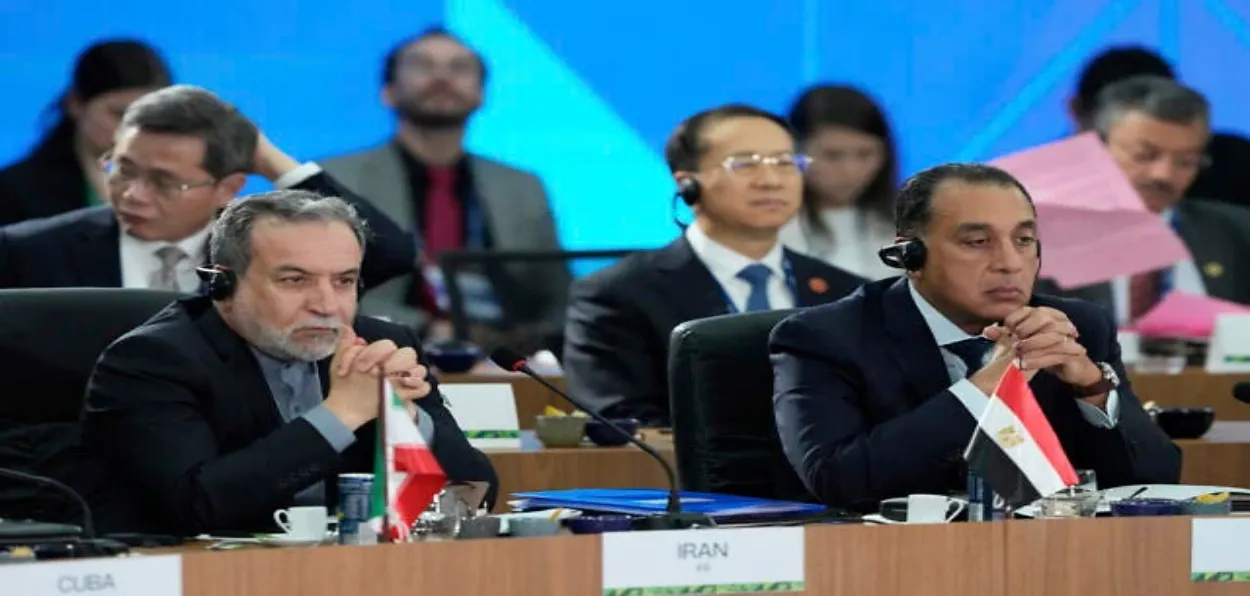
Recently, in Delhi, where he had come to attend the BRICS Foreign Ministers' meet, Iranian Foreign Minister Abbas Araghchi said Tehran is ready to restart oil trade with India and supply crude once again. He also said that Iran looked forward to India’s continued engagement with the Chabahar Port project. This signal ends Iran’s interest in continuing to engage with India.
But there was something else that Aragchi said that needs greater attention. He praised India’s diplomatic standing and suggested New Delhi can play a constructive role in promoting peace and stability in West Asia. This, even though India is a close partner of both Israel and the UAE. India had also condemned the attacks on the UAE.
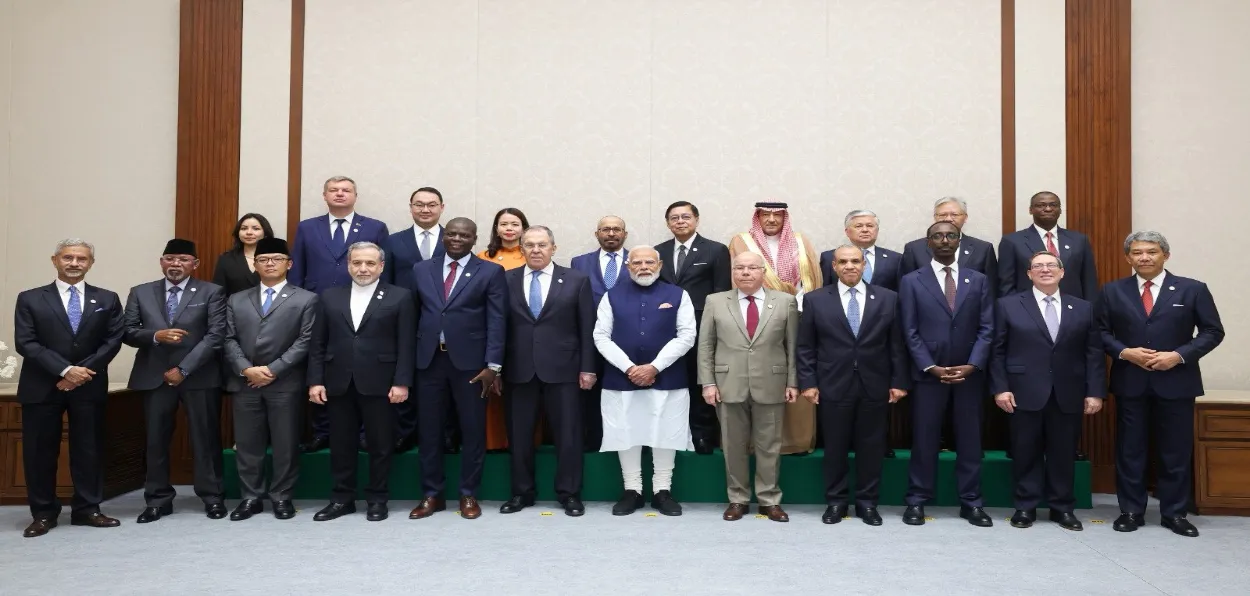
Aragchi, however, was not the only one to voice confidence in India’s potential to mediate peace in West Asia. Russian foreign minister Sergei Lavrov, also in Delhi to attend the meet, voiced the same opinion. He had underscored India's vast diplomatic experience and international standing, and proposed that New Delhi play the role of a long-term mediator for Iran-US conflicts while Pakistan manages immediate, on-the-ground dialogues.
While these reports found ample space in the Indian media, it was a UAE diplomat who, at the very start of the Israel-US war with Iran, had said that India was well-positioned to play a mediating role in the conflict, given its good relations with all sides. Former UAE Ambassador to India, Hussain Hassan Mirza, had, in March, noted that Prime Minister Narendra Modi holds rare credibility across the region, and suggested that his strong, simultaneous relationships with Gulf countries, Iran, and the US mean a direct call could significantly reduce escalating regional tensions.
The recent BRICS foreign ministers' meeting concluded without a joint statement in view of tensions between Iran and the UAE.
The UAE has also now become a party to the war because Iran has been attacking it, alleging that US bases on its territory make it a legitimate target. Reports have now also emerged that the UAE had also attacked Iran in early April.
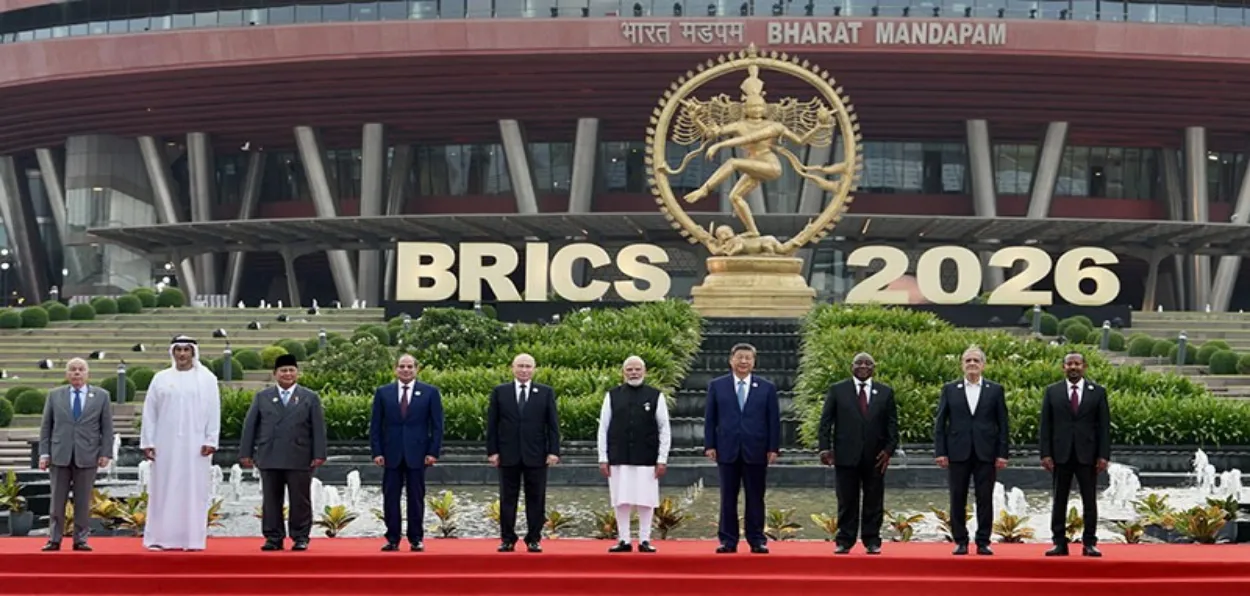
India is the land of karma, whereby nothing happens by coincidence. Every event, every occurrence is significant not only of itself but in the chain of human and universal interconnectedness and interdependence. Is it a coincidence that this very year, when a catastrophic war has broken out in the region, whose impact is being felt across the globe, is the year that India is holding the chair of an organisation as weighty, as powerful, and as consequential as the BRICS? Where two of the feuding parties are the BRICS members? It is an opportunity that India should not allow to pass by.
#WATCH | Delhi: BRICS Foreign Ministers’ Meeting | EAM Dr S Jaishankar says, "We meet at a time of considerable flux in international relations, ongoing conflicts, economic uncertainties, and challenges in trade and technology and climate are shaping the global landscape. There… pic.twitter.com/chEmUfyWIY
— ANI (@ANI) May 14, 2026
India has been reluctant to play any kind of mediating role in any conflict since its bitter experience in Sri Lanka, where it had dispatched peacekeeping troops in the 1980s. But every year, India deploys peacekeepers in hot spots across the world under the UN flag. And its peacekeeping missions have been successful too. And for one bitter experience in Sri Lanka, India has also had successes to its credit.
India’s deployment of troops to Korea during and immediately after the Korean War from 1950 to 1954 is said to represent a foundational chapter in global peacekeeping. Recently, Defence Minister Rajnath Singh inaugurated the Indian War Memorial in Seoul, commemorating the role Indian troops played during the Korean War and in its aftermath, on its 75th anniversary.
In 1953, Prime Minister Jawaharlal Nehru acted as a mediator between the USSR and Austria, which ultimately led to the emergence of post-World War II Austria as a sovereign, independent, but neutral state.
Perhaps it is time for India to take up the mantle and step up to mediate a peace or truce between Iran and the UAE. Both countries are neighbours and will remain so long after the war ends. Geography cannot be wished away. And it is always prudent to have good relations with one's neighbours. Good neighbourly relations between them would not just serve the two concerned states but also benefit India.
Engineering a truce between these two neighbours is not just idealism. India's relationship with the UAE today is at par with perhaps the kind of partnership India shares with Russia. Cooperation spans a wide range of sectors, trade, energy security, labour corridor, defence, space, culture, counterterrorism, et al. Modi's recent visit to the UAE resulted in a slew of agreements that are poised to take the relationship even further. Almost four million Indians live and work in the Emirates.
Equally, ties with Iran are significant. For years, Iran had been a supplier of crude to India. It also has a large export market for Indian goods with minimal logistical costs due to its geographical proximity. Western sanctions on Iran have impeded continuing trade, but the potential remains as before.
Iran has often cooperated with India on counterterrorism and has been useful in countering Pakistan. The Chabahar Port project that India was developing with Iran offered a host of benefits, extending beyond simply accessing Central Asia. In Delhi, Aragchi described Chabahar Port as a "golden gate" for India to access Central Asia, the Caucasus, and Europe. He signalled that Iran still desired Indian engagement in this Port. Hence, amicable relations between these two would serve India well, too.
ALSO READ: How a Railway line changed Hajj journey and united Muslims
For years, India has bèen doing a balancing act in the region which is part of her extended neighbourhood. Now, India must step up its role in the region, and deploy influence to shape outcomes instead of being a passive observer because India today is one of the worst-hit countries by the Israel-US war on Iran. It, therefore, becomes a moral responsibility for India to adopt a more proactive stance in the region.

.webp "Union Home Minister Amit Shah")







_(1).webp)