




_(3).webp "Prof. Fatima Sultana")
Neelam Gupta
Once upon a time, the forests of Darrah and Ramgarh in the Hadoti region of Rajasthan, comprising Kota, Bundi, and Jhalawar, served as both the niche of tigers and the royal hunting preserves of the royalty. However, after Independence, both these identities gradually faded away.
While the forests of Ranthambore in Sawai Madhopur district were declared and protected as a Tiger Reserve by the Rajasthan and Central governments, Darrah and Ramgarh remained neglected. As a result, tigers disappeared from these forests, severing the natural wildlife corridor that once connected them to Madhya Pradesh's Gandhi Sagar Wildlife Sanctuary.
Stretching over nearly 17,000 square kilometres, the dense forests from Ranthambore through Ramgarh and Darrah to Gandhi Sagar once formed a continuous landscape where tigers roamed freely. Over time, that ecological connectivity was lost. It has only begun to revive over the past decade. Today, the former Darrah Wildlife Sanctuary has expanded from about 250 square kilometres to nearly 800 square kilometres and has been transformed into the Mukundra Hills Tiger Reserve. Similarly, Ramgarh Sanctuary has become the Ramgarh Vishdhari Tiger Reserve.
.jpeg) Prof. Fatima Sultana
Prof. Fatima Sultana
What brought about this remarkable transformation?
Much of the credit goes to the pioneering research of Prof. Fatima Sultana, a zoologist and former professor at JDB Girls College, Kota.
Prof. Sultana recalls, "I completed my M.Sc. in Zoology from Government College, Kota, in 1988 and graduated at the top of my class. As a result, I was immediately appointed as a lecturer at the Government College in Baran. During my service, I was transferred four times, one of those postings being in Jhalawar."
Travelling frequently by road between Kota and Jhalawar, she found herself captivated by the lush forests of Darrah.
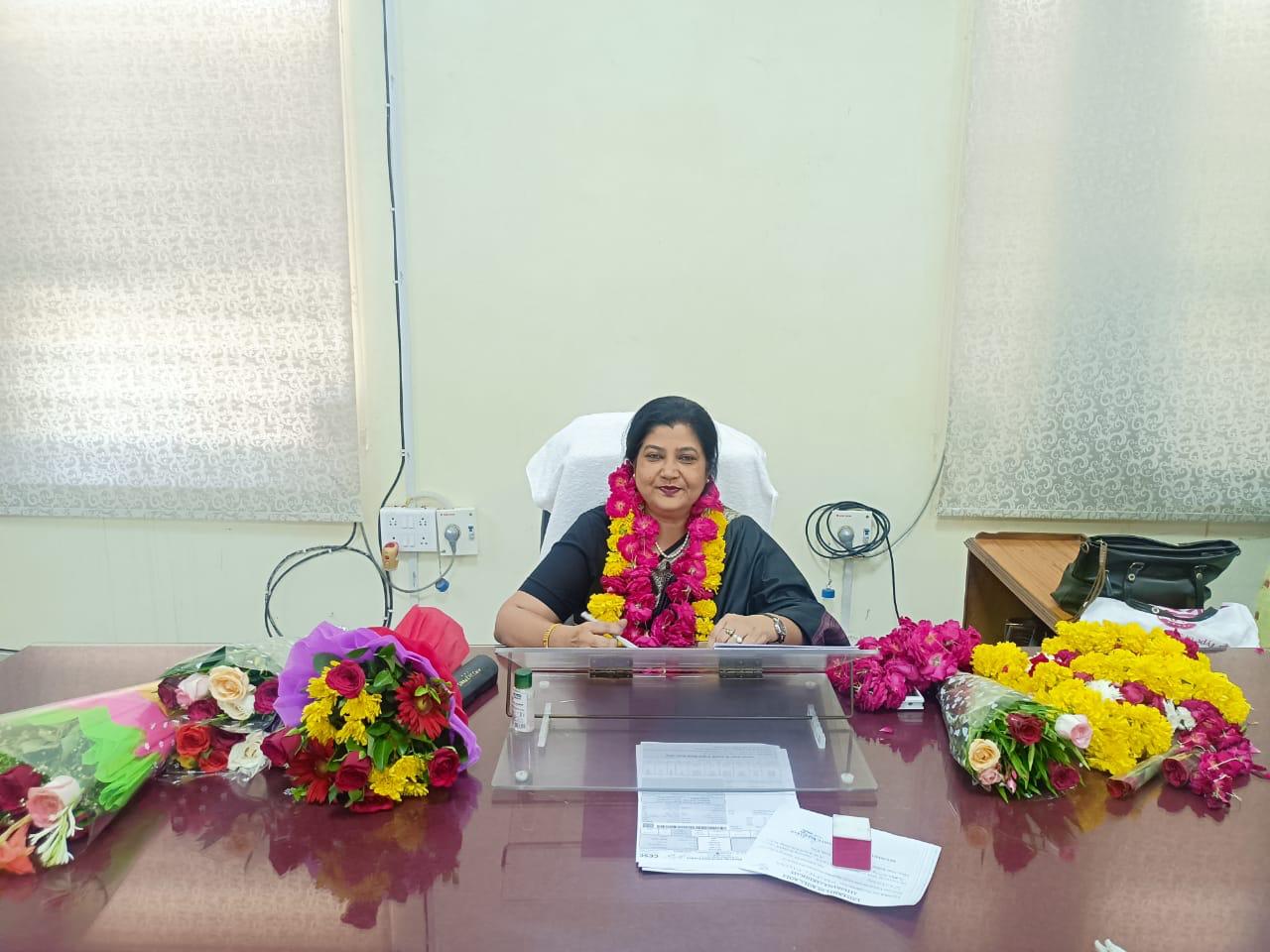 Prof. Fatima Sultana
"I would often think that if I ever pursued research, it would be on these forests."
A turning point came during a refresher course in Jodhpur, where she met wildlife expert Prof. P. P. Barkare, who introduced participants to the ecology of Ranthambore.
"I told him that I wanted to conduct research on Darrah Sanctuary. He smiled and said, 'It's extremely challenging. You won't be able to do it.' I replied, 'I am willing to work hard."
Determined to prove him wrong, she registered for her PhD under Dr. Anuradha Singh at JDB Girls College, Kota. Her research topic was "A Study of the Faunal Diversity of Darrah Sanctuary of the Hadoti Region in Rajasthan." She completed her doctorate in 2007.
After finishing her research, she submitted copies of her thesis to the Forest and Wildlife Department in Kota and to the department headquarters in Jaipur.
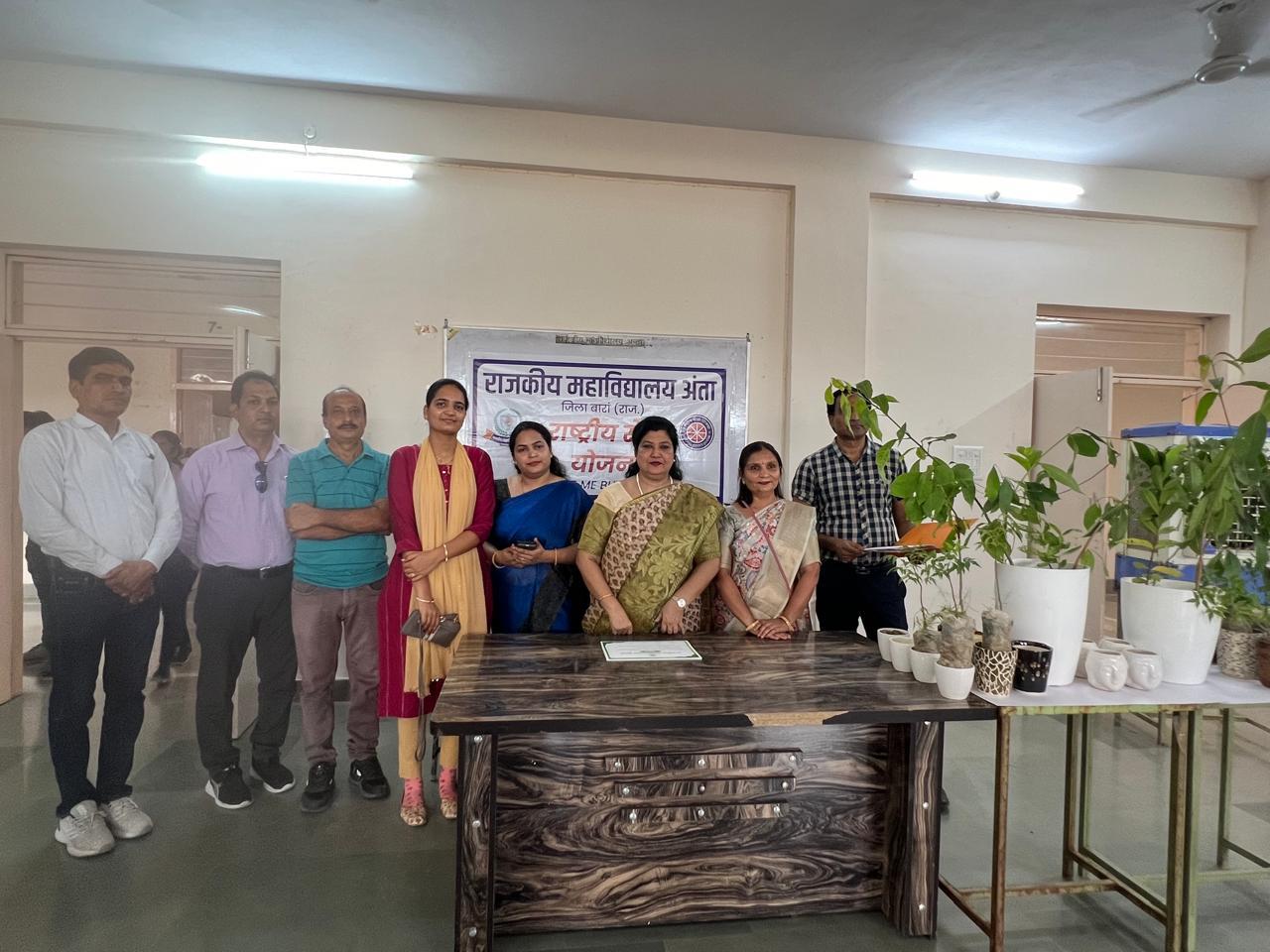 Prof. Fatima Sultana
"For the first time, the Forest Department seriously discussed the ecological importance of Darrah based on my work."
Soon, she received an official letter from the Rajasthan Forest Department. Addressing her as an ecologist, the department requested her to prepare a detailed report assessing whether tigers could be reintroduced into the region and, if so, how it should be done.
"I submitted the report in February 2012. Based on its recommendations, the Rajasthan Government declared the area the Mukundra Hills Tiger Reserve in April 2013. Soon after, two tigers from Ranthambore were relocated there."
Yet another ecological challenge remained.
 Prof. Fatima Sultana
Ranthambore's growing tiger population required additional habitat, making it necessary to revive the Ramgarh Vishdhari Sanctuary located between Ranthambore and Mukundra. Restoring this sanctuary would create a secure wildlife corridor through which tigers and other species could safely disperse and establish new territories.
"The Forest Department then asked me to prepare a similar habitat feasibility report for Ramgarh Vishdhari," she says. "I submitted it in 2022. My recommendations formed the basis of the management plan, and I also contributed as a data analyst and technical expert."
Today, Ramgarh Vishdhari is no longer merely a wildlife sanctuary. It has emerged as a vital tiger conservation landscape.
 Prof. Fatima Sultana
"Now a tiger from Ranthambore can travel safely through Ramgarh to Mukundra Hills and return naturally. It is not only beneficial for wildlife but also for nature lovers and tourists, who can now spend three or four days exploring this remarkable triangle of forests."
Prof. Sultana attributes her achievements to a lifelong passion for wildlife.
"The Forest Department accepted my reports because, although it possessed scattered records on these sanctuaries, it had never had a comprehensive scientific document that could guide tiger reintroduction."
She recalls the immense challenges she faced while conducting her doctoral research.
"When I began looking for reference material, I found almost nothing in libraries or government departments in Kota or Jaipur. Even the Wildlife Institute of India in Dehradun had virtually no information. The only reference I found merely mentioned the geographical coordinates of Darrah Sanctuary."
 Prof. Fatima Sultana
Ironically, even scientists working there knew very little about the region.
"Instead of feeling discouraged, I realised how important this research could become."
Eventually, she discovered a rare archival document dating back to 1918 in the Kota Forest Department archives. While it provided historical insights, she still had to undertake extensive fieldwork to document the sanctuary's vegetation and wildlife in contemporary conditions.
"I could only visit the forests on holidays because I had teaching responsibilities. Sometimes my husband accompanied me, but not always. My daughter was still very young, so I often had to take her along. I would leave her at the forest officer's office while I ventured deep into the forest. If I returned late in the evening, I would keep running back to check whether she was safe."
 Prof. Fatima Sultana
Looking back, she smiles and says,"Sometimes I wonder how passionate I must have been. I had unknowingly exposed even my children to risks because I was so deeply committed to my research."
Apart from tiger ecology, Prof. Sultana also conducted a separate UGC-funded study on the ecology and biodiversity of sloth bears, which are found in large numbers in the Darrah forests.
The research earned her invitations to present her work at international conferences in Greece and Japan.
"I not only presented my research papers before scientists from across the world but also chaired several technical sessions. Those were among the proudest moments of my life. I realised that all my hard work had been worthwhile."
 Prof. Fatima Sultana speaking at a public function
Prof. Sultana retired as Principal of the Government College, Anta, in February 2026. Before that, she spent nearly 28 years at Janaki Devi Bajaj Girls College, Kota, first as Head of the Zoology Department and later as Principal.
During her tenure, she introduced a specialised paper in Forestry and Wildlife Management within the Zoology curriculum.
"I wanted students pursuing Zoology to gain a strong understanding of wildlife conservation before they became teachers themselves."
The initiative proved highly successful.
"Many girls in our college opted for the subject, and today several colleges across Rajasthan, including those in Sawai Madhopur, have incorporated it into their curriculum."
In 2010, her efforts had also led to the establishment of a separate Department of Wildlife at the University of Kota.
 Prof. Fatima Sultana being received at a college
Prof. Sultana did much more than introduce academic courses. She organised numerous conferences, workshops, and awareness programmes that encouraged students to study wildlife and the Chambal River system and its tributaries.
Her work inspired generations of researchers to explore the region's rich biodiversity.To date, she has supervised more than 50 M.Phil. and PhD scholars, while over 100 of her research papers have been published in national and international journals.
Although she describes wildlife research as her personal passion, its impact extends far beyond academia.
Her work has transformed conservation in the Hadoti region, creating employment opportunities through eco-tourism, strengthening wildlife protection, and restoring forests that had long remained neglected. Once known as hunting grounds for royalty, these forests have now become protected habitats where tigers and countless other species roam freely.
 Prof. Fatima Sultana at a photography competition
By integrating wildlife studies into higher education, she has also laid the foundation for future research across thousands of square kilometres of forests and river ecosystems stretching into neighbouring Madhya Pradesh.
Future scholars, she says, will no longer have to travel to Dehradun in search of reference material because knowledge about the region now exists closer to home.
Her pioneering contributions have earned her more than fourteen awards, recognising decades of dedication to wildlife conservation, ecological research, and education.
Prof. Sultana ends with a message she frequently shares with her students:
READ MORE: CWG medalist Mohammed Basil once sprinted alongside normal athletes
"I always tell my girls never to think, 'I am just a girl.' I was a girl too, yet look at what I have achieved. My wildlife research, my papers, and my books were all completed alongside my college responsibilities. At every institution where I worked, I tried to create something new. If I could do it, so can you."



.webp "Union Home Minister Amit Shah")











.webp)