 Aditi Bhaduri
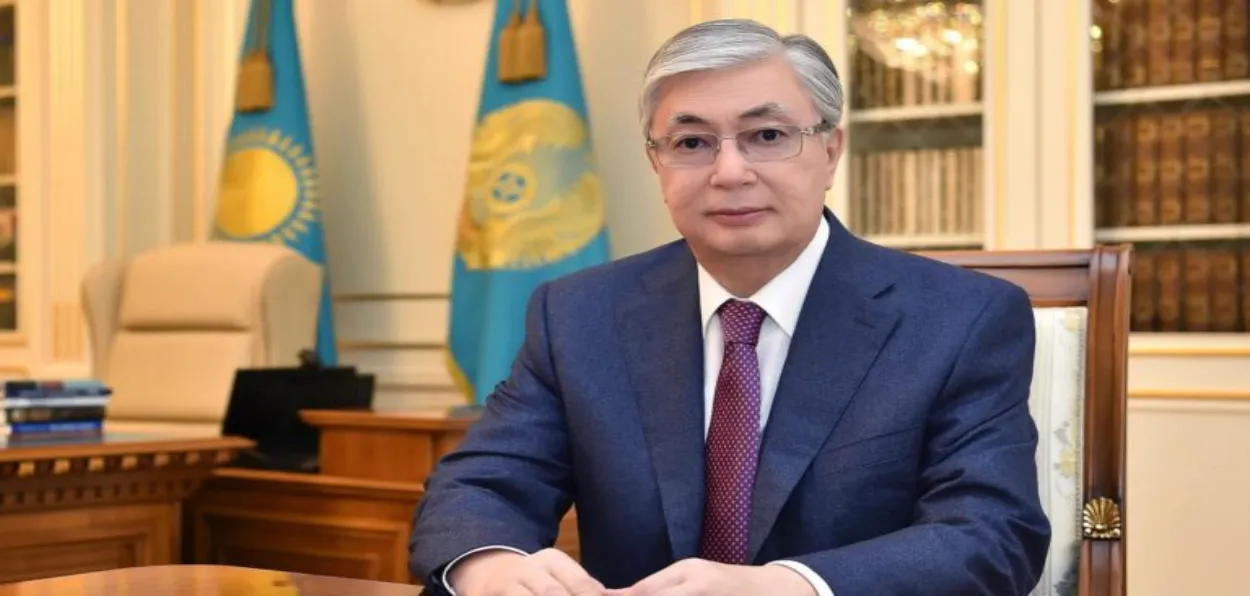
The Iran-US-Israel war has dominated global attention in recent months. Yet, in another corner of the world, a significant development has unfolded. The Central Asian nation of Kazakhstan recently adopted a new Constitution through a public referendum. More importantly, the revised document can be described as a "human-centric" constitution. Initiated by President Kassym-Jomart Tokayev, it marks a crucial milestone in the country's political modernisation and reform process.
Why is this an important development for the global community in general and Asian societies in particular?
Kazakhstan is the ninth-largest country in the world and possibly the largest Muslim-majority country by territory. It is a major economy, rich in oil, gas, rare metals, and an emerging middle power.
Kazakh society is young and vibrant, with an energy that is fresh and full of life. This is anchored in the dynamism of a young state that seeks to bring new ideas, imagination and innovation to the world.
While much of the world is weary, strained and embroiled in conflicts and wars, Central Asia, particularly Kazakhstan, is moving forward. It has resolved many of the conflicts it inherited and is now focused on the development and improvement of Kazakh society and the lives of its people. This is due in large measure to the country's wise leadership.
The new Constitution is a manifestation of this fresh and dynamic spirit.
Kazakhstan's new Constitution can indeed be termed "human-centric" because it introduces changes that place human rights at the core of the country's legal framework. Legislation will be harmonised with the will and rights of the people.

The Constitution declares human rights and freedoms as the highest priority of the state, making them the guiding principle of the entire document. This is significant because few constitutions articulate this principle so explicitly, even though the welfare of the people underpins most constitutional systems.
Equally important, the key determinants of quality of life—education, science, culture and innovation—are placed at the heart of national development. This marks a strategic shift from reliance on natural resources to human capital as the primary driver of growth.
The Constitution also prioritises transparency in governance and policymaking. This was evident when a Parliamentary Reform Working Group was formed last year to assess, evaluate and recommend broad-based constitutional amendments while inviting public suggestions. The government received more than 2,000 proposal from citizens through the e-Otinish and eGov platforms.
This was participatory governance in action, allowing people to freely submit their ideas and recommendations.
This was followed by the establishment of a Constitutional Commission tasked with studying the proposals and recommending changes. The 130-member commission represented every region and diverse sections of society, including members of the National Kurultai, legal scholars, civil society representatives, government officials and journalists.
This ensured broad representation and gave due consideration to the concerns and views of all regions and sections of society. Moreover, all meetings were broadcast publicly, enabling legal experts, human rights advocates, parliamentarians, analysts and academics to participate.
The Constitution also provides for a single-house Parliament, which is expected to streamline governance and strengthen accountability.
A People's Council of Kazakhstan is also to be established. It will serve as a nationwide consultative body representing public interests and expanding public participation in governance.
Another key feature that makes the Constitution human-centric is its emphasis on judicial reform.
This is particularly significant because even the best laws mean little if they are not implemented effectively. Kazakhstan's new Constitution strengthens the protection of legal advocacy, reinforces intellectual property rights, prohibits retroactive laws that worsen an individual's legal position or impose new obligations, strengthens the presumption of innocence, constitutionally bans double jeopardy, and enshrines the "Miranda rule", guaranteeing individuals the right to be informed of their legal rights upon detention.
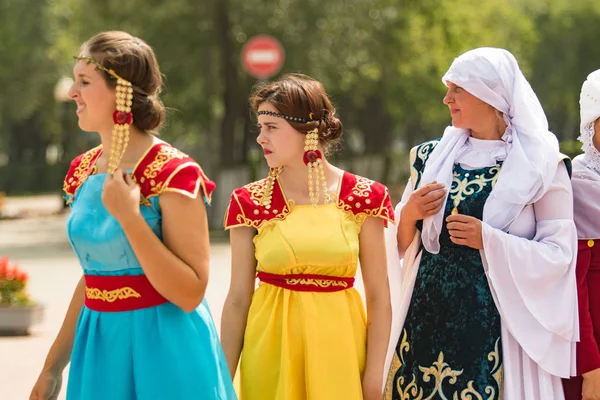 Kazakhstan's people diplaying their rich cultural roots
Alongside these reforms, the Constitution also safeguards the rights of women, while protecting family and traditional values.
Finally, the new Constitution reinforces Kazakhstan's identity as a secular republic, reflecting the equality of its diverse communities rather than privileging any one identity. This makes Kazakhstan a model for a world in which many countries are increasingly caught in the trap of identity politics. It is yet another reflection of the Constitution's "human-centric" character.
This is particularly relevant for South Asia, which regards Central Asia as part of its extended neighbourhood. Across parts of the region, religious identity is becoming increasingly politicised, while religious radicalism is being promoted and institutionalised. To put this in perspective, around the time Kazakhstan was circulating the draft of its new Constitution for public debate, Afghanistan was adopting legal provisions that have legalised wife-beating and other forms of domestic violence.
Even Bangladesh, once regarded as relatively progressive, is increasingly turning towards hard-line laws. In contrast, Kazakhstan's new Constitution is almost revolutionary in nature. This is especially significant because Kazakhstan is not an atheist country. It is a Muslim-majority nation where most people identify themselves as believers.
How will the new Constitution influence Kazakhstan globally and shape its foreign policy?
As a result of these reforms, Kazakhstan will be able to strengthen its political system by reinforcing democratic institutions and the rule of law. The country will further establish itself within the international community as a vibrant, prosperous and modern republic, in line with President Tokayev's vision. It will also strengthen Kazakhstan's role as a responsible member of the global community.
Kazakhstan aspires to play a significant international role through initiatives such as the Conference on Interaction and Confidence-Building Measures in Asia and the Congress of Leaders of World and Traditional Religions, both of which seek to promote peace, security, dialogue and understanding across Asia, and in which India also participates.
It is also the founding member of the Shanghai Cooperation Organisation (SCO), the Organisation for Security and Co-operation in Europe (OSCE), and the Organisation of Islamic Cooperation (OIC). It has made positive contributions to the functioning of all these institutions. The country has also earned a reputation as a peacebuilder and mediator through its participation in UN peacekeeping missions, where its personnel have often served alongside Indian contingents.
The new Constitution will enable Kazakhstan to engage more effectively with the world in promoting peace, democracy, transparent governance and the peaceful coexistence of nations.
ALSO READ: Sonam Wangchuk: My hero, and my disappointment
Hopefully, over time, it can inspire countries such as Afghanistan to modernise and place their people and their welfare at the heart of their constitutions, rather than allowing archaic customs and traditions to define their legal systems.

.webp "Union Home Minister Amit Shah")








_(1).webp)