 Aasha Khosa
Before Sonam Wangchuk became a face of youth resistance by joining the Cockroach Janata Party's protest in New Delhi, he was best known as a climate activist, innovator, and champion of sustainable living. His work was always deeply rooted in the realities of Ladakh—India's cold desert, where survival depends on conserving every available resource.
I first visited Leh in 1990 to report on the agitation that had erupted over Ladakh people’s anger against the Jammu & Kashmir government and their demand for Union Territory status. Nothing had prepared me for the place. The thin, rarefied air hit my lungs the moment I stepped off the aircraft, and the stark, barren landscape looked like the Moon's surface as I had imagined it in childhood.
Although I had known many Ladakhis during my college days—some of whom later became teachers and doctors in Leh—the region itself felt unlike anything I had experienced. The people, their attire, their way of life, and their intimate relationship with the harsh landscape fascinated me. As a young reporter, I wanted to look beyond the headlines of Buddhist-Muslim tensions and political unrest.
That was when I first heard about SECMOL (Students' Educational and Cultural Movement of Ladakh), an alternative educational initiative co-founded by a young engineer named Sonam Wangchuk.
Wangchuk was hardly a public figure then. Ironically, what people talked about more were the American and British women associated with SECMOL. Many locals even warned me that they were "suspected spies."
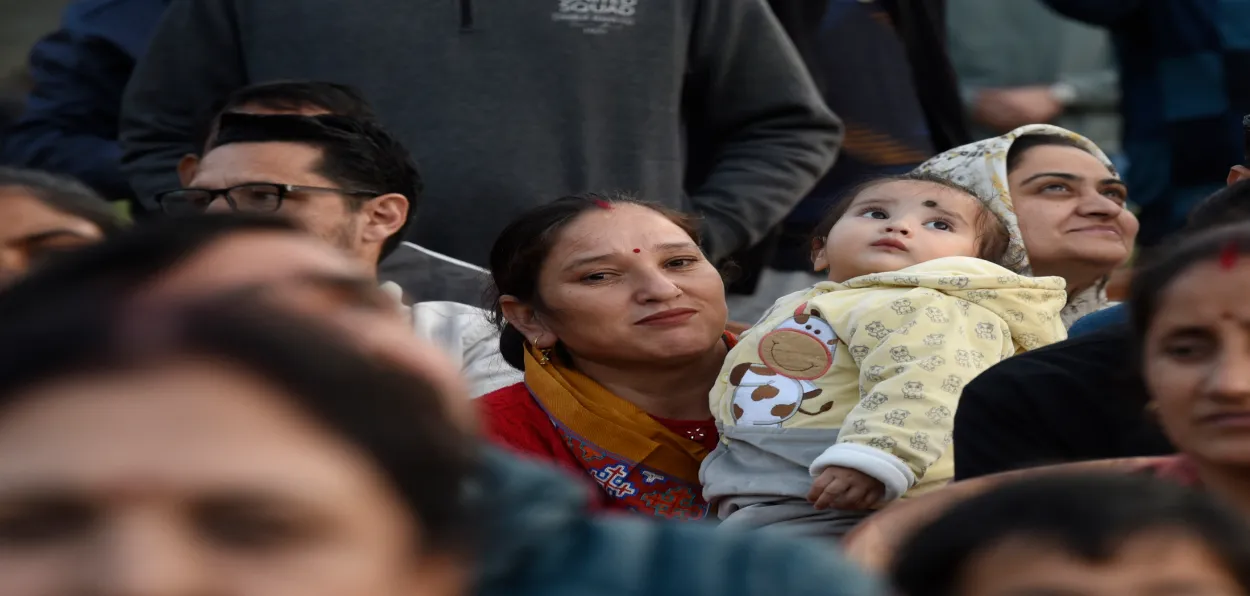
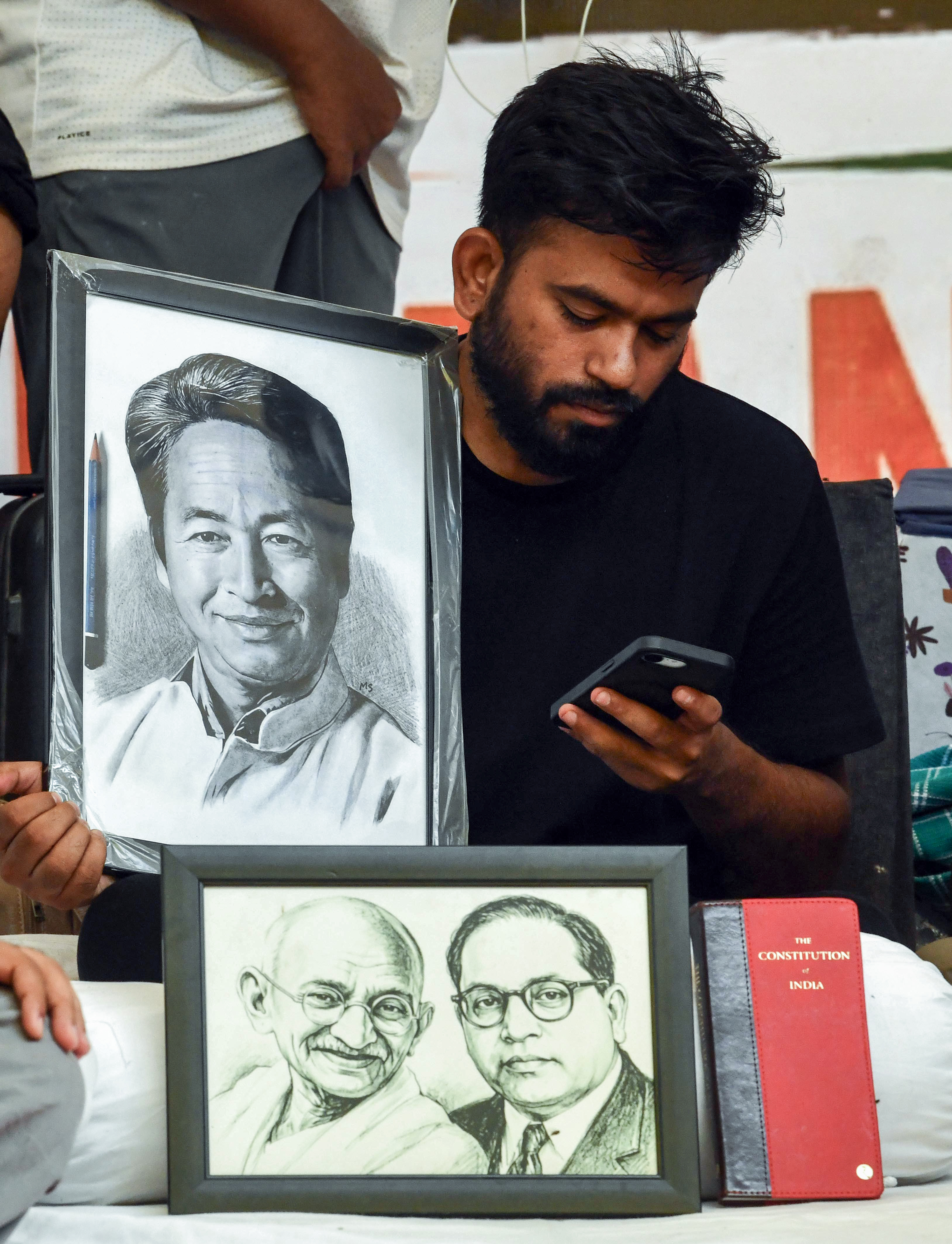 A supporter of Sonam Wangchuk at Janatar Mantar Protest
During another visit a few years later, my contacts spoke of an American teacher at SECMOL who had become fluent in Ladakhi. Her presence made many locals uneasy. Whether it reflected suspicion of outsiders or simply the tendency to distrust the unconventional, SECMOL was dismissed by many as just another eccentric experiment. Some even advised me to stay away from what they described as a "fraudulent" organisation.
Pressed for time, I never pursued the story.
Years later, when Sonam Wangchuk became a national figure—first through 3 Idiots and later through his environmental campaigns—I realised that one of those foreign volunteers had been Rebecca Norman, an American who joined SECMOL as an intern in 1992. She married Wangchuk in 1996, and the two collaborated on several studies on Ladakh's fragile environment before eventually parting ways. She has since returned to the United States.
As a journalist, I continued following Wangchuk's work. Ladakh had always held a special fascination for me. Like him, many young Ladakhis who studied in prestigious institutions across India returned home instead of settling elsewhere. They established schools, businesses and community initiatives, driven by a deep commitment to their land.
One leader of the Ladakh Buddhist Association, who later became a minister in the Jammu & Kashmir government, was a St. Stephen's College graduate who ran a bakery in Leh. He happened to be married to one of my college seniors.
Another friend taught in a village primary school despite belonging to the royal family of a tiny former principality. Time and again, I was struck by Ladakhis' extraordinary attachment to their homeland, culture and way of life.
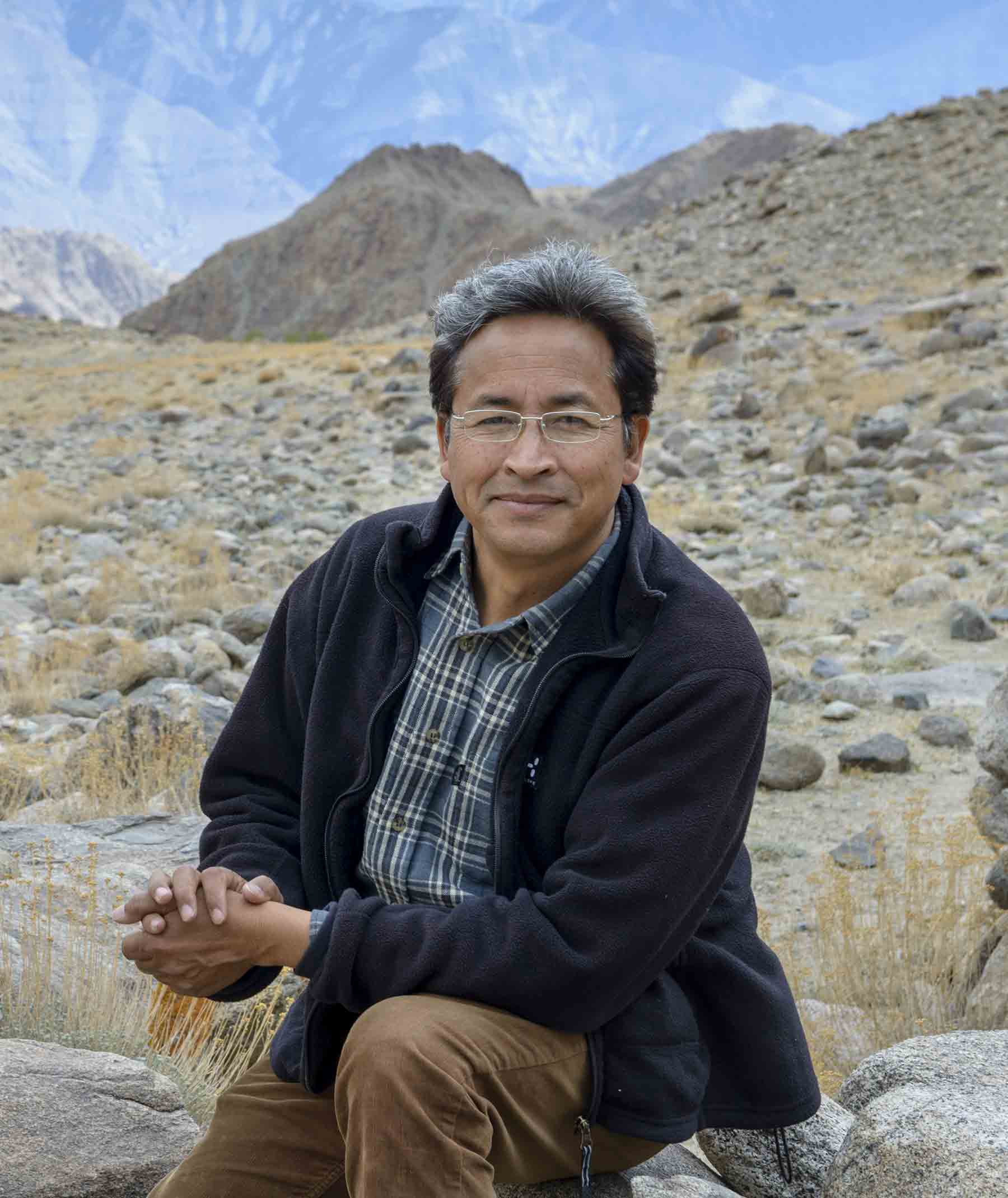 Sonam Wangchuk in Ladakh
SECMOL embodied that same spirit. It was founded by young Ladakhis determined to create an education system rooted in local realities rather than one imported from the plains.
With the rise of social media, I became an admirer of Wangchuk's environmental activism. One New Year's Day, he posted a video of himself plunging into the freezing waters of the Indus before urging people living in Indian cities to give up water heaters during winter. His argument was simple: heating water consumes energy and increases carbon emissions.
The message resonated with me. Feeling mildly guilty about my own habits, I began taking cold-water baths during winter. I even tried persuading family and friends to do the same. They thought I had lost my mind.
Yet admiration does not preclude disappointment.
The first came when Wangchuk repeatedly distanced himself from 3 Idiots, the blockbuster loosely inspired by aspects of his life. Whether or not the film portrayed him accurately, it undeniably introduced him to millions of Indians. His reluctance to acknowledge its contribution to his public visibility struck me as unnecessarily dismissive.
Here Wangchuk is asking for a regime change in India - this can't be his goal, I believe - in his video posted on Facebook:
My greater disappointment, however, concerns the story of Ladakh's artificial glaciers.
Long before the "ice stupa" became an internationally celebrated innovation, engineer Chewang Norphel had pioneered artificial glacier technology while serving in the Jammu & Kashmir government. I met Norphel in 2007 when he came to New Delhi to receive the Padma Shri for his pioneering work in water conservation.
His innovation was elegantly simple and remarkably inexpensive. By diverting water through stone embankments and pipes during winter, he created artificial glaciers that stored water as ice. These glaciers began melting in April, providing precious irrigation water for early sowing in Ladakh's cold desert.
His first artificial glacier at Phuktsey, 70 kms from Leh on the road to Manali, measured nearly 1,000 feet in length and 150 feet in width. Built at a cost of around ₹90,000, it enabled farmers to sow crops weeks earlier than usual by ensuring water availability at the beginning of the agricultural season. It was, in many ways, the beginning of a quiet green revolution in Ladakh.
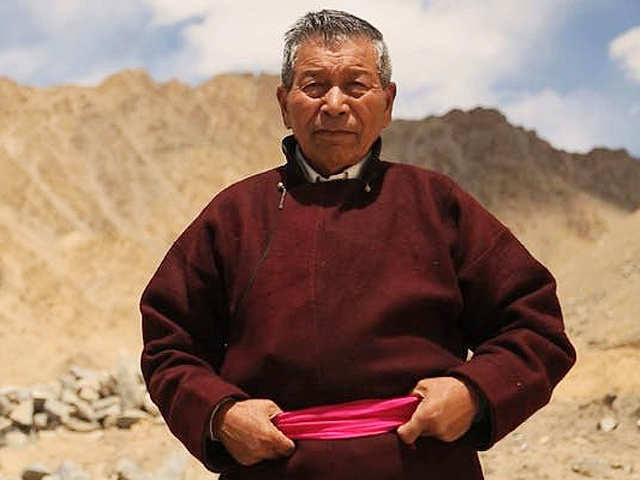 Chewang Norphel, Creator of Artificial Glacier
A dejected Norphel gave up and asked the NGOs to work on his idea. Years later, Wangchuk refined the concept and developed the now-famous Ice Stupa through the Himalayan Institute of Alternatives, Ladakh (HIAL). The project attracted international attention, awards and widespread media coverage.
What disappointed me was not that Wangchuk improved the technology, but that public recognition overwhelmingly flowed to him while Norphel's pioneering contribution gradually faded from public memory. I had expected Wangchuk to consistently and prominently acknowledge Norphel as the originator of the idea. Such generosity would only have enhanced his stature.
My disappointment deepened when questions were raised about financial irregularities in the accounts of one of his institutions. Wangchuk dismissed them as clerical mistakes for which he said he could not be held personally responsible. I found the explanation unsatisfactory.
Heroes, I have realised, are rarely flawless.
Sonam Wangchuk remains one of India's most imaginative environmental thinkers. He inspired me to change my own habits and to rethink my relationship with nature. Yet admiration need not demand unquestioning acceptance. It leaves room for disagreement—whether over giving due credit to predecessors or, more recently, over his increasingly political role in public life.
READ MORE: Sufi Sufiyan runs Kashmir-Kanyakumari in 68 days, sets world record
Perhaps that is the true measure of respect: the ability to appreciate someone's contributions without overlooking the moments that leave us disappointed.