

Basit Zargar/Pampore (Kashmir)
As farmers in Kashmir prepare for the annual saffron harvest – the world’s costliest spice – a Kashmiri farmer is experimenting with growing the crop alongside apple so that the vast land does not remain fallow for much of the year.
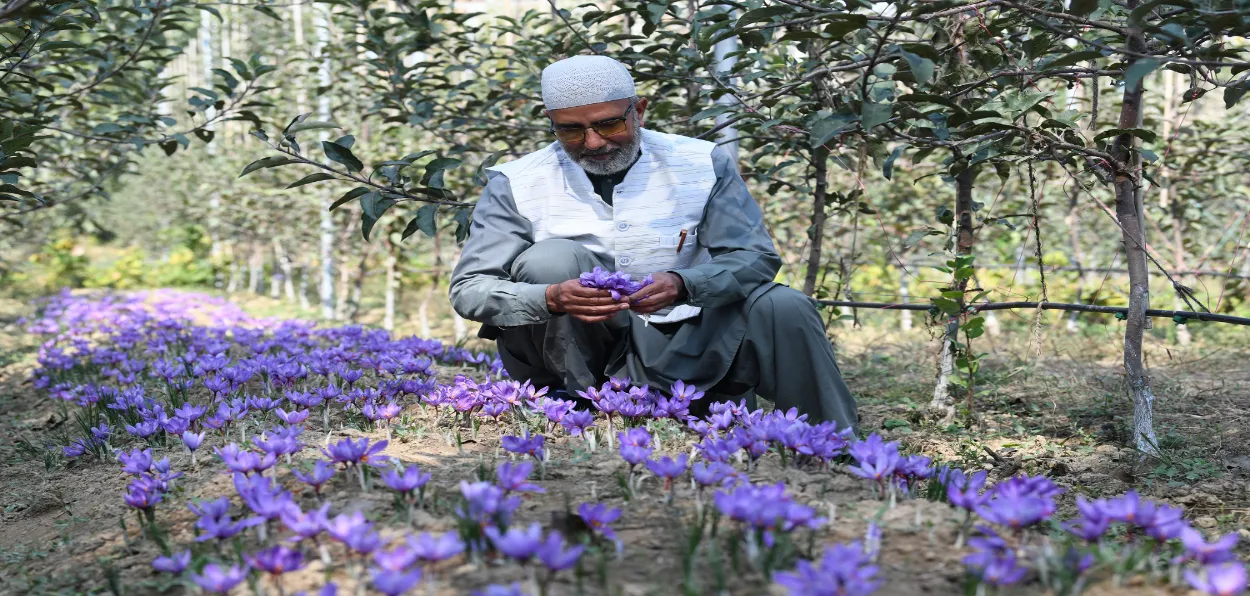
Mohammad Sultan Rather, a farmer in Ashnumbal village near Pampore, has cultivated saffron between rows of high-density apple trees, using land that would otherwise remain vacant while the young orchard develops.
The saffron has flowered in its first year, and Rather says the blooms appeared five to 15 days earlier than those in surrounding fields.
He planted apple trees in 2025 and has sown saffron corms this year. He would see whether two crops associated with Kashmir’s karewa agricultural landscape can grow together. It also explores whether timely irrigation and improved soil management can help saffron cultivation adapt to increasingly unreliable rainfall.
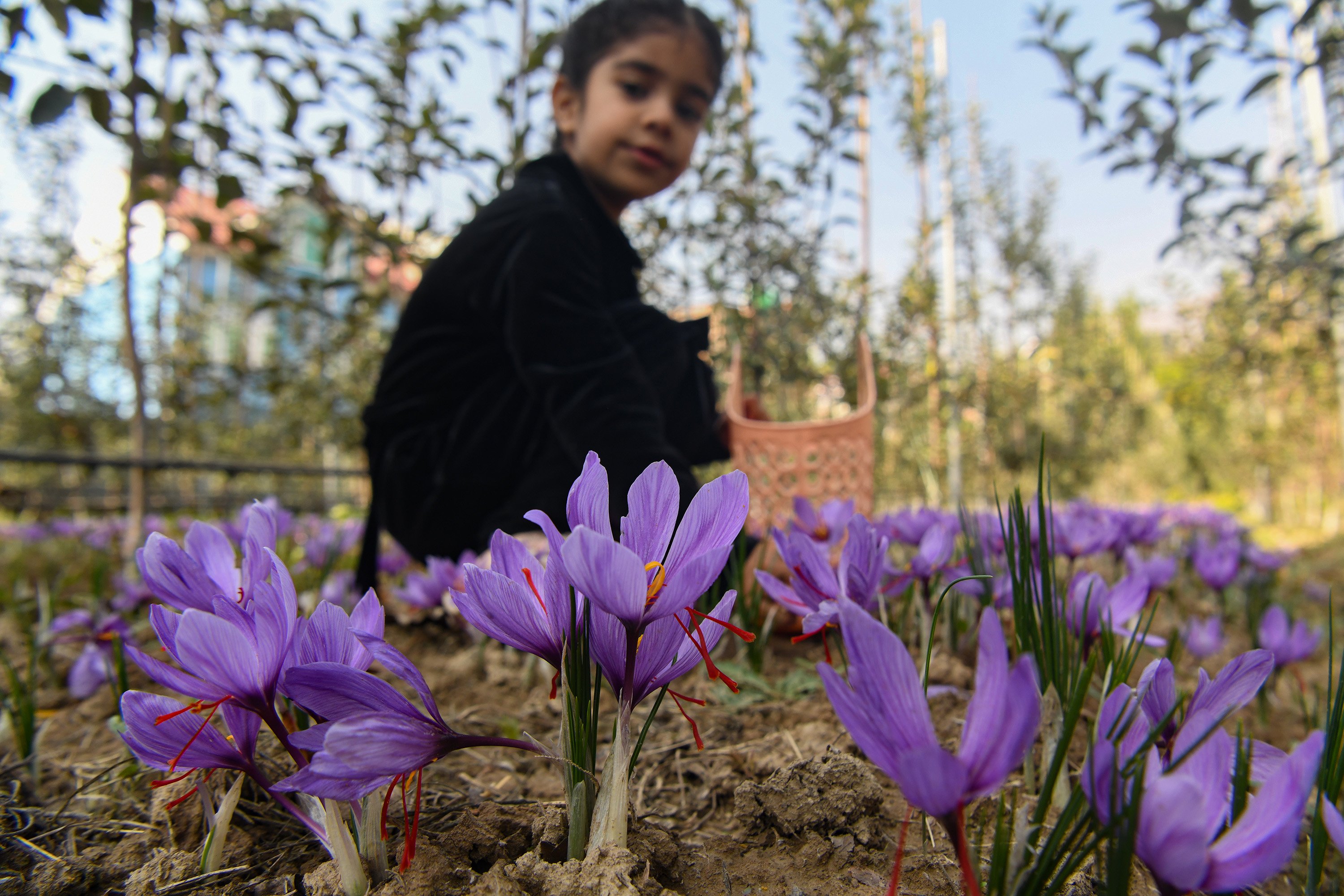 A child in the Saffron crop
The idea came from observing the space between the rows of young apple trees. High-density orchards typically leave six to ten feet between rows, and Rather saw an opportunity to put that land to use when apple trees are relatively younger.
He planted the saffron corms in August 2025. By October 2026, the plants had produced their first flowers. “I thought, why shouldn’t I plant saffron corms in this vacant space?” Rather said, explaining how the experiment began.
What followed was a trial of combining the traditional saffron crop with facilities already available in the apple orchard. The high-density plantation had a drip irrigation system, which helped Rather provide water to the saffron at selected stages of its growth.
He said he irrigated the plot two to three times during August and September 2026 and carried out soil tilling at different stages, beginning in June and continuing through the period around planting. According to him, the combination helped the corms establish roots and retain sufficient moisture.
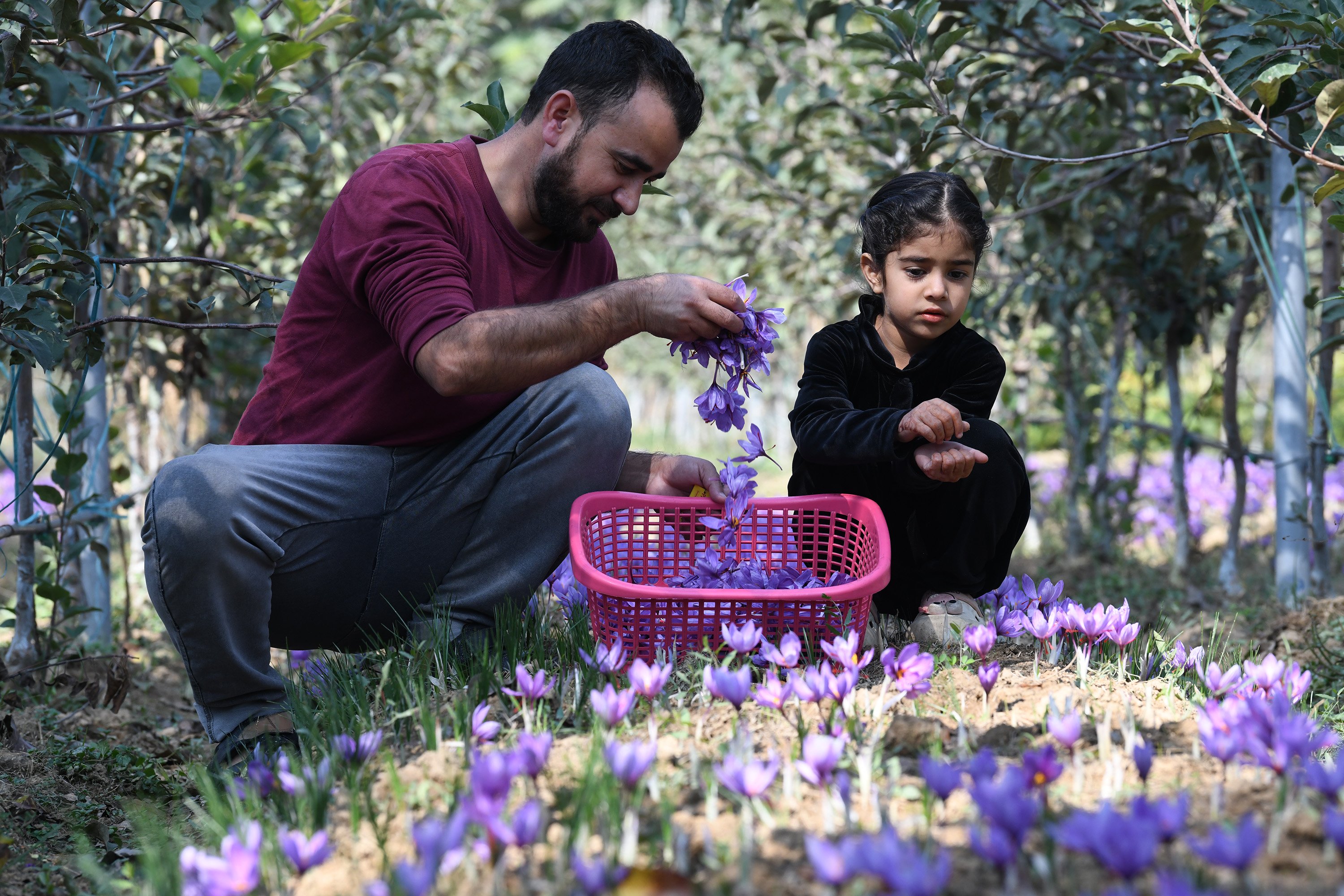 Rather's family members in his field
The young apple trees also appeared to offer an advantage. Rather believes their partial shade reduced the loss of moisture from the soil under direct sunlight, helping create conditions favourable to saffron flowering.
The early blooms have encouraged him, although the reasons for the difference in flowering time and the extent to which the method improves productivity will require further observation and testing.
Rather’s experiment is rooted in a concern he shares with many saffron growers: the changing availability of rainfall at critical stages of cultivation. He recalls that timely rains were more dependable two decades ago, whereas rainfall has become less predictable in recent years.
Saffron does not require heavy irrigation, but soil moisture has to be maintained at its flowering stage.
Rather believes that carefully timed watering can help compensate for the absence of timely rain. By using the irrigation system installed for the apple trees, he has been able to test that possibility without setting up a separate irrigation arrangement for the saffron.
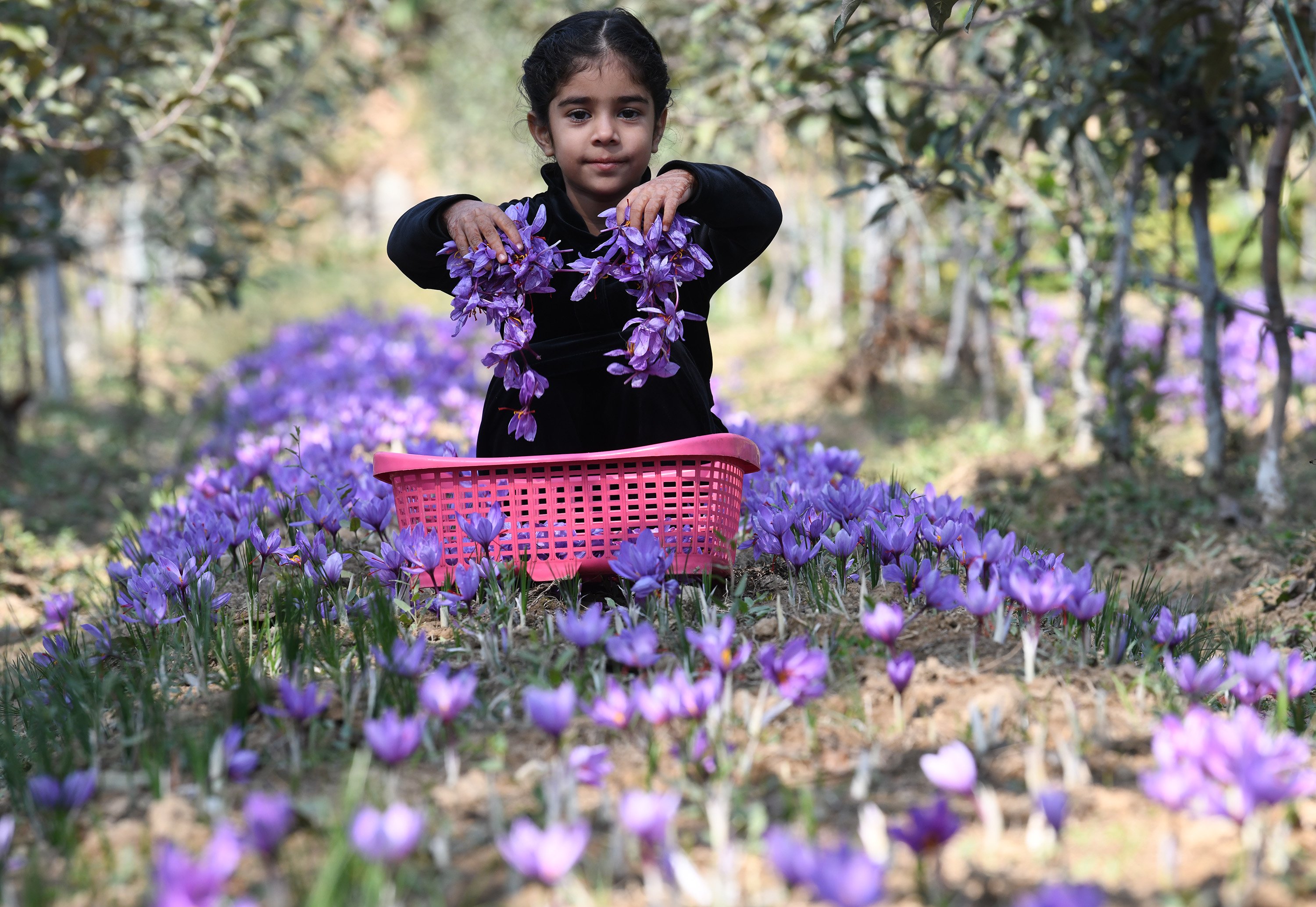 A Young child with harvested saffron flowers
He is also encouraged by the flowering. Rather said that their stigmas—the red strands harvested to produce saffron— looked larger and thicker than he expected.
He estimates that a kilogram of fresh saffron flowers normally yields around 20 to 30 grams of dried saffron and believes his crop would deliver a higher yield.
However, the actual yield and quality will become clear only after harvesting, weighing and assessing the dried product. The first flowering, by itself, does not establish that the method produces superior saffron.
Rather said the experiment was initially undertaken as a personal agricultural trial rather than a strictly commercial venture. He wanted to test whether high-density apple trees could thrive on karewa land and whether saffron could be cultivated alongside them.
He said the apple trees, planted only in 2025, had also shown vigorous growth, which he attributed to his efforts to meet their cultivation requirements and manage the available land carefully. Whether this growth pattern and the compatibility of the two crops persist as the orchard matures remains to be seen.
 Rather in his field
Rather also had to deal with the expected high pesticide use in apple. Rather said sprays, when required, were directed at the tree foliage and that no chemicals were deliberately applied to the saffron or its soil. He also noted that saffron corms remain underground during the dormant period.
The potential for pesticide exposure through drift, runoff or soil movement, however, would need to be assessed independently before any broader conclusions about crop safety could be drawn.
For Rather, one of the most encouraging signs is the interest shown by other farmers. He said a neighbour contacted him to ask what it would cost to introduce the method on two to five kanals of land. The response has strengthened his hope that the experiment might inspire others to explore similar approaches. He described the possibility of helping fellow farmers as a form of sadqah-e-jariya—a lasting community benefit.
The trial is still at an early stage. Its long-term value will depend on whether saffron yields remain satisfactory as the apple trees grow, whether the two crops compete for water and nutrients, and whether the additional income justifies the costs of managing both.
Nevertheless, the experiment offers a practical question for Kashmir’s saffron-growing belt: can land between young apple trees support another valuable crop while the orchard matures?
ALSO READ: Muslims have a key role in nation-building
In Ashnumbal, Rather is attempting to find an answer through cultivation rather than theory. The first flowering has provided encouragement; successive seasons will determine whether the approach can be replicated on a wider scale.