 Rajeev Narayan
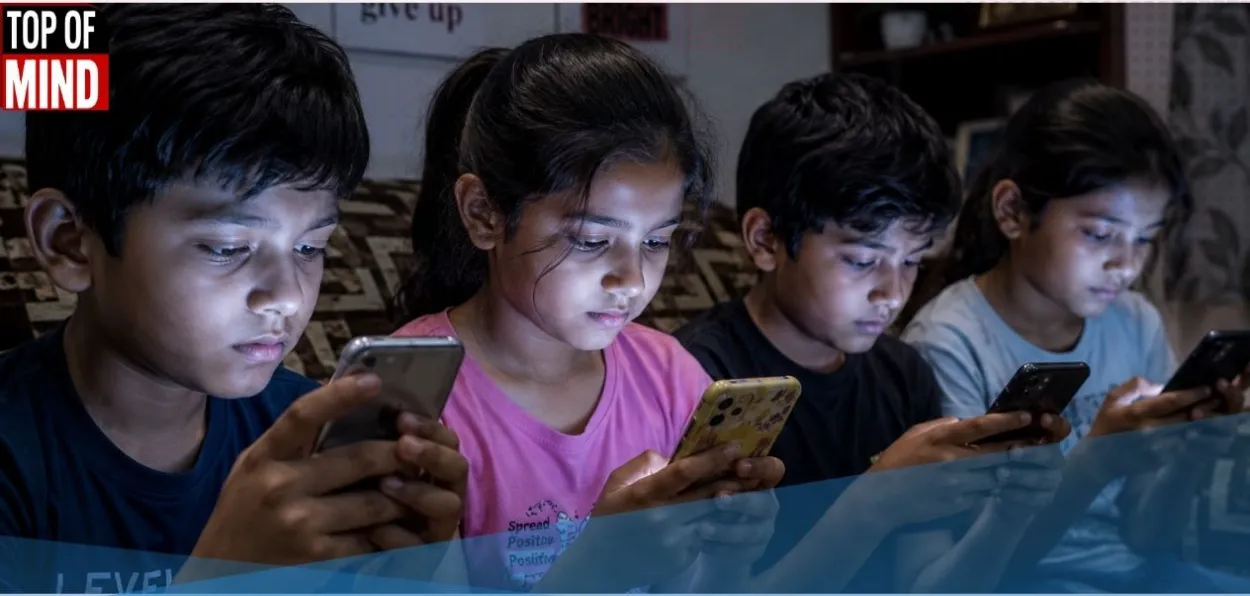
France’s move to ban social media for children under 15 reflects a global shift. For India, the question is no longer about technology – it is about protecting childhood itself. The crucial point is no longer whether children should use technology; it is whether algorithms should shape young minds before children develop the judgment to question what they see online.
For two decades, the world celebrated the Internet as a great democratiser. Smartphones placed libraries in every pocket, classrooms on every screen and knowledge within easy reach of anyone with a data connection. Governments encouraged digital adoption, schools everywhere embraced online learning, and parents proudly watched their children become digital super-natives.
Of late, though, an itchy question is overshadowing the applause: What if unrestricted digital access is changing childhood itself? France’s move to ban social media for children under 15 is the boldest expression of a growing global concern. After Australia’s veto on under-16 users and debates raging across Europe and America, governments are no longer asking how quickly children should be given access to technology. They are asking if they were introduced to it too early in the first place.
This is a remarkable shift – countries that championed digital connectivity are suddenly debating digital restraint. This is no longer a discussion on screen time or parental control. It is a debate on public health, child development and the responsibility of governments to protect young minds from technologies designed to maximise engagement. India would do well to pay attention.
Algorithm Age
The danger lies not in technology itself but in the influence that it exercises over childhood in a changing world. For the first time in mankind’s history, algorithms – not parents, teachers or books – are becoming a child’s earliest and most persistent companions.
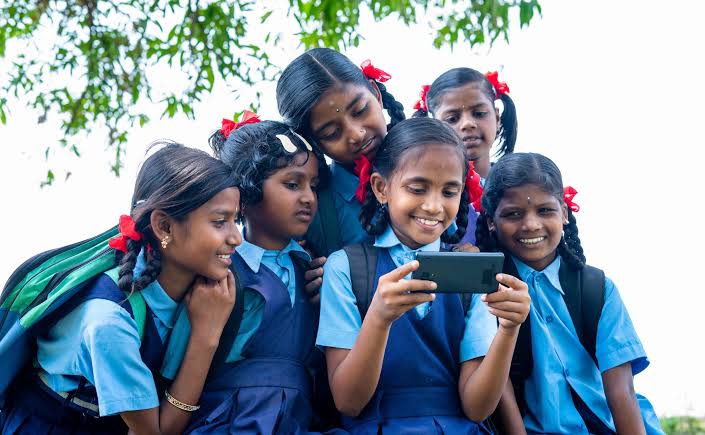
Long before many children develop the ability to distinguish fact from fiction, they are thrown into a world of endless reels, videos, personalised recommendations and algorithm-driven content that mercilessly competes for their attention. Every swipe teaches the platform a little more about the child, while the platform itself quietly teaches the child what to watch, what to admire, what to fear and even what to believe. This relationship is not neutral; it is near-sickly.
Social media platforms are designed to maximise engagement. Their success hinges on retaining eyeballs for as long as possible. Adults themselves struggle to resist the craftily-engineered systems. Expecting children – whose judgment, emotional regulation and critical thinking are still developing – to do better is patently unrealistic.
Children once learned patience because books required patience. They developed attention spans because classrooms demanded concentration. They learned conversation because moments of boredom encouraged interaction with family and friends. Today, boredom has disappeared. Each moment is grabbed by a new notification, recommendation or an endlessly scrolling feed. Before a child has learned how to think, an algorithm has learned how to keep that child scrolling.
India’s Challenge
India is home to the world’s youngest population and the largest community of smartphone users. Affordable devices and dirt-cheap mobile data have transformed access to education, entertainment and public services. Digital inclusion has become one of India’s great developmental successes. But like all good things, even technological revolutions beget unintended consequences.
Suddenly, India’s teachers are reporting lower attention spans in classrooms. Parents are speaking of children who communicate through screens more comfortably than at dining tables. Mental health experts warn about rising anxiety, sleep disruption, cyberbullying and compulsive digital behaviour among adolescents. Researchers point to the growing influence of social comparison, unrealistic body images and online validation on young users’ emotional well-being.
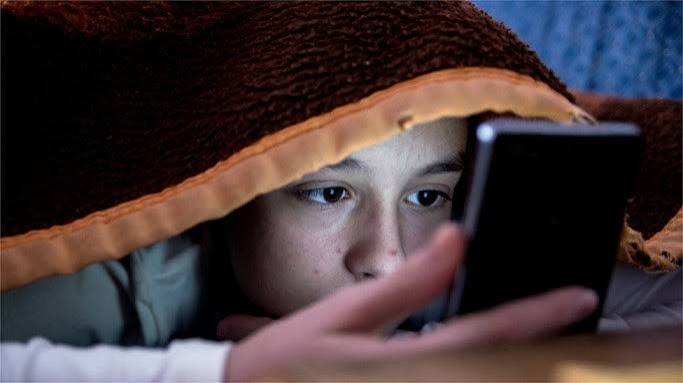
Equally worrying is the explosion of misinformation. Children devour manipulated videos, conspiracy theories, communal rumours, AI imagery and fake narratives long before they possess the maturity to verify or question these. Misinformation reaches them not through news websites but through videos, memes and influencers they instinctively trust.
The issue extends beyond addiction. It concerns premature exposure to manipulation. A generation with unprecedented access to information faces the danger of being vulnerable to misinformation if it never develops the habits of careful reading, verification and critical thinking.
Finding Balance
Does this mean India should just go ahead and replicate France’s legislation? Not necessarily. India’s social realities differ from that of France. Millions of children rely on smartphones for education, digital classrooms, language learning and access to opportunities that earlier generations never had. Technology has become an indispensable educational resource, particularly in underserved regions.
On its own, social media is not inherently harmful. Used responsibly and at an appropriate age, it can foster creativity, learning and collaboration, even entrepreneurship. The challenge lies in recognising that childhood deserves cascading graduated access, rather than unlimited exposure.
Just as societies establish a minimum age for driving, voting or consuming alcohol because maturity leads to responsibility, access to the digital world requires the ‘right-age’ guardrails. Age verification, parental controls, digital literacy programmes and greater accountability for tech platforms should become par for the course. Equally important, parents and teachers must realize that outsourcing childhood to smartphones is not a proxy for engagement. No algorithm can replace conversation. No influencer can replace guidance. No screen can replace human presence.
Protecting Tomorrow
Ultimately, France’s legislation is about more than social media. It signals a prodigious shift in how governments view childhood in this digital age. The dictum that easy access to technology is always beneficial is giving way to a more balanced understanding: social media access without maturity can become exposure, and exposure without guidance can become harm.
India need not copy every policy adopted by everyone. But it cannot afford to ignore the trend either. The debate is no longer whether children should use technology; that question has already been answered by the realities of modern life. The question is whether technology should be allowed to shape childhood before childhood has had a chance to shape the child.
ALSO READ: Sonam Wangchuk: My hero, and my disappointment
For generations, families, schools and communities were the architects of India’s children and their future. Today, algorithms are competing for the role. The future of the digital economy will depend on how India embraces technology. The future of the country may depend on how wisely it protects its children. The question before us is no longer who owns the latest smartphone. It is, quite simply: ‘Who Owns Childhoods?’
The writer is a veteran journalist and communications specialist