_(2).webp "Nishat Hussain")
Farhan Israili
Every morning, a modest office tucked away in Jaipur's bustling Johari Bazaar begins to fill with women in distress. Some are victims of domestic violence; others are locked in marital discord, second marriages by husbands, etc.
For 32 years, this office has served as a place where conversations replace confrontation, counselling replaces conflict, and families rediscover their bond.
The office belongs to Nishat Hussain, a social activist and counsellor who has dedicated three decades to supporting women, resolving family disputes, and advocating for gender justice and social reform.
Nishat Hussain was born in the Karauli district in Rajasthan. Her family was the only Muslim family in a Hindu neighbourhood, and she learned lessons in communal harmony.
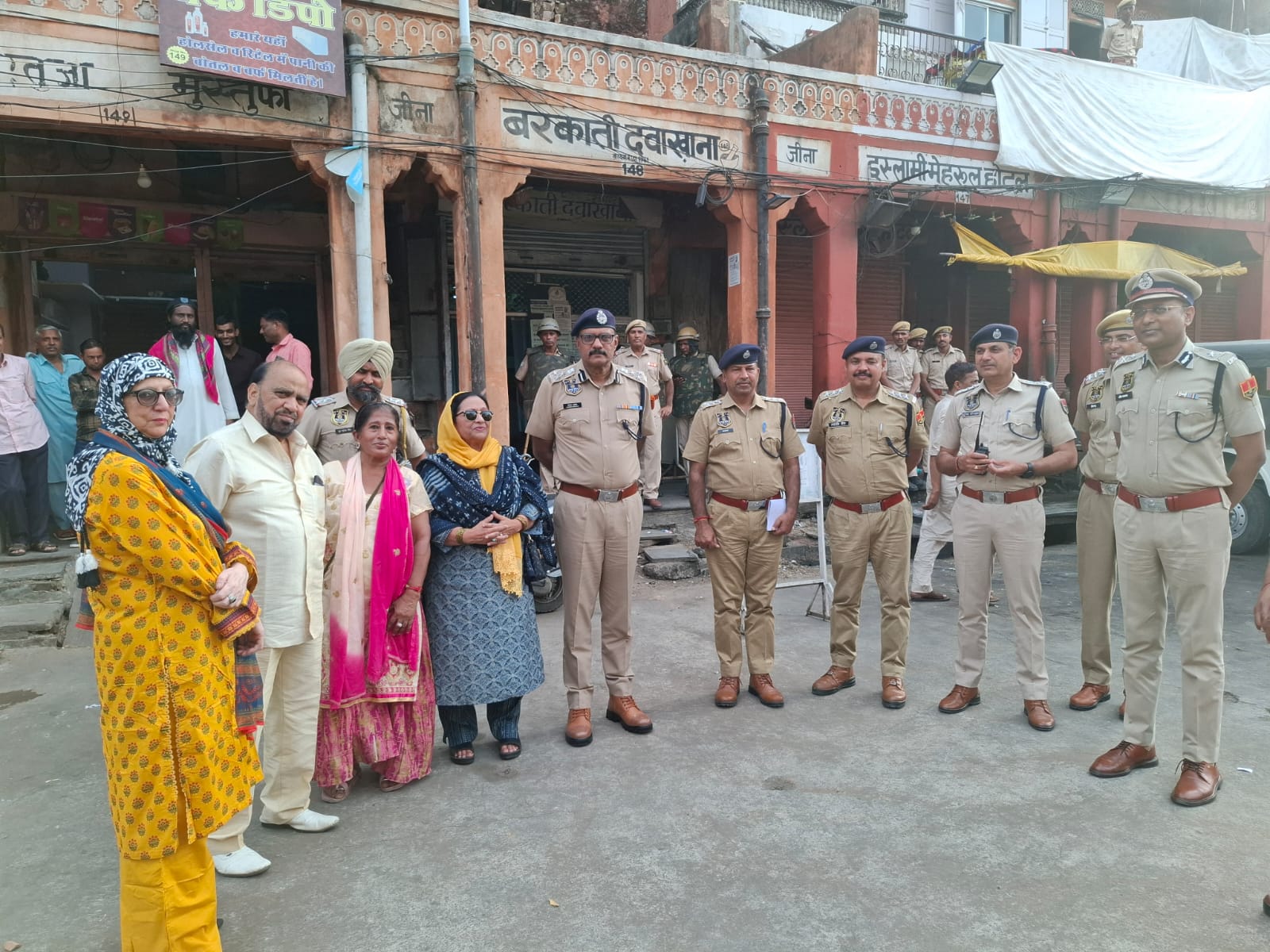
.jpeg) Police honouring Nishat Hussain for her services to society
Police honouring Nishat Hussain for her services to society
She became the first Muslim girl from Karauli district to pass the Class X examination. Among nearly 1,200 students in her school, she was the only Muslim girl.
Her father, the chief tailor to the Karauli royal family, always encouraged her. After marrying Mohammad Hussain, a gazetted officer known for his progressive outlook, Nishat’s dreams got wings.
She established Nishat Academy, a school for 350 underprivileged children.
However, a turning point in her life came during the 1989 Jaipur riots.
When goons threatened her school, parents and residents protected it. They insisted that the institution represented education and that they did not see it as a Hindu or Muslim school.
Inspired by this solidarity, she decided to become a full-time social reformer and decided to work for women's rights.
As a result she launched the National Muslim Women Welfare Society in 1992.
According to Nishat, the inclusion of the word "Muslim" in the organisation's name was intentional. It was meant to demonstrate that Muslim women are active participants in India's social progress and nation-building.
Nishat Hussain has been actively engaged in campaigns against instant triple talaq, child marriage, and discrimination against women. She believes that Islam grants women dignity and rights, but that many people have failed to understand the Quran in its true spirit.
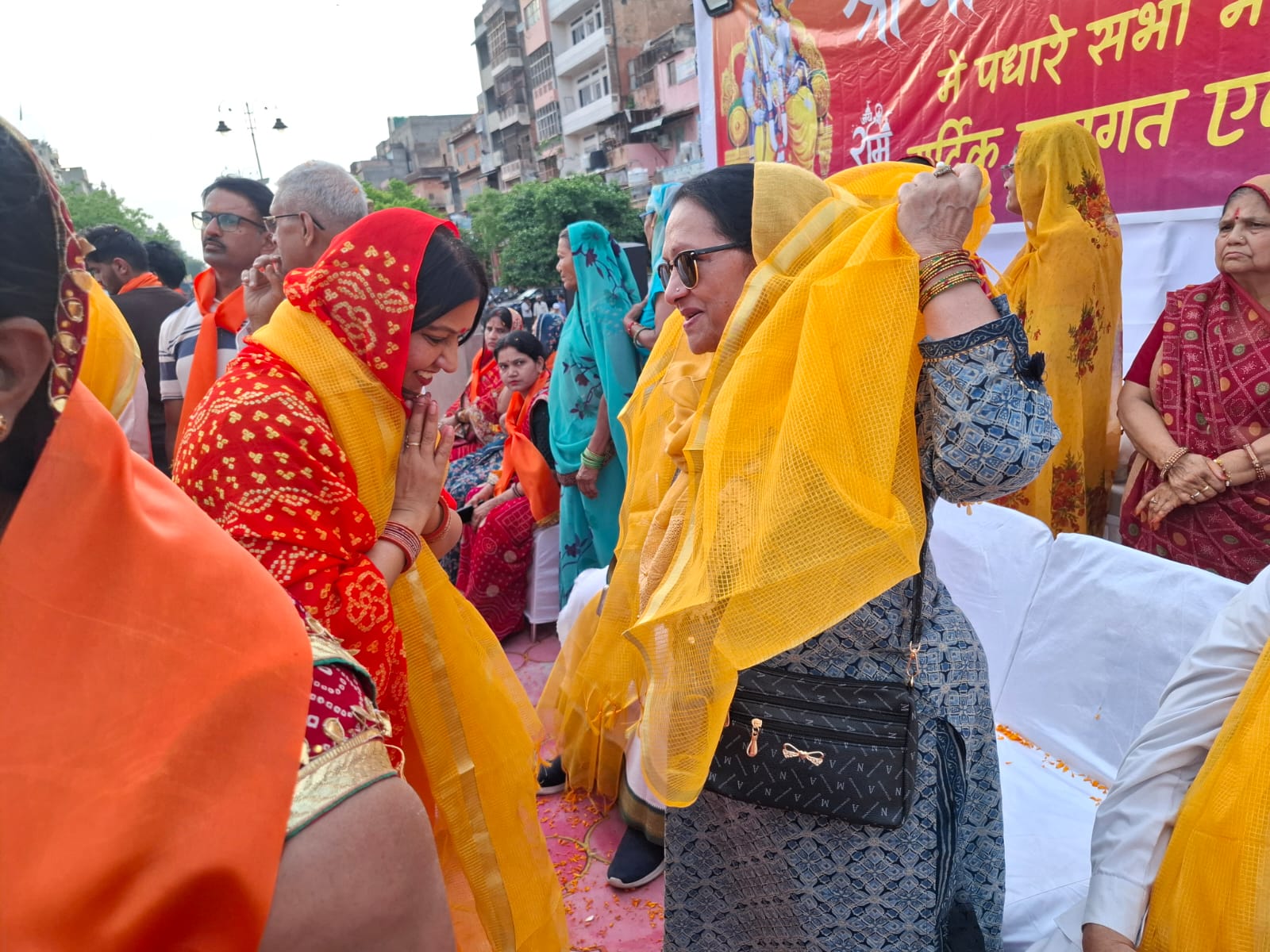 Nishat Hussain with local women
According to her, the legislation banning instant triple talaq (instant oral divorce) reflects the principles of justice embodied in the Quran. She has described the law as a victory for the Quran's teachings rather than a departure from them.
Nishat also argues that the Quran does not permit multiple marriages without strict conditions of justice. Since complete equality between multiple wives is nearly impossible to achieve, she believes monogamy remains the more ethical and practical path.
Her views are shaped by years of listening to women who have suffered emotional and social trauma after their husbands entered second marriages.
Although she acknowledges that legal protections for women still require stronger implementation, she believes the triple talaq law has empowered women to seek legal remedies and speak up for their rights.
.jpeg)
For the past 32 years, Nishat's office has been handling three to four counselling cases almost every day.
The disputes range from domestic violence, marital discord to divorce proceedings, second marriages and family conflicts.
Her approach centres on dialogue and reconciliation. Through patient counselling, she says, many couples who initially arrive determined to separate eventually choose to rebuild their relationships.
According to Nishat, her team has helped prevent the breakdown of thousands of families over the years. At her office many couples arrive carrying divorce papers, only to leave after reaching an understanding through mediation.
Her work has even attracted people from overseas seeking counselling and guidance. Alongside mediation, she has assisted women in obtaining legal support, shelter and social assistance whenever necessary.
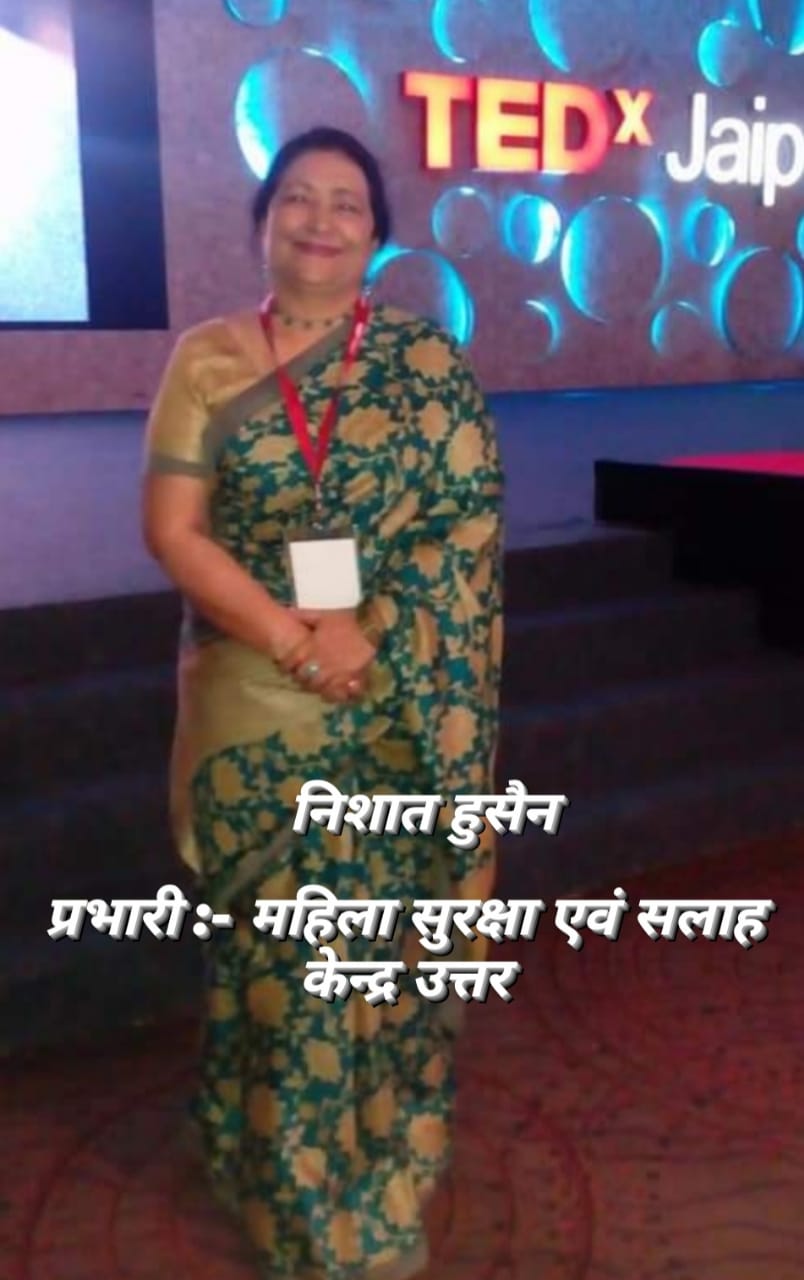
Today, Nishat also serves as the officer in charge of the Rajasthan Government's Women's Safety Centre, operating from the Women's Police Station (North) in Jaipur.She has since felt that over the years, the violence against women was no longer confined to economically or educationally disadvantaged sections of society. Women from affluent families and well-paid professionals like doctors, engineers and political leaders are also suffering.
Nishat has also been actively involved in campaigns against child marriage. Working alongside district authorities, she has helped prevent the marriages of several minor girls.
She has also criticised khap panchayats and other informal community councils, arguing that they often prioritise compromise over justice.
According to her, financial penalties imposed on offenders should directly benefit their victims rather than merely serving as symbolic punishments.
Nishat Hussain is also counted among Rajasthan's first women qazis. To qualify for the role, she completed a five-year course in Islamic jurisprudence and the Indian Constitution in Mumbai.
At the time, the idea of women serving as qazis faced considerable resistance. Despite the criticism, she remained steadfast, and over time several Islamic scholars publicly supported her work.
She also played an active role in the nationwide campaign against instant triple talaq through the Bharatiya Muslim Mahila Andolan in Rajasthan, participating in awareness programmes and supporting petitions filed before the Supreme Court.
She believes that cases of instant triple talaq have declined significantly compared to the past.
.jpeg)
Nishat's contribution to women's welfare has earned recognition at both the national and state levels.
On August 1, 2025, she was honoured by the National Commission for Women in New Delhi.
She has also received awards from the Dr Ambedkar Utthan Parishad, district administration, police authorities, peace committees and several social organisations for her work in promoting communal harmony and women's rights.
Despite advancing age, Nishat Hussain continues to work from the same modest office in Johari Bazaar where countless women still arrive every week seeking guidance and justice.
Her philosophy remains simple: lasting social change does not depend on holding powerful positions. It begins with standing beside those who have no one else to turn to and ensuring that every individual is treated with fairness, dignity and compassion.
READ MORE: Nigar Sultana: A pioneer Muslim woman lawyer in Jaipur
For more than three decades, that belief has guided her work—and transformed the lives of thousands of women and families across Rajasthan.



.webp "Union Home Minister Amit Shah")








_(1).webp)