Mansooruddin Faridi/New Delhi
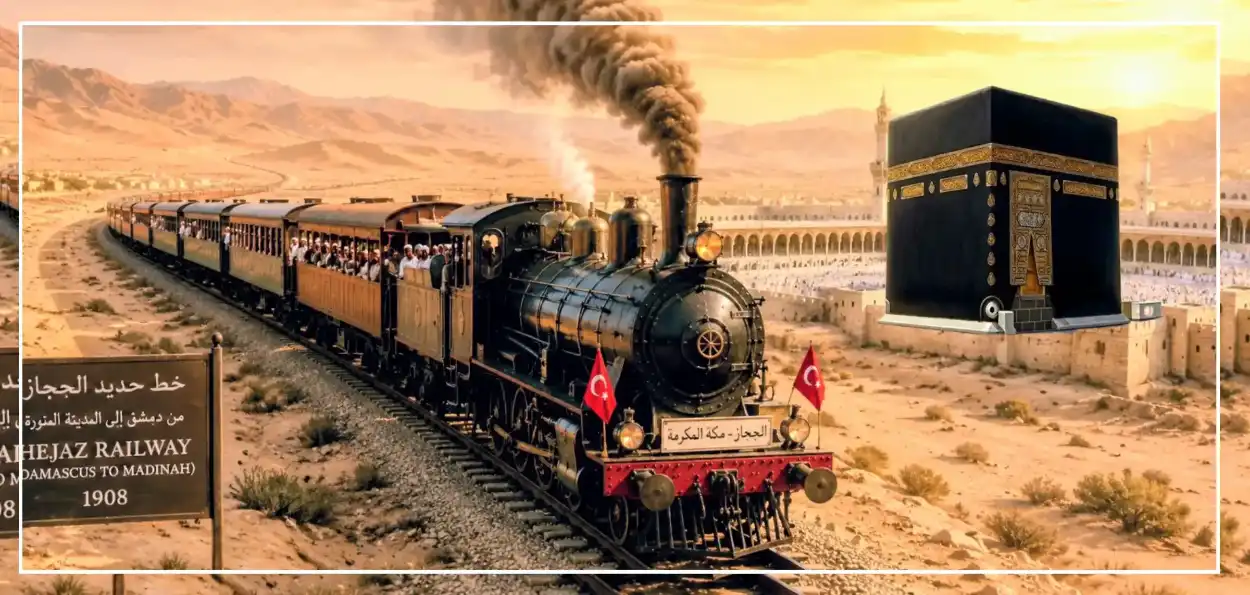
The Hajj may still appear to be a demanding pilgrimage, but it is nothing like the arduous journey of the past, when devotees travelled on camels and crossed turbulent seas in boats and ships. Over time, transport and infrastructure improved dramatically. One of the greatest transformations came with the arrival of the railway, which began carrying pilgrims across the deserts of Arabia to the holy cities of Makkah and Madina.
The railway revolutionised the way pilgrims performed Hajj.
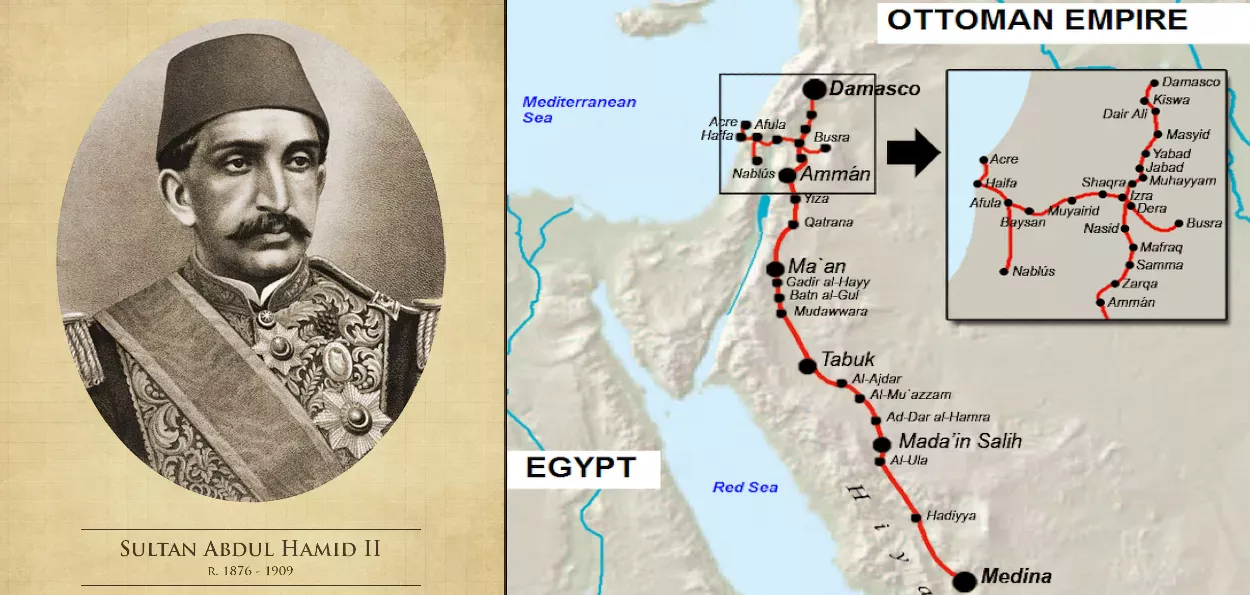
The credit for introducing the first railway line through the desert goes to the Hejaz Railway, a landmark project of the Ottoman Caliphate that connected Damascus and Amman with the city of Medina in present-day Saudi Arabia. It is regarded as one of the oldest railway lines not only in West Asia but also in the world.
The Hejaz Railway was far more than a transport project. It eased the spiritual journey of pilgrims while also strengthening the political and spiritual unity of the Islamic world. The railway was the vision of Sultan Abdul Hamid II, the 34th and last sovereign Caliph of the Ottoman Empire, who ruled from 1876 to 1909.
The reign of Sultan Abdul Hamid II was marked by political crises, pressure from European powers, modern reforms, efforts to foster Islamic unity, and the defence of Palestine. He led the Ottoman Empire at a time when it faced mounting internal and external threats.
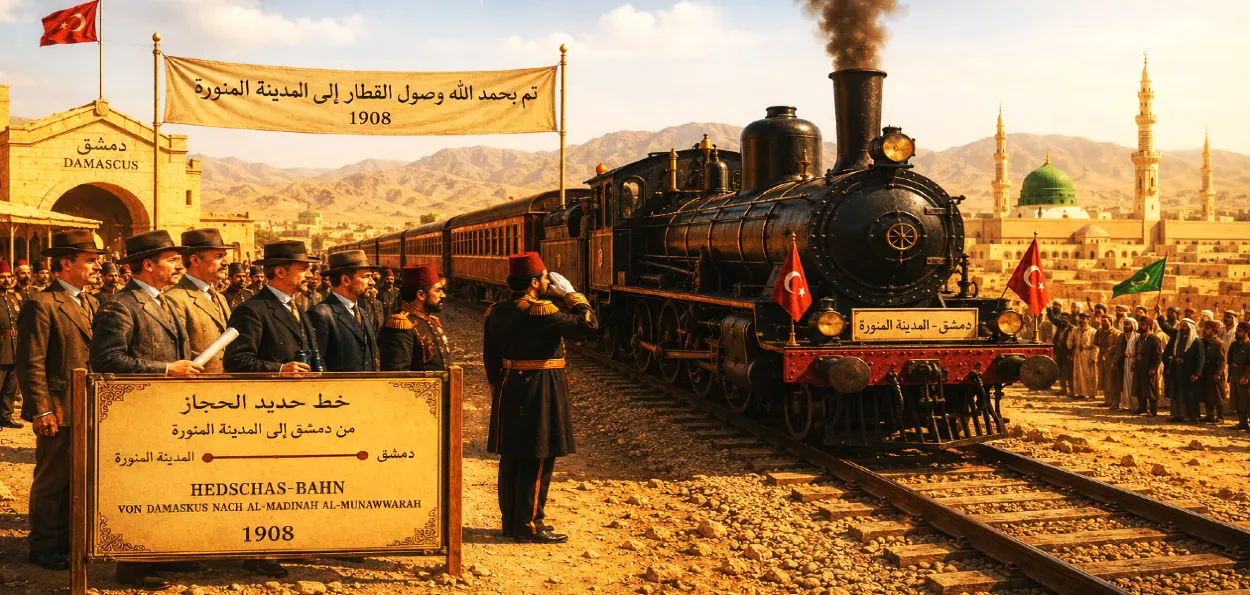 The Concept of the Hejaz Railway
European powers were actively working to weaken the Ottoman Empire, while unrest was also growing in the Arab world. In such circumstances, Sultan Abdul Hamid II initiated several major measures to preserve the unity of the Islamic world, among which the Hejaz Railway emerged as the most significant.
Until the end of the 19th century, the Hajj journey was considered extremely difficult. Caravans travelling from Syria to the Hejaz region had to endure intense heat, scarcity of water, robberies, and exhausting distances.
The journey from Damascus to Medina took nearly 40 days. Pilgrims constantly faced the dangers of disease, hunger, and attacks by robbers along the route.
Sultan Abdul Hamid II believed that connecting Damascus to Medina through a railway line would not only ease the hardships of pilgrims but also strengthen communication across the Ottoman Empire.
In 1900, he appealed to Muslims across the world to contribute financially to the ambitious project. The appeal resonated deeply throughout the Islamic world. Muslims from India, Egypt, Syria, Russia, Central Asia, and several other regions donated generously.
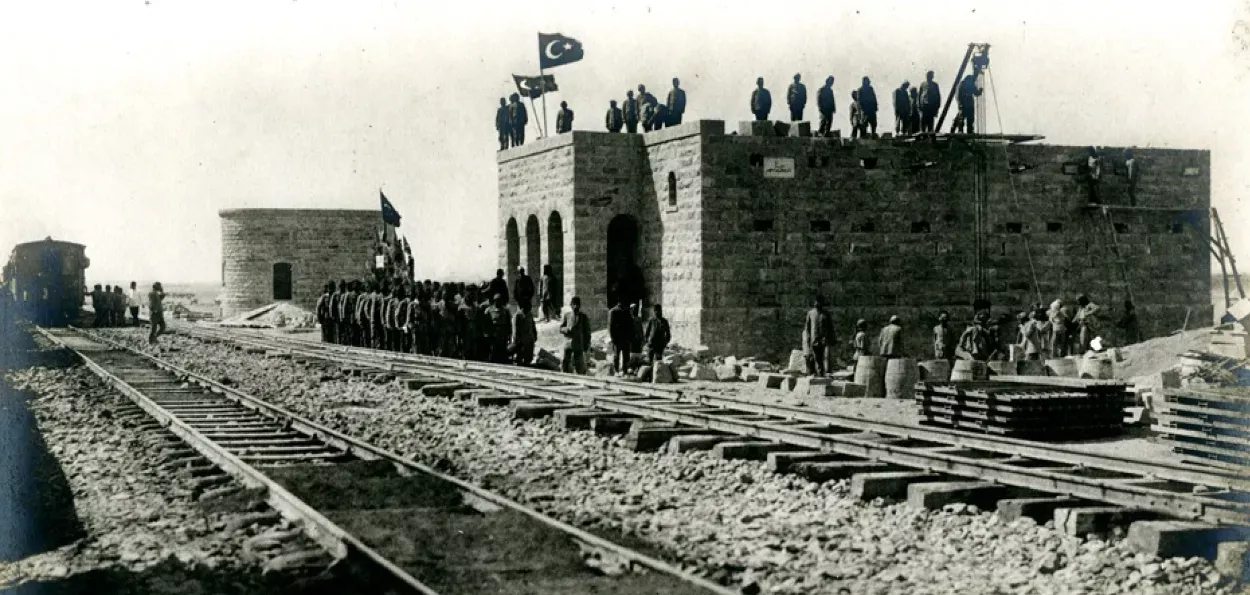 View of the construction of the Hejaz Railway
The Hejaz Railway changed the Hajj journey. Thousands of Muslims from Russia, Iran, Iraq, Central Asia and Anatolia would arrive in Damascus and from there travel by train to Medina. The railways also increased commercial activities boosting the economies of various cities and towns along the way.
The Hejaz Railway was not just a travel project but also an important part of Sultan Abdul Hamid II's political strategy. He believed that the unity of the Islamic world could become the real strength of Muslims against the European powers.
He did not limit the Ottoman Caliphate to Turkey alone, but presented it as the leadership of the entire Islamic world. He tried to strengthen the concept of Islamic unity and the Caliphate.
Photos and postcards of Sultan Abdul Hamid II were also widely published so that Muslims would associate themselves with the Ottoman Caliphate. The Hejaz Railway was also presented as a symbol of Islamic unity.
German engineers, along with Ottoman experts, provided technical support for the construction of the Hejaz Railway. The line passed through difficult mountain ranges, vast deserts, and rocky valleys.
Despite intense heat and acute water shortages, workers and engineers toiled day and night. Construction of the historic railway began in 1902 and was completed in 1908.
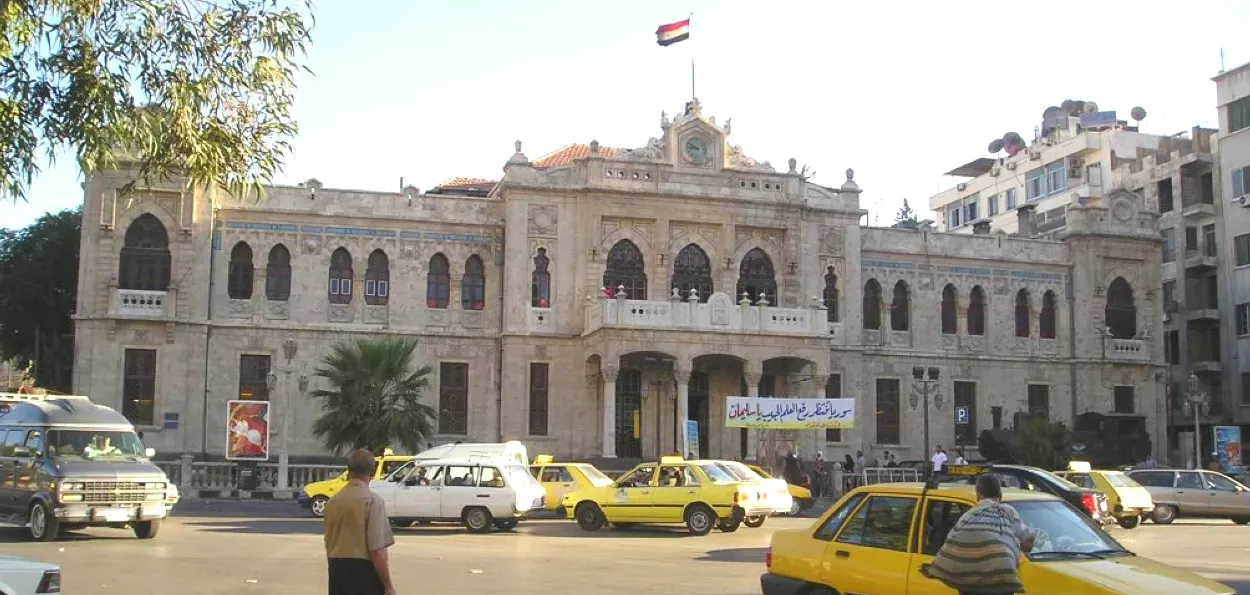 Damascus Station of the Hejaz Railway
Although the original plan envisioned extending the railway to Makkah, the dream could not be realised because of political instability and war.
Through this railway, pilgrims departing from Istanbul’s Haydar Pasha Station could travel to Medina via Syria.
Earlier, pilgrims took nearly three months to complete the journey by camel caravans. The Hejaz Railway reduced the travel time to just 54 hours.
The railway transformed the Hajj experience. Thousands of Muslims from Russia, Iran, Iraq, Central Asia, and Anatolia travelled to Damascus before boarding trains to Medina. The railway also boosted trade and commercial activity, strengthening the economies of towns and cities along the route.
At the same time, it enhanced the administrative reach of the Ottoman Empire.
British traveller Arthur Wavell described the railway route as mysterious and challenging in his travelogue. According to him, the deeper the caravan moved into Arabia, the more rocky and forbidding the terrain became.
Towering mountain ranges, narrow gorges, and dangerous cliffs made the journey perilous. Wavell wrote that at several points it seemed as though massive rocks could collapse at any moment. Yet, despite such daunting geography, the construction of the railway stood out as a remarkable feat of engineering for its time.
The Hejaz Railway was not merely a travel project; it was also a central part of Sultan Abdul Hamid II’s political vision. He believed that the unity of the Islamic world could become the greatest strength of Muslims against European imperial powers.
He did not confine the Ottoman Caliphate to Turkey alone, but projected it as the leadership of the entire Muslim world. He consistently sought to strengthen the concepts of Islamic unity and the Caliphate.
Photographs and postcards of Sultan Abdul Hamid II were widely circulated so that Muslims across different regions could identify themselves with the Ottoman Caliphate. The Hejaz Railway, too, was projected as a symbol of Islamic unity.
Sultan Abdul Hamid II also occupies a significant place in history for his stand on Palestine. Theodor Herzl, founder of the Zionist movement, reportedly attempted to obtain land in Palestine for Jewish settlement in exchange for paying off the debts of the Ottoman Empire.
According to historical accounts, Sultan Abdul Hamid II firmly rejected the proposal, declaring that Palestine was not the personal property of any ruler but a trust belonging to the entire Muslim Ummah. He reportedly stated that he would not sell even an inch of Palestine. Because of this stance, he continues to command deep respect in many parts of the Islamic world.
During the First World War, the Arab Revolt erupted in 1916. Lawrence of Arabia and his Arab allies launched attacks against the Ottoman Caliphate, and the strategically important Hejaz Railway became one of their primary targets.
The railway suffered severe damage during the war, and large sections were rendered unusable. Nevertheless, parts of this historic railway still survive in Jordan and other regions, serving as reminders of the project’s remarkable legacy.
According to Salah Al-Luzi, director of the Jordan Hejaz Railway Foundation, the Hejaz Railway remains a historical and legal heirloom of both the Ottoman Empire and the Republic of Turkey. He said the railway’s primary purpose had always been to reduce the hardships and travel time faced by pilgrims.
The railway line remains operational in parts of Jordan today, although services beyond certain sections have been affected by the ongoing civil war in Syria.Salah Al-Luzi said efforts are underway to preserve and further develop this historic project under a recent agreement between Turkey and Jordan. The initiative also includes the establishment of a museum to preserve photographs, documents, and historical records related to the construction and legacy of the Hejaz Railway.
ALSO READ: Bakrid 2026: Farmer wishes to sell Rs 15-lakh ‘Crescent Goat’ to Salman Khan
The Hejaz Railway continues to be remembered as a shining symbol of Islamic history, the Hajj pilgrimage, and the political vision of the Ottoman Caliphate.

.webp "Union Home Minister Amit Shah")








.webp "Australian High Commissioner to India Philip Green visits I Can Hear Foundation’s SpHear Clinic in New Delhi")
.webp "European Commission President Ursula von der Leyen")