




 Sushma Ramachandran
The oil shock that rattled global markets at the start of the West Asian conflict had eased after the U.S. and Iran signed an agreement in June. Oil tankers resumed transit through the strategic Strait of Hormuz, and Brent crude prices slipped below $70 a barrel.
The respite proved short-lived. Fresh hostilities erupted last week between the U.S. and Iran, bringing vessel movement through the Strait to a virtual standstill and pushing Brent crude above $100 a barrel for the first time since May. Although attacks have now paused, with Oman attempting to revive peace negotiations, prices remain elevated at around $88 a barrel.
Despite hopes of an early peace agreement, the outlook for oil markets remains uncertain as the war enters its fifth month. A major new challenge has emerged from the Yemen-based Houthis, who have imposed a blockade on Saudi vessels passing through the Bab al-Mandab Strait, the southern gateway to the Red Sea and the Suez Canal.
The blockade has created a fresh dilemma for Saudi Arabia. After disruptions in the Strait of Hormuz, the kingdom had diverted much of its crude exports to its Red Sea port of Yanbu, which now handles more than 70 per cent of its oil exports.
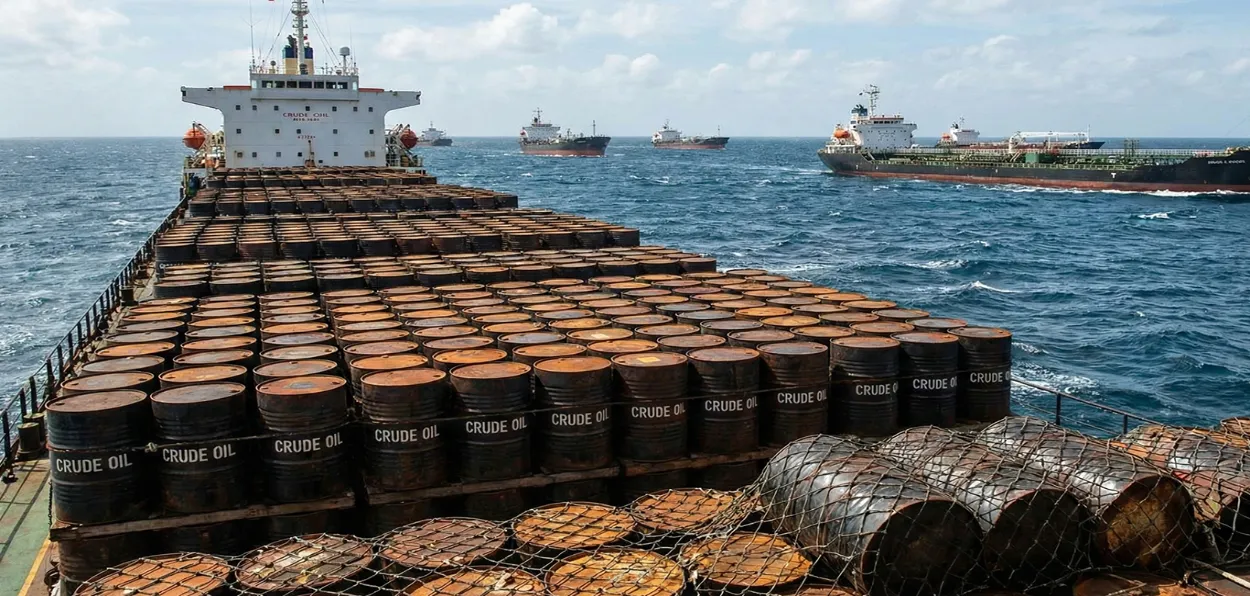
However, the Houthi attacks on shipping through Bab al-Mandab have effectively blocked Saudi oil supplies to Asian markets. The alternative route—through the Suez Canal and around the Cape of Good Hope—is longer, more expensive and unsuitable for many very large crude carriers (VLCCs) because of draft restrictions. Some smaller tankers have already shifted to the Suez route, even though it could add as much as $5 per barrel to transportation costs.
In effect, Saudi Arabia now faces disruption on both its eastern and western maritime routes. The countries most affected include Japan, South Korea, Thailand and the Philippines, all of which depend heavily on West Asian crude.
India, however, is relatively better placed because it has diversified its sources of oil imports. Even so, Saudi Arabia remained India's third-largest crude supplier in June, after Russia and Iraq. Russia alone accounted for nearly 52 per cent of India's crude imports during the month.
 Graphic representation of India's plans to end dependence on fossil fuels
With Saudi supplies under pressure, India is likely to increase imports from Russia and other producers such as Angola and Venezuela. Although Russian crude also passes through the Bab al-Mandab route, the assumption is that the Houthis will target only Saudi shipping.
The uncertainty raises a crucial question about global crude prices over the coming year. The issue is especially significant for India, which imports nearly 85 per cent of its crude oil requirements.
The U.S. Energy Information Administration (EIA) expects Brent crude to average about $74 a barrel in the third quarter of 2026 before easing further to around $65 in 2027. Goldman Sachs, however, projects prices to remain around $80 a barrel in the final quarter of 2026 before declining to about $75 next year. Unlike earlier projections, its latest forecast factors in the impact of the Houthi blockade.
These forecasts assume that the U.S.-Iran conflict will eventually move towards a negotiated settlement. Any fresh escalation could quickly render them obsolete.
For India, the earlier spike in crude prices to $137 a barrel in April served as a stark reminder of its vulnerability. The country's oil import bill rose from $96 billion in 2023-24 to $137 billion in 2024-25 before easing to $121.8 billion in 2025-26. The burden has been compounded by the rupee's steady depreciation over the past two years.
Ensuring energy security has therefore become an economic imperative—not only to guarantee uninterrupted supplies but also to contain the country's import bill.
India now imports crude from about 40 countries, including Brazil, Guyana and Angola, while also increasing purchases from the U.S. It is also expanding its strategic petroleum reserves. The existing reserve of 5.33 million tonnes, stored in underground caverns on both coasts, is sufficient for only eight days of consumption. Another 1.75 million tonnes of strategic storage has been proposed. Together with inventories held by oil marketing companies, India's total oil stocks can currently meet about 74 days of demand.
The government is also reportedly planning an incentive package worth ₹80,000 crore to attract foreign investment into deep-water oil and gas exploration.
ALSO READ: E20 row: Energy conservation is an urgency for India
These measures will strengthen India's energy security at a time when geopolitical tensions continue to threaten global energy supplies. Over the longer term, however, India must accelerate its transition to renewable energy. Until then, strategic diversification, expanded reserves and domestic exploration will remain essential to ensuring uninterrupted and affordable energy supplies.



.webp "Representational Image")







.webp "Kassim Ahmad")

_(1).webp)


.webp)