




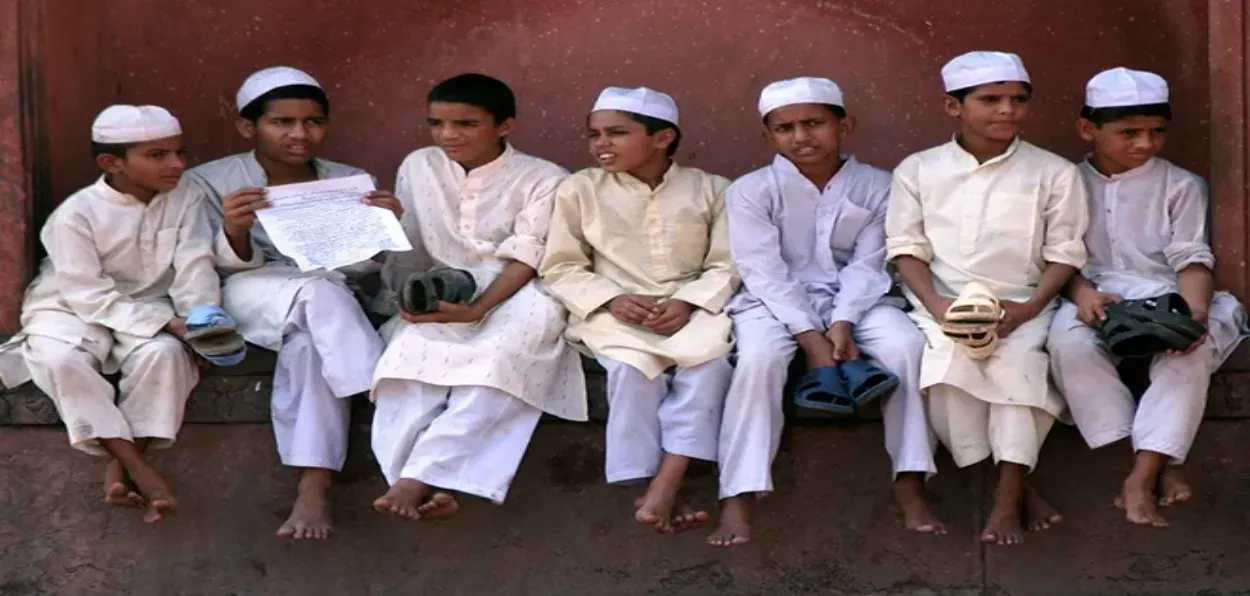
 Atir Khan
A recently published article on a news website argued that the Indian Muslim community lacks intellectuals. Its central observation was that the community has failed to cultivate an intellectual class of its own and remains dependent, at least in part, on Hindu or left-liberal intellectuals to articulate its concerns on national platforms.
The argument deserves serious consideration. A community of nearly 20 crore people, with a literacy rate of around 79.5 per cent, should ideally have a much larger pool of thinkers capable of examining its condition, questioning its assumptions and offering a long-term intellectual vision.
But the problem is perhaps more complicated than simply saying that Indian Muslims lack intellectuals.
The community has produced bureaucrats, defence officers, academics, writers, artists and public figures who have represented Muslim concerns in national life. It also has a large body of religious scholars associated with different schools of thought and socio-religious organisations.
The real gap lies elsewhere.
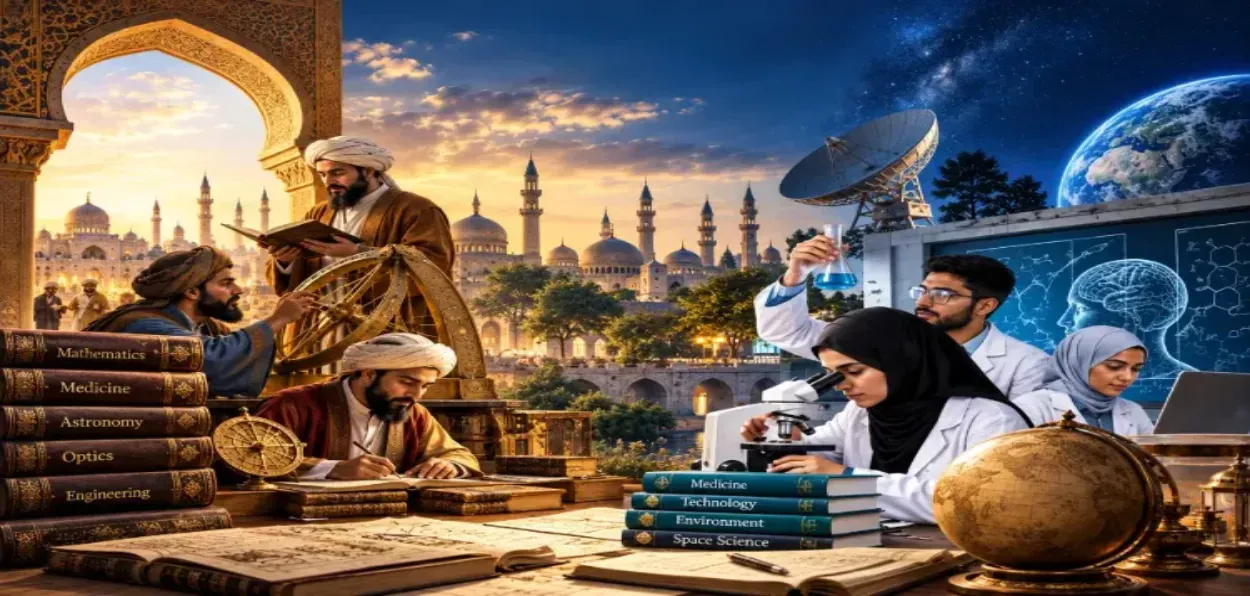
What remains relatively underdeveloped is an intellectual space between political advocacy and religious scholarship—a space where questions of social reform, modernity, education, institution-building, democracy, citizenship and contemporary Islamic thought can be examined together.
The question, therefore, should not merely be: Where are the Muslim intellectuals? It should be: What should Indian Muslim intellectuals be thinking about? That is a much more important question; Beyond political representation
Much of the public discourse around Muslims is dominated by politics and confrontation. Political leaders such as Asaduddin Owaisi have made the defence of Muslim political interests a central part of their public engagement.
Writers such as Javed Akhtar, who identifies himself as an atheist, have approached questions concerning Islam, religion and society from a sharply critical perspective. Both command considerable public attention, but neither represents the kind of sustained intellectual project that the Indian Muslim community needs today.
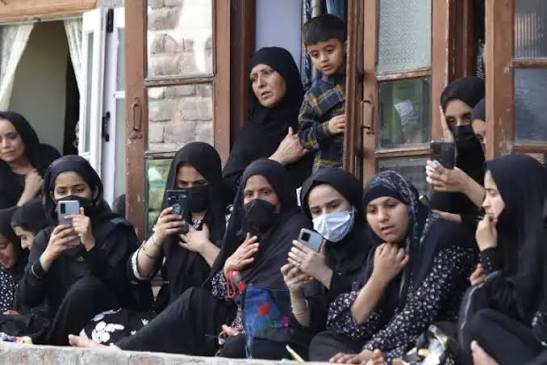 Kashmiri Muslim women
The same applies, in different ways, to retired bureaucrats, senior defence officers, politicians and religious scholars who frequently speak on behalf of Muslims. The issue is not that these voices should become quieter. It’s that advocacy alone cannot transform a community.
Political representation matters. Defending legitimate rights matters. Religious reforms matters. All three are co-related. An intellectual class must be capable of asking uncomfortable questions not only of the state and wider society, but also of its own community.
It must be willing to examine why certain problems persist, what assumptions sustain them and what institutional changes could address them.
One of the most important questions Indian Muslim intellectuals need to engage with is the relationship between religious thought and the social and political empowerment of the community.
The two cannot be treated as separate.
Across the Muslim world, serious debates have emerged about how Islamic thought should engage with contemporary circumstances. Questions once considered too sensitive to discuss openly are increasingly being examined by scholars and intellectuals.
It is the duty of Indian Muslim intellectuals to align the community with these changes and prepare them for the churnings.
At the heart of these debates is a fundamental question: How can Muslims remain faithful to revelation while responding intelligently to changing circumstances, new knowledge and the realities of modern societies?
There is renewed discussion about the reconstruction of Ilm-e-Kalam, Islamic theology, and the reformulation of Fiqh, or Islamic jurisprudence. The challenge is not necessarily to abandon tradition. It is to engage with tradition through both Naql—transmitted knowledge—and Aql—reason.
The contemporary Muslim intellectual has to confront questions that previous generations did not encounter in the same form. Artificial intelligence, biotechnology, changing family structures, gender relations, constitutional democracy, individual rights, secular citizenship and scientific knowledge all require serious intellectual engagement.
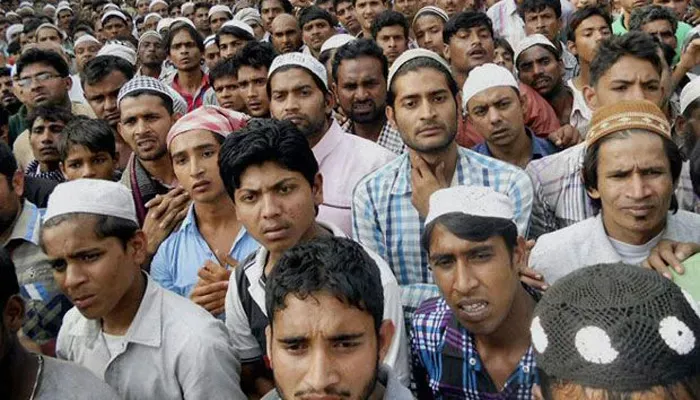 Muslim youth
The task is to develop frameworks through which Islamic thought can respond to these realities without compromising what believers regard as the essential foundations of Wahi, or revelation.
This is not an argument for replacing faith with modernity. It is an argument for taking both faith and modernity seriously.
The position of Muslim women is another area where serious intellectual engagement is necessary.
Muslim societies have historically evolved in different social and cultural contexts, and interpretations of women's roles have often been shaped by those circumstances. Some interpretations incorporated into later jurisprudential traditions also reflected the intellectual and social environments in which they developed.
The challenge today is to distinguish between the enduring principles of faith and interpretations that emerged within particular historical circumstances with regards to women.
Faith may be regarded as eternal; legal and social arrangements governing families and societies have historically evolved.
This distinction requires scholarship rather than slogans. The objective should not simply be to change laws or imitate another society. It should be to develop an intellectual framework in which Muslim women can participate fully in education, employment, public life and leadership while remaining rooted in their faith.
A community cannot speak credibly about empowerment while leaving half of its population outside the centre of its intellectual and institutional life.
India itself has a rich history of Muslim intellectual engagement with modernity. Sir Syed Ahmad Khan recognised the transformative importance of modern education and attempted to reconcile Islamic thought with the intellectual challenges of his time. Allama Iqbal questioned the stagnation of Muslim thought and called for the reconstruction of religious thinking. Syed Ameer Ali engaged deeply with Islamic history, law and modern political thought. Maulana Abul Kalam Azad represented another remarkable synthesis of religious scholarship, intellectual engagement and political leadership.
What united these figures was not that they agreed with one another on every question. It was that they engaged seriously with the intellectual challenges of their time.They did not approach modernity merely by defending Muslims against external criticism. They attempted to equip Muslims intellectually to confront a changing world.
That tradition needs to be revived.
Disagreement is not the enemy
There have always been differences among Muslim scholars and philosophers over the relationship between revelation and reason.The debates involving thinkers such as Al-Ghazali and Ibn Taymiyyah demonstrate that Muslim intellectual history has never been devoid of disagreement. Sir Syed Ahmad Khan himself faced serious disagreement from sections of the traditional Ulema.
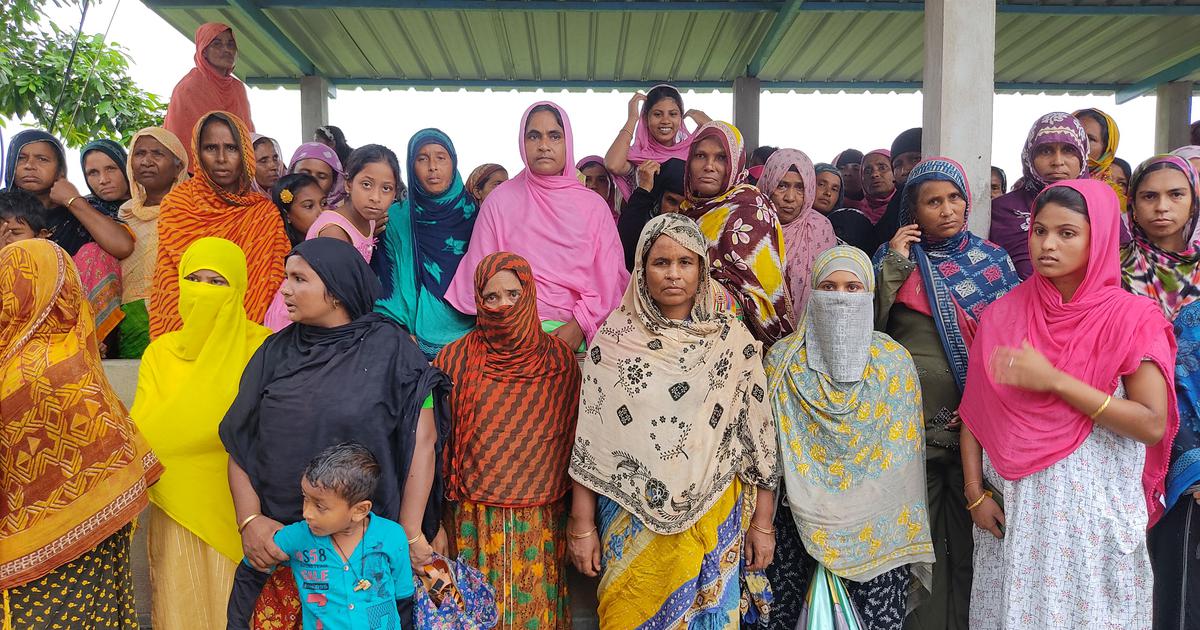 Muslim women of Assam
Intellectual disagreement, therefore, is not necessarily a threat to Islam. It has always been part of Muslim intellectual history. The real challenge is creating an environment in which disagreement can take place seriously, respectfully and intellectually.
Contemporary Muslim thought broadly contains different approaches. One argues that Muslims have moved away from traditional religious practices and that renewal requires a return to them. Another argues that Islamic thought itself needs to be reconstructed in response to contemporary circumstances.
The important question is not whether Muslims should blindly choose between tradition and modernity. It is whether they can develop a framework in which revelation, reason and contemporary knowledge engage with one another. The intellectual renewal of Islam need not mean abandoning its foundational values.
Unfortunately, politics has increasingly become the central theme of Islam rather than its original objective. For Indian Muslims, this creates another challenge.
As a minority community, their future is inevitably connected with the wider society in which they live. That requires not only defending one's rights but also understanding the concerns, sensitivities and perceptions of other communities.
A community cannot permanently remain in a state of confrontation with its surroundings and expect confrontation alone to produce progress.
Reconciliation does not mean surrendering one's beliefs. It means developing the confidence to engage with difference without treating every disagreement as a conflict. This is where Indian Muslim intellectuals have perhaps their greatest responsibility. They must move beyond short-term political calculations and become catalysts for institution-building.
Unfortunately, in India, those who speak most forcefully to polarised sentiments are often the people most readily identified as Muslim intellectuals. That is too narrow a definition of intellectual leadership. The Muslim intellectual of the 21st century should be neither a permanent defender of the community nor its permanent critic.
Whether belonging to the modernist tradition or the Ulema, such an intellectual should be a catalyst for renewal.
What is required is a new intellectual synthesis—one rooted in faith but open to reason; conscious of history but responsive to the present; committed to religious identity but equally committed to constitutional citizenship.
ALSO READ: Why Maulana Maududi's political Islam is not relevant in twenty-first-century India
The debate, therefore, should move beyond the question of whether Indian Muslims have enough intellectuals. The more consequential question is whether the community is producing the kind of intellectual leadership required for the 21st century.
Indian Muslim intellectuals have to think beyond reaction and the immediate political moment.
The author is Editor-in-Chief of Awaz-the Voice


.webp "Representational Image")






.webp "Kassim Ahmad")
_(1).webp)
.webp)