 Rajeev Narayan
BRICS has just demonstrated that countries with sharply divergent interests can still find common ground. Washington’s latest Russia sanctions bill raises a bigger question: how much room will countries retain to pursue independent economic and foreign-policy choices?
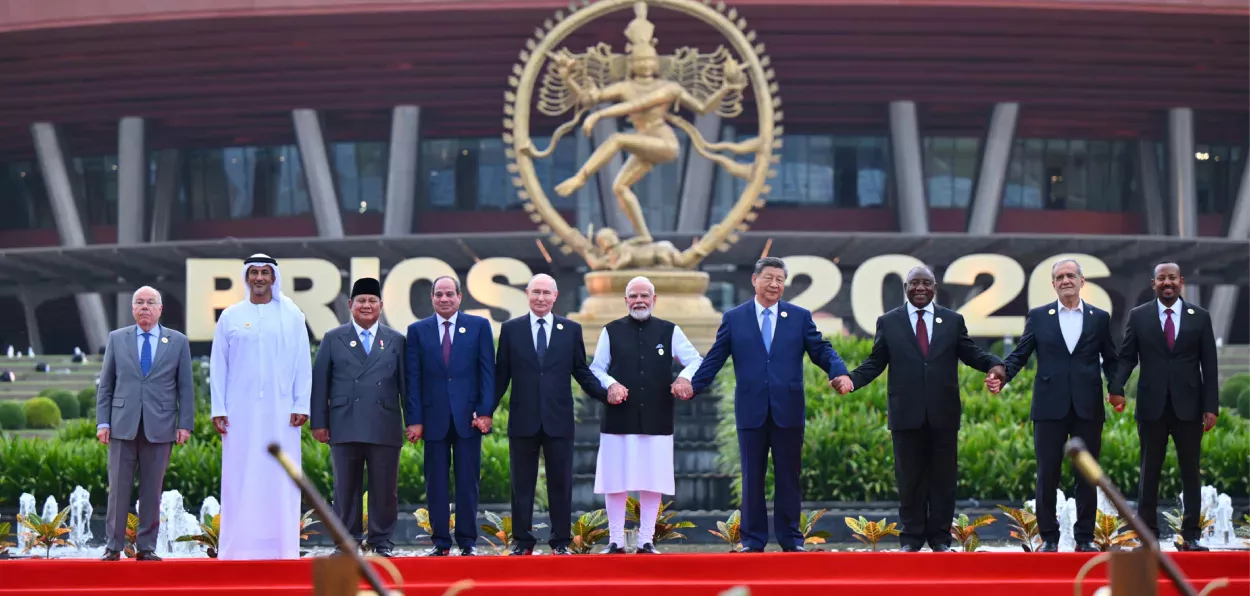
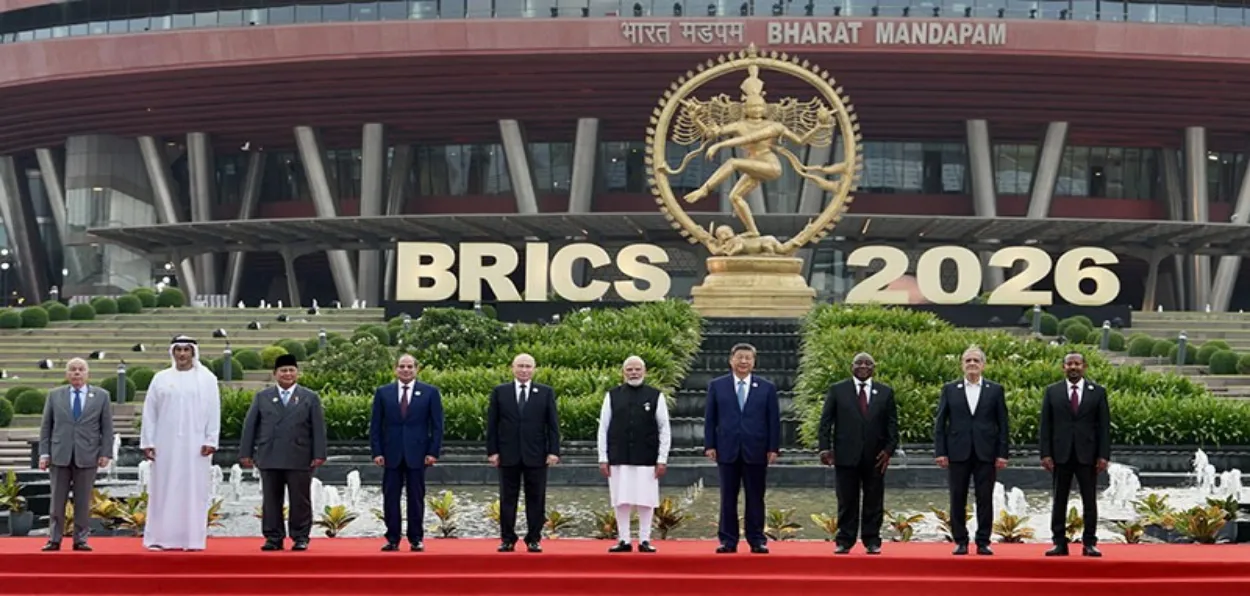
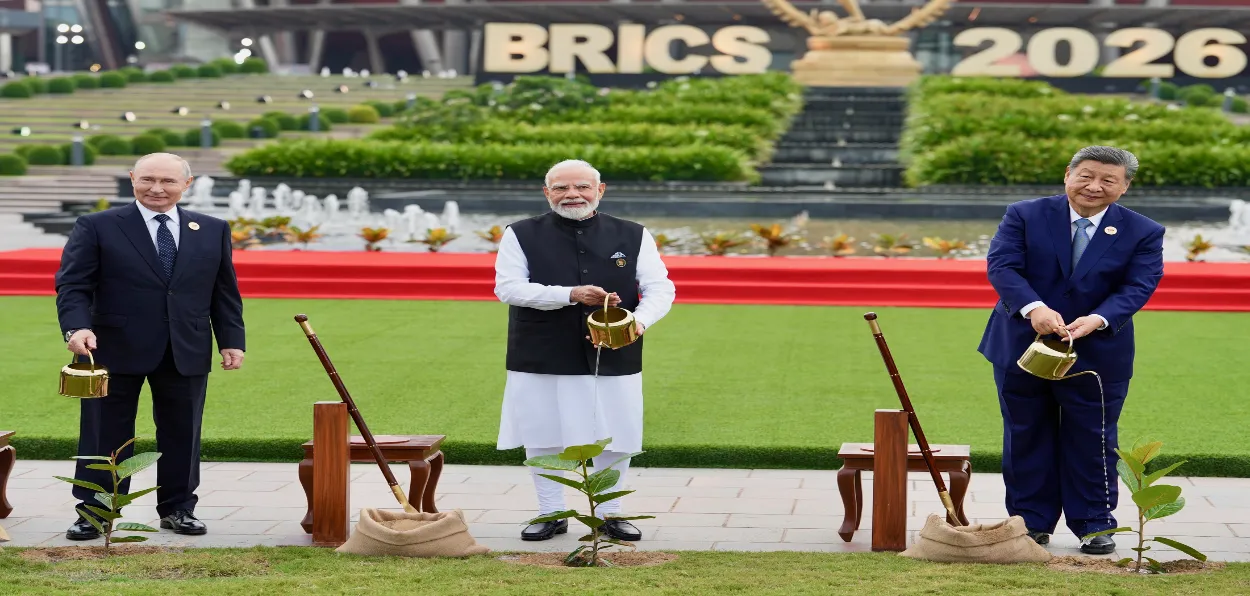
The timing is suspicious, but it doesn’t make for a slam-dunk case. It does, however, beg a question worth some thought: BRICS has barely packed up from New Delhi, and a new geopolitical tremor has already been felt. The 11-member grouping ended its summit with something that was anything but insignificant: a joint declaration adopted by consensus. India brought together countries that do not always agree on much—India and China, Russia and the West—and countries with very different positions on the wars and crises reshaping the world.
The declaration was notable not just for its content but for what it represented: a confident Global South seeking to secure more room for itself in a world still influenced by the traditional powers. It also contained a blunt objection to unilateral tariffs and sanctions, including secondary sanctions.
Days later, Washington walked in with its own declaration. The US House of Representatives has passed legislation that would give President Donald Trump the power to impose tariffs of up to 100 per cent on countries continuing to buy Russian oil and gas. The bill, which has cleared the Senate, now goes to Trump. India and China are among the major countries potentially affected.
The timing is striking. But timing is not causation. There is no need to claim that one event caused the other. The two developments do, however, showcase a changing world: countries want the freedom to make their own economic choices, while big powers are using economic weaponry to influence those choices.
The Oil Dilemma
For India, this is not an abstract argument about geopolitics. India is among the world’s largest oil importers. Russian crude became a chosen source because it was available at attractive prices, helping India manage costs and cushion consumers from the volatility of global energy markets. It is not a declaration of friendship with Moscow. It is energy economics.
India also buys oil from the Middle East, the US and others. Its energy strategy has never depended on any one source. But if purchasing Russian crude becomes the basis for punitive tariffs on Indian exports to America, the issue changes. Because a decision about where India buys its oil begins affecting what India can sell elsewhere. That is the essence of a secondary sanction: the pressure is not confined to the country being sanctioned; it also reaches countries doing business with it.
The US House bill does not, in itself, impose a 100-per-cent tariff on India. It gives President Trump the authority to impose tariffs up to that level. The distinction matters. As does the uncertainty over how, when and against whom that authority may ultimately be used. But the message is clear.
The Ripple Effect
This is where the issue becomes larger than India-US relations. Economic sanctions have traditionally been a tool directed primarily at the country being punished. Of late, their effects are travelling through the global trading system. A bank may be reluctant to finance a transaction. An insurer may decide that a shipment is too risky. A company may reconsider a supplier. A country may begin calculating not just the commercial benefit of a purchase, but the possibility that the US could object to it.
The result? A world in which geopolitical risk gets built into daily commerce. That has consequences far beyond Russia. If countries believe that their trade with one major power can trigger penalties in their trade with another, they will naturally begin looking for alternatives—alternative suppliers, alternative markets, alternative payment mechanisms and alternative financial arrangements.
This is how economic fragmentation happens. It does not necessarily arrive with a grand declaration that the old system is dead. It can happen quietly, transaction by transaction.
Autonomy Matters
Which is why India’s long-standing idea of strategic autonomy looks less like diplomatic vocabulary and more like economic insurance. Strategic autonomy does not mean choosing Russia over the US. Nor does it mean choosing BRICS over the West. It means retaining the ability to deal with both.
India has important interests with the United States—trade, technology, investment, defence and the Indo-Pacific. It has longstanding relationships with Russia. It has a consequential relationship with the Gulf. It has interests in Europe, Africa and the wider Global South. And it is simultaneously trying to make BRICS more relevant. This complexity is not a foreign-policy embarrassment. It is India’s reality.
A world of competing power centres requires the ability to maintain multiple relationships without allowing any one relationship to dictate all the others. The alternative is a world in which strategic decisions are made not in New Delhi, but in response to the possible economic consequences of decisions made elsewhere. India cannot afford that.
More Than BRICS
There is a larger consequence too. If sanctions and tariffs become intertwined with foreign policy, countries will have to explore ways to lower their exposure to any single financial or trading system. That could mean more trade in national currencies. More regional arrangements. More diversified supply chains. More payment mechanisms. And greater cooperation among emerging economies.
None of this means that the dollar is about to disappear, or that BRICS is set to replace the Western financial system. Such claims would be premature. But the incentive to diversify becomes stronger whenever economic interdependence can itself become a source of pressure. And that, ultimately, may be the most important ripple effect of all.
ALSO READ: BRICS Summit demonstrated India's capacity to unite world amid wars
The world does not have to become anti-American for it to become less dependent on America. For India, the answer should not be confrontation. Nor should it be submission. It should be choice. The question before New Delhi is not whether to choose Washington or Moscow, BRICS or the West. It is a question of whether, in today’s transactional world, India can retain the freedom not to choose.
The writer is a veteran journalist and communications specialist


.webp "Union Home Minister Amit Shah")