Amir Suhail Wani/Srinagar
Marcel Masoud Bassirian is a globally renowned Iranian-American teacher, researcher, and speaker. He is widely recognised for his work in introducing the mystical concepts and poetry of Rumi (Mowlana) to the Western world. Recently, during his visit to Kashmir, he spoke with Kashmiri researcher, writer, and poet Amir Suhail Wani on the transformative power of Jalaluddin Rumi (Mowlana) and the distinct spiritual energy that ties Bassirian’s life to the soil of India.
Excerpts from the conversation between Marcel Masoud Bassirian and Amir Suhail Wani:
You have spent decades introducing the deep mystical framework of Mowlana Rumi to the Western world. Could you walk us through the soil that raised you—your early life in Persia, and the initial spark that set you on this path?
To speak of my beginning is to speak of a long, unfolding exile that ultimately led to an internal homecoming. I was born in the historic, poetry-soaked soil of Persia (Iran). Growing up, Sufi mysticism and the echoes of classical Persian verse weren't just academic subjects; they were part of the very atmosphere we breathed.
However, the true "spark" you speak of rarely happens when you are comfortable. It happened through movement, displacement, and a deep, aching longing for the Divine. Leaving Iran, travelling to Australia, and living in different cultures made me realise that the human condition suffers from a profound spiritual homelessness. It was Rumi’s voice that anchored me. When Mowlana (Rumi) talks about the reed flute being cut from the reed bed, crying out in longing, it wasn't just poetry to me—it was my life. I realised my life’s work was to interpret that cry, not just as a cultural artefact, but as a universal reality for every wandering soul.
Now, looking at your journey, there is a fascinating chapter that immediately catches my attention: India. You spent a significant, formative period of your life living in India. How did India shape your spiritual evolution, and what does that subcontinental connection mean to you today?
Amir, India is not just a place on a map; it is an entirely different dimension of human consciousness. When I arrived in India, I felt an immediate, inexplicable spiritual resonance. There is a specific raw, vibrant devotion embedded in the very dust of the subcontinent.
In India, the boundary between the sacred and the mundane is beautifully porous. My time there allowed me to see the practical application of Ishq (divine love). Whether it was sitting in the serene aura of a Sufi shrine, witnessing the intense devotion of traditional Indian spirituality, or interacting with seekers who had given up everything for the absolute truth, India taught me sweetness and patience. It expanded my understanding of Rumi’s message.
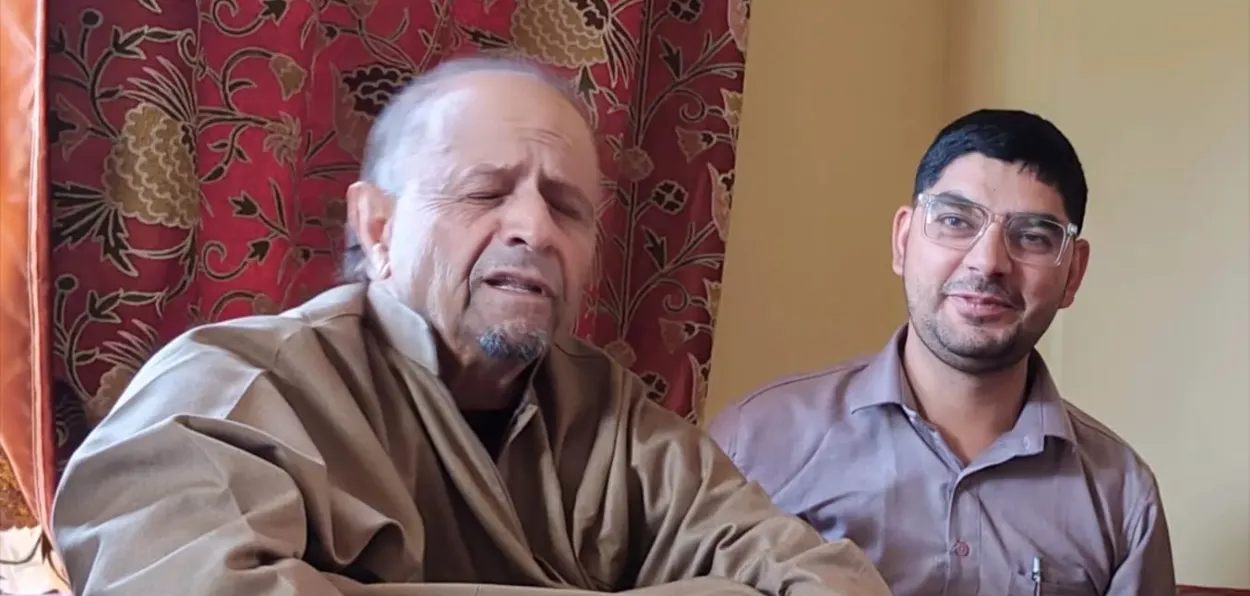
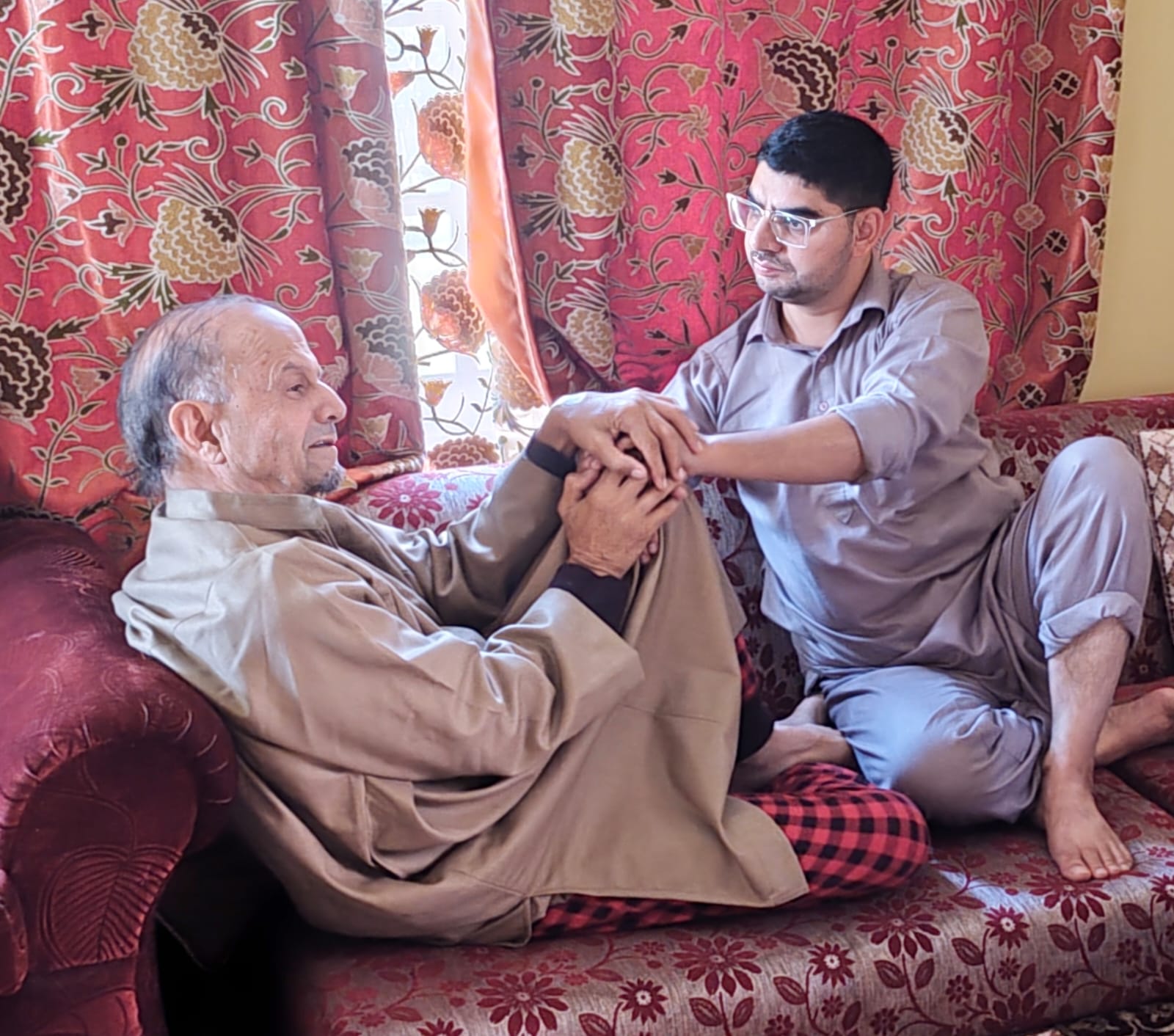 The author with Marcel Masoud Bassirian
Rumi tells us to look beyond rigid dogma to find the light of the divine essence. India lives that complexity. The country acted as a crucible for my soul, softening my edges and deeply anchoring my mystical understanding before I ever stepped foot into the West to teach.
As someone observing from Kashmir, where the Persian and Indian spiritual rivers meet so fluidly, your experience resonates deeply with me. Today, you reside in Palm Springs, California, bringing these ancient truths to a highly modern, fast-paced Western audience. You are known for an incredible ability to transition effortlessly between reciting Rumi in native Persian and translating his spiritual nuances into English. What are the challenges of translating the "smoke of existence" into a modern Western vernacular? Do you find that Western seekers are looking for something different than those in the East?
The human heart, Amir, cries out in the same language whether it beats in Srinagar, Tehran, or California. The primary challenge is that modern Western society is deeply hyper-rational and transactional. Rumi, on the other hand, demands total surrender—the annihilation of the calculated ego (Fana).
When I recite in Persian, there is a musicality, an inherent Zikr (remembrance) in the syntax that carries its own spiritual transmission. When translating to English, if you are not careful, you can reduce a cosmic love letter into mere self-help advice or romantic sentimentality. That is why my work on platforms like my website or social media focuses on preserving the spiritual gravity of the original text. I tell my Western students: Rumi is not here to make your ego feel comfortable; he is here to set your house on fire so you can discover the treasure hidden beneath the ruins. Western seekers are incredibly hungry for authenticity. They are tired of the superficiality of modern life, and when they taste the raw wine of Mowlana's true vision, their transformation is staggering.
Marcel Masoud Bassirian is a globally renowned Iranian-American teacher, researcher, and speaker who is widely recognized for his work in introducing the mystical concepts and poetry of Rumi (Mowlana) to the Western world. pic.twitter.com/dO22xtexnJ
— Amir Suhail Wani (@AmirSuhailWani2) September 8, 2026
What is your message to the young seekers of today who find themselves caught in the crosscurrents of identity crises, global uncertainty, and a longing for something permanent?
My message is simple, and it is the very core of what Mowlana has taught me over a lifetime: Do not look outside of yourself. The turmoil you see in the outer world is merely a reflection of the collective unrest within human hearts.
Every displacement, every heartbreak, and every moment of confusion is actually a divine invitation. Do not run away from the pain of longing. As Rumi famously said, "The wound is the place where the Light enters you." Turn inward, cultivate a quiet space of devotion, and remember that your true origin is not defined by geography or worldly identities. You are a ray of the Divine Sun. Find that connection, and you will remain steady no matter how violently the world shakes.
Living now in Palm Springs, California, surrounded by a vast desert landscape, I cannot help but wonder about your environment. The desert has historically been the crucible for prophets, mystics, and ascetics. How does the quietude of the California desert influence your current contemplative practices and your reading of Rumi?
Amir, you have touched upon a beautiful truth. The desert is a profound teacher because it strips you of illusions. It offers no distractions; it forces you to look directly at the vastness of the sky and the emptiness of the land, which quickly translates into the vastness of the interior world.
When I look out at the desert landscape here in Palm Springs, I am constantly reminded of Mowlana’s verses on emptiness and absolute reliance on the Divine (Tawakkul). In the city, human architecture tricks the ego into believing it is powerful, but the desert humbles you instantly. For me, this environment acts as a natural sanctuary. It provides the silence necessary to hear the subtle whispers of the texts I study. It allows me to sit with a single quatrain of Rumi for hours without the noise of modern industrial life breaking the thread of contemplation. The desert doesn't just surround me; it helps maintain the inner spaciousness required to transmit these teachings authentically to others.
.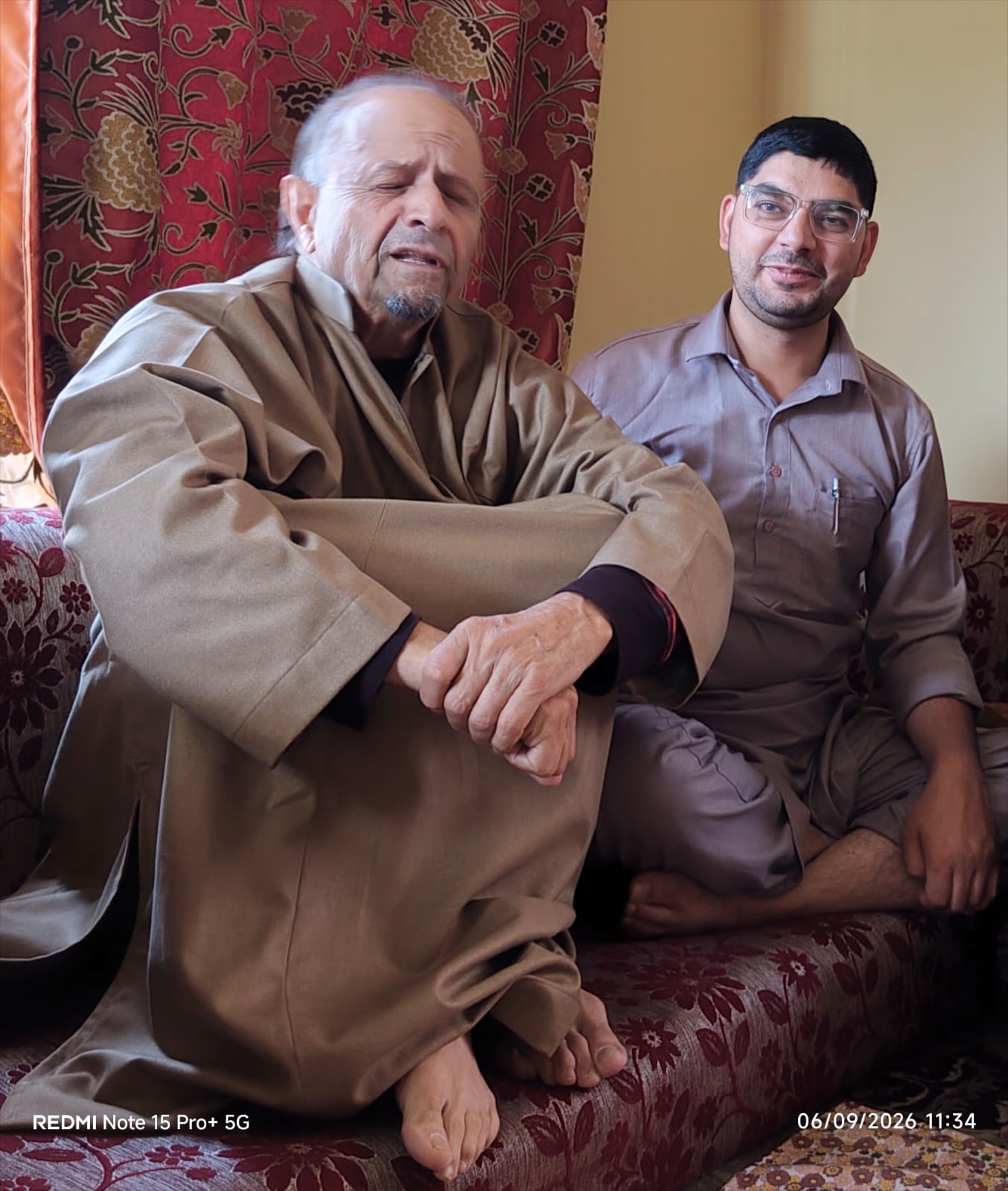 Marcel Masoud Bassirian wearing Kashmiri Phiren
In an era dominated by hyper-edited, short-form content designed for instant gratification, Sufi texts demand the exact opposite—slowness, deep listening, and patience. How do you navigate this tension? How do you use modern, fast-paced algorithms to deliver a message that requires absolute stillness?
It is a delicate tightrope walk, Amir. On one hand, the medium naturally resists the message. The digital world encourages rapid consumption, while Sufism demands slow assimilation. If someone scrolls past a video of mine between a dance trend and a political debate, the context is incredibly fragmented.
However, I view these digital platforms not as the final destination, but as a digital Khanqah—a doorway or an invitation. My goal on social media is to create a visual and auditory "pause button" for the viewer. When I recite Rumi in Persian, the rhythmic cadence itself acts as a form of sound therapy that disrupts the chaotic energy of the scroll. I try to make the presentation clean, beautiful, and focused entirely on the essence of the word. If a short, sixty-second video can spark a momentary ache of divine longing in a viewer, it has done its job. It plants a seed. That seed then leads the seeker to shut off their phone, visit the website for longer lectures, or pick up a book of poetry. We must use the tools of our time to cure the illnesses of our time.
In traditional Eastern mysticism, the relationship between the master (Pir) and the disciple (Murid) is absolute. In the modern Western paradigm, which deeply values individualism and personal autonomy, the idea of total submission to a spiritual guide is often misunderstood or viewed with suspicion. How do you address the necessity of spiritual guidance to an audience that is inherently fiercely independent?
This is perhaps the most significant cultural hurdle when teaching in the West. The modern ego hears the word "submission" and immediately fears a loss of freedom, control, or individuality. They confuse spiritual surrender with psychological subjugation.
ALSO READ: Bhartrihari: Iqbal’s favourite Sanskrit poet
When I speak to Western seekers about the bond between Rumi and Shams, I reframe the concept of the guide. A true spiritual guide is not a dictator; they are a mirror. Shams did not change Rumi into someone else; he burned away the academic titles, the social expectations, and the theological armour that prevented Rumi from seeing his own inner light.
I tell my students that independent individualism is actually a very small, confined cage. True freedom is found when you break out of that cage. The guide is simply someone who stands outside the cage, holding the key, reminding you that you have wings. By shifting the focus from "submitting to an authority" to "aligning with a mirror of truth," modern seekers begin to understand that spiritual guidance is the ultimate act of liberation, not limitation.

.webp "Ganapati idols being hander over to activists for Kashmir")