 Shankar Kumar
India is hosting the 18th BRICS summit, allowing New Delhi to flex its diplomatic muscles at a time when the world is facing challenges on all major fronts -- geopolitical, energy and economic. These developments will have a profound impact on deliberations within the summit.
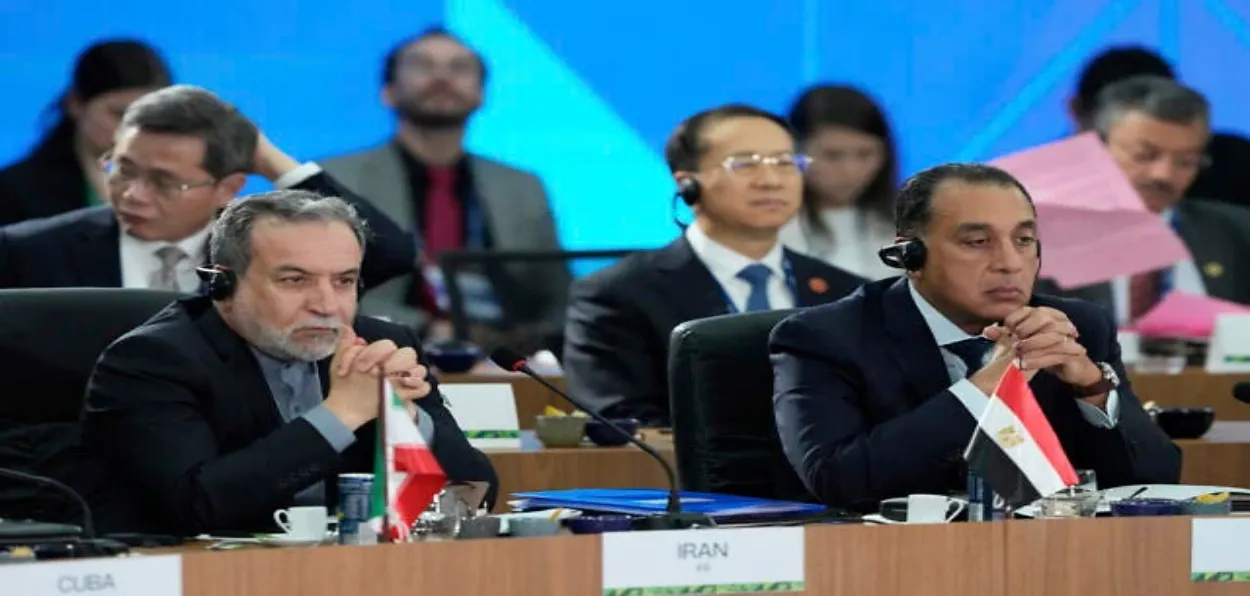
Yet what remains significant is that the participation of Middle East heavyweights like Saudi Arabia, the UAE, Iran and Egypt would infuse new dynamism, amid the turmoil in the region and souring of relations between Tehran and Abu Dhabi.
Egypt and Iran will be led by their Presidents Abdel Fattah el-Sisi and Masoud Pezeshkian; the UAE will be represented by Sheikh Khaled bin Mohamed bin Zayed Al Nahyan, Crown Prince of Abu Dhabi. Saudi Arabia, which confirmed its participation in the summit at the last moment, will be represented by the country’s Foreign Minister, Prince Faisal bin Farhan Al Saud.
Since India assumed the BRICS chairmanship for 2026, more than 350 BRICS-related meetings and high-level engagements have been held across more than 25 cities in the country.
Saudi Arabia has sent high-level delegations to almost all BRICS forums. It has also actively participated in the group’s ministerial meetings, indicating its interest in being in the room. Obviously, it appears to be Riyadh’s deliberate move; it wants to manage its relations with non-Western powers on the one hand, while simultaneously maintaining an enduring partnership with the US.
But the proof of the pudding is in the eating. The UAE and Iran have participated in all BRICS-related activities even though the Middle East war has soured their relations and has added further strain to their already complex relationship. Yet, their continued engagement with BRICS demonstrates that the grouping can provide a platform for dialogue and cooperation even when member states remain divided on contentious regional issues.
At the May 14-15 BRICS Foreign Ministers’ Meeting in New Delhi, the UAE rejected Iranian allegations and condemned what it described as Iranian attacks against the UAE and other Gulf countries. Earlier in April, a BRICS meeting of deputy foreign ministers and Middle East-North Africa special envoys reportedly ended without a joint statement after the UAE and Tehran clashed over how the Iran conflict should be addressed.
Yet, neither country left the BRICS; instead, they continued participating in the group’s activities. This clearly shows that membership does not require countries to resolve their bilateral disputes. Instead, it shows that membership of the BRICS requires countries to cooperate in areas of common interest.
In fact, BRICS is increasingly becoming a forum where geopolitical rivals coexist rather than a grouping whose members necessarily share a common geopolitical outlook. That distinction is important. The UAE and Iran can disagree sharply on security issues while still finding values in the BRICS on multilateralism, trade, finance, development, energy and the broader question of reforming global governance.
Iran's reported effort to join the New Development Bank illustrates this economic dimension. Tehran sees BRICS-linked institutions as a means of expanding financial and economic options while facing Western sanctions.
Similarly, for the UAE, the BRICS serves as a platform where it can get opportunities to strengthen multilateral financial and economic cooperation, while supporting priority issues for emerging and developing economies.
Moreover, through its membership of the BRICS and the New Development Bank, the UAE continues to support initiatives that lead to more flexible and efficient financing solutions and strengthen economic and development partnerships in response to the transformations shaping the global economy.
Undoubtedly, the UAE views its participation in the BRICS summit hosted by India as an opportunity to further advance these priorities, deepen cooperation with fellow member states, and reinforce its role as a bridge between different economic and geopolitical groupings.
At the same time, its engagement with BRICS underscores its broader objective of economic diversification and strategic autonomy, whereby participation in emerging multilateral platforms complements, rather than replaces, its longstanding economic and strategic partnerships with the West.
On the other hand, by hosting the 18th BRICS summit, India gets an opportunity to shape the group’s priorities around development, economic cooperation, institutional reform and practical cooperation, rather than allowing BRICS to evolve primarily into an anti-Western grouping.
Since Chinese President Xi Jinping's participation at the summit has been confirmed, it has become a highly significant development. Xi Jinping’s visit to India for the BRICS summit would be his first in seven years. He had last visited India in 2019. Given this, the BRICS setting provides New Delhi and Beijing with an important diplomatic channel at a time when bilateral relations remain strategically competitive.
ALSO READ: Pakistan-Saudi-Turkey pact unlikely to give Islamabad leverage against Delhi
Overall, the summit allows India to demonstrate that BRICS can represent the interests of the Global South without becoming an ideological or geopolitical alliance against the West. This distinction is crucial given the growing diversity and internal disagreements within the grouping.