Ghaus Sivani
“A diamond’s heart can be severed by a flower’s petal,
Yet gentle, tender words leave the foolish man unmoved.” (translated from Urdu)
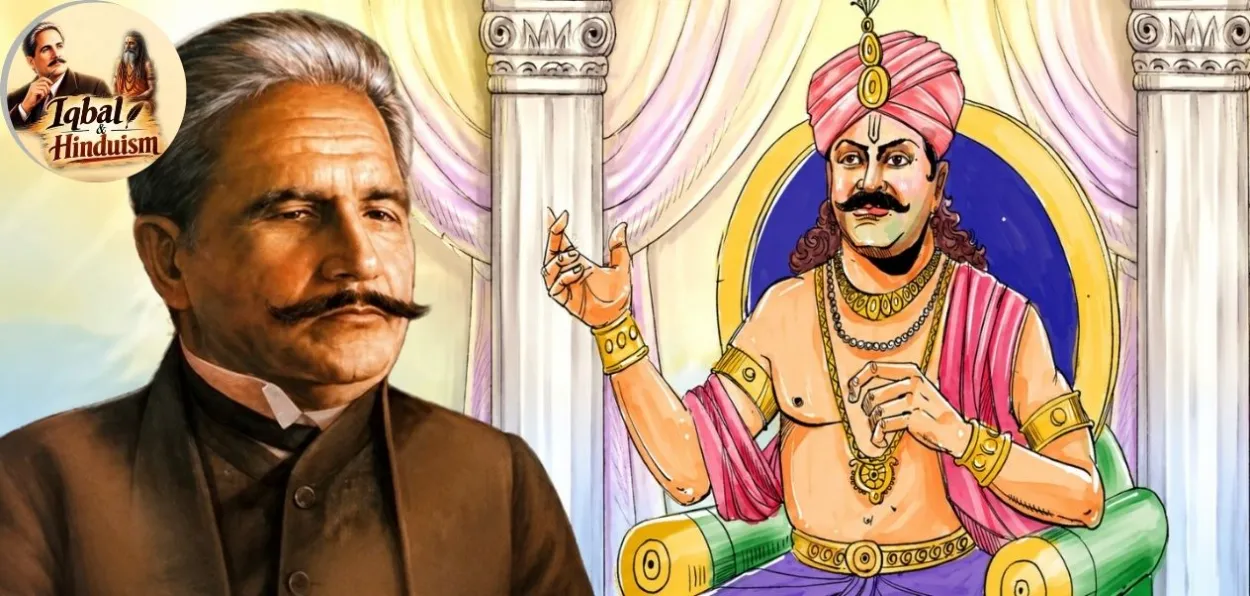
These lines, included by Allama Muhammad Iqbal in his celebrated collection Bal-e-Jibril, reflect an idea he attributed to the ancient Sanskrit poet Bhartrihari. For Iqbal, Bhartrihari was far more than a literary figure. He was a poet and thinker whose reflections on human nature, desire, action and detachment resonated deeply with Iqbal’s own intellectual concerns.
For many readers who don’t know Sanskrit, Bhartrihari may be a relatively unfamiliar name. Yet anyone who explores Iqbal’s Persian and Urdu works encounters repeated references to the Sanskrit poet. Iqbal wrote about him with unusual admiration, most notably in his celebrated Persian philosophical poem Javid Nama, where he imagines an encounter with Bhartrihari in the hereafter.
This raises an intriguing question: what did Iqbal see in a poet who had lived many centuries before him, and why did Bhartrihari occupy such an important place in his intellectual imagination?
Who was Bhartrihari?
Bhartrihari is regarded as one of the important names in the Sanskrit literary tradition. However, concrete information about his life is scarce, and even the period in which he lived remains uncertain. Scholars have placed him broadly between the fifth and seventh centuries, while legends surrounding his life have added to the mystery.
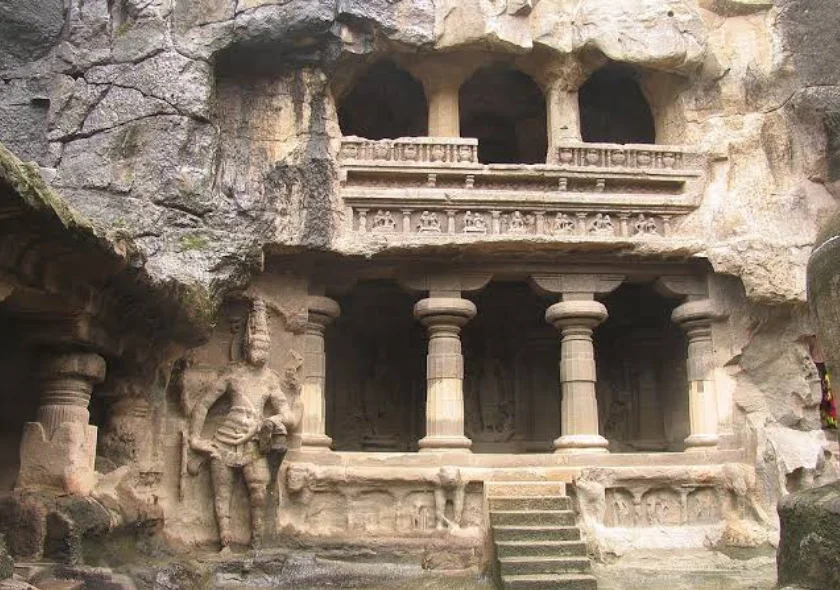 Bhartrihari Caves, Gonsa, Madhya Pradesh
He is sometimes described as a king and sometimes a court poet. One popular tradition holds that he renounced worldly life after suffering emotional anguish over a woman and turned towards spiritual pursuits. Such accounts, however, belong largely to the realm of legend rather than established history.
Three collections of verses are traditionally attributed to Bhartrihari: Niti Shataka, Shringara Shataka and Vairagya Shataka, collectively known as the Shatakatrayi.
Niti Shataka deals with ethics, human conduct, wisdom and the distinction between right and wrong. Shringara Shataka explores love, beauty, youth and human emotions, while Vairagya Shataka reflects on the transience of worldly existence, detachment and the search for inner peace.
Bhartrihari’s enduring appeal lies partly in his ability to express profound observations in concise and memorable verses. His poetry moves between the worldly and the spiritual, examining human desires while also questioning their ultimate value.
Bhartrihari and Urdu
Iqbal was not the only Indian literary figure to take an interest in Bhartrihari. Several Urdu poets and scholars engaged with his work, translated his verses or drew inspiration from them. Among them were Mirza Jafar Ali Khan ‘Asar’ Lakhnavi, Babu Gorishankar Lal ‘Akhtar’, Raghuvendra Rao ‘Jazb’ and Hasan Naeem.
Bhartrihari’s verses have also travelled far beyond India and have been translated into several European languages. His work continues to attract scholarly attention, particularly because of its treatment of universal questions concerning morality, desire, human conduct and renunciation.
But it was Iqbal who gave Bhartrihari a particularly distinctive place in modern Indian intellectual discourse.
Iqbal’s ‘conversation’ with Bhartrihari
In Javid Nama, Iqbal creates an imaginative encounter with great historical and spiritual personalities. Among them is Bhartrihari, whom Iqbal presents as an exalted Indian poet and thinker.
The episode begins with an evocative description of Paradise and the appearance of Bhartrihari. Iqbal portrays him as a poet whose gaze transforms the ordinary into something precious:
“Behold that melodious singer from India—
At the grace of his gaze, the dewdrop turns into a pearl.” (Translated)
Iqbal then presents Bhartrihari as a man of extraordinary intellectual depth. He describes him as a poet whose nature resembles a cloud showering its blessings upon all. Bhartrihari, he suggests, has gathered the finest blossoms from the garden of the world and transformed them into poetry.
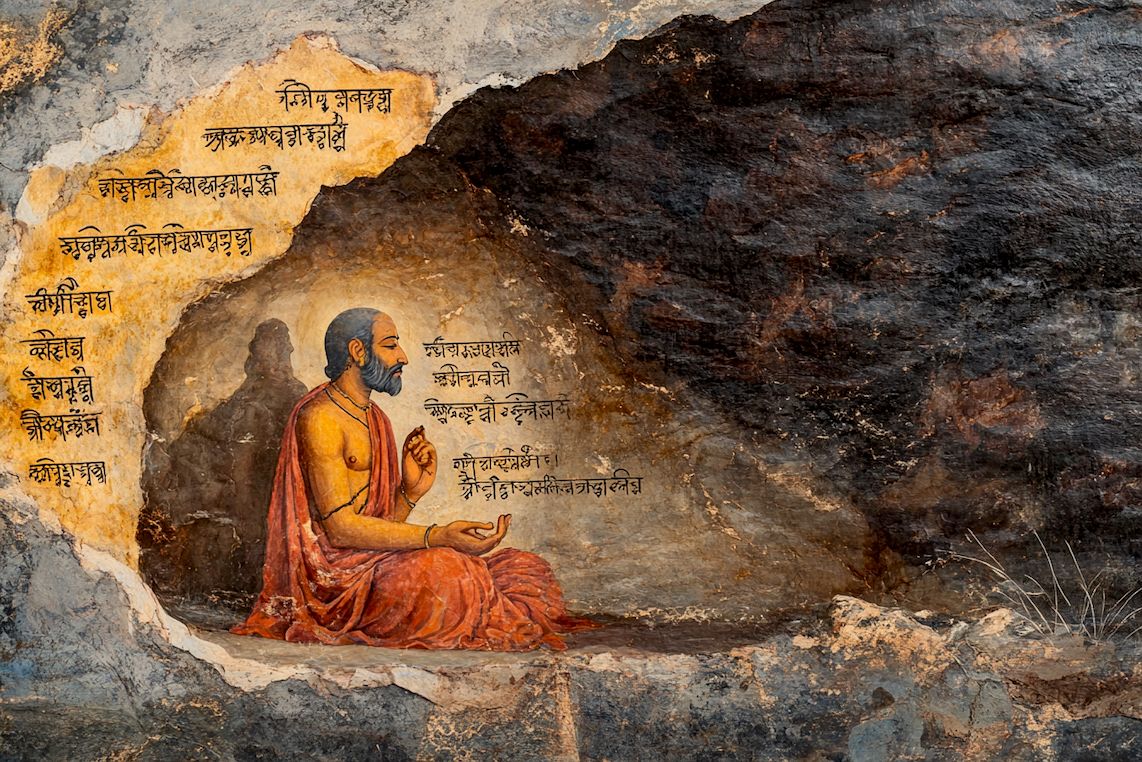 Bhartrihari meditating in the now famous caves named after him (Painting)
He is also portrayed as a sovereign of the realm of thought—someone who possesses the authority of a king while simultaneously embodying the spirit of an ascetic.
For Iqbal, this combination is significant. Bhartrihari represents both worldly experience and spiritual detachment, and his poetry compresses vast philosophical ideas into remarkably few words.
Iqbal compares his wisdom to the legendary Jam-e-Jam, the Cup of Jamshid, through which, according to Persian mythology, the secrets of the world could be revealed.
Poet and the source of his longing
Iqbal then enters into a philosophical dialogue with Bhartrihari.
He asks where the pain and yearning expressed in great poetry originate. Is this longing born from Khudi, the human Self, or is it bestowed by God?
Bhartrihari responds that the ultimate destination of a genuine poet is difficult to comprehend. The secret of his being is hidden in the melody and rhythm of his poetry.
The restless heart, he says, finds no permanent repose. The very essence of the soul lies in continuous seeking, and the pain of poetry emerges from this unending quest.
For Iqbal, this idea has a striking affinity with his own philosophy of Khudi. Human beings are not meant to remain passive or spiritually stagnant. Their greatness lies in striving, seeking and continually transcending themselves.
Bhartrihari on action and karma
The dialogue then moves from poetry to the condition of India.
Iqbal remarks that he sees the people of India troubled and restless and suggests that the time has come to speak the truth openly.
In response, Bhartrihari urges a movement beyond empty ritual and superficial forms of worship. He speaks of a higher truth that transcends the physical structures associated with religious practice.
The message then turns towards action.
According to Bhartrihari’s voice in Iqbal’s poem, prayer without devotion and love becomes lifeless, while human existence is defined by action and its consequences. He invokes the principle of karma, suggesting that human beings shape their own spiritual destiny through their deeds.
This is one of the most striking aspects of Iqbal’s portrayal of Bhartrihari. Rather than presenting him merely as an ancient Sanskrit poet, Iqbal transforms him into a philosophical voice addressing questions that remain relevant to humanity.
Why did Iqbal admire Bhartrihari?
Iqbal’s admiration for Bhartrihari becomes clearer when viewed against the central themes of his own philosophy.
Bhartrihari’s poetry deals repeatedly with the tension between desire and detachment, worldly existence and spiritual freedom, and action and its consequences. These themes had a natural resonance with Iqbal’s own preoccupation with selfhood, discipline, action and the development of human potential.
Iqbal therefore presents Bhartrihari not simply as a representative of ancient Sanskrit literature, but as a universal thinker whose insights transcend religious, linguistic and historical boundaries.
His Bhartrihari is at once poet, philosopher and visionary—a thinker capable of discovering profound truths in the complexities of human life and expressing them in a handful of powerful words.
The reference to Bhartrihari also allows Iqbal to reflect on the condition of India under British rule. By invoking an ancient Indian voice, he reminds his contemporaries of the intellectual and spiritual resources embedded in their own civilisational heritage.
The larger message is one of awakening: a people must rediscover its inner strength, overcome passivity and act with confidence.
This perhaps explains why Bhartrihari occupied such a distinctive place in Iqbal’s imagination. Iqbal saw in the ancient Sanskrit poet not merely a literary predecessor, but a kindred spirit—one who had explored the mysteries of human existence, questioned worldly attachments and placed great emphasis on inner strength and purposeful action.
For Iqbal, the wisdom of Bhartrihari had survived the centuries because the questions it addressed had not changed: Who are we? What drives our desires? What gives life meaning? And how can human beings rise above the limitations of the self?
ALSO READ: Iqbal admired Shankaracharya yet disagreed with his philosophy
In bringing Bhartrihari into Javid Nama, Iqbal gave an ancient Indian poet a new place in the philosophical conversation of the modern age.

_(1).jpg "Visitors gather at the Santosh Mitra Square Durga Puja pandal, themed on the 150th anniversary of Vande Mataram and its historic role in India's freedom movement, ahead of the festival, in Kolkata")

.jpg "Gujarat’s women entrepreneurs bring their craftsmanship to life during Navratri")










_(4).webp)
_(2).webp)