 Rajeev Narayan
India has always been a country that waited. Be it for trains, bank queues, government files, restaurant tables, project clearances or deliveries. Not anymore. Technology has done something unique to India: it has not just made the nation faster; it has made waiting intolerable.
India is now a 10-minute country. But it wasn’t always like this. There was a time when ordering anything meant ordering it and forgetting about it for a while. A letter took days to reach its reader. A cheque took time to clear. A new telephone connection could become a family story. Even a taxi involved standing on the roadside and waiting, even hoping.
Not anymore. Today, we order groceries while cooking dinner and expect our doorbell to ring before the food is ready. Or ask for printouts to be delivered home and are upset if the ink is too dry.
The extraordinary thing is not that somebody can deliver a packet of biscuits in 10 minutes. It is that India has begun to think 20 minutes is slow. Quick commerce has turned urgency into a business model. A forgotten ingredient, a phone charger, toothpaste, snacks for an unexpected guest—things that once required planning—can all be summoned almost instantly.
Once convenience reaches this level, it does not remain convenience for long. It becomes a benchmark. That is how expectations change.
Everything, Now
UPI has done something similar to money. A payment that once involved cash, a card, a signature, or a waiting period now happens invisibly, in seconds. In August this year, UPI processed 24.5 billion transactions across the country. The significance is not just financial. We have become accustomed to completion.
 German Minister for Digital and Transport Volker Wissing makes a payment through UPI to a vegetable seller,
You pay, and it is done. You book, and it is confirmed. You order, and the countdown begins. You summon a cab, and you watch its little icon move towards you on the map. Even entertainment has surrendered to impatience. We can no longer wait until next week for the next episode. We need to watch it tonight. Often, we devour the entire season in one thrilling evening of binge-watching.
Banking, shopping, travel, food, entertainment… one after another, entire spheres of life have been redesigned around eliminating waiting. And technology keeps raising the bar. The danger, if that be the right word, is not that we are becoming impatient people. It is that we are beginning to forget that some things cannot—and perhaps should not—be made instantaneous.
New Benchmarks
The ‘Now’ factor is also changing how businesses compete. It is no longer enough to provide a good product. Today’s new rule is that products must arrive quickly. A recent CII-Alvarez & Marsal study found that 77 per cent of Indian shoppers expect delivery within two hours. Two hours, maximum. Speed has become part of service.
A restaurant that once said, “Your order will take 40 minutes,” now risks losing a customer to another one promising delivery in 25 minutes. An online retailer does not just advertise what it sells; it advertises when it will arrive. Even grocery is being forced to coexist with the expectation of instant fulfilment.
This is not entirely a bad thing. India spent decades accepting inefficiency as an unavoidable part of life. Queues, paperwork, slow banking, delayed deliveries and indifferent service were often treated as facts of existence rather than problems to be solved.
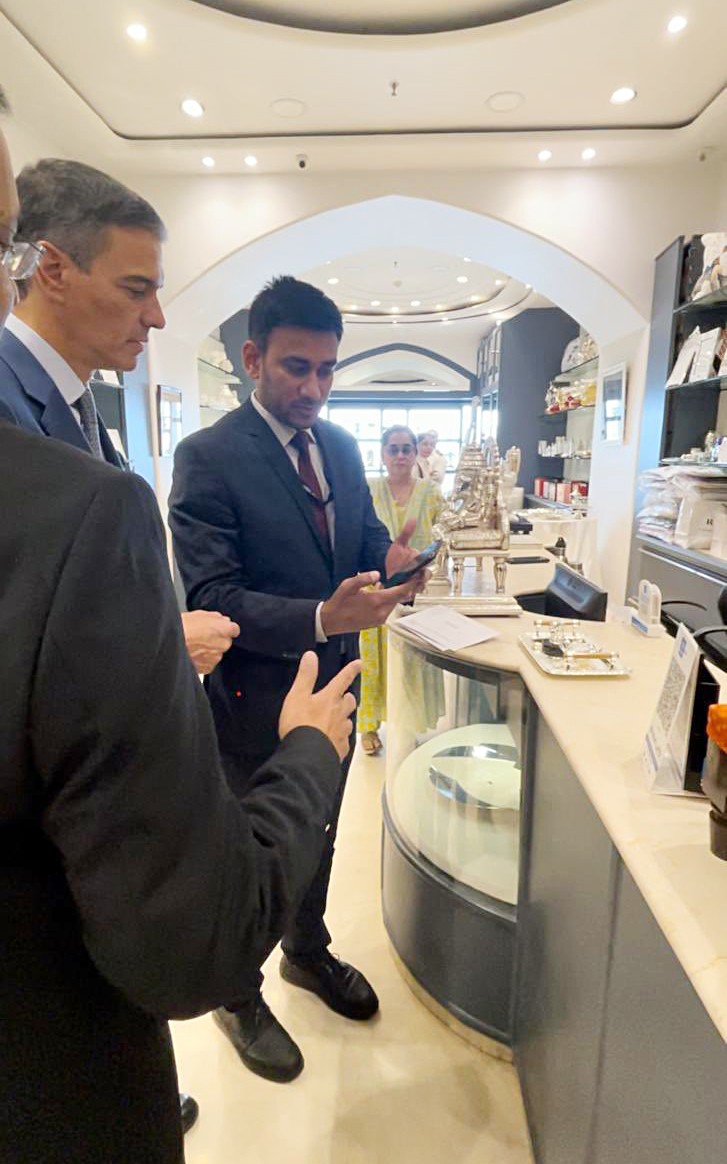 Spanish President Pedro Sanchez makes payment through UPI in Mumbai
Technology has challenged that complacency. If a payment can happen in five seconds, why should settling a simple transaction take two days? If a parcel can reach your home today, why should it automatically take a week? In that sense, the impatient Indian may actually be a healthier consumer.
The Price of Speed
There is another side to this transformation. When everything around people becomes faster, their expectations of everything else change too. A website taking five extra seconds to load can feel broken. A restaurant taking 35 minutes can feel mismanaged. A colleague who has not replied to a message for three hours may appear to be ignoring you, or simply callous. A government process that takes several weeks can seem prehistoric.
We have begun importing the logic of instant commerce into parts of life that operate on human time. Relationships do not have a tracking link. Children do not grow faster just because parents are impatient. A good book cannot always be skimmed to the ‘Wisdom’ section. Ideas need incubation. Skills require repetition. Trust takes time. Recovery takes time. Even good decisions require the luxury of not taking them immediately.
The paradox is that technology has given us more time by removing all small delays, while making us less willing to spend any of that time waiting. We have saved minutes, yet lost patience.
Learning to Wait
Perhaps the next challenge for India is not becoming faster. We are already very good at that. The more difficult task may be learning where speed genuinely matters, and where it does not. Nobody wants to wait three days for a payment to go through. Nobody wants to stand in a queue merely because a process has not been modernised yet. Nobody wants to waste an afternoon obtaining a document that could have been issued online in minutes.
 A delivery person on his way
But there is a difference between deleting unnecessary waiting and eliminating waiting altogether. Some of the best things in life remain stubbornly slow. A meal cooked properly; A friendship that matures over time; A child growing up; A career being built and a good idea becoming a great one.
ALSO READ: BRICS Summit: Middle East rivals at one table can broker peace
India has spent decades trying to catch up with the world. Technology has now given Indians something unexpected: the confidence to ask why anything should take so long. That is progress. Yet perhaps the next sign of progress will know when to ask a very different question: Why must everything happen now?
The writer is a veteran journalist and communications specialist.















.webp)