 Rajeev Narayan
India’s real BRICS achievement is not that it hosted an impressive gathering. It is that it showed the world that it can bring together countries that disagree profoundly—without choosing one camp itself, and while making its own interests count too. Just in itself, that is quite a feat.
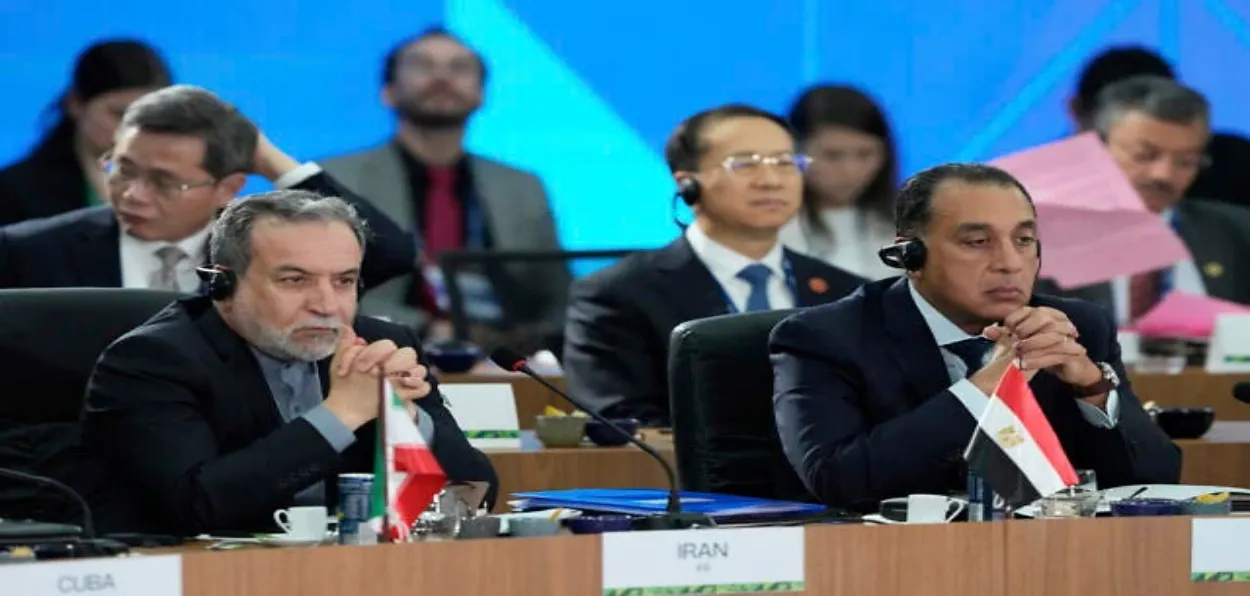
There was something quietly revealing about the BRICS guest list in New Delhi. China, Russia, Iran, the Gulf, Brazil, South Africa, Indonesia and others sat around the same table at a moment when the world is becoming less cooperative, more fragmented and far less predictable than it used to be. For India, that alone is far more than diplomatic theatre.
The 18th BRICS summit has demonstrated the value of India’s ability to operate in parallel strategic rooms. It shows that India can deepen its partnership with the United States and remain part of the Quad, work with Russia, engage China, maintain ties with Iran and the Gulf, and speak out loud for the concerns of the Global South… all without treating any one relationship as a substitute for the others. That is not fence-sitting. It is strategic autonomy adapted to a world in which there are no longer just two fences.
There was an important symbolic achievement too: the expanded BRICS grouping managed to deliver a joint declaration despite its extraordinary internal diversity and the disagreements among its members. India was not merely at the table. It was setting the table.
The China Dividend
Perhaps nowhere was that more evident than in the presence of Xi Jinping. The Chinese President’s visit to India—his first since 2019—was significant. It would be foolish to describe the Modi-Xi meeting as a ‘reset’. The border issue remains unresolved, strategic mistrust has not vanished, and the two nations continue to compete for influence across Asia. But diplomacy does not always begin with grand breakthroughs. It can also begin with restoring conversation.
BRICS provided that space. The two sides discussed border peace, trade imbalances, business ties and people-to-people exchanges. These issues matter to India because a difficult relationship with China cannot simply be wished away, nor can every disagreement be allowed to consume the entire relationship. The significance of BRICS is not that it makes India and China friends. It is that it gives them a new institutional channel through which competition can be managed without making hostility the default setting.
That is a useful dividend. Indeed.
Beyond Declarations
The other dividend is more material, although it will take longer to arrive. The economic discussions moved away from the fashionable talk of a common BRICS currency and towards something far more practical: making cross-border payments easier, exploring interoperability between payment systems and encouraging trade and investment in local currencies.
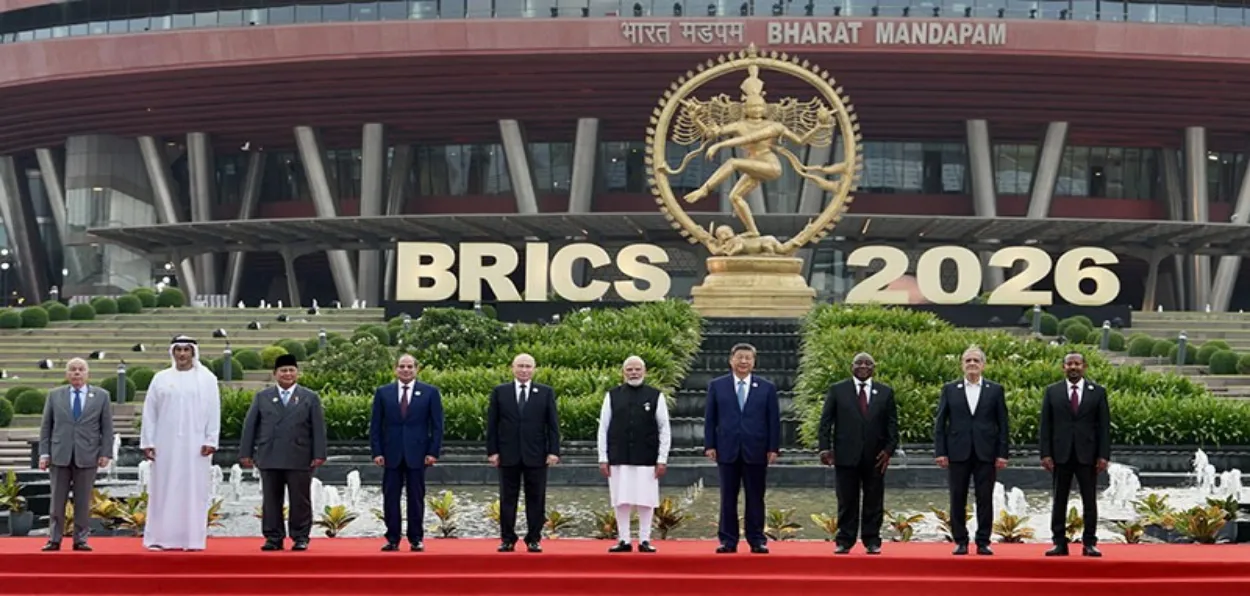
JUST IN: BRICS leaders pose for a photo in New Delhi, India. pic.twitter.com/lZSUr94Atn
— BRICS News (@BRICSinfo) September 12, 2026
The New Development Bank was encouraged to expand local-currency financing, while BRICS also advanced work on investment and risk-management mechanisms. None of this will transform global finance overnight. Nor should every new BRICS initiative be mistaken for an institution capable of challenging the dollar tomorrow morning. But this is how alternative systems are built: not through dramatic announcements, but through plumbing.
India has an obvious interest in such plumbing. A world of more diversified payment mechanisms, resilient supply chains, wider investment channels and cooperation in critical technologies gives India more room to manoeuvre. And India has something distinctive to offer: its experience with digital public infrastructure, payments and technology at population scale.
The summit’s emphasis on AI governance, digital public infrastructure and industrial cooperation gives India another opportunity: that of arguing for a model that is neither the private, market-driven American approach nor the state-centric Chinese model. That middle space could become strategically valuable.
The Global South
There is also a diplomatic dividend. For years, the phrase ‘Global South’ has all but become the centrepiece of international diplomatic vocabulary. It is frequently invoked, occasionally listened to and rarely allowed to shape the agenda. India’s BRICS presidency has given it the chance to make the phrase mean more. Much more.
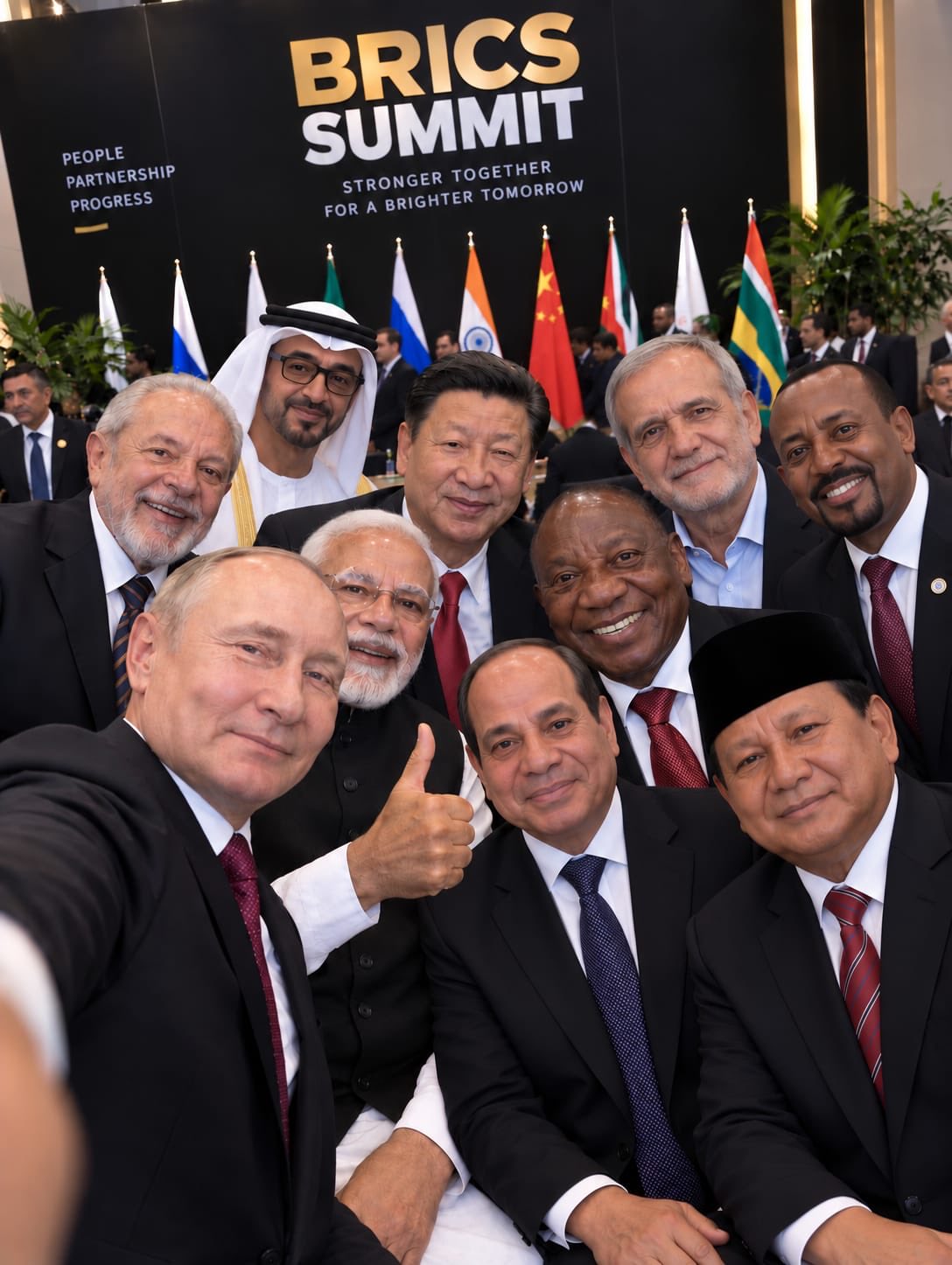 Russian President Vladimir clicking a selfie with the BRICS leaders
The grouping’s expanded membership gives India access to major economies and energy producers, but its importance goes beyond the 11-member grouping. BRICS is now a platform through which developing and emerging economies can press for a greater voice in institutions whose architecture was largely designed in another era. India has credibility in making that argument because it does not come to it as an adversary of the West.
That distinction matters. India can argue for reform of the UN and global financial bodies without arguing for the destruction of the existing system. It can object to unilateral sanctions and protectionism while continuing to seek Western investment and technology. It can seek a greater say for emerging economies while maintaining partnerships with the world’s established powers. That makes India’s voice more useful than a louder, more ideological one.
The Real Test
This is the most important win from the Delhi summit. India does not need BRICS to become an anti-Western club. In fact, turning it into one would diminish India’s own strategic advantage. Its interest is in a BRICS that is practical rather than ideological; influential rather than confrontational; and capable of giving the Global South a stronger voice without becoming another geopolitical camp.
That is also why the next phase will matter more than the photographs from Delhi. India now has the task of converting diplomatic capital into investment, technology partnerships, supply-chain opportunities, energy security and economic engagement with the expanding BRICS universe. It has to ensure that initiatives on payments, finance, AI, industry and development produce benefits that businesses and citizens can truly feel.
ALSO READ: BRICS Summit: Middle East rivals at one table can broker peace
Hosting the summit was the easy part. The harder task would be to make BRICS useful to India without allowing BRICS to define India. That is the real dividend of New Delhi: not choosing between competing worlds, but acquiring enough weight to work with all of them. And occasionally, to make them work with one another.
The writer is a veteran journalist and communications specialist.

.webp "Union Home Minister Amit Shah")