 Ahmet T. Kuru
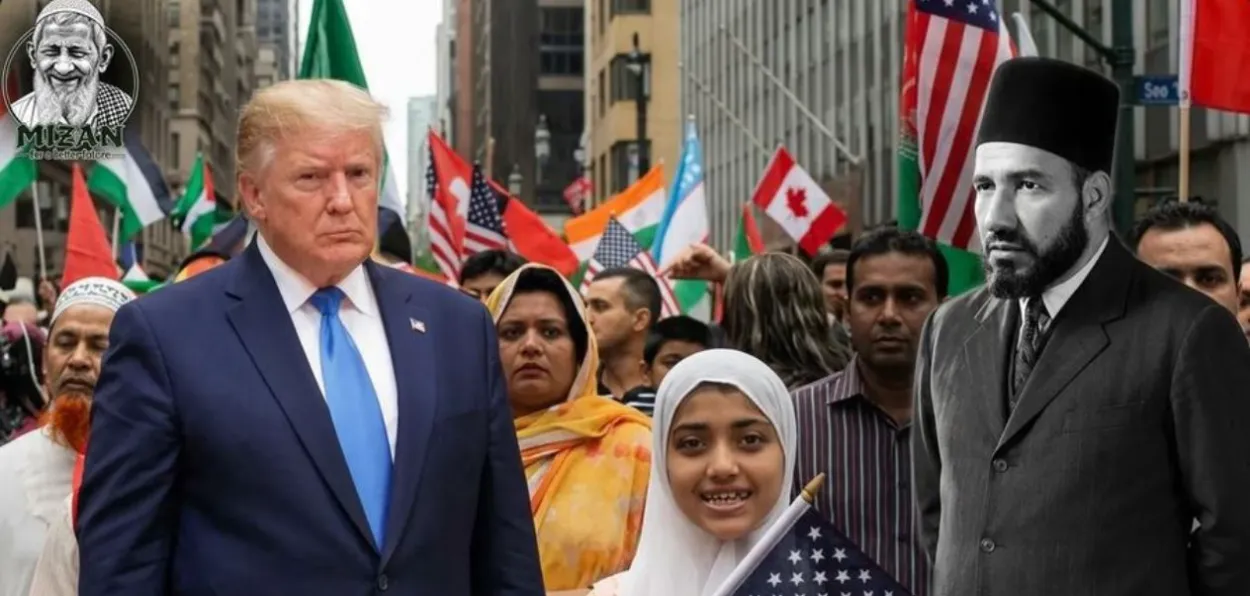
I grew up in Turkey, where I lived for half of my life. For the past quarter-century, I have lived in the United States as an American citizen. Am I trying to make the United States an Islamic country?
Who would seriously ask such a question? Those who embrace a medieval and radical understanding of Islam—generally called Islamists—and those who hate Islam and regard it as a threat—generally called Islamophobes.
These two groups present themselves as opposites, yet they often share the same assumptions about Islam. Both Islamists and Islamophobes believe that Islam does not distinguish between religion and state.

I know this well because, since the publication of my book Islam, Authoritarianism, and Underdevelopment: A Global and Historical Comparison, now translated into fifteen languages, including Hindi and Urdu in India, I have been criticised by both groups.
For Islamists, my argument that religious and political authorities were largely separate in the Muslim world between the eighth and the mid-eleventh centuries is unacceptable. They view Islam as a complete blueprint governing everything from personal conduct to government. According to this view, sharia should be interpreted and elaborated by the ulema, who should ally with political rulers.
Al-Mawardi and al-Ghazali, two influential eleventh-century scholars, envisioned a political order headed by a caliph. About two centuries later, Ibn Taymiyya preferred a system jointly led by the ulema and the rulers.

His interpretation presents what I call the ulema-state alliance as the divinely ordained political order.
Fast-forward to the twentieth and twenty-first centuries. Islamists such as Hasan al-Banna in Egypt and Abul A'la Mawdudi in Pakistan, inspired by the post-eleventh-century ulema tradition, defined Islam as a total system encompassing both religion and state.
Mawdudi further argued that every sphere of life—including politics, the economy, education, and society—should be Islamicized under what he envisioned as an Islamic state.

From this perspective, a Muslim living in the United States, India, or any other non-Muslim-majority country has only two choices: either leave or remain to eventually islamise society and the state. They are deeply mistaken.
Therefore, a Muslim can be a faithful believer and a good citizen of the United States, India, or any other country by obeying its laws. Muslims are expected to honour their contracts and commitments, and citizenship is a key commitment.

Islamophobes, whose influence has grown alongside the recent rise of populist nationalism in many parts of the world, are mistaken as well.
 They also reduce Muslims to a single religious identity while ignoring their many other identities—as professionals, intellectuals, entrepreneurs, artists, and members of diverse ethnic and cultural communities—in short, fellow citizens of their countries.
Ahmet T Kiru's latest book on Islam
Countries that reject immigrants or fail to respect minorities lose dynamism and creativity. By contrast, immigrants and minorities have been among the driving forces behind American academic, scientific, and economic achievements.
The key concept in this discussion is citizenship. Islamists deny its central role because they imagine that all Muslims should eventually become part of an Islamic political order based on Muslim majority rule. Islamophobes, on the other hand, deny full citizenship to Muslims because they envision societies in which Muslims can never truly belong. Both visions are mistaken.
In reality, Muslims can be equal citizens of the countries in which they live. That is entirely compatible with living a fully Islamic life guided by faith, morality, and ethical principles.

The Qur'an also teaches that God created human beings into different “peoples and tribes so that you may know one another” (49:13), not so that one group should dominate the others.
ALSO READ: Beyond survival: The future of Indian Muslims
Islam does not require Muslims to seek political power. Rather, it calls them to worship God, uphold justice, honour their commitments, and serve the common good wherever they live.
Ahmet T. Kuru teaches in a US university and has authored Islam, Authoritarianism, and Underdevelopment: A Global and Historical Comparison




.webp "Union Home Minister Amit Shah")








.webp)