 S. Y. Quraishi
For decades, the dominant conversation about Indian Muslims has centred on what others think of them, say about them, or do to them. Perhaps the time has come to ask a different question: What do Indian Muslims think of themselves, and what future do they wish to build?
This question arises at an unusually difficult moment. Few would deny that a large section of the community today feels anxious and uncertain about the future.
Years of growing polarisation, recurring hate speech, episodes of mob violence, and official actions often perceived as discriminatory or exclusionary have left many Muslims feeling increasingly insecure and isolated.
Added to this are shrinking economic opportunities, changes in or withdrawal of several minority-focused educational and welfare schemes, and the widespread perception that avenues of advancement are becoming narrower than before.
Whether every such perception is objectively justified is beside the point. The feeling itself is real. It has created a mood of apprehension and quiet withdrawal.
Families speak less of ambition and more of security. Parents worry more about protecting their children than preparing them for leadership.
Community conversations, whether in drawing rooms, mosques or social media, revolve around the latest controversy, the latest hate speech, the latest arrest, the latest demolition, or the latest political setback.
These concerns are neither imaginary nor trivial. They deserve to be acknowledged with honesty. Let me be equally honest about what this essay is not.
It is not an argument that Indian Muslims should stop asking hard questions of the state, or that grievance should give way to gratitude.
Constitutional rights are not favours to be earned through good behaviour; they are guarantees, and they must continue to be defended firmly, peacefully and democratically, in courts, in Parliament and in public discourse.
Nothing that follows is meant to soften that demand or to suggest that the burden of change lies only with the community itself. It does not.
When a community begins to define itself almost entirely by what is happening to it, it gradually loses the ability to think about what it wishes to become.
It starts living from one news cycle to another. It reacts, protests, worries and survives—but it stops dreaming. It forgets its capacity to bounce back.
Holding the state to account and building one’s own future are not competing projects; a community that does only the first, and neglects the second, hands away more of its future than any single policy could take.
Periods of insecurity typically produce two impulses. One is withdrawal: to become consumed by grievance, retreat into nostalgia, and live from one controversy to the next. The other is renewal: to ask how a community can strengthen itself from within without surrendering either its rights or its hopes. The two are not alternatives. A community can insist on justice and still choose not to be defined solely by its absence.
The confidence to build will not come merely from political assurances or courtroom victories, important and necessary though they are.
It must also emerge from within society itself—from families, neighbourhoods, mosques, professional networks and philanthropic institutions.
For centuries, zakat and awqaf have served as instruments of compassion. Perhaps the time has come to imagine them more ambitiously: not only as means of relief for the distressed, but also as investments in the future.
Yet there is a further danger, distinct from the dangers of discrimination and neglect. It is that our collective imagination is becoming smaller.
Equally important is the role of those who have already succeeded. Every prosperous family, every established professional and every successful entrepreneur can transform lives by assuming responsibility for at least one child or young student—helping with school fees, mentoring, vocational training or the transition into professional life.
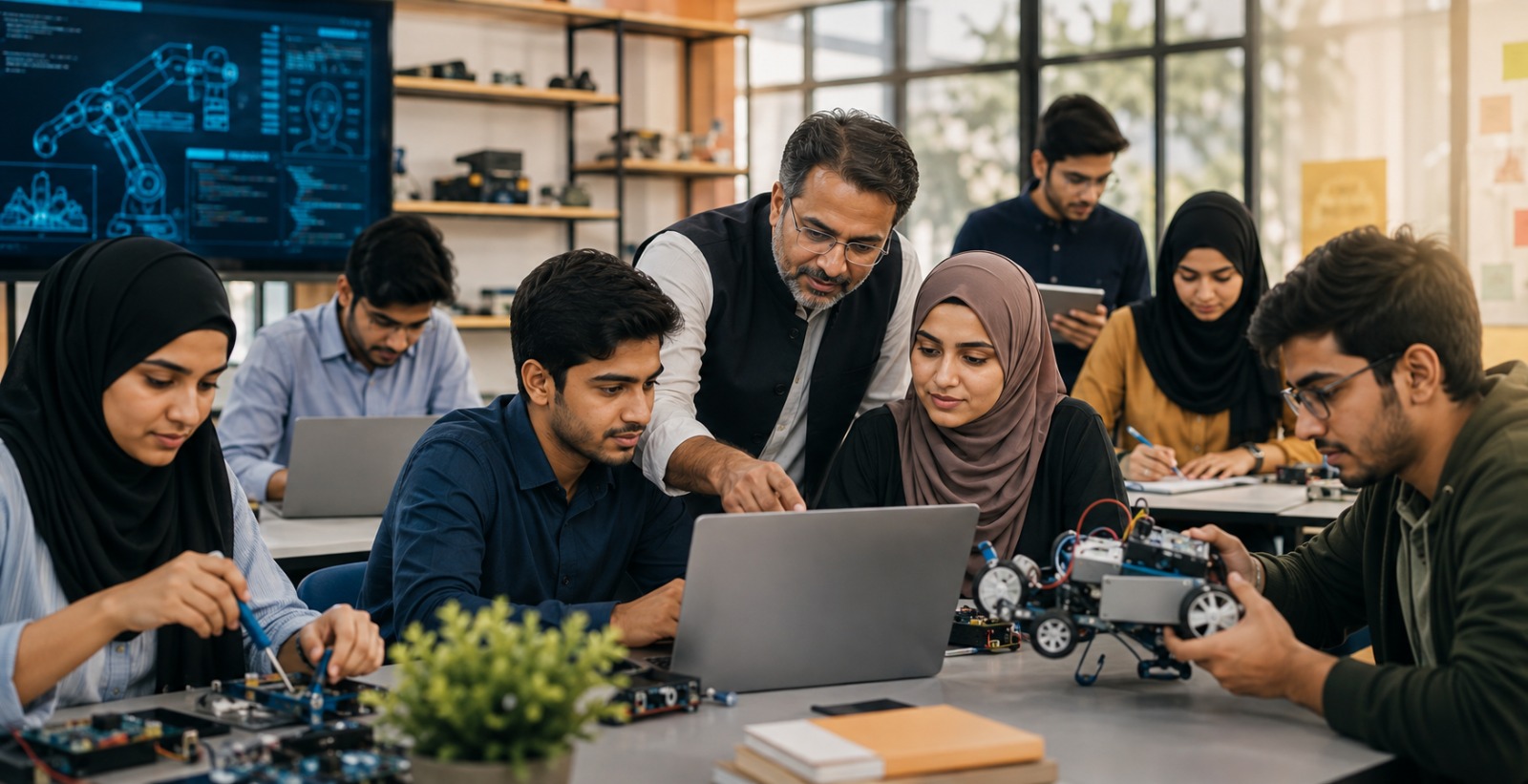
Scholarships, libraries, skill-development centres, research fellowships, digital learning platforms and vocational institutions can create opportunities that endure long after today’s controversies have faded.
No government programme can match the cumulative power of millions of such quiet acts of solidarity.
The challenge is not merely educational or economic; it is psychological. A generation raised amid anxiety must not inherit anxiety alone. It must inherit ambition.
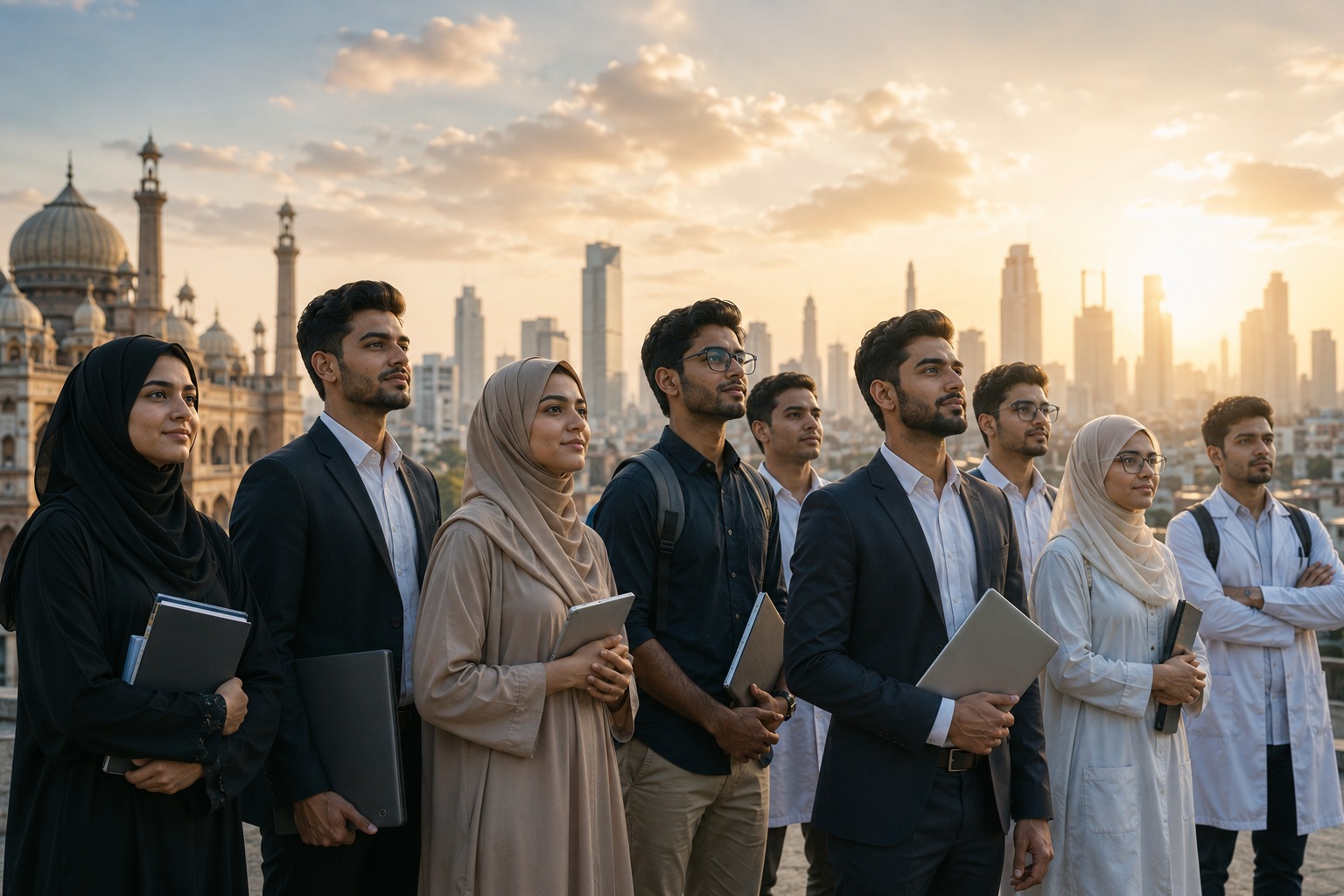
Education must be central to this effort—not as a slogan, but as sustained practice. Experience repeatedly shows that communities overcome adversity not merely through political mobilisation, but through the patient accumulation of knowledge, skills and excellence.
School and college education must not be seen simply as a means of acquiring degrees; it must become a quest for mastery, curiosity and intellectual confidence.
Alongside formal education, the community must renew its long and distinguished tradition of craftsmanship, enterprise and vocational skill.
In an age shaped by artificial intelligence, digital technologies and rapidly evolving markets, skill development can no longer remain confined to traditional occupations.
Young Muslims must be encouraged to embrace new technologies, modern business practices and contemporary marketing methods, equipping themselves for opportunities that did not exist even a generation ago.
There is a fair objection to any argument built around excellence: that it can shade into telling the discriminated-against to simply work harder, as though prejudice were a problem of insufficient merit. That is not the claim here.
Excellence does not cure prejudice, and no one should have to be twice as good to be treated as an equal. But within the space that remains after every legitimate demand for justice has been made, excellence is still one of the few forces a community can build entirely on its own terms, answerable to no one’s permission.
It complements the fight for rights; it does not substitute for it. Students should aim not merely to obtain qualifications but to excel in their chosen fields, because respect and influence flow not only from numbers or political power, but from competence, integrity and demonstrated achievement.
That ambition should extend beyond traditional notions of success. The future belongs to societies that can adapt to new technologies, build institutions and cultivate talent across every field. Indian Muslims have a distinguished history of scholarship, enterprise and public service. The task before them is not to recreate the past, but to equip a new generation to flourish in a very different India.
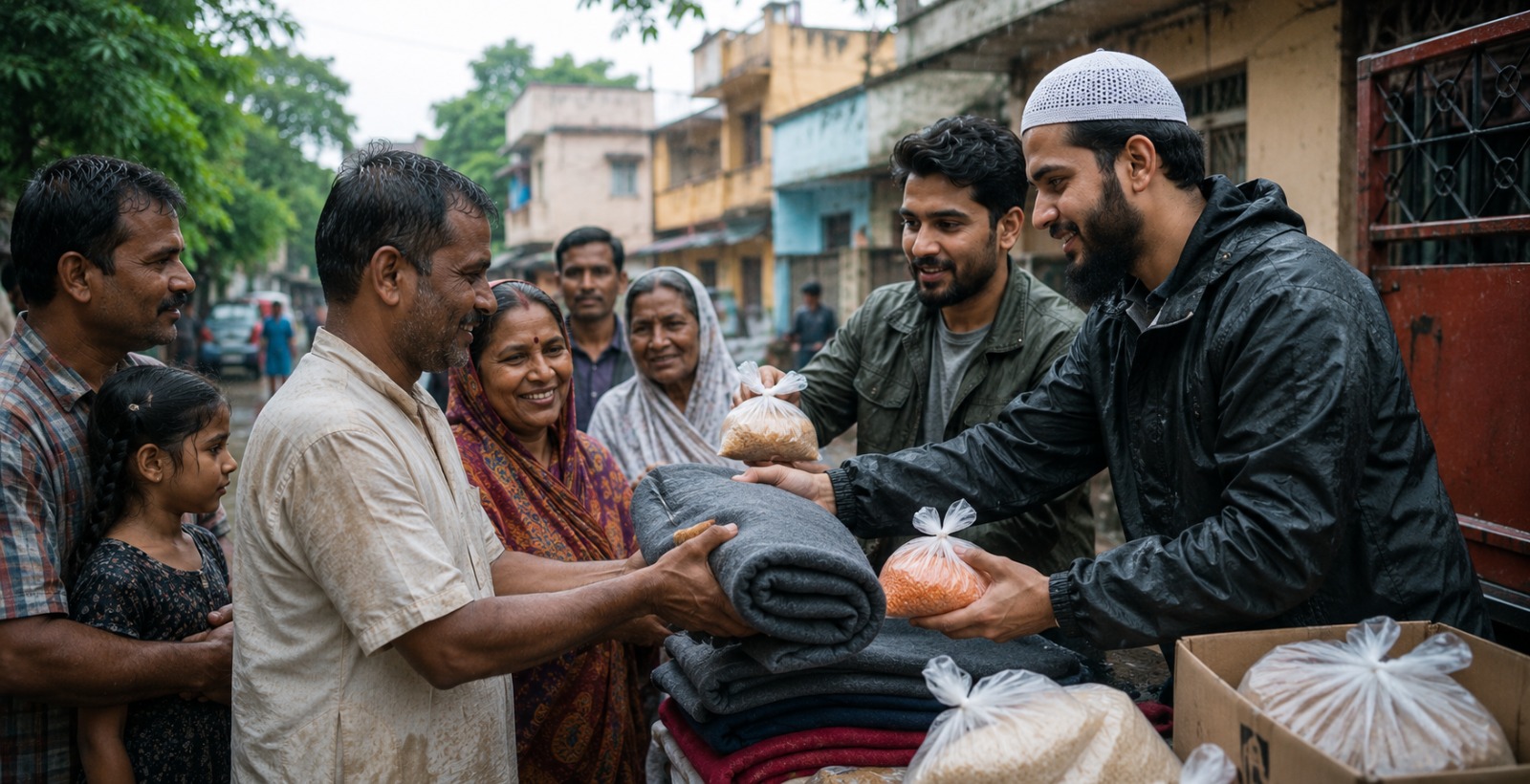
The encouraging signs are already visible, even if any single instance is illustrative rather than proof of some larger trend. When a devastating fire broke out in a building in Delhi recently, local Muslim shopkeepers rushed to help, spreading mattresses and blankets to save those trapped inside.
Across the country, one occasionally comes across moving stories of Muslims helping Hindu neighbours in moments of distress—during accidents, natural disasters or personal crises—and receiving, in return, gratitude and goodwill.
Such moments do not settle larger arguments about the state of communal relations in India. But they are a reminder of what remains possible beneath the noise of politics and social media, and of the kind of society Indian Muslims can help build, block by block, regardless of what happens in any single news cycle.
Holding the state to account and building one’s own future are not competing projects; a community that does only the first, and neglects the second, hands away more of its future than any single policy could take.
Periods of insecurity typically produce two impulses. One is withdrawal: to become consumed by grievance, retreat into nostalgia, and live from one controversy to the next. The other is renewal: to ask how a community can strengthen itself from within without surrendering either its rights or its hopes. The two are not alternatives. A community can insist on justice and still choose not to be defined solely by its absence.
The confidence to build will not come merely from political assurances or courtroom victories, important and necessary though they are.
It must also emerge from within society itself—from families, neighbourhoods, mosques, professional networks and philanthropic institutions.
For centuries, zakat and awqaf have served as instruments of compassion. Perhaps the time has come to imagine them more ambitiously: not only as means of relief for the distressed, but also as investments in the future.
Scholarships, libraries, skill-development centres, research fellowships, digital learning platforms and vocational institutions can create opportunities that endure long after today’s controversies have faded.
Equally important is the role of those who have already succeeded. Every prosperous family, every established professional and every successful entrepreneur can transform lives by assuming responsibility for at least one child or young student—helping with school fees, mentoring, vocational training or the transition into professional life.
No government programme can match the cumulative power of millions of such quiet acts of solidarity.
The challenge is not merely educational or economic; it is psychological. A generation raised amid anxiety must not inherit anxiety alone. It must inherit ambition.
Education must be central to this effort—not as a slogan, but as sustained practice. Experience repeatedly shows that communities overcome adversity not merely through political mobilisation, but through the patient accumulation of knowledge, skills and excellence.
School and college education must not be seen simply as a means of acquiring degrees; it must become a quest for mastery, curiosity and intellectual confidence.
Alongside formal education, the community must renew its long and distinguished tradition of craftsmanship, enterprise and vocational skill.
In an age shaped by artificial intelligence, digital technologies and rapidly evolving markets, skill development can no longer remain confined to traditional occupations.
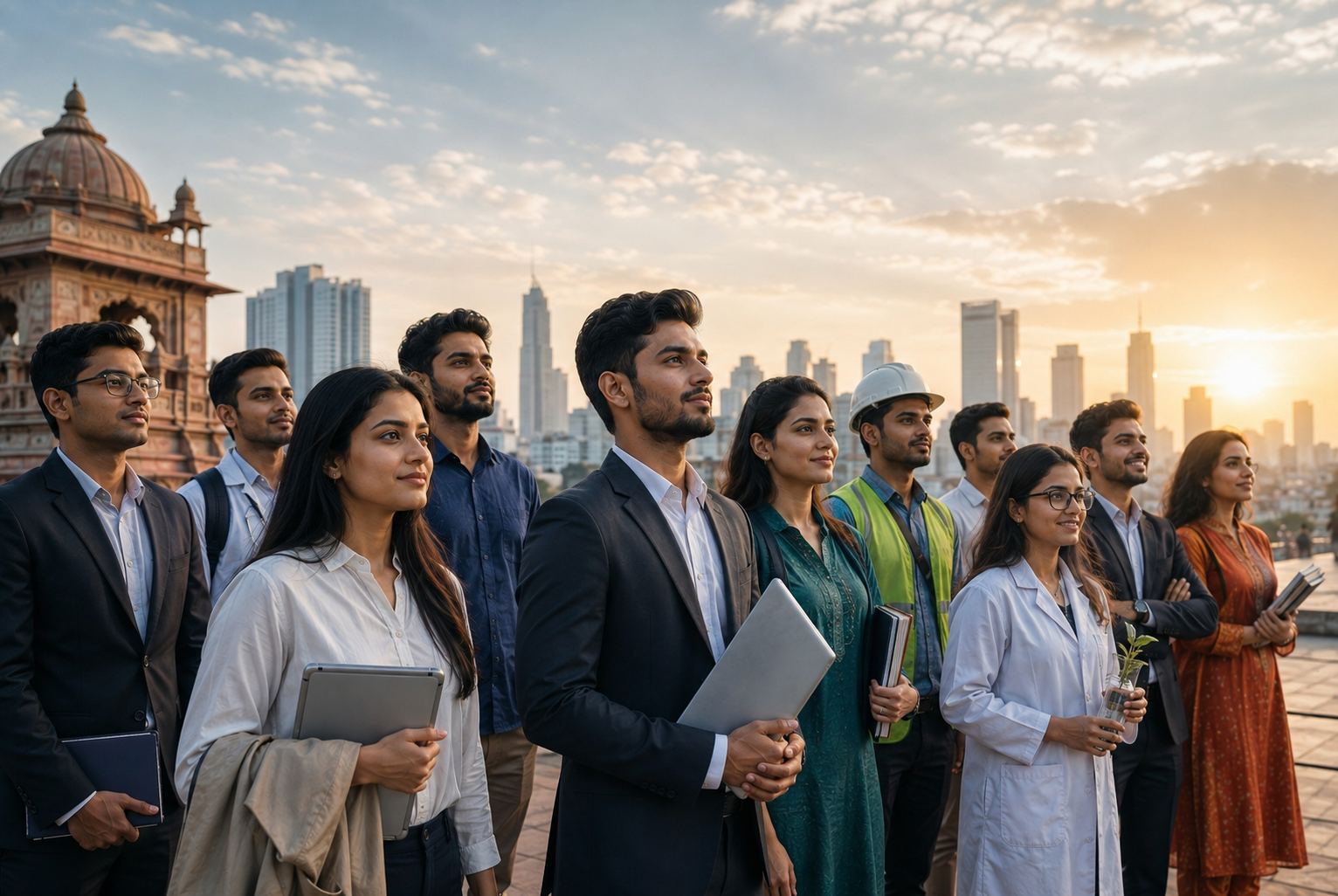
Young Muslims must be encouraged to embrace new technologies, modern business practices and contemporary marketing methods, equipping themselves for opportunities that did not exist even a generation ago.
There is a fair objection to any argument built around excellence: that it can shade into telling the discriminated-against to simply work harder, as though prejudice were a problem of insufficient merit. That is not the claim here.
Excellence does not cure prejudice, and no one should have to be twice as good to be treated as an equal. But within the space that remains after every legitimate demand for justice has been made, excellence is still one of the few forces a community can build entirely on its own terms, answerable to no one’s permission.
It complements the fight for rights; it does not substitute for it. Students should aim not merely to obtain qualifications but to excel in their chosen fields, because respect and influence flow not only from numbers or political power, but from competence, integrity and demonstrated achievement.
That ambition should extend beyond traditional notions of success. The future belongs to societies that can adapt to new technologies, build institutions and cultivate talent across every field. Indian Muslims have a distinguished history of scholarship, enterprise and public service. The task before them is not to recreate the past, but to equip a new generation to flourish in a very different India.
The encouraging signs are already visible, even if any single instance is illustrative rather than proof of some larger trend. When a devastating fire broke out in a building in Delhi recently, local Muslim shopkeepers rushed to help, spreading mattresses and blankets to save those trapped inside.
Across the country, one occasionally comes across moving stories of Muslims helping Hindu neighbours in moments of distress—during accidents, natural disasters or personal crises—and receiving, in return, gratitude and goodwill.
Such moments do not settle larger arguments about the state of communal relations in India. But they are a reminder of what remains possible beneath the noise of politics and social media, and of the kind of society Indian Muslims can help build, block by block, regardless of what happens in any single news cycle.
Perhaps, then, the task before the community is larger than securing its own future. Schools, hospitals, scholarships, relief work, environmental campaigns, blood-donation drives and neighbourhood initiatives should serve not only Muslims but society as a whole. Institutions command respect when they transcend communal boundaries.
The children entering school today will come of age around the centenary of the Indian Constitution. By then, the most important question may not be how much prejudice their parents endured, but what they built despite it, and alongside the demand for justice: the institutions they created, the opportunities they expanded, the rights they defended, and the confidence they passed on.
Hostility may sometimes be manufactured from above, but trust is built from below—through countless acts of service, generosity and shared purpose.
In strengthening the bonds that connect communities, Indian Muslims would not merely improve their own image; they would help preserve the plural and humane idea of India itself.
At a time when the country speaks increasingly of Atmanirbhar Bharat—of self-reliance, entrepreneurship and innovation—the challenge before Indian Muslims is to translate their own traditions of charity, learning and institution-building into instruments of empowerment, even as they continue to insist, without apology, on the rights the Constitution guarantees them.
True self-reliance is not merely economic; it is intellectual, educational and moral. It lies in nurturing generations equipped with knowledge, skills and the confidence to compete and excel in a rapidly changing world.
For Indian Muslims, therefore, the task is not simply to endure adversity, nor simply to demand its end, but to do both while also transforming it into a source of renewal.
ALSO READ: Mizan – Towards a new Muslim imagination
Communities do not rise only when circumstances become favourable. More often, they rise because they resolve that adversity, however painful and however unjust, will not have the final word. By defending their rights, investing in education, mastering new skills, pursuing excellence and serving society as a whole, Indian Muslims would not merely secure their own future; they would help build the plural, humane and self-confident India to which the Constitution aspires.
The writer is former Chief Election Commissioner of India and the author of INDIA and I - A Hundred Memories, Not a Memoir.

.webp "Union Home Minister Amit Shah")