 Aditi Bhaduri
Each year around this time, the public debate in India is on the relevance of multilateral platforms like the Shanghai Cooperation Organisation (SCO) and BRICS. One camp feels that India’s destiny is tied to the West and she should stop accommodating these forums. Another camp sees India's future only through the prism of the global south and feels the country is not adequately invested in these forums. A smaller camp finds India as a balancer between these platforms and the West.
This third camp is the most pragmatic and practical. For indeed, India’s destiny is tied to both the West and the global south. It is not one or the other, and India will not have to continue to do this balancing act but is itself a balancer of these platforms.
What exactly does this mean?
Let us take the recently concluded SCO summit of heads of state in Bishkek, the Kyrgyz capital. Prime Minister Narendra Modi travelled to Bishkek to attend the summit. He was possibly representing the only democracy in the forum, therefore already striking a balance.
Next, India's presence also ensured that the platform is not turned into an anti-West event. India's presence there helps to keep it non-Western rather than anti-Western.
Thank you to all BRICS leaders for making the Delhi Summit very productive and outcome oriented! pic.twitter.com/C3DMZWGgLL
— Narendra Modi (@narendramodi) September 13, 2026
Most importantly, India's presence and participation in such forums is emblematic of its strategic autonomy. The SCO was formed as a security bloc for the Eurasian region. It may also be pertinent to point out that it was floated soon after the American war on Afghanistan began. It has often been dubbed as the Eurasian NATO, though it is not a military bloc. Dominated by Russia and China, India's presence helps create a middle ground and a democratic space since all decisions are made on consensus.
It is the same with BRICS, which launched 20 years ago with a meeting in Russia's Yekaterinburg between India, China, and Russia. South Africa joined in 2010. During the 2924 summit in Russia's Kazan, 5 more members - Egypt, Ethiopia, Iran, Saudi Arabia, and the UAE were inducted. Indonesia joined the bloc last year. Today, BRICS also has 10 partner countries.
In Bishkek, India, in a very bold but understated manner, demonstrated what it meant by strategic autonomy - the right and ability to choose and pursue interests which first and foremost serve its national interest. This was amply evident during Prime Minister Narendra Modi's meeting with Iranian President Masoud Pezeshkian in Bishkek.
Following the meeting, Modi wrote on his X account: "Met President Masoud Pezeshkian in Bishkek. Reiterated our commitment to strengthening India's long-standing friendship with Iran across diverse sectors. We want to expand and diversify our trade basket in the times to come. We had a discussion on the prevailing situation in the region. India will continue to support all efforts at ensuring peace."
This was Modi's second meeting with Pezeshkian and the first after the US-Israel war on Iran began.
The full import of the Modi-Pezeshkian meeting can be understood when one considers that it came in the wake of warnings by US Treasury Secretary Scott Bessent that countries that trade with Iran will face secondary sanctions on their exports to the USA. The US has also withdrawn the sanctions waiver on the Chabahar port, forcing India to withdraw from its engagement at the Shahid Beheshti terminal there.
Meanwhile, India continues to negotiate a trade deal with the US. None of this prevented the meeting and India's resolve to continue engagement with Iran, important for a variety of reasons - trade, connectivity, and energy procurements.
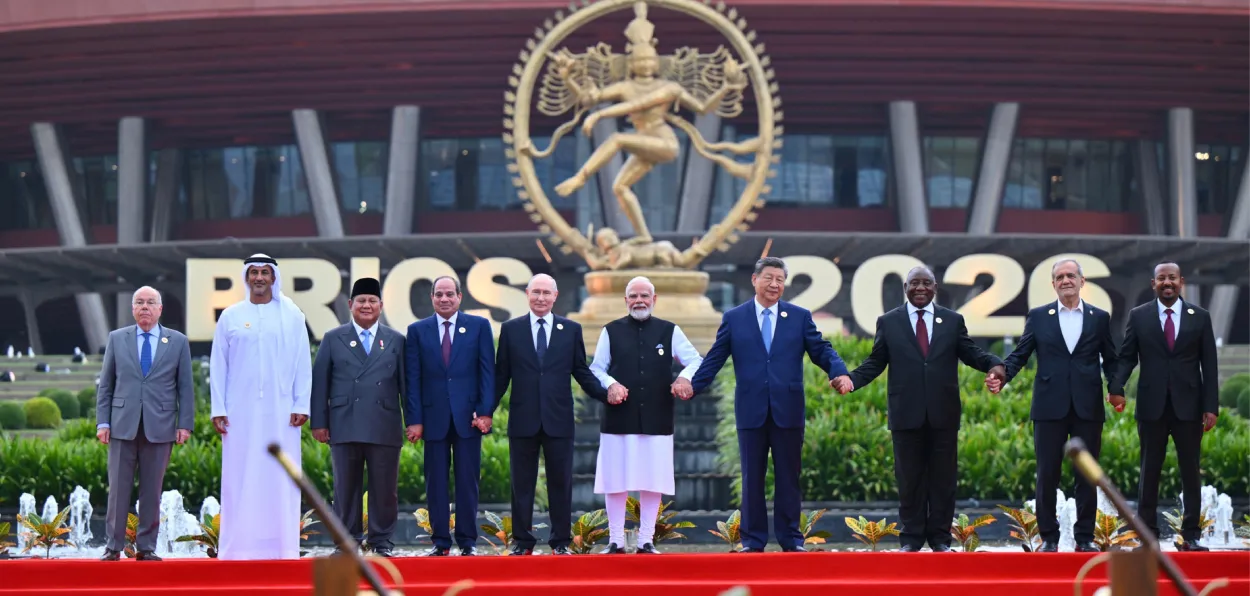
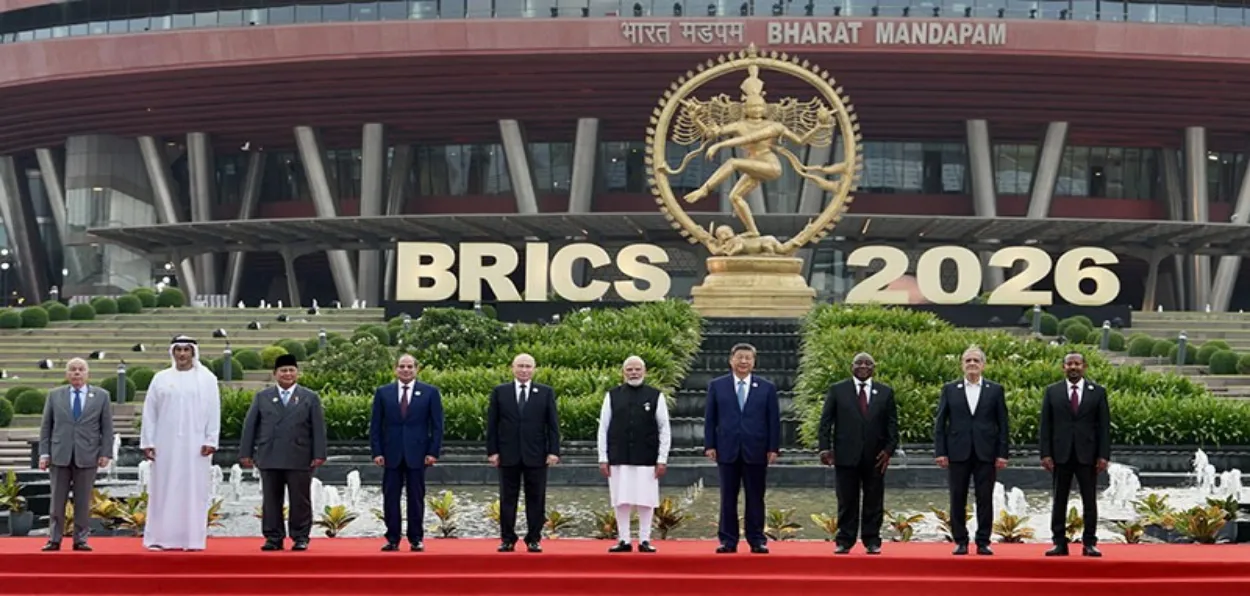
This engagement continued in Delhi too during the BRICS summit, also attended by Pezeshkian. The photo of Modi and Pezeshkian spoke volumes at a very divisive moment for the world. Modi proved his resolve that despite his closeness to Israel, India will not abandon Iran but continue to engage with it because India needs Iran.
Yet, this engagement also called for a quid pro quo as Modi did not hesitate to spell out India's concerns regarding the closure of shipping in the Strait of Hormuz or the deaths of Indians - both seafarers and innocent workers in the Gulf countries because of Iranian fire.
A bond that keeps growing stronger! 🇮🇳🤝🇷🇺#BRICS2026 pic.twitter.com/f3jpc0voeK
— Piyush Goyal (@PiyushGoyal) September 11, 2026
India's resolve to pursue policies in its own interest was similarly seen in Modi's meeting with Russia's President Vladimir Putin in Bishkek. India continues to buy Russian crude despite tariffs imposed on it for such imports. It continues its engagement with Russia as seen in Putin's visit to India last December for the annual India-Russia bilateral summit, and his current visit not only to attend the BRICS summit but also for a bilateral with Prime Minister Modi on defence, trade, energy and AI.
At the same time, the engagement with Russia revealed more: Modi in clear terms conveyed to Putin in Bishkek that the war in Ukraine must come to an end, from 'endless war" to 'end of war".
We do not know what happened behind the scenes. However, Modi's message to Putin and subsequent trip by External Affairs Minister Dr S Jaishankar to Poland and Ukraine may point to something cooking. Whatever it is, there is no doubt that the war is increasingly hurting India's interests. India's message has also been that it is willing to do whatever is necessary to bring the Ukraine conflict to an end.
In Delhi, during the bilateral with Putin, Modi also pointed out the trade imbalance, tilted heavily in favour of Russia due to energy imports.
It was the same with China. The Modi-Xi bonhomie seemed to be back as President Xi Jinping too attended the BRICS summit and both leaders held a bilateral meeting. India is resolved to improve relations with China - a neighbour, and geography is something that cannot be wished away. Both are great civilisational states which have been dialoguing with each other for centuries. Here too Modi laid out India's position in a clear, crisp manner - the border issue needed to be resolved and India expected China to be sensitive to India's concerns.
For those lamenting that BRICS signified replacing the US with China as a dominant power, India provided the answer. The Yuan will not replace the dollar in trade matters, but bilateral trade within the BRICS bloc should be encouraged to be conducted in local currencies, something India has already been doing with some countries.
Finally, the BRICS summit provided some fine moments of Indian diplomacy.
#BREAKING
— Nabila Jamal (@nabilajamal_) September 12, 2026
FIRST MEET SINCE WEST ASIA WAR
Iran, UAE come face-to-face in New Delhi
Iranian President Masoud Pezeshkian meets Abu Dhabi Crown Prince Sheikh Khaled bin Mohamed bin Zayed Al Nahyan on the sidelines of the BRICS Summit, the first such high-level meeting since West… pic.twitter.com/n7rGfYTWiM
We saw a breakthrough of sorts as Pezeshkian met with the UAE's Sheikh Khaled bin Mohamed bin Zayed Al Nahyan, Crown Prince of Abu Dhabi. Any future talks and normalisation between these two countries, which have been on opposite sides of the divide in the Iran war, will have this meeting in Delhi as a watershed moment.
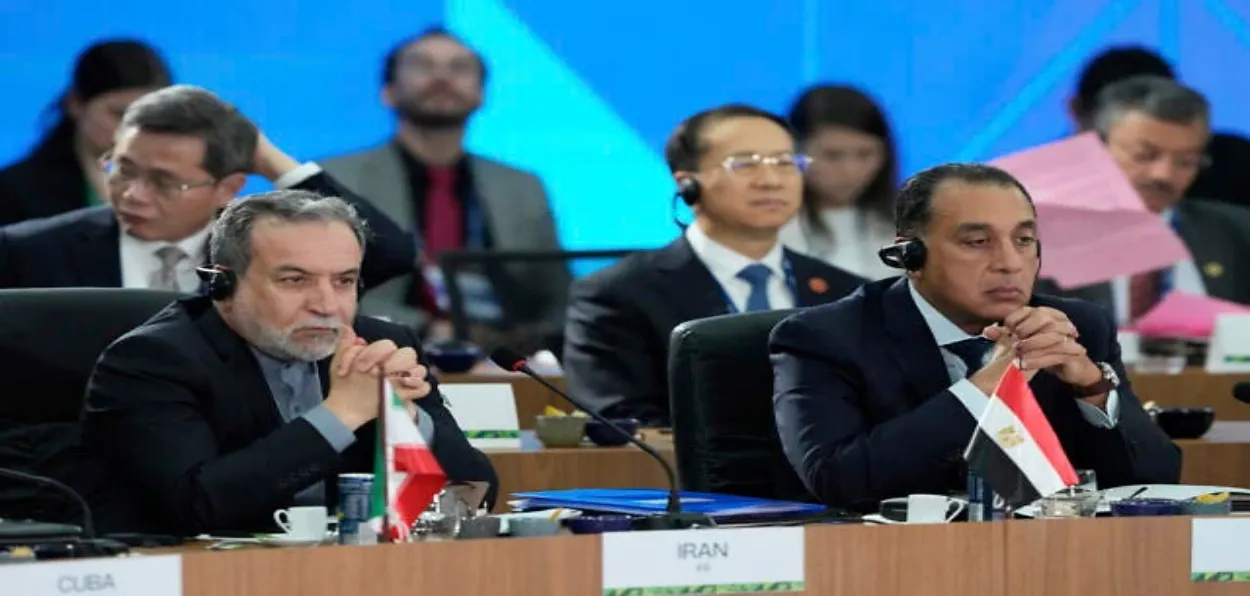
But India was not just able to bring such opposing powers together under the same roof for the BRICS summit in Delhi; it also pulled off a joint statement. This was undoubtedly a diplomatic feat. And the Delhi Declaration was voluminous about Palestinian rights - once again reflecting India's commitment to the two-state solution even as it builds close ties with Israel.
ALSO READ: Why is Kazakhstan's new constitution good for world?
Thus India continues to navigate its increasingly robust relations with the West, along with its ties to Russia, while staying true to its roots in the global south. India's participation in these forums helps not only expand its footprint in these geographies, but it also promotes true multilateralism and India's commitment to it in an increasingly multipolar world.
.webp "Union Home Minister Amit Shah")






.webp)