Mansooruddin Faridi
The story of Mumbai’s famous Ganeshotsav celebration, Lalbaugcha Raja, began on land donated by a Muslim landlord. Decades later, the Ganpati immersion procession would pause before a mosque, where it received a warm welcome from members of the Muslim community.
The history of Lalbaugcha Raja—Mumbai’s most renowned Ganesh idol—therefore contains a remarkable chapter in the city’s shared cultural heritage, reflecting its traditions of mutual respect and coexistence.
The tradition that today draws hundreds of thousands of devotees to Lalbaug originated in the early 1930s, when local fishermen, porters and traders were struggling to find a permanent space for their market. Their search eventually led to land being made available by a local Muslim landlord, Rajavali Tayyab Ali.
The story goes that the local fishermen and traders vowed that if they could secure a permanent site for their market, they would install a Ganesh idol there and celebrate Ganesh Utsav every year. Once the land was secured and the market established, they fulfilled their vow.
It was at this site that the first public Ganesh idol was installed on September 12, 1934, laying the foundation for what would eventually become Lalbaugcha Raja.
Blissful darshan of Shri Lalbaugcha Raja, Mumbai.
Jai Shri Ganesh pic.twitter.com/0RqcrvxmDf
— Akanksha Parmar (@iAkankshaP) September 15, 2026
A Muslim Landlord and the Market
Rajavali Tayyab Ali, a prominent local Muslim landlord, played an important role in this early chapter. Working with local leaders and residents, he helped make land available for the market, enabling the fishermen and traders to re-establish their livelihoods.
The Ganesh idol that emerged from this community initiative gradually became the centre of a tradition that has grown far beyond its original setting. What began with the practical need for a marketplace eventually developed into one of Mumbai’s most celebrated Ganesh festivals.
Some darshans don’t need words—just fold your hands and feel Bappa’s presence.
The First Idol
The first public Ganesh idol was installed at the site on September 12, 1934. Reflecting the identity of the local Koli fishing community, the idol was dressed in traditional fishermen’s attire.
The early celebration was closely connected with the lives and traditions of the local fishermen and traders. Over the years, the Ganesh mandal grew in popularity, and Lalbaugcha Raja gradually emerged as one of Mumbai’s most prominent centres of Ganesh Utsav.
Kambli Family’s Legacy
The Kambli family has played a significant role in shaping the identity of Lalbaugcha Raja. In 1935, Madhusudan D. Kambli was entrusted with sculpting the idol.
The tradition was later carried forward by his son, Venkatesh Kambli, and subsequently by his grandson, Ratnakar Madhusudan Kambli. For decades, generations of the Kambli family remained associated with sculpting the Lalbaugcha Raja idol.
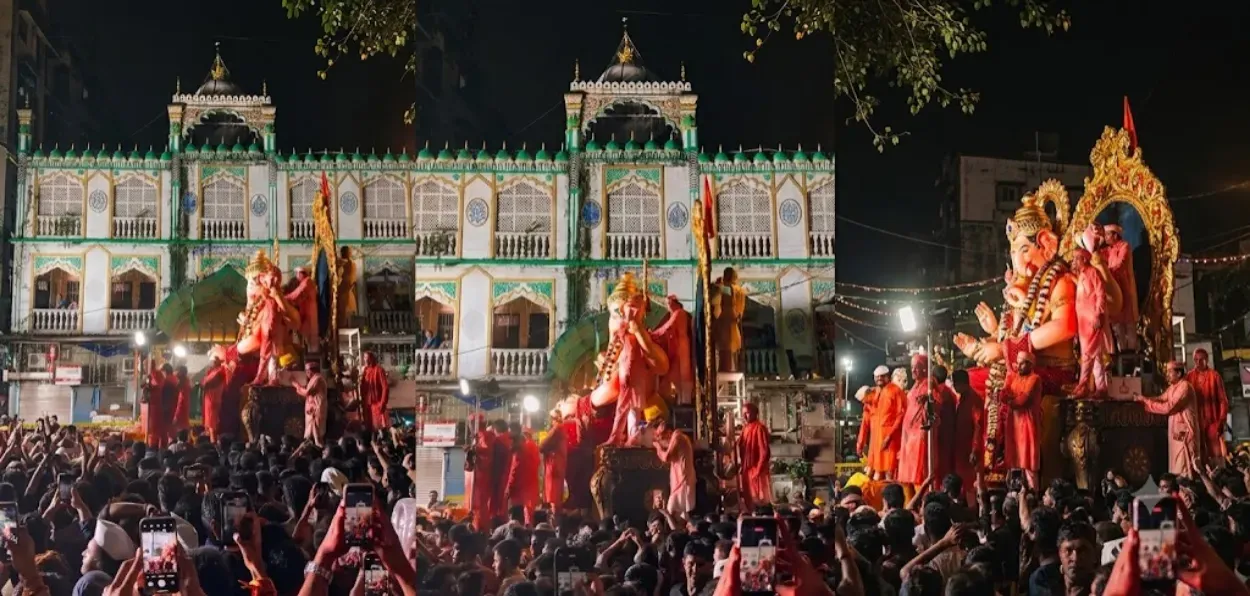
Lalbaugcha Raja: Halt at Hindustani Masjid, a Unique Tradition of Hindu-Muslim Unity
لال باغچا راجا کا جلوس ہندوستانی مسجد کے قریب رک جاتا ہے۔ یہ ایسی روایت ہے جسے ممبئی میں ہندو مسلم اتحادکی علامت کے طور پر دیکھا جاتا ہے۔#Mumbai #LalbaugchaRaja #HindustaniMasjid #hindumuslim pic.twitter.com/dbbS6Em4zS
— mansooruddin faridi (@mfaridiindia) September 17, 2026
Thus, while the first public idol was installed in 1934, the Kambli family’s sculpting tradition began a year later and eventually became an integral part of the identity of Lalbaugcha Raja.
Why Lalbaugcha Raja is Called ‘Navsacha Ganpati’
Over the decades, the fame of Lalbaugcha Raja spread far beyond Mumbai. During Ganesh Utsav, hundreds of thousands of devotees visit Lalbaug to seek the idol’s darshan.
Many devotees firmly believe that Lalbaugcha Raja fulfils their wishes and prayers. This belief has earned the idol the name ‘Navsacha Ganpati’, or the Ganpati who fulfils devotees’ wishes.
The number of devotees arriving for darshan is so large that many spend hours, and sometimes much longer, waiting in long queues for a glimpse of the idol.
Another remarkable chapter in the story of Lalbaugcha Raja unfolded decades later. After the 1980s, a scheduled halt for the immersion procession was introduced in front of the Hindustani Masjid in Byculla.
Local Muslim leaders extended their cooperation to the Ganesh mandal during the procession, helping with its smooth movement and logistical arrangements along the long immersion route. Over time, this cooperation evolved into an established tradition.
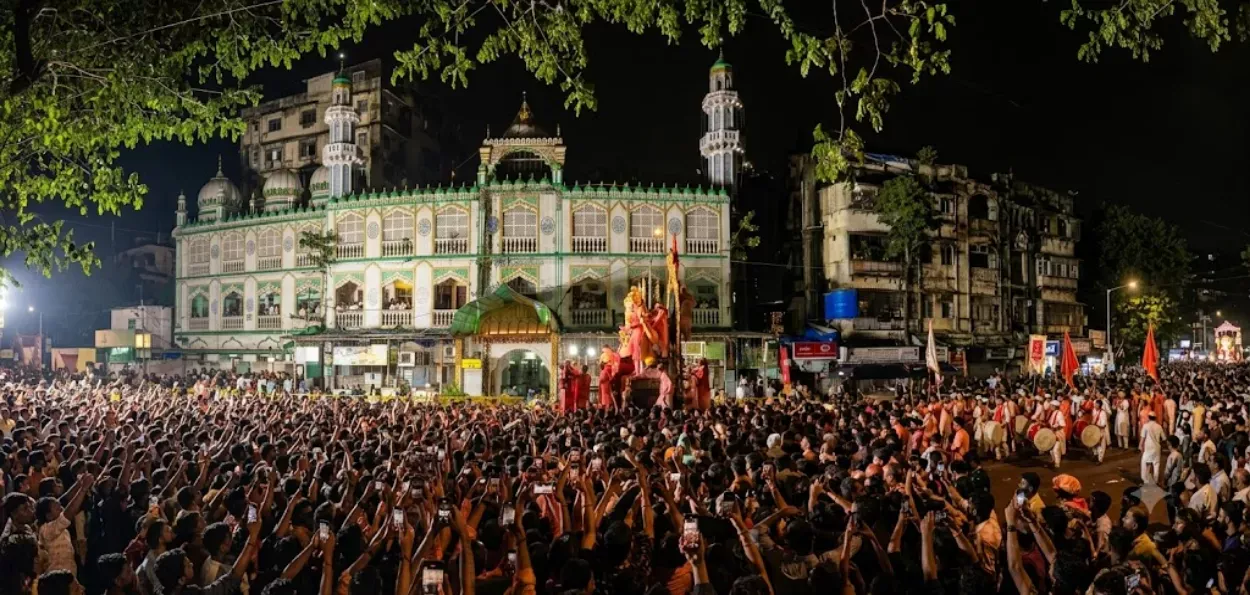 Ganeshotsav Visarjan
When Lalbaugcha Raja reaches the Hindustani Masjid during immersion, the procession pauses briefly. Local Muslims gather outside the mosque to welcome the Ganpati procession. Flowers are offered, garlands are placed on the idol, and sweets are exchanged between members of the two communities.
The scene is striking: on one side stands the mosque, while on the other is the vast procession accompanying the Ganesh idol. Amid the rhythmic beats of drums and chants of “Ganpati Bappa,” the brief halt becomes a distinctive expression of Mumbai’s shared civic and cultural life.
It is a moment in which different religious identities exist alongside a tradition of mutual respect and cooperation—one that has continued at the local level over the years.
Beyond a Religious Festival
Today, Lalbaugcha Raja is one of the major focal points of Mumbai’s Ganesh Utsav. Every year, devotees arrive not only from across Mumbai but from different parts of the country.
Yet its history goes back to something much more ordinary: the need for a marketplace and a secure livelihood for local fishermen and traders. It also remembers the contribution of Rajavali Tayyab Ali, the Muslim landlord who helped make land available for that market.
And decades later, the sight of the Ganesh immersion procession pausing before the Hindustani Masjid adds another dimension to its story.
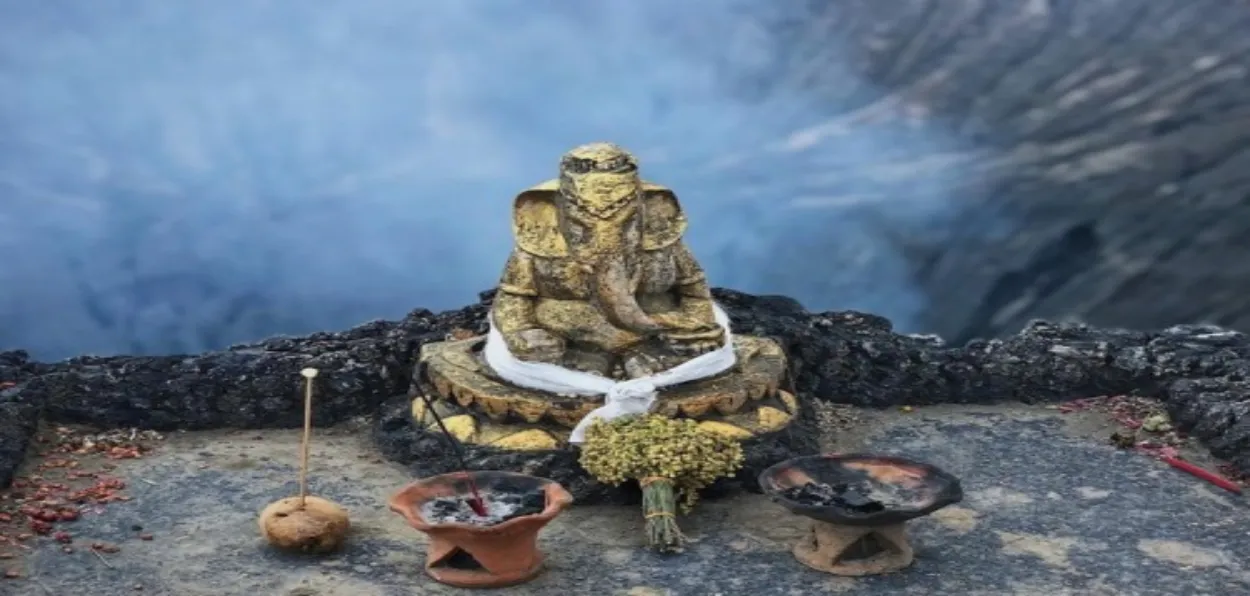
ALSO READ: Indonesia: Ganesha atop Mount Bromo volcano is worshipped
Lalbaugcha Raja is therefore not only the story of a famous Ganesh festival. It is also a window into Mumbai’s evolving social and cultural landscape, where communities with distinct religious traditions have, at different moments, shared spaces, supported one another and created traditions that became part of the city’s collective memory.

.webp "Representational Image")






_(1).webp)
.webp)