




Bhopal
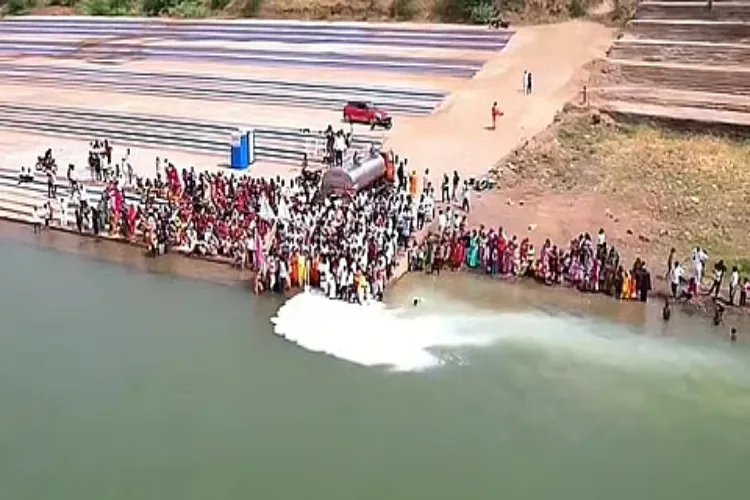
The Central Zone bench of the National Green Tribunal has sought replies from the Central and Madhya Pradesh pollution control boards over allegations that thousands of litres of milk and hundreds of sarees were offered into the Narmada River during a religious ceremony in Madhya Pradesh’s Sehore district, raising concerns about river pollution.
The tribunal was hearing a petition filed against the Madhya Pradesh government regarding a ritual held in Satdev village of the Bherunda area on April 8, marking the conclusion of a 21-day religious programme. According to the plea, around 11,000 litres of milk and 210 sarees were immersed in the river as part of the ceremony.
The bench, comprising Justice Sheo Kumar Singh and expert member Sudhir Kumar Chaturvedi, directed the Central Pollution Control Board and the Madhya Pradesh Pollution Control Board to examine whether such practices are already covered under existing environmental regulations or whether new guidelines are required to prevent pollution caused by similar rituals.
Petitioners argued that the large-scale offering of milk and other materials could damage the river ecosystem, affect aquatic life and contaminate water used for irrigation and drinking purposes. They also contended that such acts may violate provisions of the Water (Prevention and Control of Pollution) Act, 1974.
While hearing the matter, the tribunal noted that no scientific study or data had yet been presented to establish the exact extent of pollution caused specifically by pouring milk into rivers. However, it observed that Section 24 of the Water Act bars the discharge of polluting substances into streams and wells.
The tribunal further remarked that organic substances entering water bodies can increase Biological Oxygen Demand (BOD), which may reduce oxygen levels in water and adversely impact aquatic organisms. It said the issue had become a matter of environmental concern that required detailed examination by pollution control authorities.
The matter has now been listed for further hearing on July 17.
READ MORE: Dr Sofia Banu’s mission to make science serve society
Originating from Amarkantak, the Narmada flows for nearly 1,312 kilometres through Madhya Pradesh, Maharashtra and Gujarat before draining into the Arabian Sea. The river is considered one of the most significant west-flowing rivers in India and serves as a major source of irrigation and drinking water across several regions.










_(3).webp)