 Pallab Bhattacharyya
Some writers observe the world from a safe aesthetic distance, while others walk into its burning edges with memory and responsibility. Shehnab Sahin belongs unmistakably to the latter tradition. Her life has moved across astonishing landscapes—from the riverine plains of Assam to the war-ravaged streets of Damascus, and yet a single thread runs through her journey -- a stubborn faith in humanity even when civilisation appears to be collapsing under the weight of violence, displacement and political fracture.
Her literary voice, administrative experience and humanitarian commitment together make her one of the most compelling contemporary figures from India’s Northeast.
Her book Colour My Grave Purple and Other Stories is not merely a collection of fiction; it is an excavation of memory. Stretching across more than a century and a half of Assamese history, the stories move through tea plantations, colonial violence, indigenous resistance, fractured identities, ecological anxieties and deeply personal grief.
The title itself is unforgettable. Purple becomes the colour of bruises, mourning, resilience and remembrance all at once. The stories resist the temptation to portray the Northeast merely as a theatre of insurgency or exoticism. Instead, they reclaim ordinary lives from the margins of national consciousness. Through quiet but piercing prose, Sahin restores dignity to people who history often leaves unnamed.
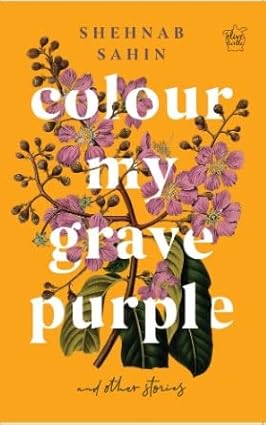
What makes the book remarkable is the emotional authenticity with which it approaches political realities. In “Two Leaves and a Bud,” colonial Assam is not romanticised through misty tea gardens; it is shown as a terrain of exploitation and dispossession.
In Bellows of a Wilted Poppy, indigenous healing traditions confront the arrogance of imperial control. Elsewhere, she enters difficult terrains of ethnic prejudice, sexuality, alienation and ecological destruction. Yet the stories never descend into bitterness. There is sorrow in them, but also tenderness. Sahin’s characters continue to love, hope and endure even in hostile circumstances.
The emotional centre of the collection, however, lies in the title story itself, where private grief merges with collective trauma. The death of a father becomes inseparable from bomb blasts, social unrest and a society trembling under political anxieties. That fusion of the personal and the historical reflects Sahin’s own life. The sudden loss of her father at the age of 16 altered her forever. Her father, a police officer and a respected Assamese writer, had embodied a fascinating duality: the discipline of state authority and the sensitivity of artistic imagination.
His death forced her into premature adulthood, making her emotionally responsible for her family, including a widowed mother and a brother struggling with schizophrenia. The trauma did not diminish her spirit; rather, it created within her an almost relentless drive to live expansively, as though every experience she embraced was also a tribute to the unrealised possibilities of her father’s own life.
This desire for expansion took her far beyond Assam. At St. Stephen’s College, where she studied History, she absorbed the discipline of historiography and the importance of marginalised narratives. Later, her academic path led her to University of Vienna and then to the University of Torino, where she studied international development. Europe widened her intellectual horizons, but it was the destruction of ancient Syrian heritage sites by ISIS that profoundly transformed her sense of purpose. Watching the ruins of Palmyra disappear under the brutality of war awakened in her a realisation that history was not merely to be studied; it had to be defended through humanitarian action.
Before entering international humanitarian work, Sahin briefly returned home to join the Assam Civil Service. On paper, it appeared to be a prestigious and secure career. In reality, it became a difficult confrontation with bureaucracy, hierarchy and the limitations of institutional power. As an administrator, she worked sincerely on welfare and nutrition initiatives, trying to improve conditions for women and children at the grassroots. Yet the environment increasingly suffocated her.
The years of the pandemic, rising sectarian tensions surrounding the Citizenship Amendment Act, and the patriarchal rigidity of administrative culture created a deep sense of disillusionment. She later described this period as emotionally bruising.
It was precisely this crisis that sharpened her literary and humanitarian instincts. Writing became a refuge and a resistance simultaneously. More importantly, she began to recognise the difference between administering systems and serving people directly. The shift from bureaucracy to humanitarianism was therefore not accidental; it was almost inevitable.
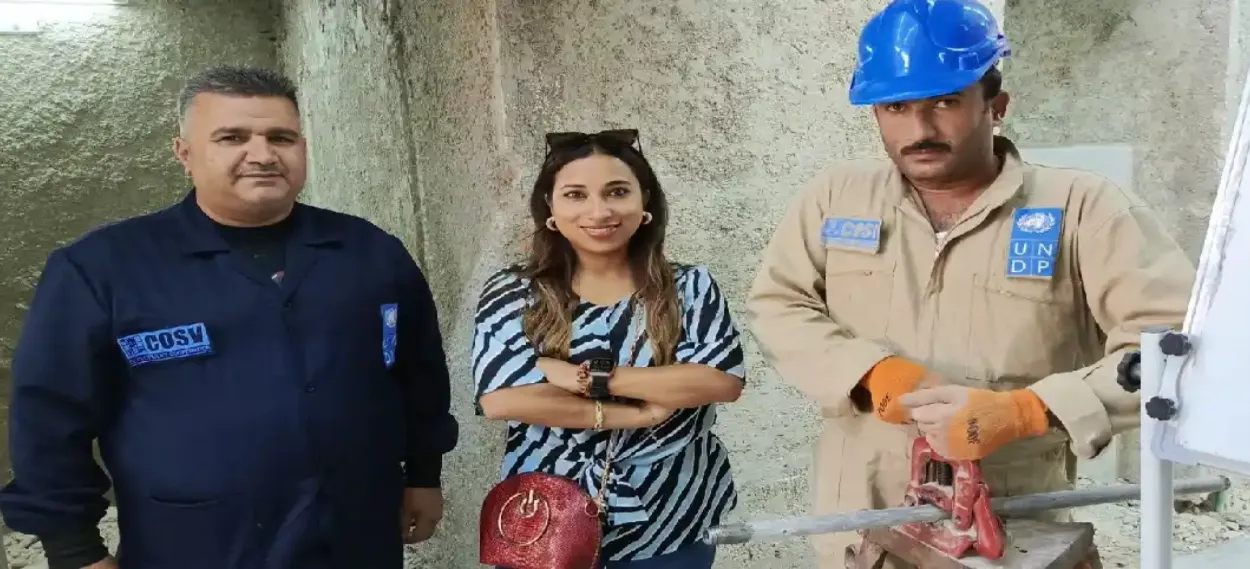
Her next chapter unfolded in some of the world’s most dangerous conflict zones. Joining the Italian humanitarian organisation COSV, Sahin moved into the complex theatres of Syria, Lebanon and Jordan. She became Country Head and Head of Mission in Syria, overseeing projects related to food security, women’s protection, livelihoods and climate resilience. To work in Damascus under the Assad regime required navigating suffocating surveillance, layers of permissions and constant insecurity. Yet Sahin found in these fractured landscapes a strange emotional clarity. She once remarked that she felt more relaxed under missiles and air strikes than within restrictive bureaucratic systems.
For many, conflict zones represent chaos and fear. For Sahin, they became spaces where the masks of society fall away, and humanity appears in its most vulnerable yet authentic form. Working among refugees, displaced children and bombed communities gave her a direct encounter with suffering stripped of ideology. In those devastated streets, she found solidarity rather than alienation.
The author spoke from Damascus, Syria, about the book for her published on X:
The Middle East gradually became a “second home,” not because it was peaceful, but because it affirmed her belief that compassion survives even amidst destruction.
What drives such an insatiable commitment to humanity? Part of the answer lies in her intimate acquaintance with loss. People who have experienced grief often recognise suffering in others with unusual immediacy. But Sahin’s compassion also emerges from her understanding of displacement. Assam’s history of migration, colonial intrusion and identity anxieties gave her a deep sensitivity toward uprooted lives long before she encountered Syrian refugees. In many ways, her journey from the Brahmaputra valley to the Levant revealed to her that human pain speaks a universal language.
Equally important is her refusal to reduce people to statistics or political categories. Whether she writes about Assamese minorities, queer individuals seeking acceptance, villagers living at the edge of forests, or families fleeing bombardment in Syria, she approaches them first as human beings carrying memory and dignity. Her prose is marked by restraint rather than spectacle because she understands that trauma does not always scream; often it survives in silences, gestures and unfinished conversations.
In an age increasingly shaped by polarisation, aggressive nationalism and endless wars, Shehnab Sahin’s relevance becomes striking. The contemporary world is witnessing simultaneous conflicts in multiple regions, unprecedented refugee crises, rising identity politics and a dangerous erosion of empathy in public discourse. Her life offers a counter-vision. She demonstrates that one can engage with power without surrendering moral imagination, and that literature and humanitarian action are not separate realms but complementary acts of witnessing.
Her significance also lies in challenging conventional narratives about India’s Northeast. She carries Assam into global conversations without reducing it to cliché. At the same time, as an Indian woman leading operations in the Middle East, she disrupts older Eurocentric assumptions about who defines humanitarianism.
ALSO READ: Assam's Shehnab returned amidst war in Syria only wanting to go back
Ultimately, Shehnab Sahin’s story is not only about a writer or an aid worker. It is about a human being who refuses to let grief turn into cynicism. Across continents marked by violence, she continues to insist on remembering the forgotten, listening to the displaced and colouring history’s silences with the stubborn shade of humanity. In a world growing noisier with hatred and division, that insistence may itself be an act of profound courage.
Colour My Grave Purple; Shehnab Sahinl Niyogi Books, The author is the former Director General of Police, Assam








_(3).webp)
.webp)
.webp)