Mughal Princess who travelled for Hajj and broke barriers
Story by ATV | Posted by Aasha Khosa | Date 16-05-2026
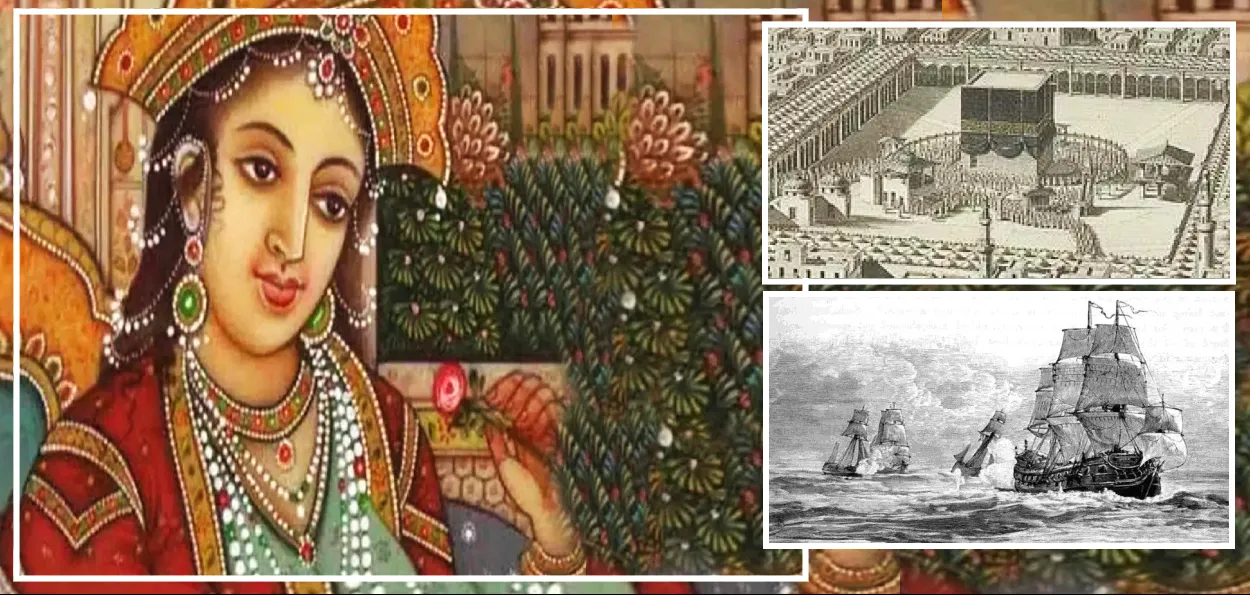
Portait of Princess Gulbadan and her voyage
Mansoruddin Faridi
Set in the sixteenth century, the story of Mughal princess Gulbadan Begum remains one of the most extraordinary journeys undertaken by a woman in medieval India. Emerging from the secluded royal harem of Emperor Akbar, Gulbadan set sail for Makkah to perform Hajj at a time when long-distance travel for women was almost unimaginable. Her decision, supported by Akbar, stunned the royal court and conservative sections of society, where such an act was viewed as revolutionary.
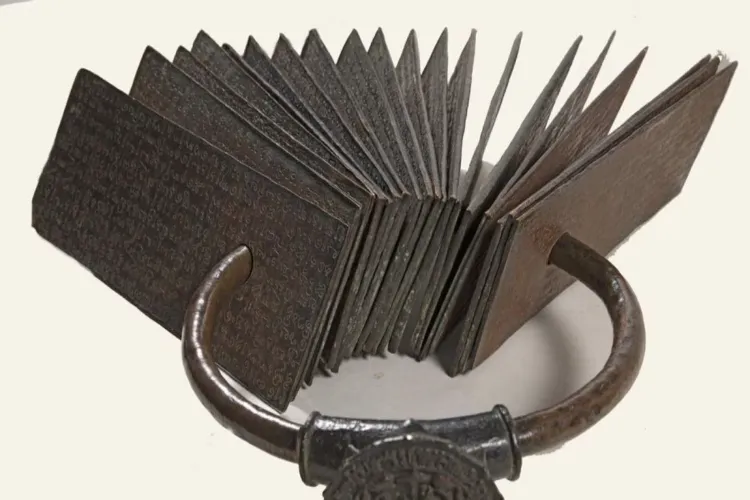
Yet Gulbadan Begum not only completed the arduous pilgrimage to Makkah but also returned safely to India after years of travel, hardship and political intrigue. Upon her return, she wrote her memoir, making her the only Mughal woman of her era known to have left behind a surviving prose work. Her remarkable life and journey have been vividly chronicled by historian Ruby Lal in the book Vagabond Princess: The Great Adventures of Gulbadan.
Born in Kabul in 1523, Gulbadan Begum was the daughter of Mughal founder Babur, the sister of Emperor Humayun, and the maternal aunt of Akbar. She spent her childhood between Kabul and northern India, witnessing the rise and consolidation of the Mughal Empire. Later, under Akbar’s reign, she lived within the imperial harem, a carefully controlled world designed to project the emperor’s grandeur and authority. However, Gulbadan longed for the freedom and movement she had experienced in her earlier life.
In 1575, at around 52 years of age, she resolved to undertake the Hajj pilgrimage. It was no ordinary journey. She led an almost entirely female caravan of royal women and attendants on a voyage of nearly 3,000 miles from Agra to Makkah. Such a large-scale sea journey by Mughal women was unprecedented.
The Book
The caravan included several distinguished women from the Mughal court, among them Bibi Safiya, Shaham Agha and Bibi Sarvo Sahi, remembered for her intelligence and musical talent. Salima Khanum was also part of the expedition. Since Islamic custom required women to travel with male guardians, two men accompanied the caravan: Abdur Rahman Beg, from Babur’s family, and Baqi Khan, Akbar’s foster brother. Sultan Khwaja was appointed Mir-e-Hajj to supervise the voyage.
The departure itself was a historic spectacle. As Ruby Lal describes, Gulbadan Begum emerged from the guarded quarters of the imperial harem wearing an embroidered dupatta while Emperor Akbar personally came to bid farewell to the women. Young princes Salim and Murad were also present during the departure from Fatehpur Sikri in October 1575.
Akbar spared no effort in preparing for the expedition. Two large ships, the Salimi and the Ilahi, were equipped for the voyage. Vast quantities of wealth accompanied the caravan, including thousands of robes and hundreds of thousands of rupees intended for charity in the holy cities. Soldiers, cooks, servants, porters, water carriers and even poor pilgrims travelling at state expense joined the expedition.
Rumi Khan, a veteran gunner from Babur’s era, was reportedly included as a translator.
The journey, however, was filled with danger. The sea route to Makkah was dominated by the Portuguese, who frequently attacked Muslim vessels. Gulbadan’s caravan had to wait in Surat for more than a year to secure Portuguese permission to sail safely across the Arabian Sea. Even after departure, the voyage remained perilous. On the return route, their ship nearly met disaster near Aden.
After performing Hajj, Gulbadan Begum stayed in Makkah for several years. During this period, she generously distributed aid from the Mughal treasury among the poor and needy, earning immense popularity in the holy city. Arabia at the time was under Ottoman rule, and Sultan Murad III reportedly grew uneasy over her growing influence. Several royal decrees were sent asking her to leave Makkah, but Gulbadan ignored them for years, displaying unusual independence and political confidence for a Mughal princess of her age.
Finally, in 1580, she began her return journey to India. After nearly two more years of travel, she reached Fatehpur Sikri in 1582, where she received a grand welcome. Akbar's son, Prince Salim, received her, and at the court, the Emperor Akbar himself later welcomed his aunt back to court.
Gulbadan Begum’s journey was far more than a pilgrimage. It was a powerful assertion of courage, autonomy and endurance by a woman living in a deeply patriarchal age. Her voyage challenged the notion that Mughal women were merely confined to the veil and the harem. Instead, it revealed them as individuals capable of leadership, resilience and independent action.
Centuries later, Gulbadan Begum’s remarkable expedition continues to inspire. Her story is not merely about a royal pilgrimage to Makkah; it is the story of a woman who defied convention, crossed oceans, faced political and physical dangers, and secured her place in history through both action and authorship.














 The Book

_(1).webp)