.webp "Prof. Shahida Murtaza")
Sreelatha M
When we speak of welfare schemes — Beti Bachao, Anganwadi scheme, rural employment guarantees, ASHA , minority scholarships — we rarely think of the years of field research that often precede such announcements. Policies are shaped by scholars who walk through neglected neighbourhoods, document conditions on the ground, and submit reports that may or may not translate into action.
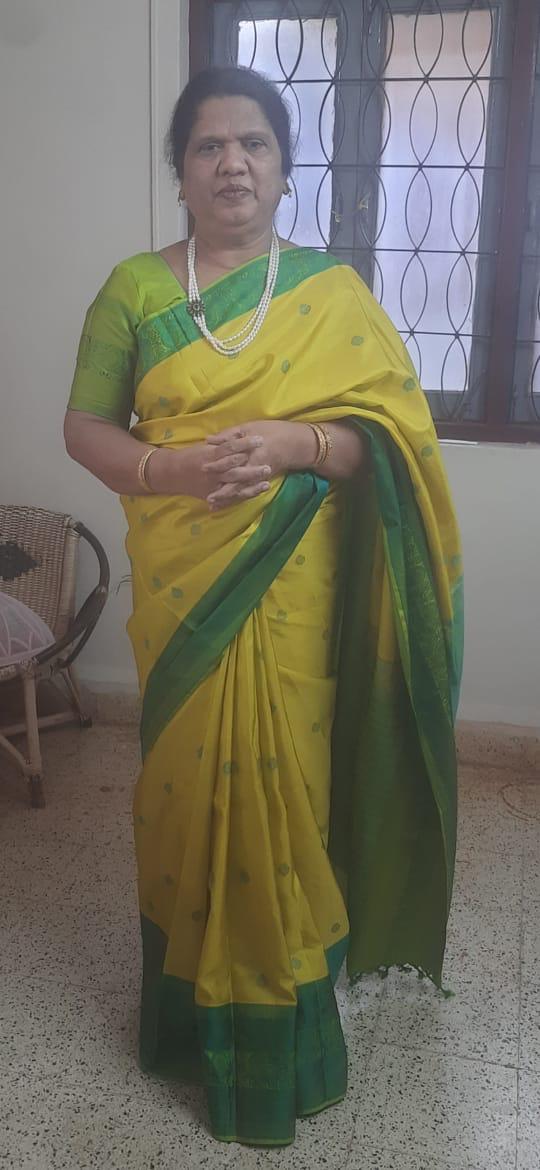
Prof. Shahida Murtaza has been one such academic. An anthropologist and former dean of the School of Social Sciences and former Professor of women’s studies at Maulana Azad National Urdu University in Hyderabad, she spent more than three decades moving between the classroom and the community. Her work combined teaching, ethnographic field studies, and policy-oriented research focused largely on women in marginalised sections of society, particularly in Muslim-dominated pockets of Telangana and Karnataka.
Her path into anthropology was not planned. As a young student from Mehboob Nagar in the erstwhile Andhra Pradesh, she was deeply interested in pure science and intended to pursue it further. Circumstances shifted her course. During postgraduate admissions in Gulbarga, she was redirected into anthropology, and it altered her life’s trajectory. Anthropology gave her a method to study what had always troubled her: inequality, vulnerability, and the quiet suffering of women whose lives rarely enter official narratives. "Now I had access and approach to study poverty," she says.
Her early fieldwork among Lambadi tribal communities in Gulbarga introduced her to poverty — not as theory, but as lived experience. This exploration into the lives of people and investigation of the entry points of poverty and backwardness continued for decades…till her recent retirement.
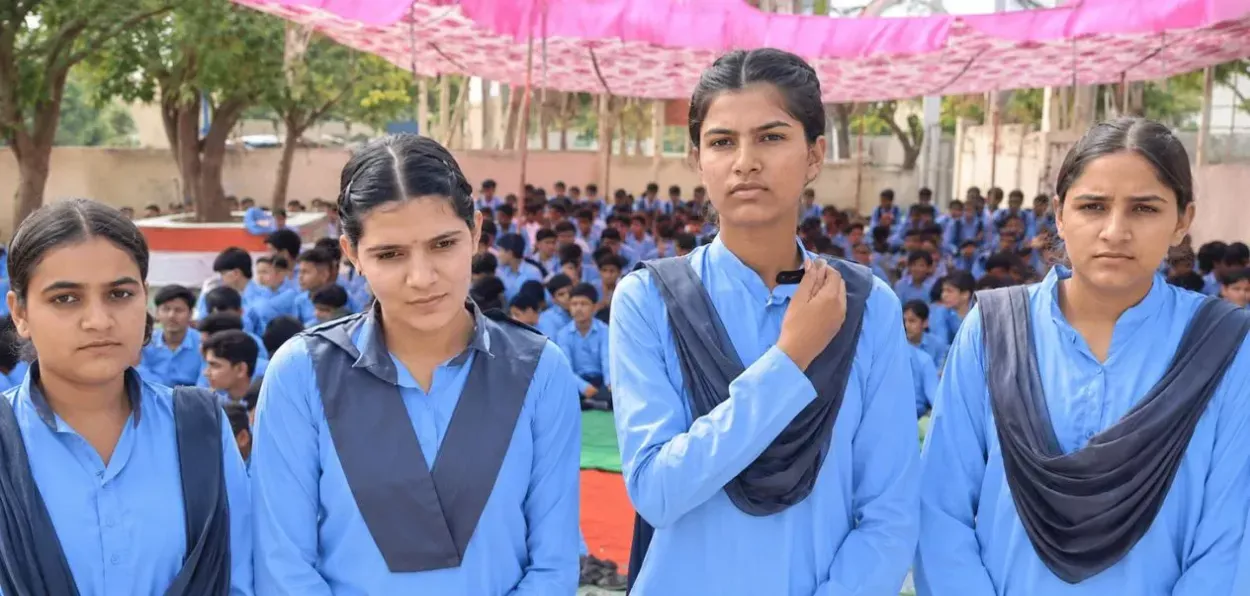
Over the years, she entered homes where 12 to 13 people shared a single room. She met women who had no access to contraceptives and no information about birth control. She spoke with girls who were married at 13 or 14, relocated to unfamiliar towns, financially dependent and socially isolated. She encountered repeated pregnancies not as a choice but as an inevitability. Her sad conclusion: 70 years of freedom have changed nothing for these girls/women.
.jpeg)
She has made these findings across many of her surveys, first as a PhD researcher, asking the question Are Muslims pro-Natalist? She completed many such surveys in different communities, including Muslim-dominated areas, the last one done quite recently before her retirement.
Asked if the condition of Muslim women, the prevalence of child marriage, and the large number of children are related to their faith, she says: "Faith has nothing to do with development." Even as a student, she says she was never interested in manmade discrimination, and she swore by ethnographic investigation. "The differences are the result of conditions. You put anyone in the same conditions, the outcome will be the same."
And the main reason for all these ills is mainly one: lack of agency, she says.
“Give women agency,” she says. “Everything else will follow.” And according to her agency, or doer-ship or empowerment comes from three things: education, awareness of various facilities and schemes, and most importantly, delayed marriages.
The helplessness of the average Muslim woman in the poorest areas is due to the lack of these three factors. The girls are married early; they submit quietly to the man and have no control over their bodies. The third reason is that, being uneducated, she doesn’t know what facilities are available to help her. If a man beats her up, she doesn’t know what to do except suffer silently.
So, giving countless schemes for the poor without creating awareness about them is futile, she says.
In a recent field survey conducted in Muslim-dominated areas of Hyderabad, Prof. Murtaza examined the implementation of welfare and protection mechanisms intended for women.
The findings, according to her, were stark.
She did not find a single functioning One Stop Centre — facilities meant to address grievances related to domestic violence and provide integrated support services.
She found no active livelihood programmes in the areas surveyed.
She found no structured efforts to spread awareness about government schemes meant for women’s welfare.
“All these interventions exist today only on paper,” she says.
In tenements behind the Jama Masjid in Hyderabad, she encountered more than a dozen people living in single rooms. Where is privacy in these homes? And for menstruating women, there is no space to dry their clothes except maybe the roof. Women said they did not even have any old cloth available for menstrual use.
This, she points out, is not a consequence of their faith. Such encounters have left deep impressions on her. "You talk of India Shining, but people are living in subhuman conditions,‘’ she breaks down.
Years earlier, before the bifurcation of Andhra Pradesh, she studied Anganwadi centres in parts of Hyderabad. In several instances, she found children from Urdu-speaking homes being taught in Telugu-medium materials in pre-primary settings. She informed the relevant departments. She facilitated the translation of books and offered them for use.
The materials were not distributed. In some centres, she says, enrolment existed only on paper.
Throughout her career, she submitted multiple research reports to government departments, including studies commissioned for policy consideration. Some were marked confidential. In many cases, she says, there was no communication regarding follow-up action.
This uncertainty — whether the findings were acted upon or archived — has been a recurring frustration.
She also observes what she perceives as a shift in government priorities. According to her, in the last decade, the government has taken a U-turn in whatever interventions were done for minority education.
Monthly research scholarships of Rs 35,000 for minority students were discontinued, and funding for minority institutions has also been curtailed. So earlier, MANA used to sponsor students with small amounts every month. Today, it is only enough to pay salaries, she says.
Despite setbacks, she attempted to build bridges between universities and communities. In 2004, she proposed a model where universities would function as intermediaries between government policies and beneficiaries — spreading awareness in adopted villages, digitising rural communities, and connecting departments through structured outreach.
She also recalls how she set up a self-help group in a village near her college in Karnataka in her early days and called it the Kathyayini Mahila Mandal, which became the first-ever DWCRA project in Karnataka. DWCRA was a poverty alleviation programme of the Rural Development Ministry in the early 2000s, but started at the ground level in southern states in the late 80s.
She used to teach them; she bought them a pounding machine and held meetings with them in her own house. They made atta, spice powders, and she used to sell them in her college hostel kitchen, among other places. The women started earning some money out of these ventures, she recalls proudly.
She spent years teaching in the women's education department of the university. But for her, teaching was not just a job.
“I never carried books,” she says. “I taught from the experiences of women.” For her, a classroom was not a space to complete a syllabus. It was a space to awaken.
“People do not teach to sensitise anymore,” she says quietly. “They teach to earn a living.”
ALSO READ: Prof Nilofer Khan, first woman Vice Chancellor of the Kashmir University
Between policy and people, she believes, lies a huge gulf that has yet to be bridged effectively.

_(1)_(1).webp "Khanqah Emadia Qalandaria, Patna, Bihar")








.webp)