_(3).webp "Dr Sofia Banu")
Daulat Rahman
Dr Sofia Banu, an Associate Professor at the prestigious Gauhati University, chose research as her career because it allows her to turn her curiosity into work that benefits society. From a young age, she was interested in science and inspiring teachers during her school days helped her develop a deep love for scientific research.
In an interview with Awaz-The Voice, Dr Banu explained that what motivates her most is understanding how nature works and using that knowledge to solve real-life problems. According to her, research is not just about doing experiments. It is about asking important questions, testing ideas carefully, and finding answers based on solid evidence. She enjoys the freedom to explore new ideas and the excitement of discovering something new.
Over the years, Dr Banu has become one of the most promising scientists in Assam. She has made important contributions to biotechnology, both in academics and in ways that help society.
_being_felicitated_during_International_Women_Day.jfif)
One of her major research areas is agarwood, which comes from a tree called Aquilaria malaccensis. Agarwood is very valuable in Northeast India because it is used in perfumes and traditional medicines. Dr Banu and her team study how this tree reacts to infections and how agarwood is formed. Their work helps farmers produce agarwood in a sustainable way while also protecting the trees. This supports the local economy and helps conserve an important natural resource.
Another important project focuses on the Assam lemon, a special variety of citrus fruit grown in Assam. Dr Banu’s research studied the genetic makeup and found that lemons from different districts have slight differences. This shows that the fruit has rich genetic diversity, but it also means that steps must be taken to protect its unique qualities. This study was recognised among the top 10 research findings of 2023 by Nature India. The research highlights the importance of preserving both the scientific and cultural value of the Assam lemon.

Dr. Banu has also worked on health-related research, especially on how insulin works in the body and how cells deal with stress. These studies help improve understanding of diseases related to metabolism, such as diabetes, and show how biotechnology can contribute not only to plant science but also to medical science.
She has worked with several well-known institutions, including the National Chemical Laboratory, Jawaharlal Nehru University, Assam Agricultural University, Tripura University, and Symbiosis International University. Her projects have received funding from national agencies like the Department of Biotechnology and the Science and Engineering Research Board under the Government of India. Her team has presented more than 100 research papers at national and international conferences and has won several best presenter awards.
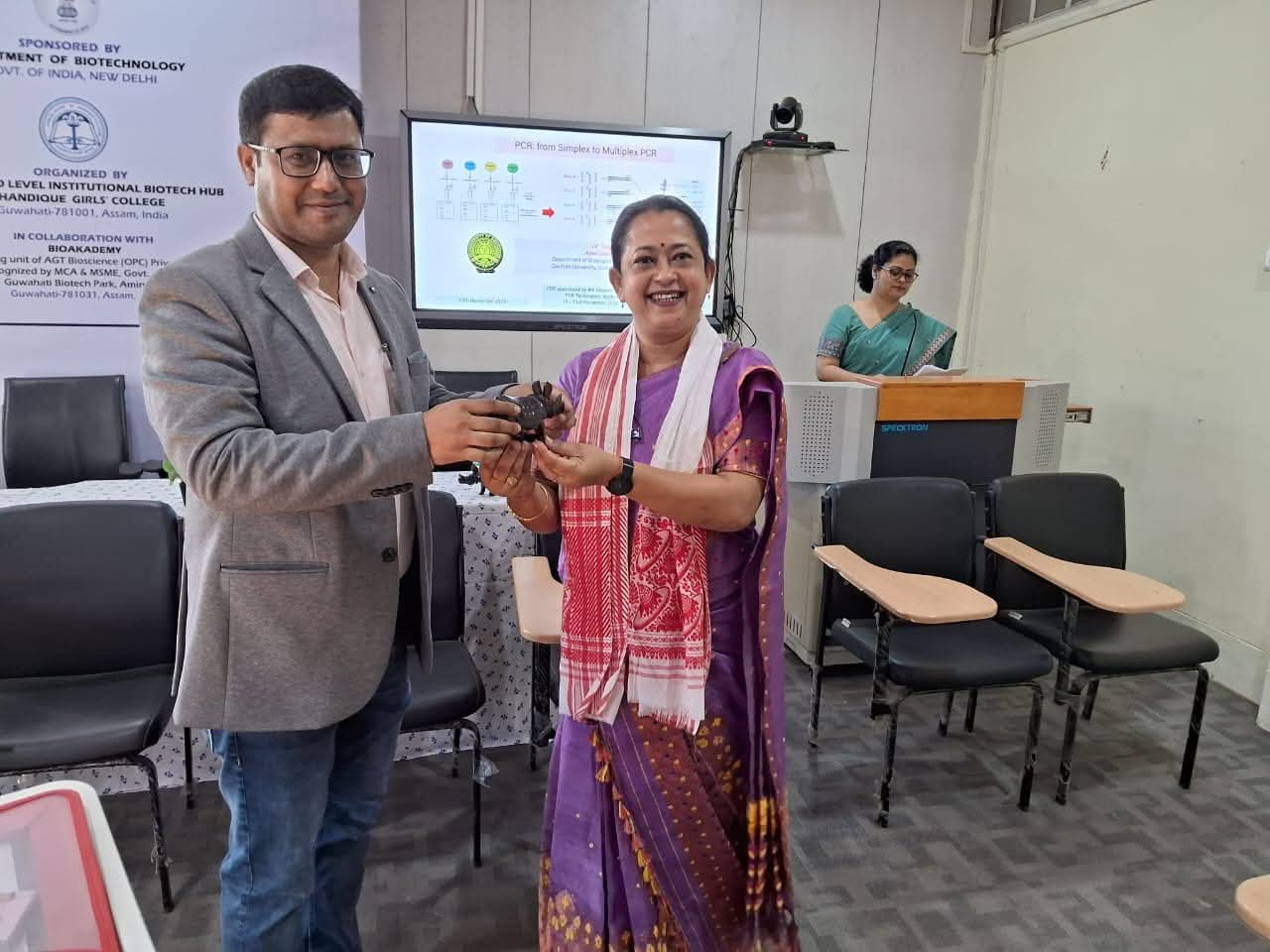
Dr. Banu has written more than 40 research papers and contributed 10 chapters to academic books. Apart from research work, she also writes articles in newspapers on different topics to help people understand science in a simple way.
She has been invited to speak at more than 24 academic events and seminars. Under her guidance at Gauhati University, six students have completed their PhD degrees. Dr Banu is also a member of the editorial boards of several international journals, including Scientific Reports, where she helps review research papers written by scientists from around the world. In addition, she is a life member of five professional organisations and has helped organise several international conferences.
Dr Banu believes that scientific topics are not discussed enough in popular newspapers, even though many people read them every day. To reduce this gap, she regularly writes articles on topics such as antioxidants, stem cells, and genetically modified organisms. Through these writings, she tries to explain complex scientific ideas simply so that the general public can understand them. Her aim is also to encourage young students to take an interest in science and research careers.
.jfif)
Dr Banu and her research team have published several papers in well-known international journals in fields like plant biotechnology, molecular biology, and genomics. They have also written book chapters on modern scientific technologies such as CRISPR gene editing, molecular evolution, and plant-based chemical compounds. These works help other researchers and students learn about new developments in science.
Dr Banu says her family, especially her parents, played a very important role in shaping her career. From her school days, they encouraged her to learn and stay curious about science. Their guidance helped her make the right decisions about her education and career.

She recalls that during one phase of her research, she had to travel frequently for fieldwork and sometimes could not return home regularly for nearly two years. Despite the challenges, her family always supported her and believed in her abilities. Their encouragement gave her the confidence to take risks and continue her scientific work.
Today, Dr Banu wants to expand the impact of her research while also guiding young scientists. She plans to study better and more sustainable ways to improve important plants such as agarwood and Assam lemon. She also hopes to turn her laboratory research into practical benefits, especially for farmers and local communities in Northeast India.
ALSO READ: Prof Nilofer Khan, first woman Vice Chancellor of the Kashmir University
Overall, Dr Sofia Banu aims to combine strong scientific research with real benefits for society. Through her work, she hopes to support both the academic community and the wider public, while inspiring more young people to choose careers in scientific research.

.jpg "Gujarat’s women entrepreneurs bring their craftsmanship to life during Navratri")