New Delhi
Constitutional expert and academic Faizan Mustafa has asked Indian Muslims to prioritise out of the court settlement in the case of disputes of religious places which have tell tale signs of being of the other religions and build a goodwill with them so that the liberal among them come forwards to resolve the dispute.
He asked Muslims not to nitpick the Supreme Court judgements and always speak about Places of Places of Worship Act 1991 as end of all claims on religious places.
Faizan Mustafa is the former Vice-Chancellor of NALSAR University of Law, Hyderabad and the founding V.C. of The National Law University, Odisha. He sits on the board of directors of technology incubator, the T-Hub and most recently, he was the Vice-Chancellor at the Chanakya National Law University, Patna
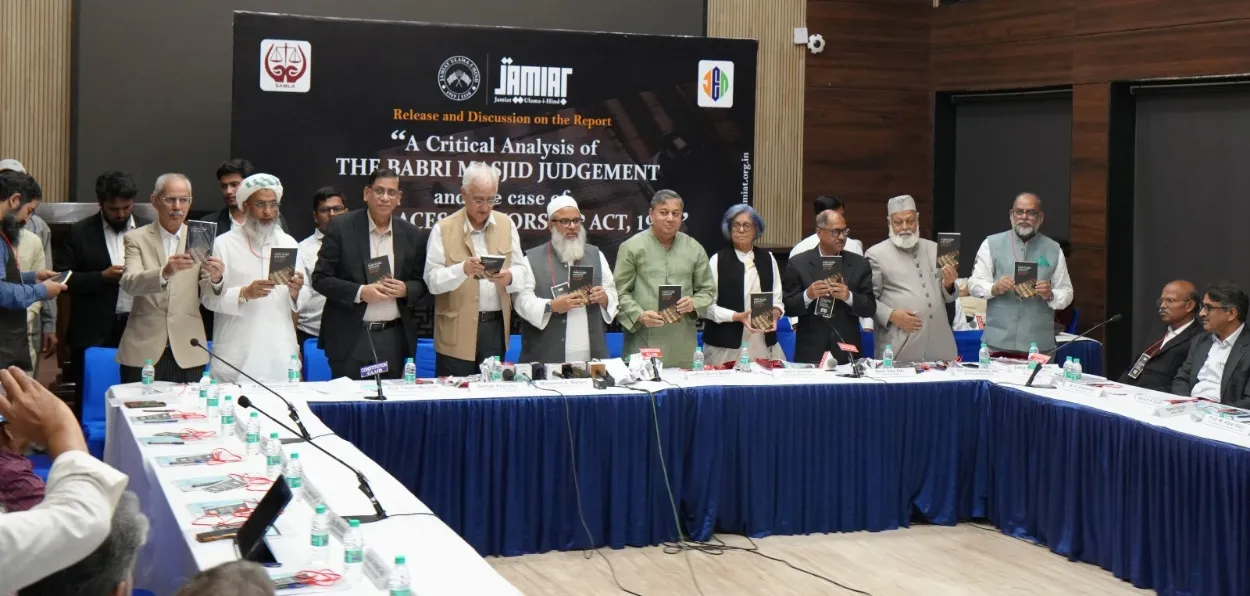
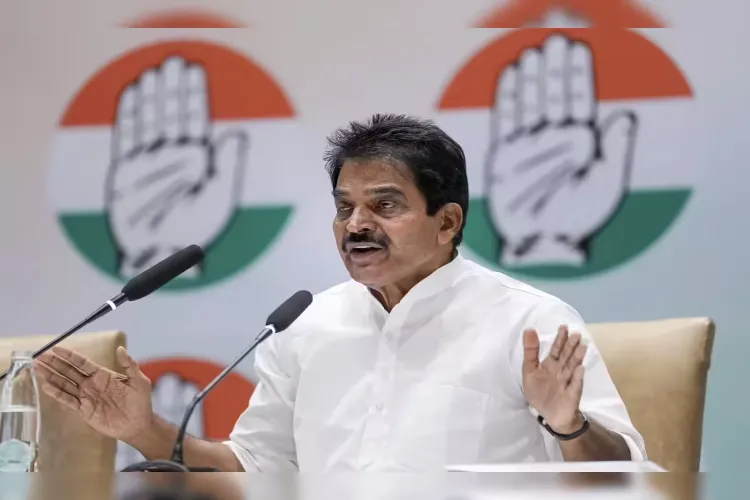
Faizan Mustafa was speaking at an event opf the Jamiat Ulema-e-Hind in Delhi on the Supreme Court judgement on the Babri mosque demolition case.
He argued that engaging in protracted religious litigation increases tensions in society, allowing hate-mongers to exploit this.
The event of JIH was about the release of a report reviewing the Supreme Court verdict on the Babri mosque and the Places of Worship Act 1991.
On the report, Jamiat President Maulana Mahmood Madani said that its purpose is to remind future generations of the "controversial decision" of Supreme Court in the Babri Masjid case.
#Jamiat’s Report Released on #BabriMasjidVerdict and #Places_of_Worship_Act, 1991
— Jamiat Ulama-i-Hind (@JamiatUlama_in) May 16, 2026
Important event on #Secularism and #Justice Organized by Jamiat Ulama-i-Hind and SAMLA. Speakers assert no evidence that Babri Masjid Was Built after Demolishing a Temple and Demand Strict… pic.twitter.com/Myvz3GLmKL
However, Faizan Mustafa expressed his serious objection to the report. He stated that some parts of the report amounted to contempt of court.
Later eleborating on it in his YouTube channel "Legal Awareness Web Series," Faizan Mustafa said that Muslims should prioritise their civil rights and constitutional protections.
He argued that engaging in protracted religious litigation increases tensions in society, allowing hate-mongers to exploit this.
He stated that efforts should be made to find solutions outside the courts in cases of historical disputes on ownership of religious structures like mosques, especially about the claims of demolition of temples and subsequent demolitions of mosques.
He argued that avenues should be explored that allow both parties to move forward with respect.
Faizan Mustafa also questioned the Places of Worship Act of 1991, stating that this law could be challenged in court. He argued that limiting judicial review of any law could raise constitutional questions for the courts.
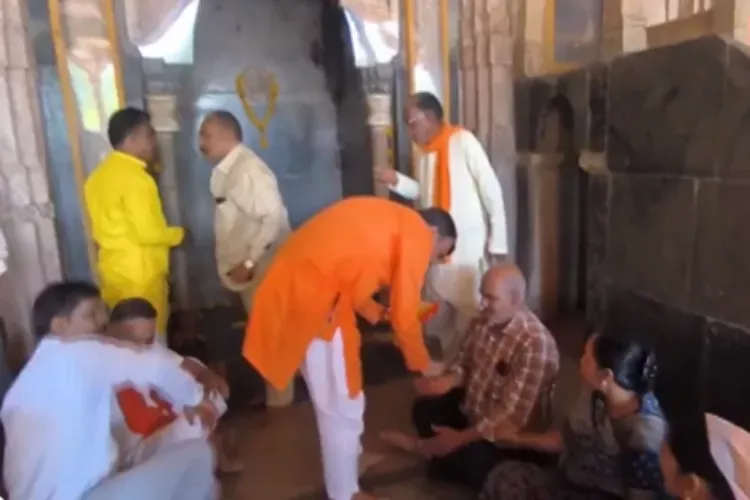
Referring to the recent Bhojshala case, he said that mosques protected by the Archaeological Survey of India (ASI) could be considered outside the scope of this law. This could lead to new legal disputes over many religious sites in the future.
Some speakers at the event disagreed with Faizan Mustafa's views. They stated that Muslims should not back down on the issue of their religious rights. Some also stated that the Babri Masjid case was not fought with full force.
In response, Faizan Mustafa stated that winning every court battle is not the only solution. He added that Muslims must also understand the larger social and political landscape. If polarisation continues to grow in society, it will impact the entire country.
He also stated that there is a need to increase trust and dialogue in society. According to him, the politics of hatred and conflict do not provide lasting benefits to any community.
Faizan Mustafa also expressed a different opinion regarding the sharp criticism of the Supreme Court. He stated that criticism of the courts is part of democracy, but maintaining trust in constitutional institutions is also essential.
He described some aspects of the Babri Masjid verdict as positive for Muslims. He stated that the Supreme Court did not accept that the Babri Masjid was built by demolishing a Ram temple. He stated that this fact is rarely discussed, although it was a crucial part of the verdict.
Following Faizan Mustafa's statements, a debate has intensified on social media. Some are calling his views practical and timely. They believe that in the current environment, an out-of-court settlement and an emphasis on social harmony may be a wise approach.
At this time, Faizan Mustafa's emphasis on out-of-court settlement and social peace is being seen as a distinct approach.
However, it is also clear that there is still no consensus within the Muslim community on this issue.
ALSO READ: Prof Nilofer Khan, first woman Vice Chancellor of the Kashmir University
This event in Delhi has once again raised the question of whether religious disputes can only be resolved through courts or whether new avenues of dialogue and compromise must be found within society. This debate is likely to intensify in the coming days.








.webp)