Mansooruddin Faridi/New Delhi
In ancient times, pilgrims often travelled for months, sometimes even years, to reach Makkah for Hajj. Some crossed scorching deserts on camels, while others walked thousands of miles to fulfil one of the most sacred duties in Islam.
The arduous journey tested the pilgrims in every possible way. They endured hunger, thirst, deadly diseases, harsh weather, and attacks by bandits. Later, when sea routes became common, stormy waters and long voyages severely tested their patience and endurance.
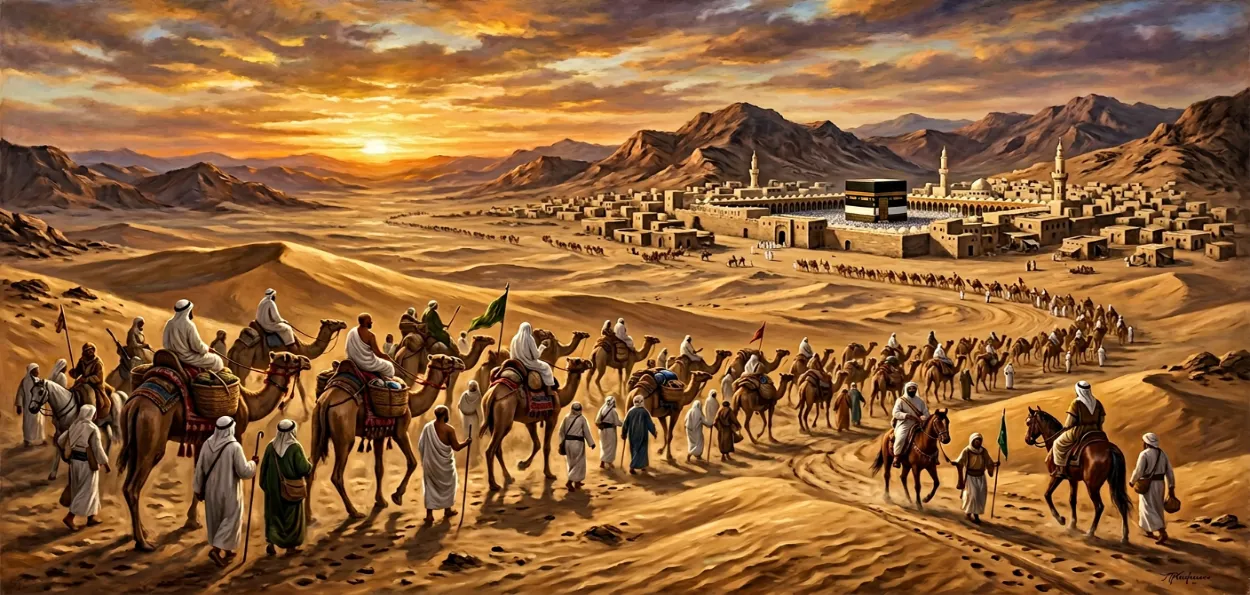
The routes leading to the holy cities were neither paved nor clearly marked. In the absence of modern navigation, pilgrims relied on the wind, stars, and traditional knowledge to find their way. Those travelling for Umrah and Hajj often determined the direction to Makkah by observing the movement and position of stars during the night.
During the Middle Ages, Muslim rulers began organising large caravans to ensure the safety of pilgrims. These caravans departed from major centres such as Cairo, Damascus, and Kufa, and travelled under the protection of armed escorts.
Yet the journey remained perilous. Nomadic tribes inhabiting the deserts along the routes frequently attacked the caravans and imposed exorbitant taxes on travellers. Historical records mention a devastating attack in 1757 in which thousands of pilgrims were killed.
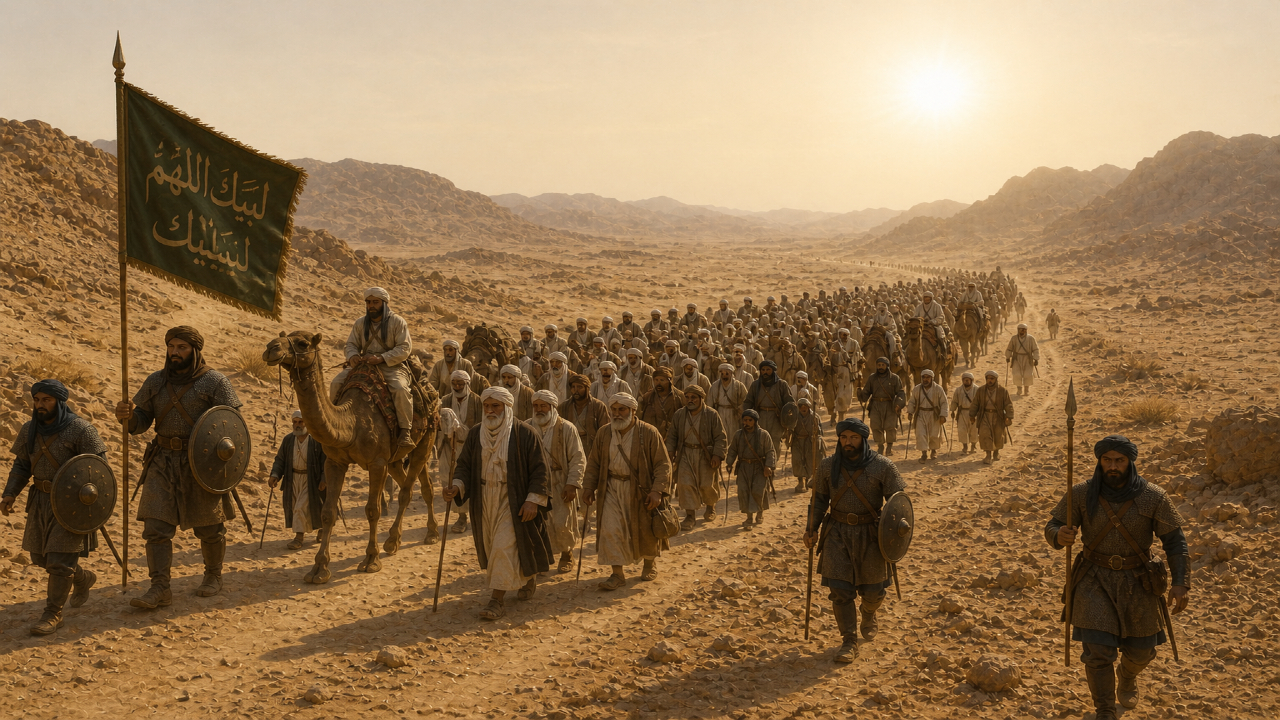
In 1876, English traveller and journalist Charles Doughty joined a large Hajj caravan departing from Damascus. The caravan consisted of nearly 6,000 pilgrims and more than 10,000 animals. Doughty wrote that whenever a pilgrim died during the journey, he was buried in the desert, with his clothes and blankets placed upon the grave.
He vividly described the departure of the caravan: at dawn, tents were dismantled, camels loaded with luggage were lined up, and everyone waited for the cannon shot that signalled the beginning of the journey. The moment the cannon fired, thousands of riders moved forward silently and without commotion.
📍 Makkah | Hajj 1938
— Muslim Landmarks Explored (@MuslimLandmarks) May 15, 2026
What did Hajj look like 88 years ago?
This rare archive footage captures the Hajj of 1938 — a time when pilgrims travelled to Makkah by foot, camel, and car.
See what the Mataf looked like nearly 90 years ago, and the immense dedication of those who… pic.twitter.com/TyAgQ67ZTv
According to documents preserved in the British Museum, land caravans mainly assembled at three major centres — Kufa in Iraq, Damascus in Syria, and Cairo in Egypt — while pilgrims arriving by sea disembarked at the port of Jeddah.
The Kufa-to-Makkah route was among the oldest and was further developed during the Abbasid era under the name “Darb al-Zubaydah.” Historian Ibn Jubayr noted that special water reservoirs and resting places were constructed along the route, offering immense relief to weary travellers.
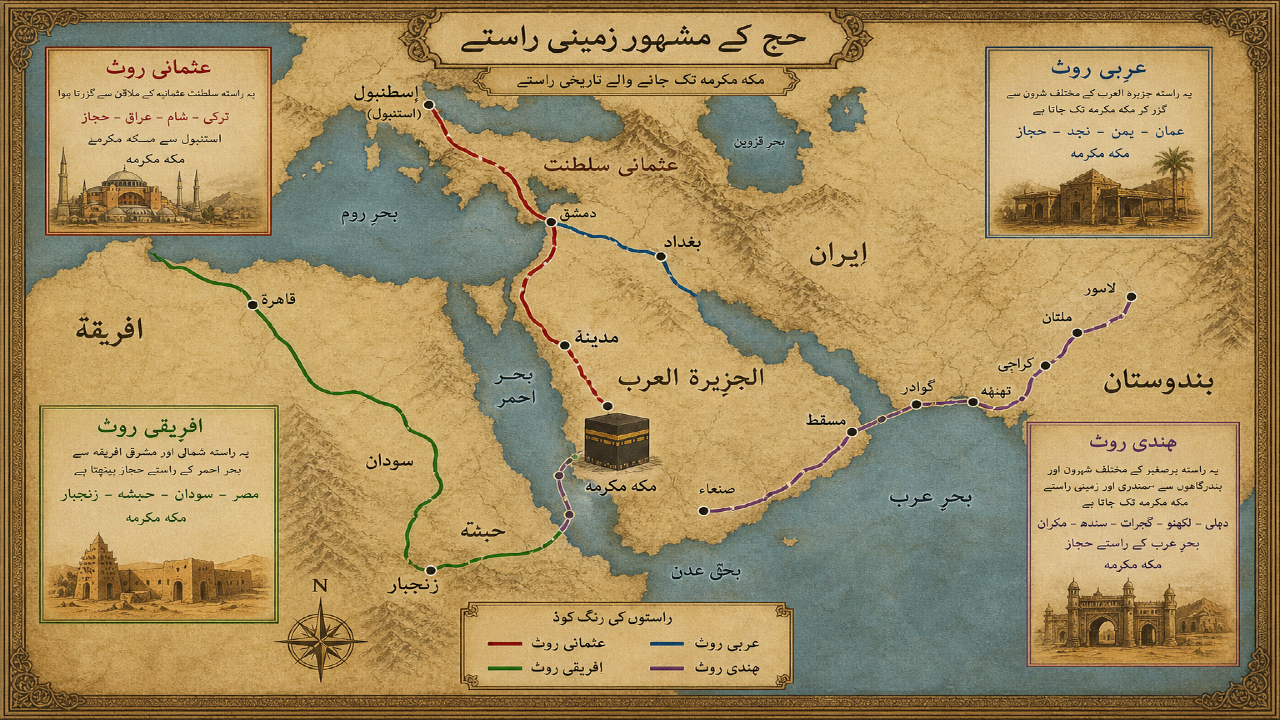
Cairo, meanwhile, served as the principal hub for African pilgrims. Travellers from Timbuktu, the renowned intellectual centre of West Africa, undertook an extremely difficult journey across deserts, including the Sinai, to reach Makkah.
When the Ottoman Empire took control of Egypt in 1517, it assumed responsibility for securing the Hajj routes and maintaining the holy sites. During Ottoman rule, Damascus became the main assembly point for caravans departing from Istanbul. These royal caravans were ceremonially bid farewell in grand processions known as the “Surre.”
For pilgrims from India and South Asia, the Hajj journey across the Indian Ocean was once considered highly risky. Pilgrims from India, China, and Indonesia travelled in traditional sailing vessels, entirely dependent on monsoon winds.
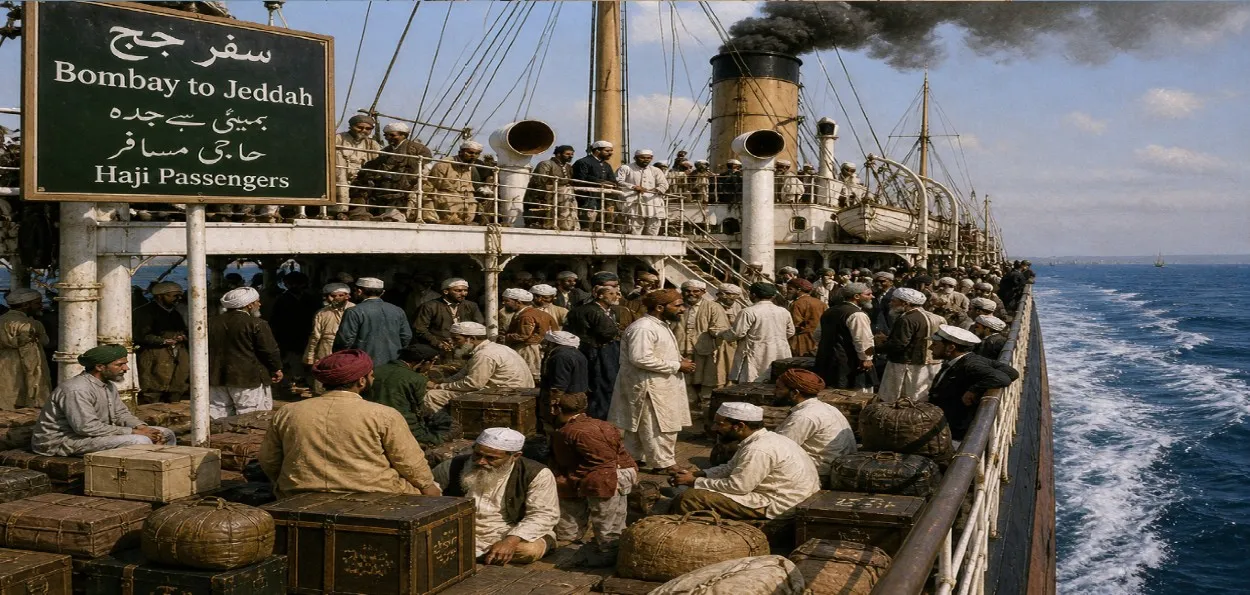
The voyage often lasted for weeks or even months, while storms and pirates posed constant threats. A pilgrim’s safe return was therefore celebrated across entire communities.
Most Hajj convoys from India departed from the ports of Surat in Gujarat and Bombay in Maharashtra. The ships sailed across the Arabian Sea and the Red Sea, stopping at Mukha in Yemen before reaching Jeddah. From there, pilgrims covered the final 40 miles to Makkah by camel or on foot, a journey that usually took two days.
The arrival of steamships in the nineteenth century dramatically reduced both travel time and costs.
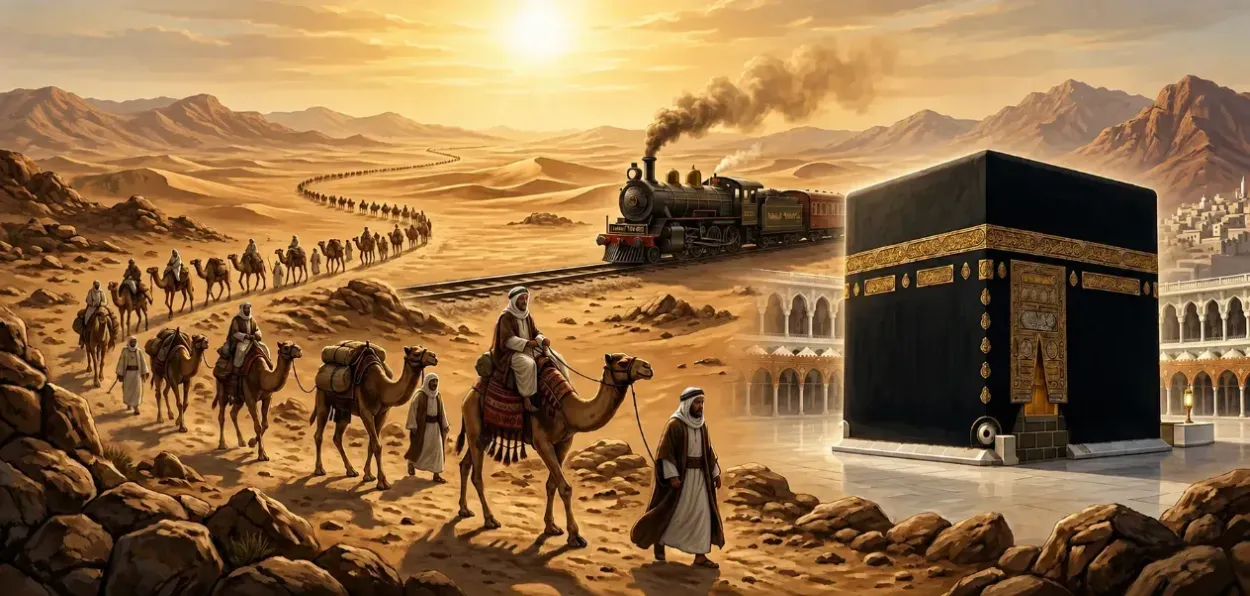
The early twentieth century brought another revolutionary transformation. In 1900, Ottoman Sultan Abdulhamid II appealed to Muslims worldwide to support the construction of a railway linking Damascus with Madinah and eventually Makkah.
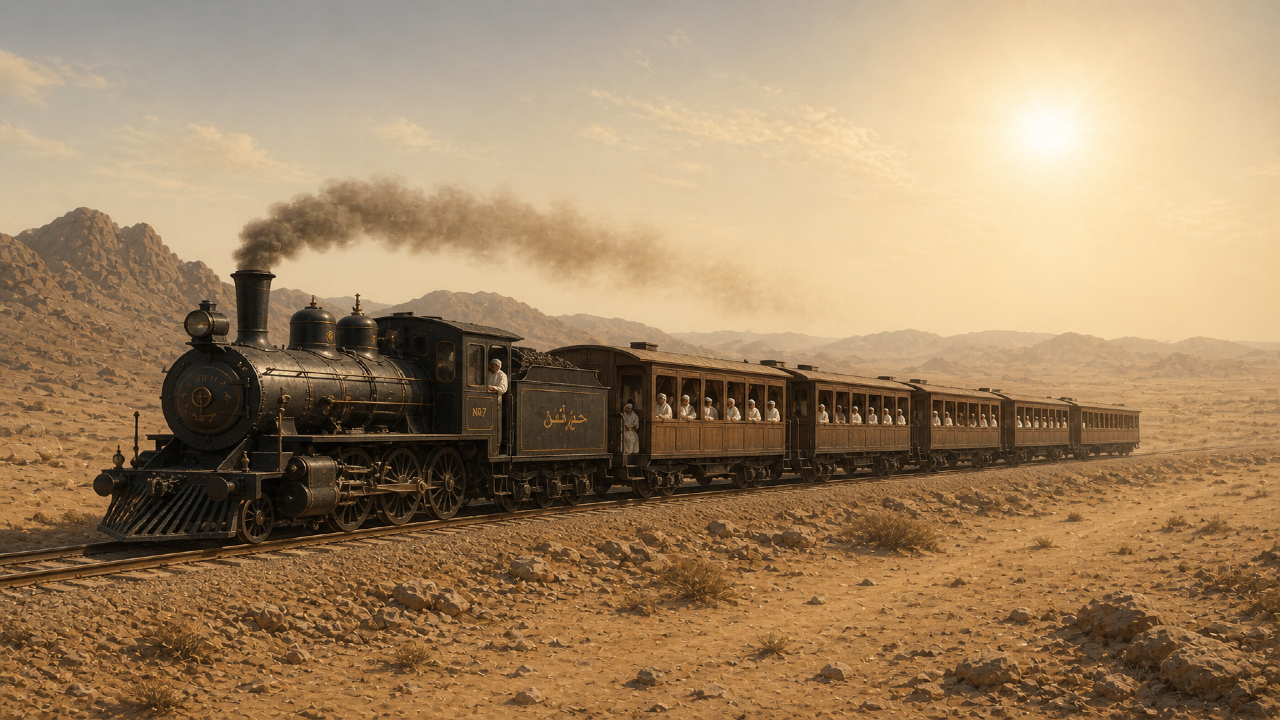
Built with public donations and technical assistance from German engineers, the railway reached Madinah in 1908. Pilgrims could now travel by train from Istanbul’s Haydarpaşa Station directly to Madinah. What had once been a gruelling 40-day desert journey was reduced to just five days. Thousands of pilgrims from Russia, Central Asia, Iran, and Iraq began converging on Damascus to board the train.
Today, the nature of the Hajj pilgrimage has been transformed completely. Pilgrims are no longer challenged by endless deserts, towering mountains, or terrifying ocean voyages. Air travel now enables millions to reach Saudi Arabia within hours.
ALSO READ: How a Railway line changed Hajj journey and united Muslims
More than 1.5 million pilgrims currently travel to Saudi Arabia by air each year for Hajj. During the pilgrimage season, Jeddah’s King Abdulaziz International Airport handles nearly 5,000 special flights. The era of camel caravans and months-long sea voyages has now passed into history.
See A Special Podcast on Eid:

.webp "Union Home Minister Amit Shah")