




 Rajeev Narayan
Wars often turn on their head and go against the pre-conceived outcome, perhaps because they are scripted in assumptions but remembered for the surprises they throw up. The US-Israel conflict with Iran, raging since late February with the expectation of a quick outcome in favour of the United States, is a testament to this dictum, having birthed a complex oil hiccup. Even as diplomatic talks continue and falter in equal measure after the inconclusive round of talks in Islamabad, the real on-ground question is “What will it take to get the oil flowing again?”
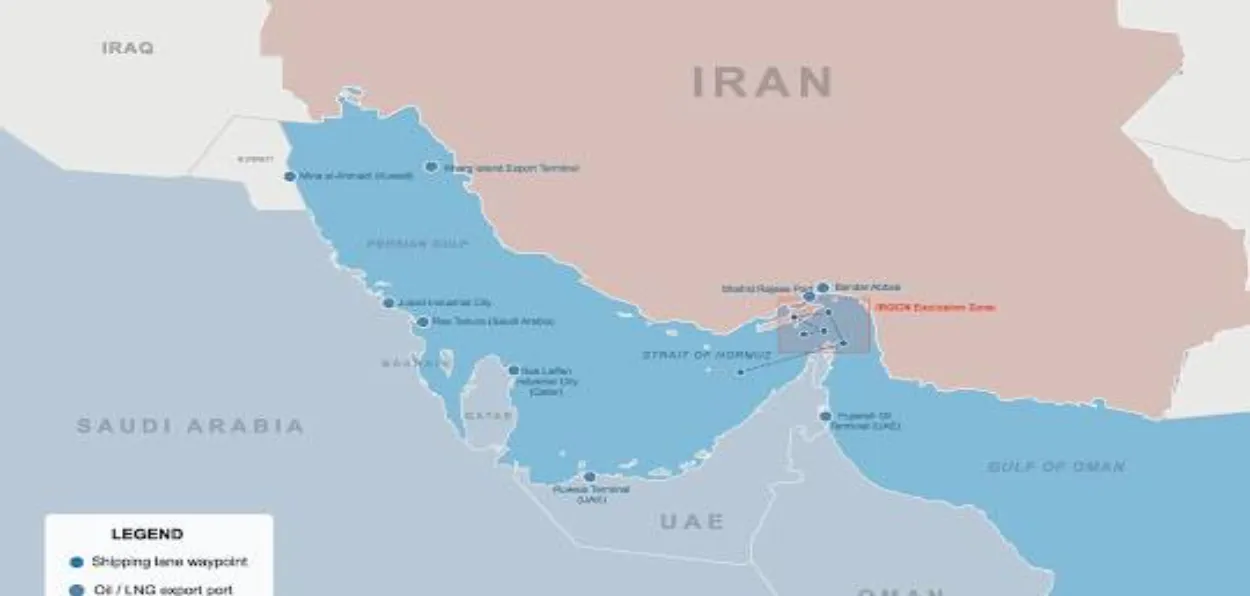
Among the most unexpected developments of this war is Iran’s renewed strategic prominence, not through conventional military assertion alone but through geography. At the centre of this recalibration lies the Strait of Hormuz, a narrow maritime passage that carries a large share of the world’s oil supplies. Few would have anticipated at the outset of the conflict that Iran, which was expected to be quickly overwhelmed, would find itself in a position to explore new forms of leverage tied to a critical chokepoint called the ‘Strait of Hormuz’.
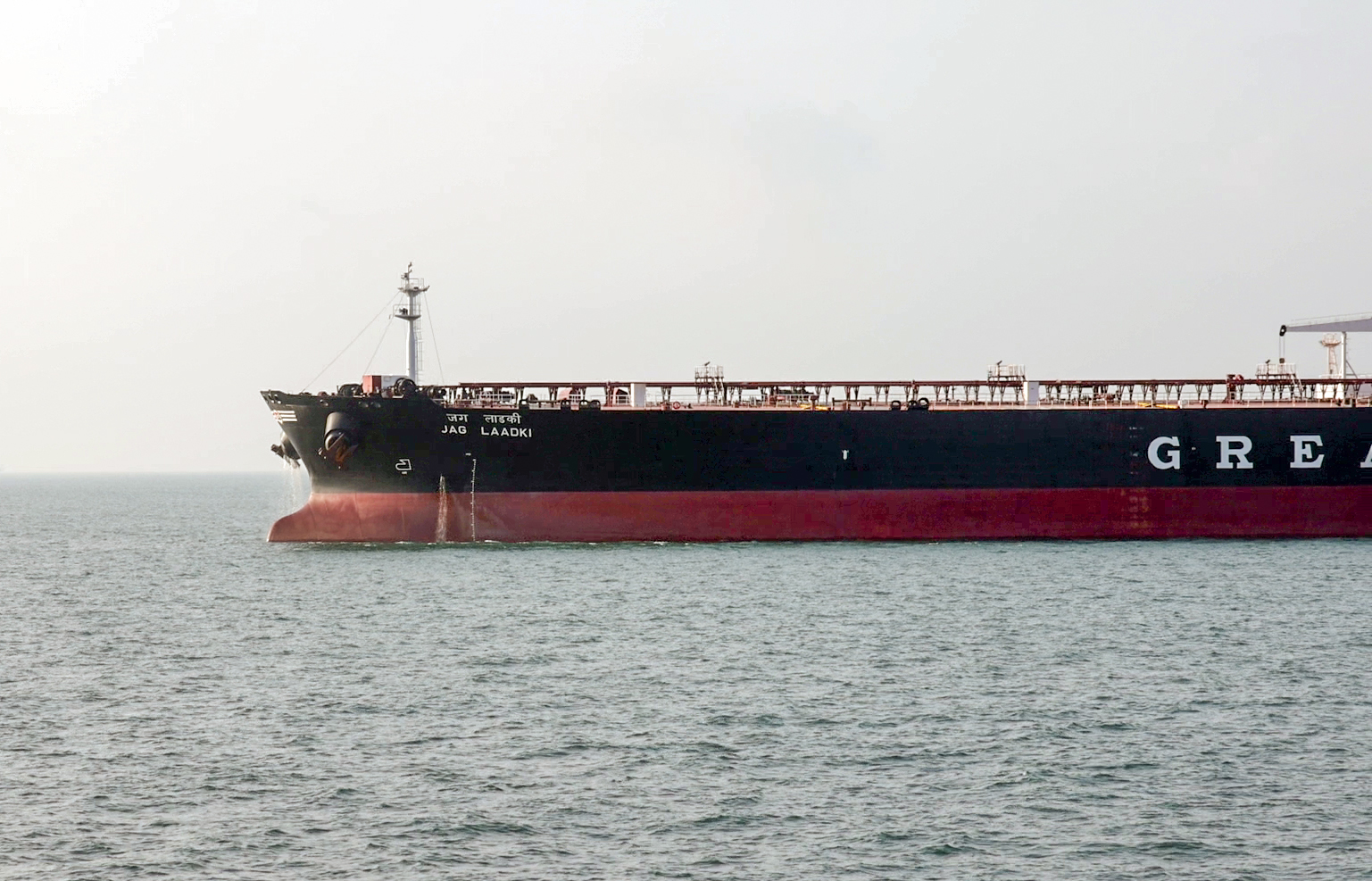 The Indian-flagged vessel 'Jag Laadki', carrying approximately 80,886 MT of UAE-sourced crude oil after passing through Hormuz
The war-ravaged nation has proposed a ‘toll tax’ on oil shipments transiting the strait, with a ‘tariff’ of $1 for every barrel of oil that sails in ships through the strait. Whether this toll evolves into policy or remains a strategic signal is unclear, but the proposal itself is remarkable.
Iran’s Chokepoint Logic
The idea of charging for passage through vital waterways is neither novel nor unprecedented. The Suez Canal and the Panama Canal stand as examples of how geography, when engineered and regulated, can generate economic returns while facilitating global trade. Built in 1869, the Suez Canal transformed global maritime commerce by linking Europe and Asia. Today, Egypt operates it as a major revenue-generating asset, with tolls determined through structured and globally accepted frameworks.
The Panama Canal opened in 1914 and was expanded a century later; it now functions under a toll regime based on vessel size and cargo metrics, contributing significantly to Panama’s economy.
These canals are man-made, artificial constructs governed by treaties and regulations. The Strait of Hormuz is fundamentally different. It is an international waterway with passage rights underpinned by maritime conventions, including provisions related to transit. A move to levy a toll in such a setting introduces legal and diplomatic complexities that are yet to be fully tested.
What is Being Proposed?
For now, there is no enforceable mechanism through which Iran can impose such a toll. But Iran has proposed it. Maritime experts say the proposal is speculative and exploratory, with no formal framework, enforcement system or international recognition. In that sense, the proposed $1-per-barrel cess is less an operational policy and more a conceptual proposition.
But even as a concept, the toll has drawn attention. The scale of oil sailing through the Strait of Hormuz, around 17-20 million barrels per day, means that even this modest levy could have huge economic implications, if implemented. Iran would gain $600 million in toll collections each month, over $7 billion annually. That said, the practical challenges of the toll are considerable, such as enforcement in international waters, the response of larger economies and the legal standing of such a toll under existing maritime regulations.
REPORTER - Toll on 🇮🇳Indian ships?
— Bitinning (@bitinning) April 14, 2026
IRAN ENVOY - We have good ties with India. Our Foreign Minister has already called India a friendly nation.pic.twitter.com/rWRqXbhpiW
Global energy markets are jumpy, for they react not only to specific developments but to perceived risks as well. Mere discussions on a toll have thrown a new layer of uncertainty into an already sensitive geopolitical environment. So much so that nations and regions are vociferous on the matter. The European Union, for one, has rejected any proposal to charge toll on vessels, insisting that global law guarantees unfettered and free navigation in the waterway. The UK has passed a similar judgment.
Inflation Could be Stoked
For other nations too, the implications of the proposed toll are worrisome. Energy-importing nations, particularly in Asia, are assessing the move. Any increase in transit costs, realised or anticipated, would translate into higher oil prices, with a ballooning impact on inflation and economic stability.
India, one of the world’s largest crude importers, also has a stake in these developments. A large portion of its energy supplies passes through Hormuz, making it sensitive to any disruption or additional cost. Even a slight rise in per-barrel costs, if long-term, would have broad macroeconomic implications.
Clearly, Iran’s suggestion that it may charge ships to pass through the strait as a condition for reopening the waterway has upset everyone, with many nations propounding that “international law provides for the freedom of navigation, which means no payment or toll”.
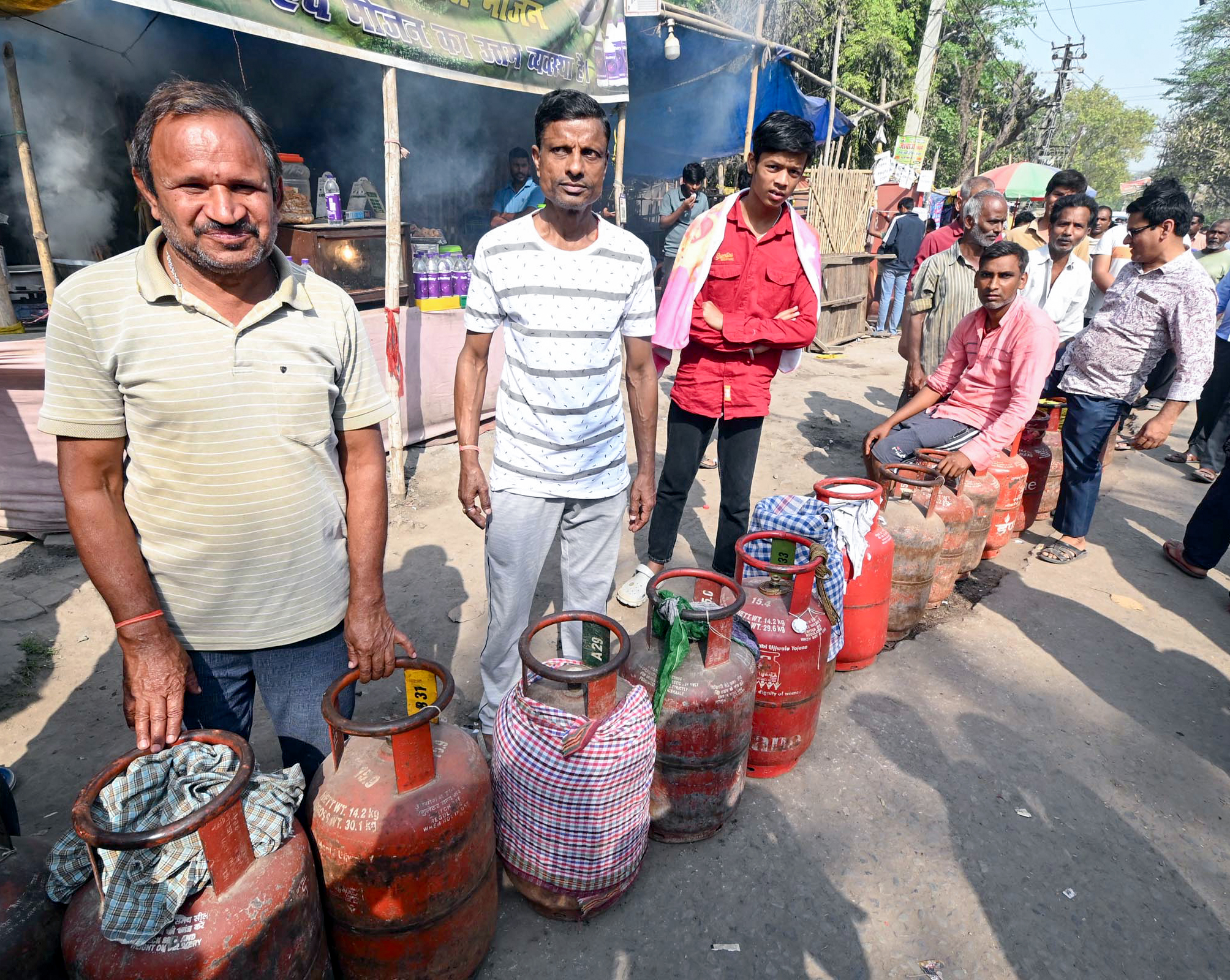 Long queues for LPG Cylinder refilling in Patna
On the ground, it is still premature to assume that such a toll will be levied soon. The interconnected nature of international trade, coupled with the laws that govern waterways, acts as a calming influence. Diplomatic engagement, multilateral dialogue and strategic considerations are likely to influence the trajectory of Iran’s proposal on this toll.
Measured Steps Needed
Rather than the proposed toll itself, what this issue highlights is the evolving character of geopolitical influence in an interconnected world. The aftermath of the war has demonstrated that outcomes are rarely linear and that assumptions – about military capability or strategic vulnerability – can be upended.
For Iran, the discussion around a Hormuz toll is an attempt to explore the economic dimensions of its geographic position today, having made a resolute point in withstanding the might of the United States’ military aggression. For other nations, it presents a moment to reassess the balance between security, legality and economic interdependence in managing critical trade routes.
Over the years, the Suez and Panama canals have shown us that sustainable tolling systems are possible only when anchored in transparency, global cooperation and predictable governance. Whether such principles find resonance in the context of Hormuz remains to be seen. But then, Iran has already sprung a surprise on the world.
ALSO READ: How long can India manage oil and gas crisis caused by West Asia conflict
For India and the world, the response lies not in alarm, but in preparedness. Diversified energy strategies, stronger diplomatic channels and support for rules-based maritime order will help. At the end of the day, the Strait of Hormuz remains what it has always been: a passage whose significance extends beyond its narrow waters. But today, it is carrying not just oil but the weight of an uncertain geopolitical moment.
The writer is a veteran journalist and communications specialist.


.webp "Shrine of Hazrat Maulana Ziauddin Shah-e-Wilayat")
_(1).webp "tHE shrine of Hazrat Syed Shah Ehteram Al Qaderi")













_(1)_(1).webp)