




 Sushma Ramachandran
India and the world are facing an unprecedented crisis that could disrupt economic growth and development for many years. This is a direct outcome of the war on Iran launched by the U.S. and Israel. It has had global ramifications like energy prices rising in many countries, while shortages of critical goods like fertilisers are also in the offing. The situation is likely to worsen as movement of merchant cargoes through the Red Sea has also slowed down owing to fears of Houthi attacks.
The sensitive Strait of Hormuz, the narrow sea passage between the Persian Gulf and the Gulf of Oman, has already been blocked by Iran, curtailing 20 per cent of international oil shipments. As a result, inflationary pressures are building up and emerging economies have conflicted for over one month.
In the midst of this global unrest, consumers here can breathe easier since retail prices of petroleum products have been contained at existing levels, in sharp contrast to most other economies. This is, although prices have shot up from around 65 dollars per barrel before the war to over 100 dollars per barrel currently. This has been highlighted by Petroleum Minister Hardeep Puri in a recent statement, noting that prices have risen by around 30 to 50 per cent in Southeast Asian countries, 30 per cent in North American countries, 20 per cent in Europe and 50 per cent in African countries.
Instead of raising retail prices, the government has slashed excise duty on petrol and diesel by Rs. 10 per litre. Also, an export tax is being levied on oil refineries exporting petrol and diesel to the international market. The excise cuts are expected to lead to a revenue loss of Rs. 7000 crore in 15 days, and the export tax will yield Rs. 1500 crore over the same period.
#WATCH | Delhi: On India’s diplomatic handling of Strait of Hormuz crisis, Ranjeet Mehta, CEO & Secretary General, PHDCCI, says, "...I think India has managed it very well with dialogue and diplomacy. Our energy sources are passing through the Strait of Hormuz. But if the… pic.twitter.com/bnDzc0Y3OE
— ANI (@ANI) April 1, 2026
These measures will help in lowering the burden on oil marketing companies, which have enjoyed a cushion built up over the last two years due to lower world oil prices.
Though international prices averaged 70 to 80 dollars per barrel in 2024 and 2025, retail rates were not reduced accordingly. Instead, these companies could build financial reserves that will now stand them in good stead when prices have reached alarmingly high levels.
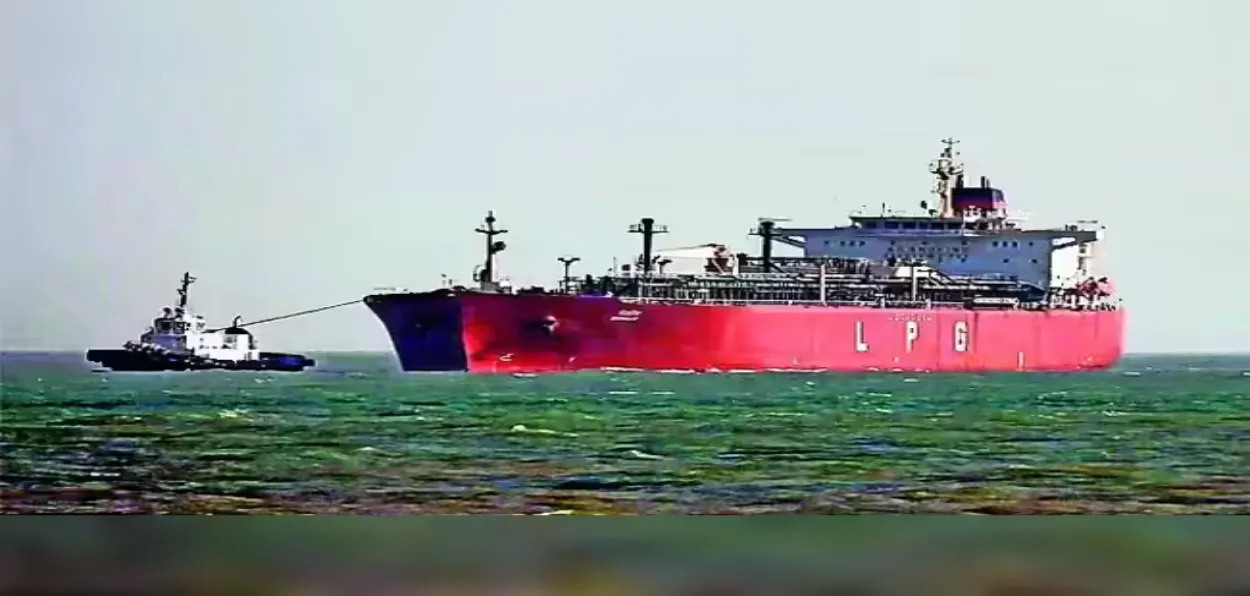
As far as liquefied petroleum gas (LPG) is concerned, some areas have faced shortages. The situation is now looking. up with domestic production being stepped up considerably. In addition, Iran’s decision to allow ships from “friendly” nations to pass through the Strait should enable India-flagged ships to pass through what has been described as the world’s most sensitive chokepoint for oil.
Domestic consumer supplies have eased considerably after the initial panic. The other LPG consumers will also get a reprieve as the allotment for commercial LPG users is raised to 70 per cent of the pre-crisis status of 20 per cent. This will give relief to a wide range of industries, including steel, textiles, automobiles, dyes and chemicals. This is apart from canteens, restaurants and small businesses.
While the scenario regarding LPG is easing for the time being, the long-term outlook is not so bright. This is because as much as 65 per cent of LPG is imported, largely from Qatar and the UAE. About 80 per cent of this supply moves through the Strait of Hormuz. Iran may have allowed Indian vessels to pass through the passage right now, but nobody can be sure of Iran’s mood in the future.
The scene of crude oil and natural gas is equally gloomy. Though availability may not be a problem, prices are likely to remain elevated for quite some time. The reasons are not hard to seek. Even if the war ends and the Strait opens for normal transport, it will take time for oil and gas from the region to reach consumers. The supply - demand mismatch will ensure that prices remain high for several months.
🚨🇮🇳LPG carrier bound for India escorted by Indian Navy warship in the Indian Ocean
— Sputnik India (@Sputnik_India) March 29, 2026
Two India-flagged tankers, BW TYR and BW ELM, safely transited the Strait of Hormuz. pic.twitter.com/BEnISgcblV
The delay in bringing oil production and distribution back to per- crisis levels is partly because several facilities in the West Asian region have been damaged by attacks from Iran. Another problem is that major oil producers have cut output by as much as 40 per cent ever since the launch of hostilities. It will take several weeks to bring production back to the same level as earlier. The situation in regard to natural gas is even worse, as Qatar's Energy Minister said repairs following the attacks on gas fields and infrastructure could take three to five years. It must be recalled that Qatar accounts for nearly 20 per cent of the world’s liquefied natural gas.
The outcome of all these delays means that prices are likely to move within the range of 80 to 90 dollars per barrel for the rest of the year. This prediction is based on the assumption that the war ends sooner rather than later. If the war stretches on, as it might, then oil prices are likely to continue the existing volatility. Any hint that negotiations are underway has been bringing prices down, while further attacks have led to fresh spikes.
As far as India is concerned, it has so far been able to tackle the crisis with a considerable measure of success. Apart from LPG, the availability of other petroleum products has been adequate to meet demand. The situation regarding specialised products like helium may have to be monitored, but the country has so far been insulated from any shortages. Even the higher oil and gas prices are not likely to create serious problems in the short and medium term, given the country’s comfortable foreign exchange reserves.
ALSO READ: West Asia Conflict: Pakistan, a peacemaker without credibility
Yet there must not be any complacency in regard to dealing with the fallout of the war. The fact is, even India will find it difficult to deal with a high energy price scenario in the long run. Efforts must thus be made at energy conservation and expanding capacities and generation of renewable energies in the days to come. India, like the rest of the world, will need to adopt coping strategies to deal with the prospect of a long-term war scenario.
The author is a veteran journalish who writes on economy and international affairs

_(1).jpg "Visitors gather at the Santosh Mitra Square Durga Puja pandal, themed on the 150th anniversary of Vande Mataram and its historic role in India's freedom movement, ahead of the festival, in Kolkata")

.jpg "Gujarat’s women entrepreneurs bring their craftsmanship to life during Navratri")









_(2).webp)
.webp)