Ghulam Rasool Dehlvi
On this Ram Navami, reclaiming Ayodhya as a shared civilisational space may be the most meaningful tribute to Maryada Prushottam Shri Ram! As the country celebrated Ram Navami, the birth of Shri Ram invites reflection not only within Hindu tradition but also across the wider civilisational landscape of India. In an age where identities are often narrowed and histories selectively remembered, Ayodhya offers an opportunity to rediscover a deeper, more inclusive legacy—one that resonates even within strands of Indian Sufi thought.
For many, Ayodhya wells up memories of the Babri Masjid dispute and its demolition. Yet, to define this ancient city solely through a modern political episode is to overlook its layered spiritual history.
My own understanding of Ayodhya took shape in 2005, when I visited the town as a madrasa student at Al-Jamiatul Islamia in Raunahi, Faizabad, to appear for the Maulvi/Munshi examination. What began as a routine academic journey soon turned into a moment of lasting spiritual introspection.
During my stay, I met a local Muslim social activist, Dr Ambar Siddiqui, who offered to take me to the Ram Janmabhoomi site. His perspective was both unexpected and illuminating. He spoke of Ayodhya not merely as a disputed site, but as a place that also held significance in Indo-Islamic spiritual memory.
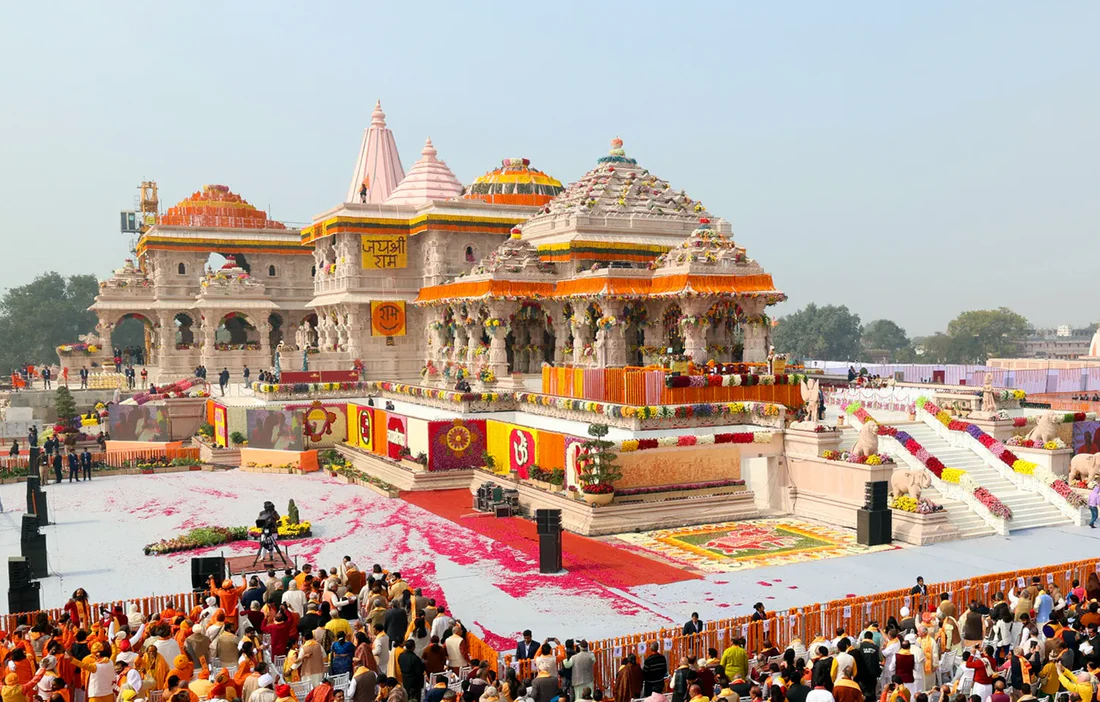
Shri Ram Janambhoomi Temple
Certain traditional narratives associate Ayodhya with revered prophetic figures. Some believe that Nabi Sheesh, known as Prophet Seth, was linked to this sacred land. I also visited “26 Ghazi Mazar,” associated, in popular belief, with Nabi Nooh. These references expanded my perception of Ayodhya beyond a singular narrative.
The moment I stepped into the site revered as the birthplace of Shri Ram, I experienced a quiet but profound shift. At the age of 15, my spiritual awareness found a new dimension. For the first time, I began to see India not just as a land of diverse religions, but as a sacred geography shaped by the presence of Ambiya (Prophets) and Auliya (Saints).
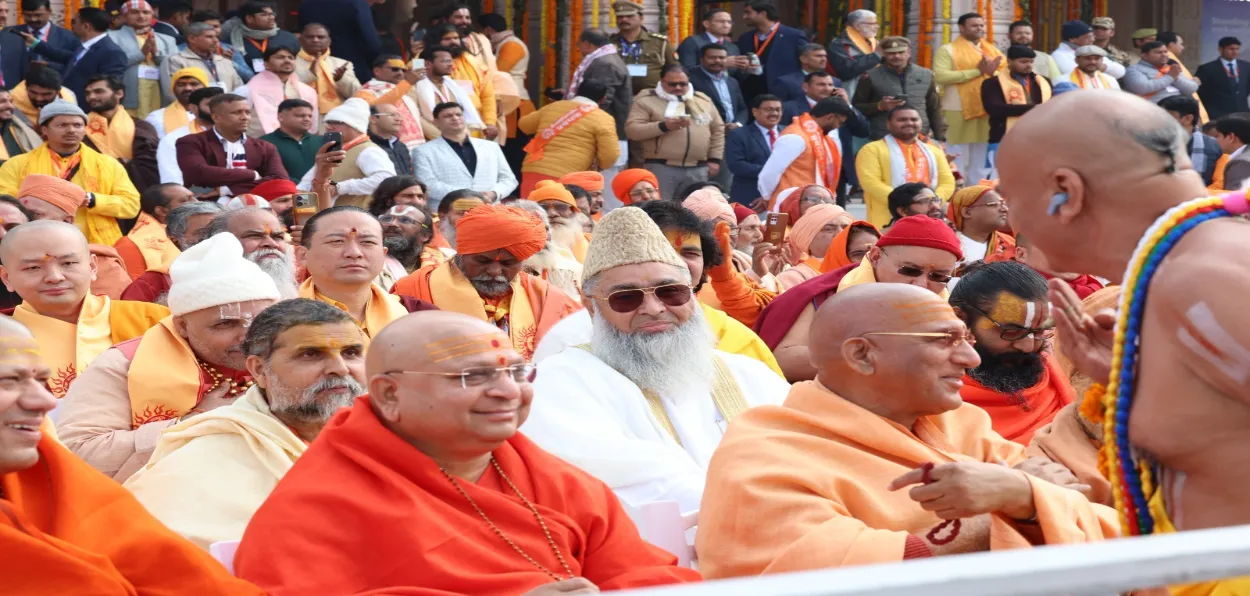
#WATCH | Delhi | Fatwa issued against Chief Imam of All India Imam Organization, Dr Imam Umer Ahmed Ilyasi after he attended the Pranpratishtha ceremony of Ram Lalla at Ram Temple in Ayodhya.
— ANI (@ANI) January 29, 2024
He says, "As a chief Imam, I received the invitation from Shri Ram Janmbhoomi Teerth… pic.twitter.com/iVe2bA3s1X
In that moment, Shri Ram appeared to me not only as a central figure of faith for millions, but as a universal moral presence—symbolising justice, sacrifice, and ethical leadership. This realisation did not blur religious boundaries; rather, it deepened my appreciation of how divine values can transcend them.
This broader vision is not without precedent. The poet-philosopher Allama Iqbal famously described Ram as Imam-e-Hind (leader of Hind), acknowledging his moral and spiritual stature beyond religious lines. Such expressions reflect a long-standing tradition of recognising greatness wherever it appears.
Sufi Thought and Civilisational Bridges
Within Islamic intellectual history, especially in Sufi traditions, prophethood has often been understood in deeply spiritual terms. A Prophet is seen not merely as a bashar (human being), but as a Noori Bashar—a being illuminated by divine light. While other theological schools emphasise the purely human nature of prophets, this diversity of thought reflects the richness of Islamic scholarship.
 A Sufi shrine in Ayodhya
In India, some Sufi thinkers articulated these ideas in ways that resonated with local cultural frameworks. They drew conceptual parallels between the Islamic understanding of prophethood and the Indic idea of avatar—not to equate the two, but to foster mutual comprehension.
This mystical sensibility is captured in the poetry of Sheikh Abdul Aleem Aasi Ghazipuri of the Khanqah-e-Rashidiyya:
Wahi jo mustawwi-e-arsh hai, Khuda ho kar
Utar pada hai Madine mein Mustafa ho kar
Such expressions, though debated in orthodox circles, reveal an effort to communicate spiritual truths in a language that bridges traditions. For many within the Indic worldview, where divine manifestations are an accepted concept, such metaphors are neither unfamiliar nor contentious.
Seen through this lens, Ayodhya emerges as more than a geographical location—it becomes a symbol of shared sacred memory. It is not only associated with the legacy of Rishi-Munis, but is also remembered in certain traditions as a land connected with Ambiya and Rusul (prophets and messengers).
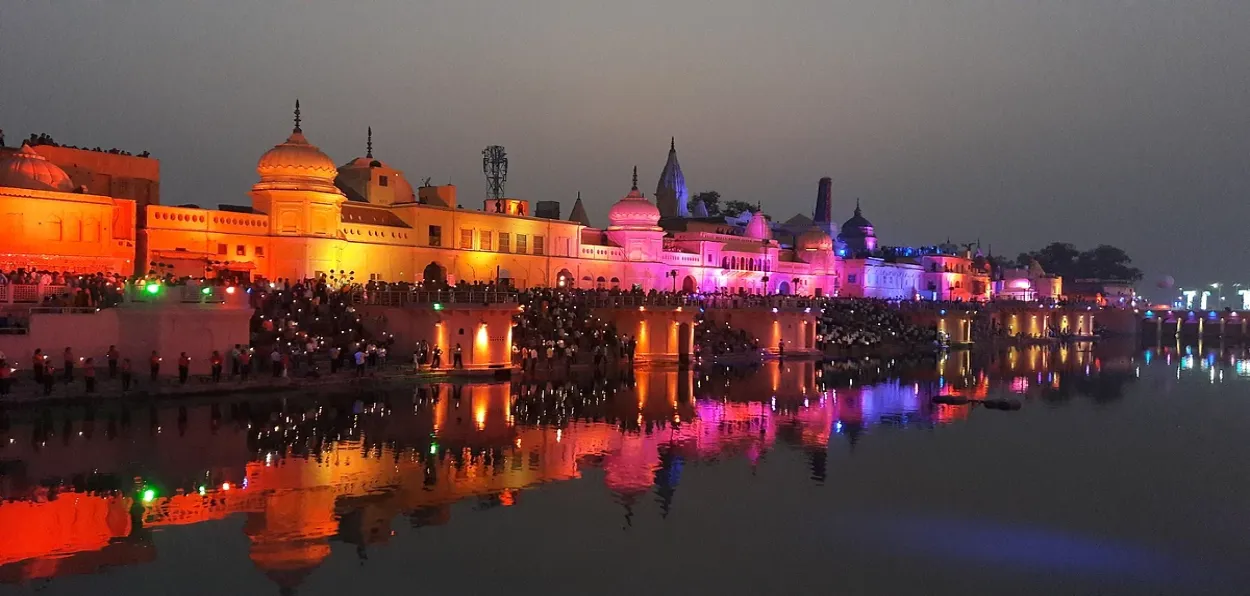
The Saryu Riverfront
This perspective finds resonance in the Quranic message: “And We certainly sent into every nation a messenger.” It points to a universal understanding of divine guidance—one that allows for the possibility of sacred figures across cultures and civilisations.
Historical texts also reflect this layered perception. In Ain-i-Akbari, the Mughal scholar Abu’l Fazl refers to Ayodhya with reverence, noting its importance not only within Hindu tradition but also in the broader cultural consciousness of the subcontinent.
To reduce Ayodhya to the memory of a single historical episode is to limit its civilisational significance. The Babri Masjid dispute, while undeniably important, need not define the entirety of how communities relate to this ancient city.
ALSO READ: Hindu comrades of Sir Syed Ahmad Khan who touched his life and mission
What is needed today is a more expansive engagement—one that acknowledges history, but is not confined by it. Ayodhya can be seen as an “oasis of spiritual symbiosis,” where traditions have long interacted and enriched one another.

.jpg "Gujarat’s women entrepreneurs bring their craftsmanship to life during Navratri")