




.webp "Tanzeela showing a Waggu woven by her (Basit Zargar)")
Basit Zargar/Srinagar
In a quiet corner of Srinagar, where traditional crafts are steadily giving way to modern alternatives, a young woman is working tirelessly to preserve a fading legacy.
Tanzeela, a postgraduate student, has taken it upon herself to continue her late father’s traditional waggu weaving craft, balancing her studies with long hours of meticulous handwork to keep the family tradition alive.
Waggu, a traditional woven mat once commonly found in Kashmiri households, has gradually been replaced by plastic and machine-made alternatives. Made from dried reeds available in abundance, the mat is eco-friendly and deeply rooted in Kashmir’s cultural heritage.
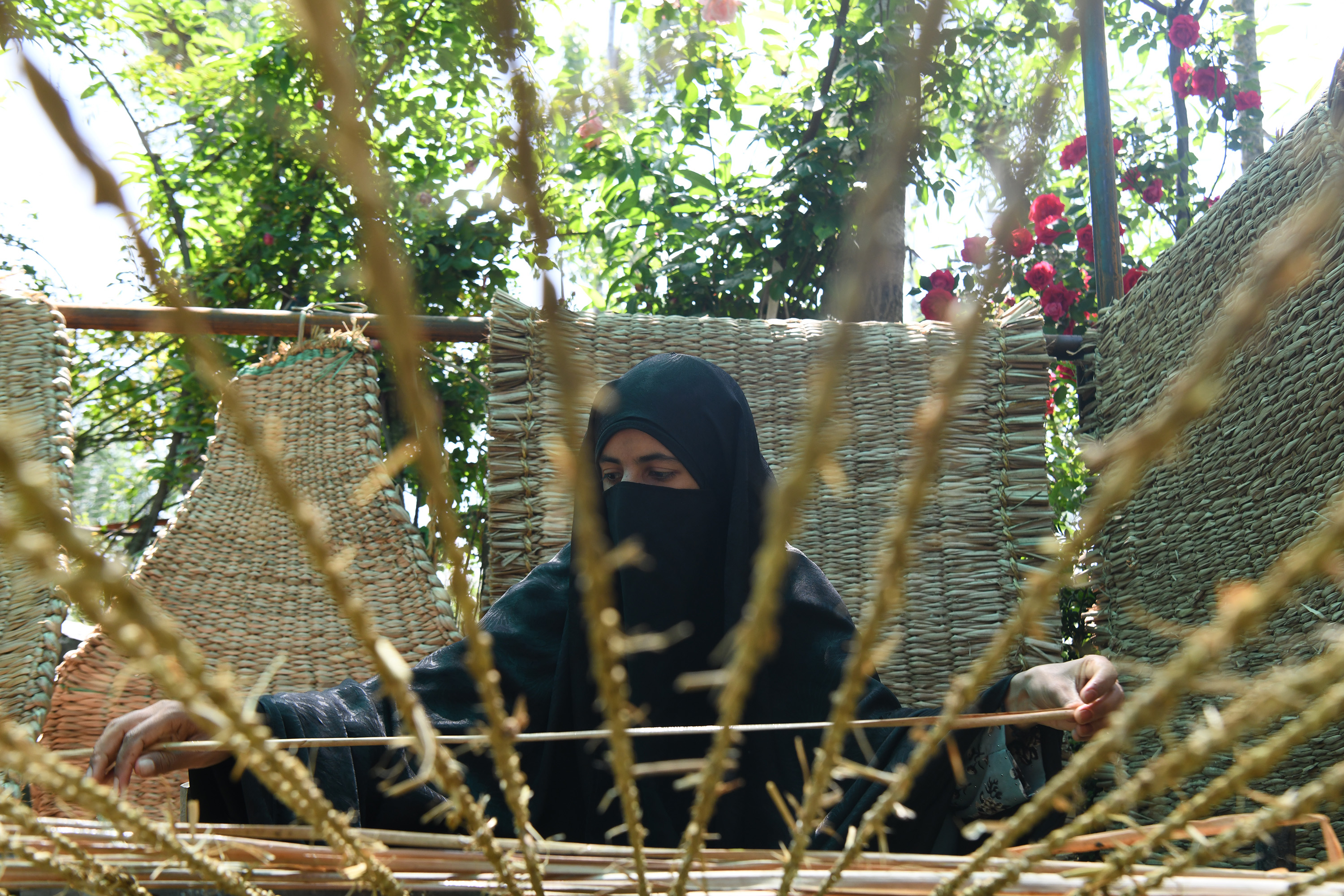 Tanzeela weaving a Waggu
The declining demand, however, has forced many artisans to abandon the craft in search of more sustainable livelihoods
Undeterred, Tanzeela remains committed to carrying forward the work her father began decades ago.
Currently pursuing her Master’s degree, she spends her evenings and weekends weaving waggus by hand using techniques passed down through generations. Despite the physical labour involved and the limited financial returns, she says the craft is inseparable from her identity and family history.
“My father devoted his life to this work. After his passing, I felt it was my responsibility to continue the tradition,” Tanzeela said.
“People may not use waggu the way they once did, but there are still those who value handmade traditional items.”
The weaving process is laborious and demands patience, precision, and skill. From preparing the raw material to carefully crafting intricate patterns by hand, each piece takes several days to complete.
.jpg) .Tanzeela at work
.Tanzeela at work
Tanzeela says mastering the art was not easy, but years of watching her father at work helped her learn the craft.
“In the beginning, it was difficult to balance studies and weaving, but gradually I adapted. I usually work after classes and during weekends,” she said.
Although the market for traditional mats has shrunk considerably, Tanzeela says she still receives orders from customers who appreciate authentic Kashmiri handmade products. Some buyers purchase waggus as decorative pieces, while others continue to use them in traditional settings.
Local residents familiar with the craft say artisans like Tanzeela are playing a vital role in preserving Kashmir’s cultural heritage. They believe traditional crafts not only showcase artistic skill but also reflect the region’s history and way of life.
READ MORE: Arjumand Ara: Building bridges between languages, literature, and cultures
Experts have repeatedly expressed concern over the gradual disappearance of indigenous crafts due to changing lifestyles and inadequate institutional support. Many artisans struggle with low incomes, rising raw material costs, and limited market access, making it increasingly difficult for younger generations to continue such professions.

.jpg "Gujarat’s women entrepreneurs bring their craftsmanship to life during Navratri")








.webp)