_(1).webp "Arjumand Ara")
Arjumand Ara, an educationist, translator, and noted critic of Urdu literature, serves as Professor in the Department of Urdu at University of Delhi. She is widely respected as an accomplished translator, an insightful researcher, and an inspiring teacher. A feminist thinker and a serious literary critic, she is regarded in Urdu literary circles as a vital link between classical tradition and modern global consciousness.
In 2021, she received the Sahitya Akademi Translation Award for her Urdu translation of Arundhati Roy’s novel The Ministry of Utmost Happiness, translated into Urdu as Bepanah Shadmani Ki Mamlakat. Earlier, in 2013, she was honoured by the Delhi Urdu Academy for her contributions to translation. In a conversation with Awaz-The Voice, Arjumand Ara reflected on translation, literature, feminism, and the changing readership of Urdu.
As a researcher and translator, she believes that the true task of translation is not literal reproduction but the faithful transmission of the spirit and essence of the original text. According to her, a translator must possess a deep command of both the source and target languages to understand linguistic subtleties and cultural nuances. Equally important, she says, is familiarity with the social, cultural, and intellectual context of the text being translated.
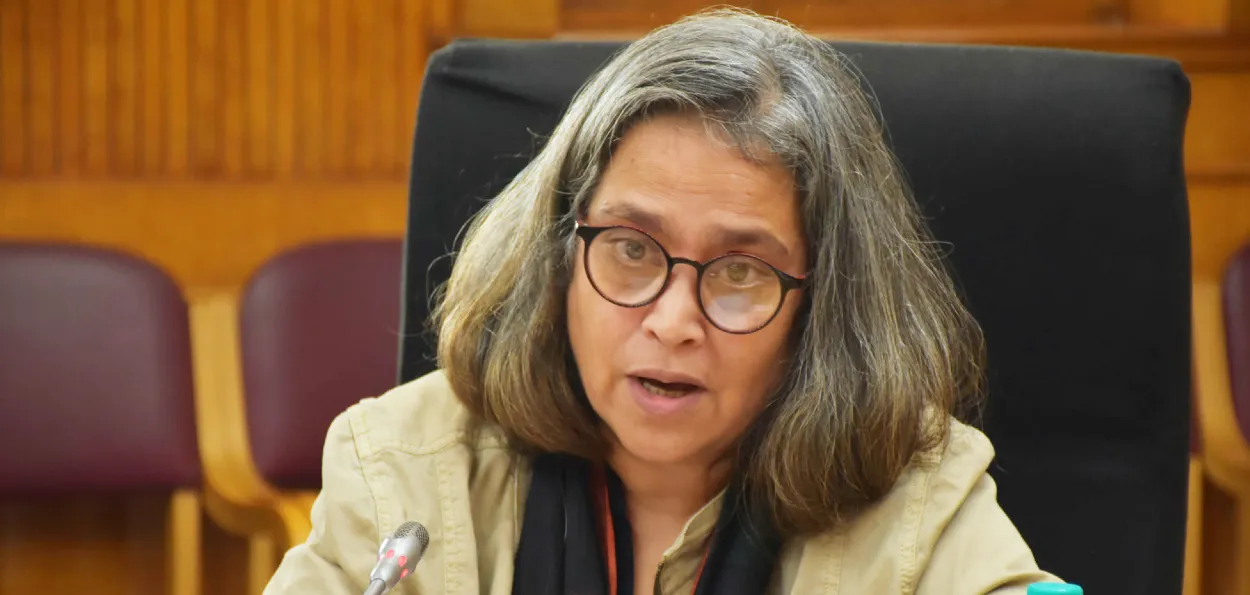 Arjumand Ara
Over the years, she has translated more than twenty important works, playing a crucial role in introducing world literature and Indian literature to Urdu readers. Among her major translations are Bepanah Shadmani Ki Mamlakat (2018), the Urdu rendering of Arundhati Roy’s novel; Yeh Basarat Kush Andhere (2020), translated from Tahar Ben Jelloun’s This Blinding Absence of Light; Laash Ki Numayish aur Digar Iraqi Kahaniyan (2019), a collection of stories by Iraqi writer Hassan Blasim; and several novels by Afghan-French author Atiq Rahimi, including Sang-e-Saboor (The Patience Stone), Khakstar o Khak (Earth and Ashes), and Khwab aur Khauf ki Hazar Bhool Bhulaiyan.
Her translations also include Suraj Ka Satvan Ghoda by Dharamvir Bharati, Islam aur Maghrib, a dialogue between Jacques Derrida and Mustafa Cherif, and Joinda ya Banda, the autobiography of renowned Urdu scholar Ralph Russell. She has also translated Season of Migration to the North by Tayeb Salih and Hashimpura 22 May by Vibhuti Narain Rai. Her scholarly contributions further include Nazari Discourse, a work on critical theories.
Alongside translating world literature into Urdu, Arjumand Ara has devoted significant attention to translating Urdu literature into Hindi. Her Hindi translations include Sindhu by Jeem Abbasi, collections of contemporary Pakistani short stories, and Egyptian writer Miral al-Tahawy’s novel Al-Khiba, translated into Hindi as Khema. She also translated the poetry of Pakistani poet Sara Shagufta into Hindi as Aankhen, Neend ka Rang.
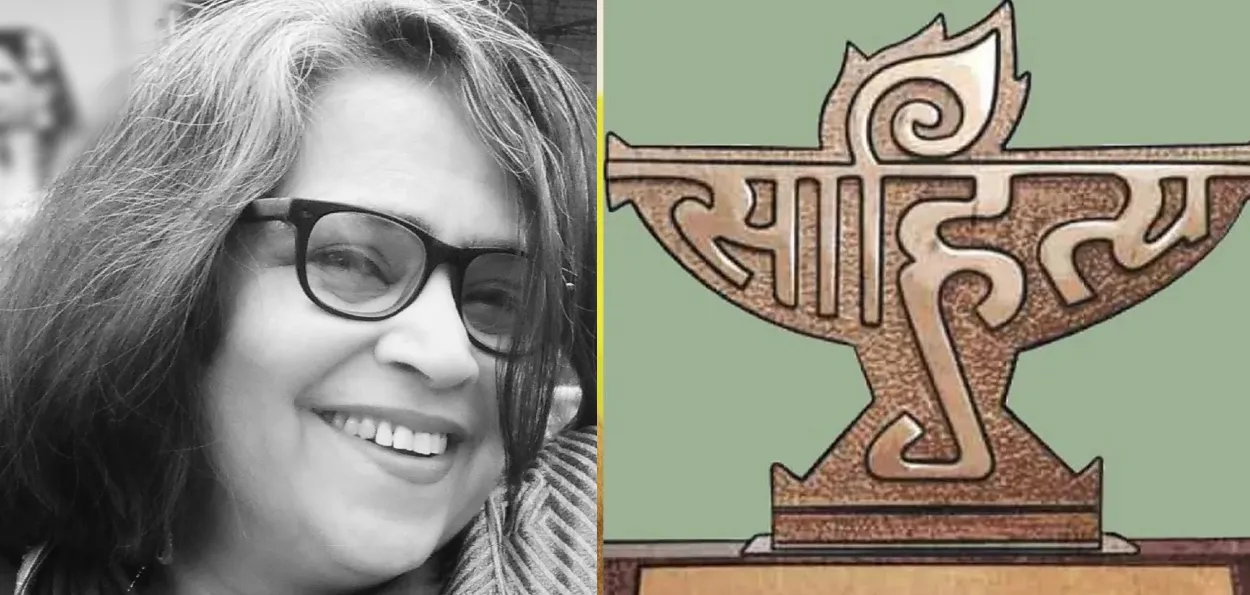 Arjumand Ara with Sahitya academy Award
Her scholarly work extends beyond translation to the editing of classical Urdu texts. Applying modern research principles, she edited eighteenth-century poet Ahsanullah Khan Bayan’s Diwan-e-Bayan and Masnavi Lakht-e-Jigar by Munshi Bal Mukund Be-Sabr.
Arjumand Ara believes that a translator has no right to “improve” a text by making it better than the original. Honesty towards the author, she says, is an ethical responsibility. A translator must respect the distinct cultural identity of the text and avoid unnecessary additions or omissions. If clarification is required, she prefers using footnotes. Speaking about machine translation, she remarks that imitation itself requires intelligence. While technology can assist translators, she believes that the refinement and sensitivity of translation will always depend on a trained human mind.
Discussing women in Urdu poetry, she observes that women have largely remained silent figures within the traditional Urdu ghazal. Men speak about them, describe their emotions, and define them from a male perspective. Women are often portrayed as beloved, unfaithful, or indifferent, but their own emotional worlds rarely receive independent expression. In her view, classical poetic discourse has historically remained male-centric.
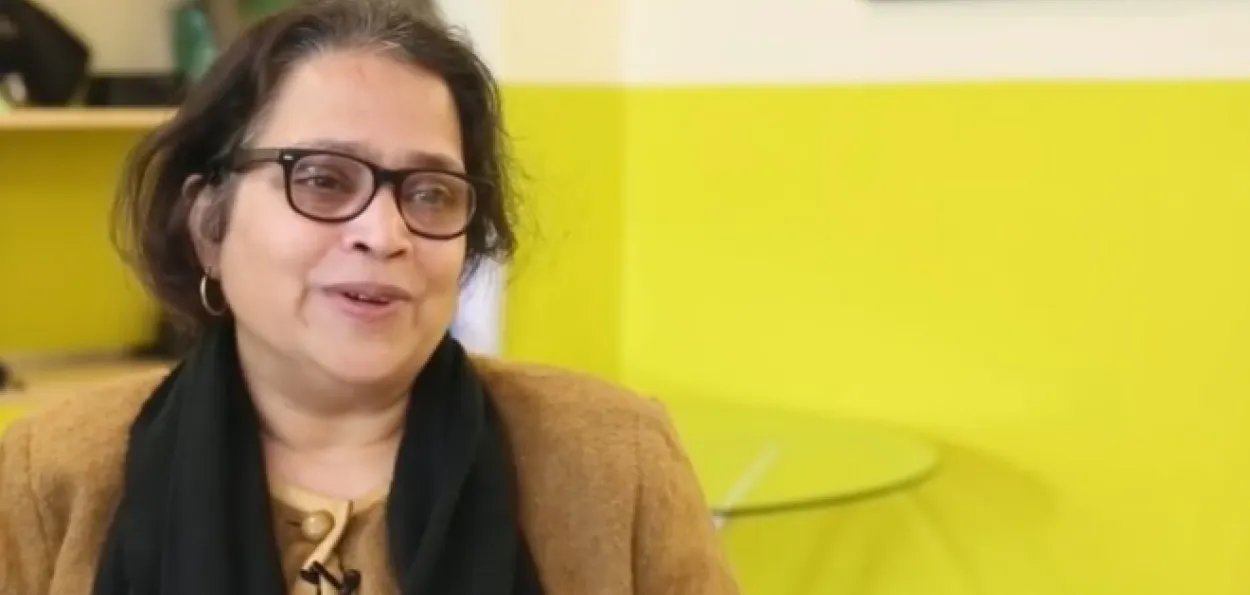 Arjumand Ara
She argues that even today the literary world continues to be dominated by patriarchal attitudes. In feudal thinking, she says, a woman is considered respectable only within the confines of the home, while outside she is reduced to an object of entertainment. Such attitudes, she believes, still persist in society. She stresses that women must be seen as complete human beings rather than mere symbols of beauty.
According to her, the primary purpose of feminist literature is to break silence. Since women experience the world differently from men, she argues, literary criticism must also develop different standards and perspectives. In her book Tanisi Mutalea aur Doosre Mazameen (2015), she examines feminism not simply as a Western theory but within the specific cultural and social context of Urdu literature. She strongly advocates for women’s voices in Urdu writing and encourages women authors to move beyond conventional boundaries and write fearlessly about identity and lived experience.
For more than two decades, Arjumand Ara has taught at the University of Delhi, where she approaches Urdu literature through modern critical frameworks rather than purely traditional methods. She teaches postgraduate students subjects such as eighteenth-century Delhi poetry, Muhammad Iqbal studies, and the Progressive Movement, while also guiding MPhil and PhD scholars in research methodology, textual criticism, and the sociology of literature.
She expresses concern that many students entering universities today show declining interest in serious reading and writing, with only a small number genuinely committed to academic pursuits. At the same time, she believes students should remain aware of the social and political realities of their times.
Arjumand Ara has also contributed significantly to curriculum development and translation projects for institutions such as IGNOU and NCERT. Alongside her academic responsibilities, she continues to write scholarly essays and research papers for national and international journals. Her essay “Memories of Ralph Russell” reflects on her meetings with the celebrated scholar during the translation of his autobiography. Other notable research papers by her include Sahir ke Sarokar, Klassiki Ghazal Padhne se Pehle, Vichardhara, Bhasha aur Sahitya, and Mir: Ek Shakhs aur Uska Ahd.
In recent years, she has increasingly focused on translating into Hindi rather than Urdu. The reason, she says, is the shrinking readership of Urdu. She rarely encounters readers who discuss her Urdu translations, whereas her Hindi translations, particularly those of Sara Shagufta’s poetry, generated active engagement among Hindi readers. Through this experience, she says, she came to understand the meaning of a “living language.” Today, through translation and the Devanagari script, Urdu literature is reaching wider audiences and generating fresh discussions.
ALSO READ: 10 Muslims women academicians of India
Through her writings, translations, and critical scholarship, Arjumand Ara has emerged as a powerful bridge between Hindi and Urdu. By bringing world literature into Urdu, she has expanded the horizons of Urdu fiction, while her editorial work has revived valuable classical texts. Her work demonstrates that translation is not merely the transfer of words from one language to another, but the transmission of cultures, histories, and human experiences across linguistic boundaries.









.webp)