New Delhi
Detention of Sheema Kirmani, exponent of Indian classical dance forms like Bharatanatyam, Kathak and Odissi by the Karachi police has raised a debate on the basic cultural and individual freedoms in Pakistan.
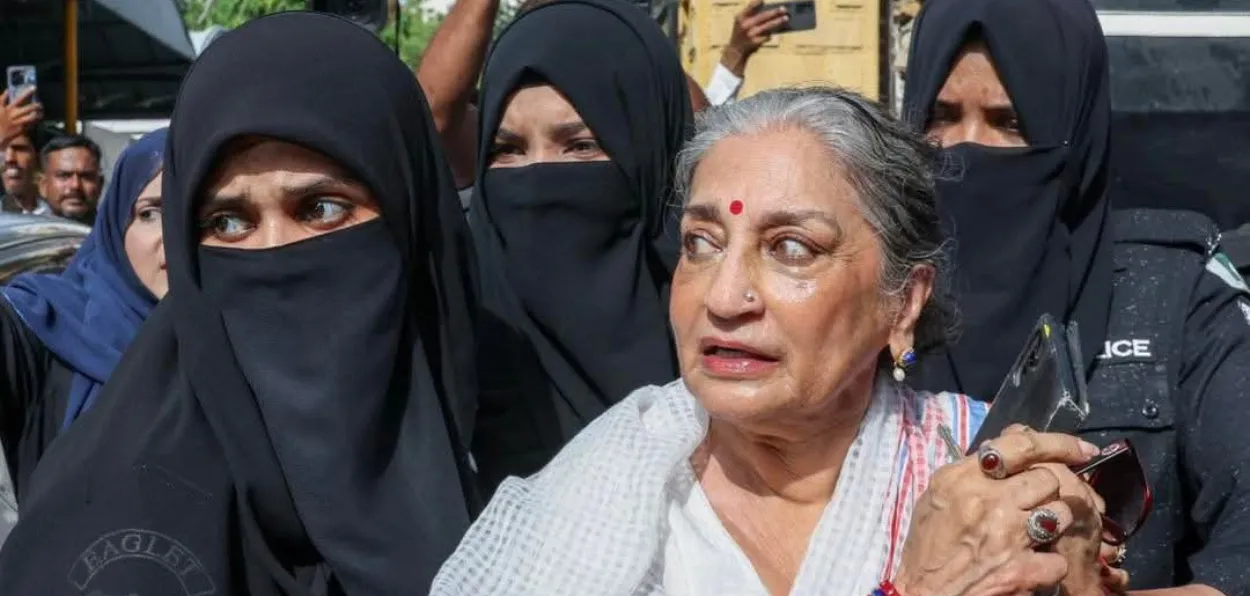
Videos circulating on social media show a group of burqa-clad police women dragging Kirmani out of a car. Kirmani, clad in her trademark sari and supporting a Bindi on her forehead is heard saying “You can’t drag me like this. I am 75-year old.”
Kirmani is a cultural and women rights activist, who has stood up to dictators like General Zia-ul-haq when he sought to ban dance and wearing og Sari, labeling these as ‘Hindu and Indian symbols.”
According to reports circulating on social media and local activist networks, Kermani was detained outside the Karachi Press Club while seeking NOC for Aurat March.
Sheema Kermani, in her own words: "If respect wasn't to be given, then why were they awarded the national award?"
— Anaya Zehra (@AnayaZehra4) May 6, 2026
She is asking the question the state cannot answer.
1/3 @UstadrahiS @FearlessWolfess @bilalfqi @MIqbal_BRP @VeengasJ #SheemaKermani #SindhPolice pic.twitter.com/xBAPN4lOWA
She has always been a target of radical Islamist groups. These groups accuse Kirmani of “spreading shirk” (apostasy) through classical dance performances and of promoting ideas related to women’s freedom and gender equality that they claimed were “against Islamic values.”
Critics alleged that she was influencing young women and encouraging them to challenge conservative social norms.
For decades, Sheema Kermani has been one of Pakistan’s most recognizable cultural figures. Through her organization Tehrik-e-Niswan, she has used dance, theatre, and literature as tools to speak about women’s empowerment, minority rights, and social justice. In a country where conservative religious forces often oppose artistic expression, her work has consistently faced resistance. Yet she remained a symbol of resilience for many Pakistani women and artists.
The Rawalpindi-born Kirmani learned dance in Delhi where she stayed for years when dance and other art forms were banned in her country.
After returning, she used dance as a weapon against fear. She also performs 'Dhamal' at Sufi shrines. Recently, she was even thrown out of an event for speaking out in support of Palestine, but she always stood firm on her principles.
Pakistani classical dancer & veteran women’s rights activist Sheema Kermani was manhandled & arrested by Sindh Police outside Karachi Press Club while seeking NOC for Aurat March. Even peaceful activists aren’t safe in Pakistan. #SheemaKermani #AuratMarch #SheemaKermani… pic.twitter.com/nVaVhMYpCB
— VIRAL VOLT (@ViralVolT1) May 9, 2026
Younger generation knows her from her famous song Pasoori on Coke Studio.
Sheema Kirmani gained recognition as a fearless artist during the reign of General Zia-ul-Haq in Pakistan. At that time, there were numerous restrictions on women dancing and performing on stage. Many considered their dance to be against religion.
Despite this, Sheema remained resolute. She would wear a sari on stage and, through her dance, would raise issues of violence against women. From the dance stage, she would advocate for women's equality. She is one of the organizers of the "Aurat March" in Pakistan.
She has gained worldwide recognition for his work in using art as a vehicle for social change. He was nominated for the Nobel Peace Prize in 2005. In 2023, the Pakistani government honored him with the "Pride of Performance" award.
READ MORE: Why Congress MLA Motab Shaikh thinks he is the luckiest man on earth
As international attention grows, many are now calling for Kermani’s immediate release and for stronger protections for artists, minorities, and women who continue to challenge extremism through culture and peaceful expression.
According to Pakistani media, Kirmani and other activists have been released, social media is raging with the debate on freedom of expression in Pakistan in the wake of this incident.











.webp "Representational Image")