




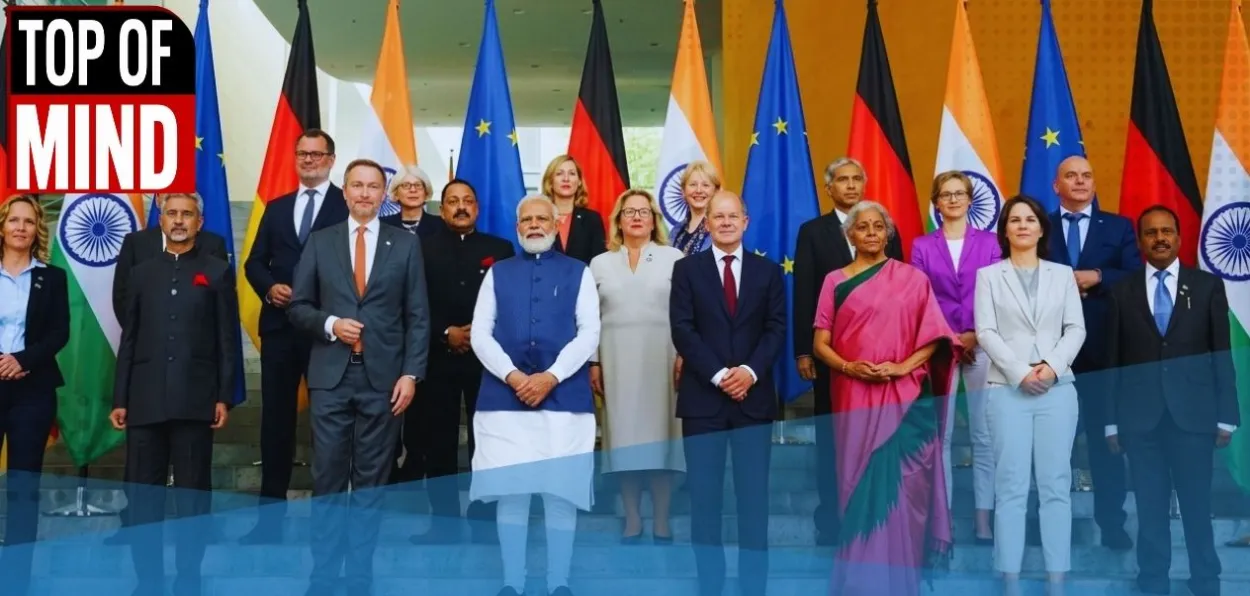
 Rajeev Narayan
India is no longer navigating the global order; It is rewriting its rules. For long, New Delhi’s foreign policy was caricatured as hesitant, overly cautious and trapped in the moral fog of Cold War-era non-alignment. Western capitals often viewed India as a fence-sitting power – unwilling to commit, reluctant to offend and attempting diplomatic yoga between rival blocs. Today, that same ambiguity is beginning to look less like indecision and more like geopolitical sophistication.
Because India no longer wants to choose sides. And increasingly, neither does the world.
The transformation is striking. India buys discounted Russian oil despite Western sanctions, strengthens defence and technology ties with the United States, trades heavily with China while confronting it militarily along the Himalayan frontier, partners with Israel strategically, speaks loudly for the Global South, participates in the Quad, avoids directly condemning Moscow and still finds itself welcomed at virtually every major summit table that matters.
To many Western analysts, this appears contradictory. For India, it has become a doctrine.
The old Non-Aligned Movement of the Cold War era was defensive, ideological and moralistic. India’s new non-alignment is different. It is transactional, muscular and unapologetically self-interested. It is not about neutrality. It is about leverage. In an increasingly unstable world, India may not remain the exception for very long.
Fractured World
The global order of the post-Cold War period is cracking under its own contradictions. America remains militarily dominant, but overstretched and politically polarised. China has become an economic superpower, yet it is distrusted across continents. Europe peddles strategic independence while depending on US security guarantees. Russia remains disruptive and dangerous, but economically weakened. The result is not a multipolar world, but a deeply fragmented one.
Fragmentation creates opportunity for countries capable of manoeuvring through uncertainty.
EAM S Jaishakar speaking about how India's growth is impacting the global economy:
#WATCH | Addressing the representatives from various sections of Surinamese society, EAM Dr S Jaishankar says, "If you look at the IMF expectation of global growth this year, India contributes to the 17 % of the total global growth... Now, when a country like us, an economy like… pic.twitter.com/Rsyg0CKdnF
— ANI (@ANI) May 8, 2026
India senses that opportunity clearly. New Delhi is now behaving not as a junior partner seeking validation, but as a civilizational power demanding more room to manoeuvre. Its foreign policy is being driven less by ideological loyalty and more by layered national interests, such as energy security, supply-chain positioning, defence preparedness, technological access and domestic political calculations.
The Russia example captures this shift perfectly. After the Ukraine war began, Western nations expected India to distance itself sharply from Moscow. Instead, India increased purchases of discounted Russian crude oil, helping stabilise domestic inflation while cushioning itself from global energy shocks. According to analyses by the Council on Foreign Relations, Russian crude accounted for a major share of India’s oil imports after the war began.
The irony was extraordinary. India helped soften the economic impact of sanctions on Russia, while strengthening strategic partnerships with Washington. US criticism grew uncomfortable, but accommodation eventually prevailed because India had become too important to alienate. That single episode revealed a geopolitical truth: nations increasingly speak the language of values while practising the arithmetic of interests. India is simply more honest about it.
The China Shadow
Hovering behind India’s strategic balancing act is the enormous shadow of China. Beijing’s rise has destabilised the Asian balance of power. India cannot fully align with the West because it fears excessive dependence and understands how quickly big powers recalibrate priorities. Yet, India also cannot distance itself from the West because China’s economic and military scale demands counterweights. This creates a delicate geopolitical dance.
#WATCH | Addressing the representatives from various sections of Surinamese society, EAM Dr S Jaishankar says, "During COVID, there were countries who stockpiled vaccines. I remember one in particular. Being from the diplomatic world, I won't mention its name, but they had… pic.twitter.com/YbCv7On909
— ANI (@ANI) May 8, 2026
Consider this. India participates enthusiastically in the Quad grouping with the US, Japan and Australia, avoiding the appearance of becoming a formal military ally. It continues trading with China despite border tensions and distrust. To outsiders, this appears contradictory. To India, it is survival, the means to emerge stronger. There is a distinctive psychological shift underway.
India sees itself not as a developing country, but as a civilizational state reclaiming autonomy after centuries of colonialism and dependence. The rhetoric around sovereignty, ‘Vishwaguru’ and leadership of the Global South resonates strongly within domestic politics because it aligns with a broader national desire for independent decision-making.
Non-alignment is no longer marketed as neutrality. It is sold as sovereignty itself.
That distinction matters enormously in India, where public opinion favours independence over alignment with foreign powers. In many ways, India’s foreign policy reflects domestic political sentiment as much as external geopolitical realities. The sentiment and intent are clear: India will cooperate with everyone, but subordinate itself to no one.
New Global Prototype
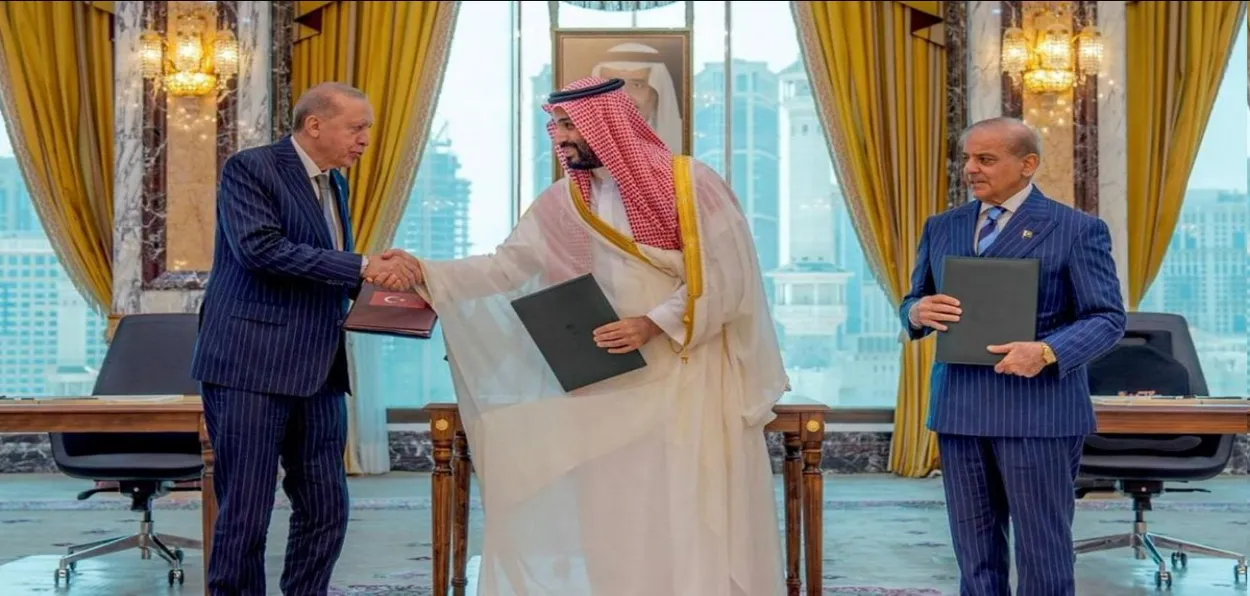
The remarkable part is that the world is moving in India’s direction. Saudi Arabia engages with the US and China simultaneously. Turkey balances NATO membership with independent geopolitical adventurism. ASEAN nations hedge between China and the West. Even Europe now speaks the language of ‘strategic autonomy’.
ALSO READ: Three likely scenarios emerging from the West Asia crisis
Traditional alliance systems are weakening because countries no longer see permanent loyalty as economically feasible. Globalisation has changed the logic of power. Nations today depend on one country for energy, another for technology, a third for manufacturing and a fourth for security cooperation. In such a world, rigid alignment becomes expensive.









_(1)_(1).webp)


.webp)
.webp)

_(1).webp)