 Manjit Thakur
The world today sits atop a powder keg. Looking at the world map, we see fewer islands of peace and far more smouldering embers of conflict. Be it the plains of Russia and Ukraine, the streets of Gaza turned into rubble, the blood-soaked civil war in Sudan, or the conflict zones of Myanmar—humanity today is being scorched by the man-made fires triggered by hatred.
Modern science has empowered humans with weapons of destruction, yet it has stripped us of the wisdom to live in peace. In such a scenario, the principles propounded by Vardhaman Mahavir 2,500 years ago appear not merely as ‘religious precepts,’ but ‘strategic formulas’ for safeguarding humanity.
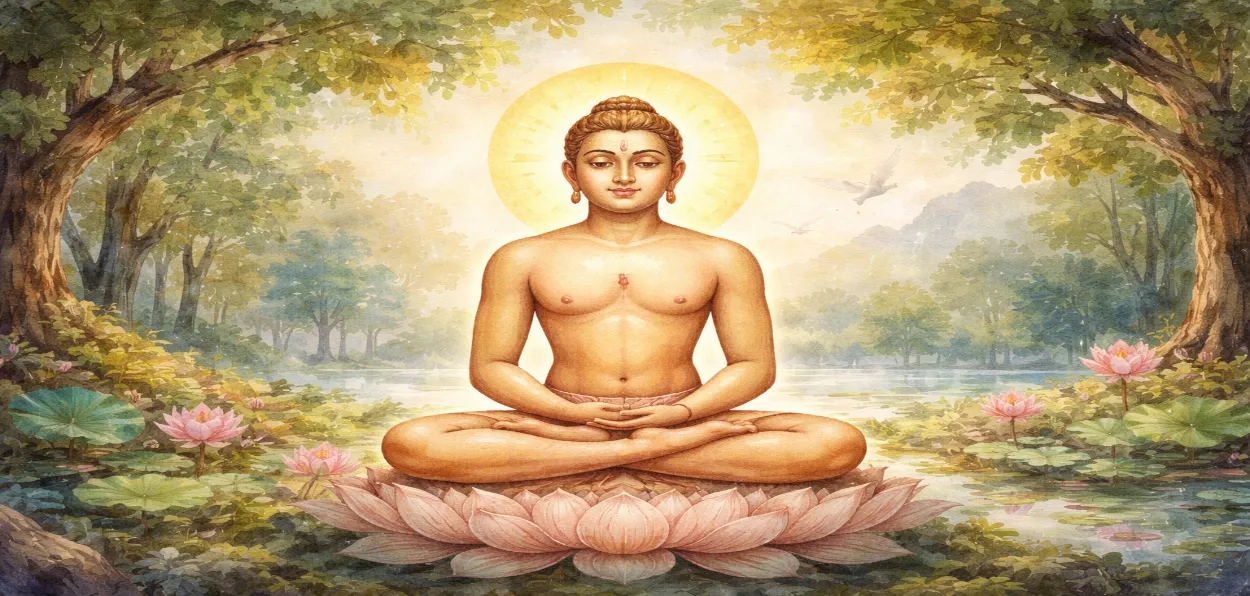
Lord Mahavir’s philosophy rests primarily on three pillars, which appear to offer a precise remedy for the geopolitical crises plaguing the world today.
Mahavir’s principle of Ahimsa (non-violence) is not a euphemism for cowardice; rather, it is the greatest power in the world. He proclaimed, "Ahimsa Paramo Dharma" (Non-violence is the supreme duty).
In today’s world, the conflicts between Russia and Ukraine—as well as those involving the US, Israel, and Iran—are fundamentally the offspring of ‘ego and expansionism.
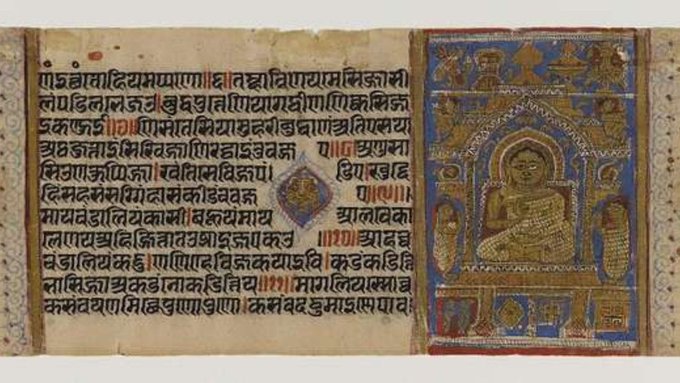
Jain scriptures
Mahavir teaches that violence is not merely physical; it can also manifest through speech and thought. Until one nation accepts the existence of another with tolerance, the clouds of war will not dissipate. His maxim, "Live and Let Live," stands as a humane alternative to the violent modern doctrine of "Survival of the Fittest."
In today's world, the greatest conflict is ideological. The dogmatic assertion that "My truth is the only truth" lies at the very root of decades-old conflicts, such as that between Israel and Palestine.
Mahavir propounded the principle of Anekantavada (Non-absolutism), which posits that truth can have multiple facets.
If today's politicians and national leaders were to embrace Anekantavada, they would come to realise that an opposing side, too, may possess its own valid truth.
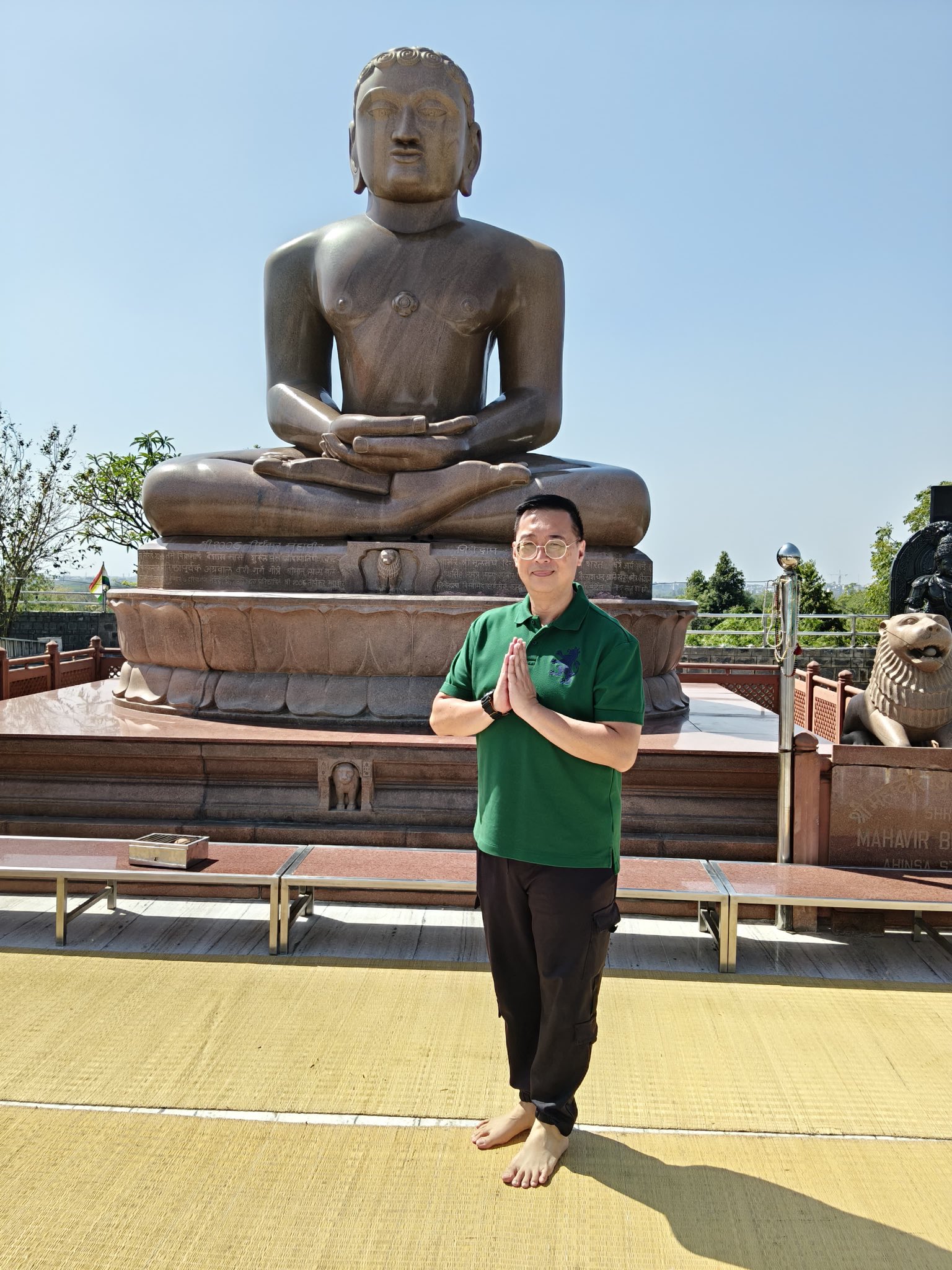 Hong Kong ambassador to India H C Wong paying tributes to Lord Mahavir
This principle fosters ideological tolerance. If we start listening to others’ perspectives, the doors to dialogue will open, and the horrors of war will naturally begin to recede. Anekantavada is, in essence, the very soul of modern democracy and pluralism.
History bears witness to the fact that the majority of wars have been waged for the acquisition of land, oil, water, or minerals. The ongoing civil wars in Sudan and Central Africa are driven by a blind race for resources. Mahavir’s principle of Aparigrah (non-possession beyond one's needs) serves as a scathing critique of modern-day consumerism.
If humans and nations learn to limit their needs, the struggle for resources can end.
Aparigraha is not merely personal sacrifice, but an economic model that advocates for ecological balance and global justice.
Today, the world is divided into two factions. On one side are military alliances like NATO, and on the other, their opponents. This bloc has brought back the era of the Cold War, when nuclear deterrence was considered the only basis for peace. But can peace based on fear be lasting?
Today, it seems as if World War III has already begun, being fought piecemeal in different parts of the world. Including both large and small wars, civil wars, and ethnic conflicts, including those between Iran, the United States, Israel, and Russia, and Ukraine, there are currently 67 wars raging worldwide.
From Myanmar to Syria, where brother is thirsty for brother's blood, Mahavira's principle of Atmaupamya (considering others as oneself) is relevant. When we begin to consider the suffering of others as our own, the sword falls from our hands automatically.
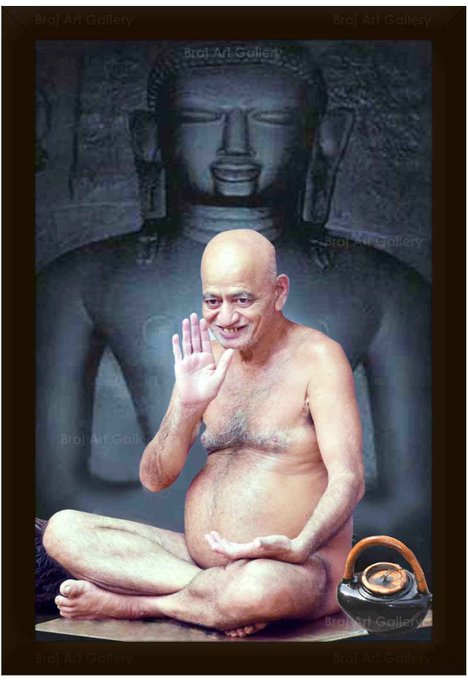
A Jain Monk
This is the era of information warfare. Today, 'digital violence' is being used to spread hatred. Mahavira's teachings of 'Satya' and 'Achaurya' teach us that stealing someone's reputation through misleading information is also violence.
Lord Mahavira did not leave his kingdom and practice penance in the forests because he wanted to escape from the world, but because he did so, to conquer the ‘internal enemies’ like anger, ego, delusion, and greed.
He once stated, “To conquer thousands of warriors is easy, but to conquer oneself is the true victory.”
The victory that contemporary figures—such as Vladimir Putin, Benjamin Netanyahu, or other global leaders—seek is the one that traverses a path paved with heaps of corpses. Mahavir’s victory, however, begins with a ‘change of heart.’
If the world is to be spared the horrors of a Third World War, it must place upon its table not only the Charter of the United Nations but also Mahavir’s manifesto of Anekantavada’ (the Doctrine of Many-Sidedness).
Today, Lord Mahavir stands relevant not merely as a Tirthankara of Jainism, but as a true ‘Global Citizen.’ His teachings serve as a ‘balm’ capable of healing the wounds of a war-torn world.
ALSO READ: Alfiya Pathan: The rising boxing Star from Nagpur, aspiring to be the Next Mary Kom
Peace will not emerge from armies, but rather from a consciousness that embraces the principle of ‘Parsparopagraho Jivanam’—meaning that all living beings are interdependent and complementary to one another.
Manjit Thakur is an author and Editor of the Awaz AV