.webp "S. Irfan Habib with Saquib Salim in Deen Aur Duniya")
New Delhi
Maulana Abul Kalam Azad once grappled with the version of Islam he had inherited. Seeking a deeper understanding, he distanced himself from religion for nearly 17 months. During this period of introspection, he developed a renewed interpretation of Islam—one that emphasised critical thinking and conscious personal commitment.
This insight was shared by historian S. Irfan Habib in a special podcast, 'Deen aur Duniya,' by Awaz-The Voice, in conversation with Saquib Salim. According to Prof. Habib, Maulana Azad believed that religion should not dominate human beings; rather, individuals must retain the ability to think critically and independently. For him, religion encompassed both spirituality and practical life.
Maulana Azad maintained that the Quran is a moral and spiritual guide that illuminates the path of knowledge and ethical living, but it is not a scientific text. In this, he echoed the views of Sir Syed Ahmad Khan, advocating that science should be studied independently.
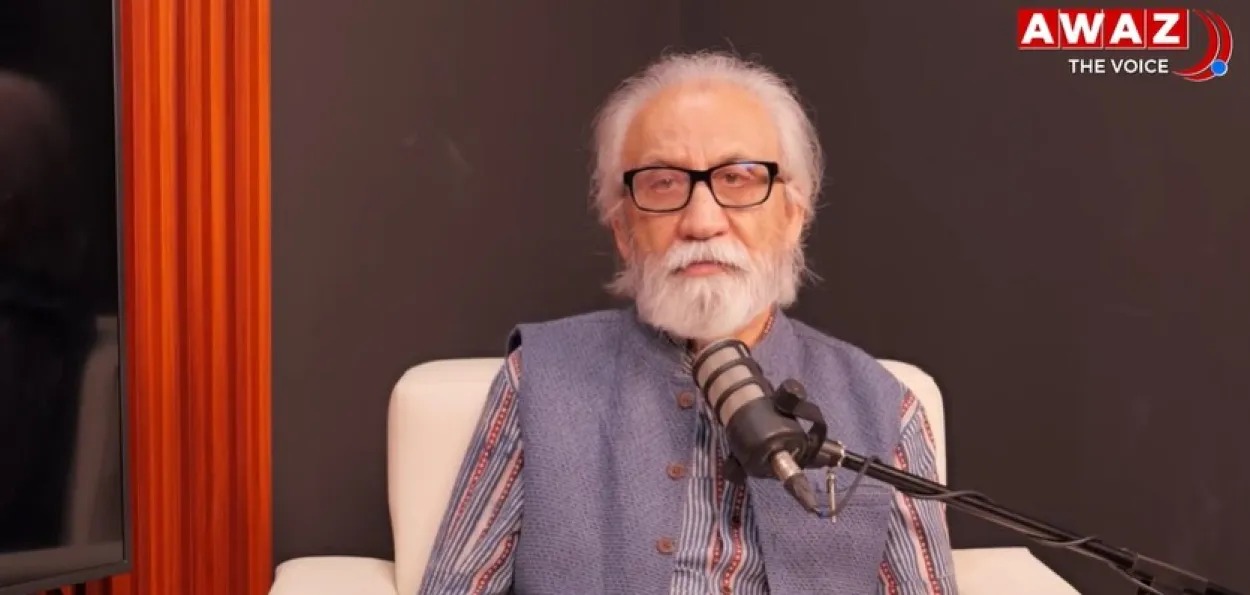 Prof S. Irfan Habib
Prof. Habib also highlighted that Maulana Azad came from a deeply religious and scholarly background. His father, Maulana Khairuddin, was a distinguished scholar educated in the Arab world. Azad received his early education at home and did not attend a formal school or university, emerging instead as a self-made intellectual who cultivated a lifelong habit of study and reflection.
From a young age, Maulana Azad began to examine religion critically. Although he temporarily distanced himself from it, he eventually returned with a transformed perspective. He believed that religion should not confine individuals but should encourage understanding and inquiry. In his view, merely memorising religious texts was insufficient; true scholarship lay in comprehension. He urged ordinary Muslims to understand the Quran, even if it required engaging with it in Arabic.
Maulana Azad’s upbringing also shaped his balanced worldview. His father strongly opposed Wahhabism and ensured that his son was educated under teachers who were distant from such ideological influences. This careful guidance contributed to Azad’s broad and inclusive outlook.
He consistently emphasised that the role of religion is to provide moral guidance, not scientific explanations. Inspired by Sir Syed Ahmad Khan, he stressed the importance of modern education and scientific learning. For Azad, the pursuit of knowledge was a fundamental duty, even if it meant travelling to the farthest corners of the world.
Importantly, Maulana Azad’s contribution extended beyond his role as India’s first Education Minister. At the time, he effectively oversaw the domains of education, culture, and science before these were divided into separate ministries. When he assumed office, one of his foremost challenges was addressing inequality—not merely in access to education, but in the broader social structure.
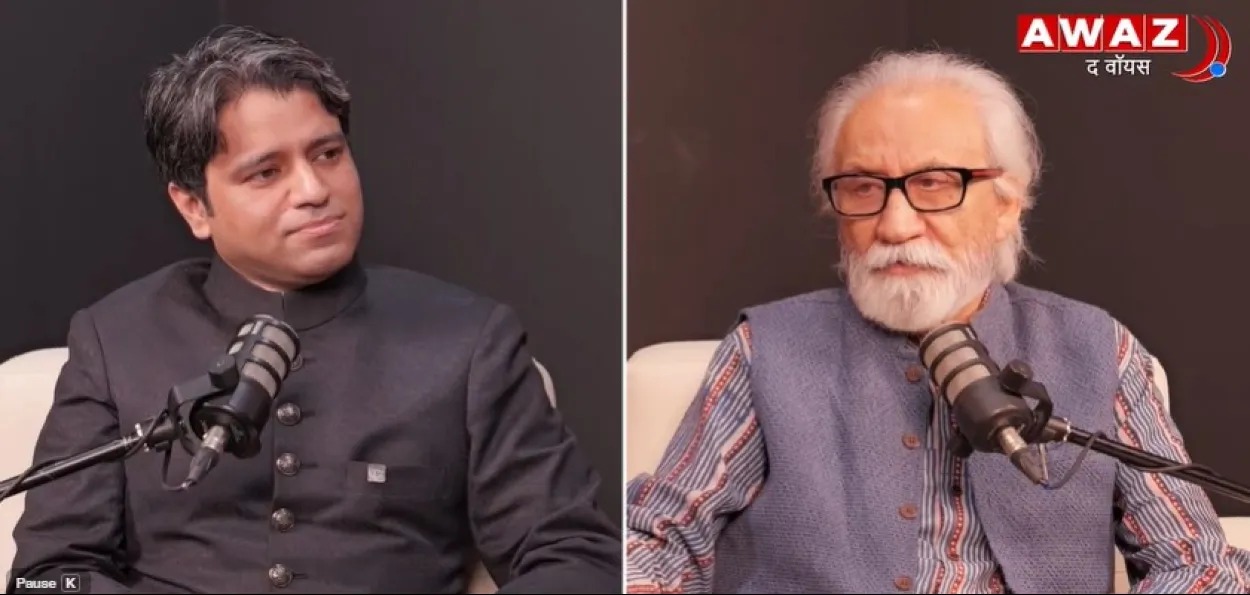 Saquib Salim and S. Irfan Habib
He inherited a nation where nearly 85 percent of the population was illiterate, and the education budget stood at a mere Rs 1 lakh. Despite these constraints, Azad persistently advocated—both in the Constituent Assembly and beyond—that at least 10 percent of the national budget should be allocated to education. His vision was to bring historically marginalised communities into the educational mainstream.
At the heart of Maulana Azad’s message was the importance of balance. He believed that religion and worldly life must coexist harmoniously. Religion, he argued, should not overshadow essential aspects of life such as education, employment, and social cohesion. Instead, individuals should strive for equilibrium between spiritual and worldly pursuits.
The discussion concluded by underlining the enduring relevance of Maulana Azad’s ideas. He envisioned an India rooted in equality, free from discrimination on the basis of religion. His efforts contributed to fostering a sense of belonging among Muslims in India, many of whom chose to remain in the country and embrace it as their homeland.
ALSO READ: Khan Saab's Dhurandhar 2 hit makes Punjabi Sufi singer a national craze
This conversation reaffirms that Maulana Abul Kalam Azad was not merely a religious figure but a profound thinker, educationist, and nationalist leader. His life and ideas continue to offer valuable lessons on the importance of knowledge, tolerance, and balance as the cornerstones of a progressive society.
The Full Interview:

_(1)_(1).webp "Khanqah Emadia Qalandaria, Patna, Bihar")