 Rajeev Narayan
The world has seen oil shocks before. But few in recent memory have travelled as quickly from distant battlefields to our kitchens and petrol stations. It is a gathering storm. The current crisis began far from India’s shores, with escalating military confrontation in West Asia between the United States-Israel axis and Iran. The consequences have been immediate. Iran’s threats and on-ground attacks on shipping have disrupted traffic through the Strait of Hormuz, one of the world’s most critical energy arteries. Tanker movement through the narrow channel, through which roughly a fifth of the world’s oil passes, has collapsed dramatically amid security fears.
Almost instantly, the impact has rippled across global markets. Brent crude surged past $100 per barrel and briefly touched $126, marking one of the sharpest supply shocks since the oil crises of the 1970s. Not since Britain faced the shutdown of the Suez Canal in 1956 has such a backlash been witnessed. For the global economy, the result has been catastrophic – inflation, nervous markets and an energy crunch. The International Energy Agency has called this “the most serious global energy and food-security challenge in decades”.
Yet, nowhere is the tension between perception and reality more visible than in India. Rumours, queues and rising prices have begun to shape public behaviour as much as the underlying supply situation itself.
India’s Energy Dependence
India’s vulnerability to global energy turbulence is structural, with the country importing around 80-85 per cent of its crude oil requirements. And since the dependence on overseas shipments for cooking gas and natural gas is massive, any stuttering in global supply routes inevitably sends tremors rushing through India’s domestic market.
Liquefied Petroleum Gas, the cooking fuel used in crores of Indian homes, has emerged as the most visible symbol of the crisis. Nearly 90 per cent of India’s LPG imports pass through the Strait of Hormuz, making us uniquely sensitive to disruptions in this waterway. And as shipping slowed and tankers hesitated to enter the conflict-prone waters, supply chains tightened.
In many Indian cities, households have reported delays in LPG cylinder deliveries. Restaurants and small eateries – dependent on commercial cylinders – felt the squeeze even sooner, forcing some establishments to temporarily shut kitchens or rewrite their menu cards.
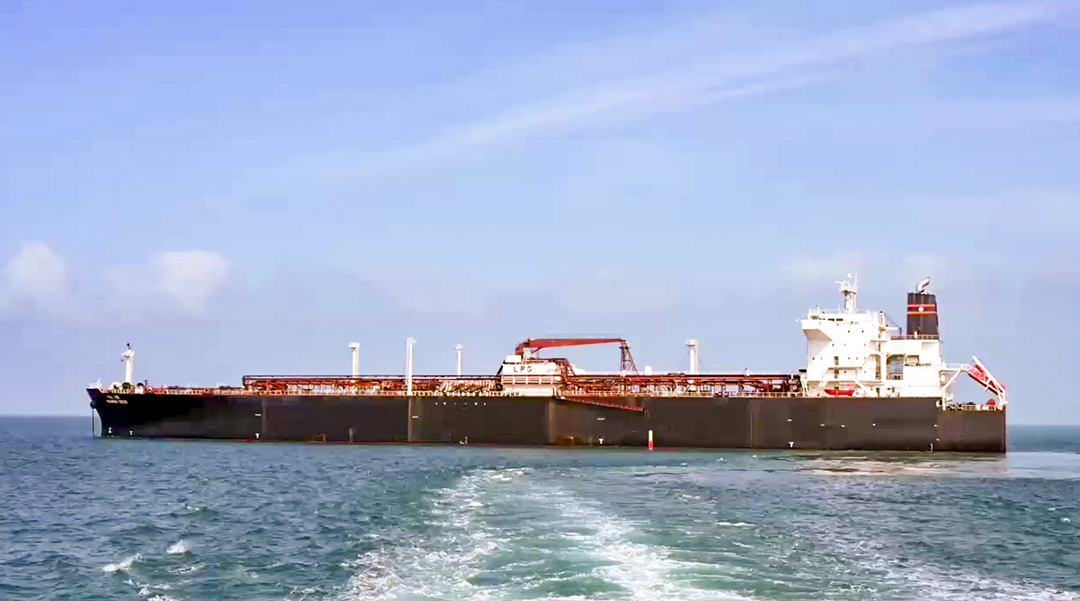
Indian LPG Carrier Nanda Devi which entered Indian waters after crossing Hormuz Strait
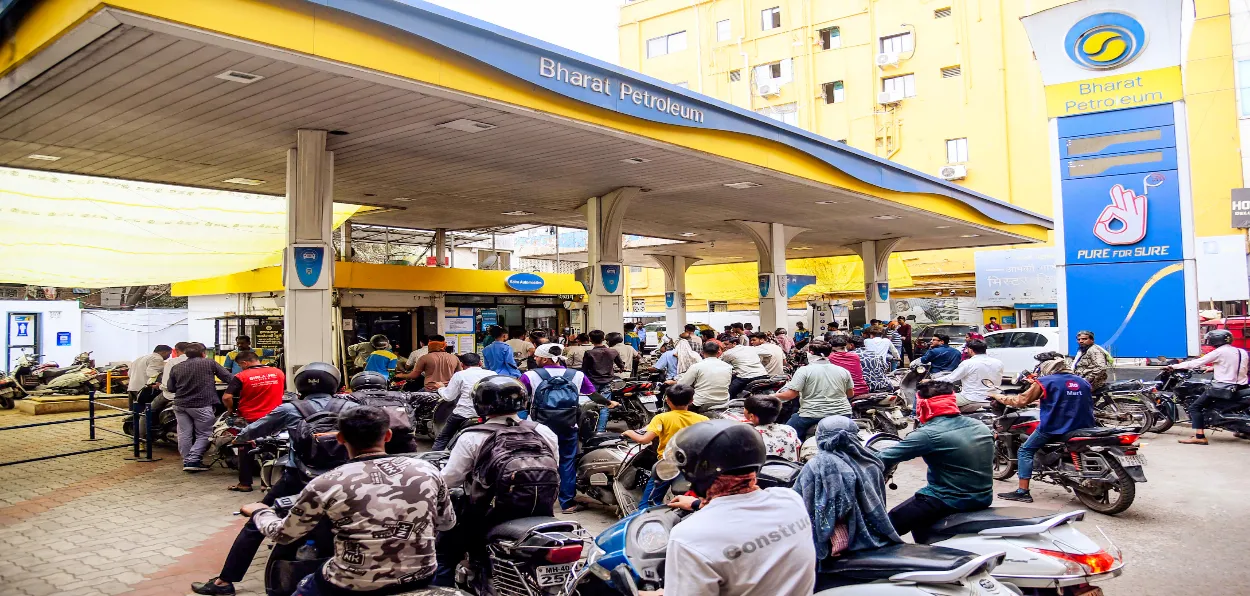
At the same time, the psychology of scarcity fed the crisis. Queues appeared outside petrol pumps and gas distributors countrywide last week. Panic buying, fuelled by WhatsApp- and social media-fed rumours and speculation, risked creating the very shortages people feared.
Reports of LPG cylinders selling at inflated prices in informal markets added to the anxiety. And therein lies the crucial point often lost in the noise – the disruption is real, yet it is not the same as a collapse of supply.
India’s oil companies, public and private, have repeatedly emphasised that their inventories remain adequate and distribution networks are functioning normally. They have urged citizens to avoid panic purchases and hoarding, warning that such behaviour strains logistics and worsens temporary imbalances.
Government Moving Fast
The government has responded quickly to stabilise the situation. Strategic stockpiles and refinery operations have been recalibrated to cushion short-term volatility. Emergency procurement channels have been activated to source additional cargoes of crude and LPG from alternative suppliers, where possible. At the same time, authorities have engaged diplomatically with key partners in the Gulf to ensure safe passage for energy shipments.
Policy adjustments have also been introduced. In some regions, the authorities have increased allocations of alternative fuels such as kerosene and temporarily allowed restaurants to explore substitute energy sources to keep kitchens operational.
But pricing changes – particularly the upward revision in LPG prices – reflect the uncomfortable reality that India cannot fully insulate itself from global energy markets. When crude prices surge internationally, domestic adjustments become inevitable. Yet, the broader message from policymakers and energy companies remains consistent: India is managing a supply disruption, not confronting an energy famine.
Citizens Have a Role Too
The lesson from every energy crisis – from the 1970s oil embargo to recent supply shocks – is clear: that government action alone cannot stabilise markets. Public behaviour matters. India’s consumption patterns offer ample room for collective prudence. Simple measures, multiplied across millions of households, can significantly reduce demand pressures.
Smart cooking practices such as using pressure cookers, covering utensils while heating and avoiding unnecessary flame time can stretch LPG cylinders longer. Urban commuters can reduce petrol and diesel use by carpooling, relying more on public transport and avoiding unnecessary trips.
🚨🇮🇳 India braces for long West Asia crisis
— Sputnik India (@Sputnik_India) March 23, 2026
PM Modi signals prolonged disruption from the war.
Govt securing oil, gas and fertilisers, prioritising households and food reserves.
Watch how Indian govt is going to react👇 pic.twitter.com/rC7OqcLy9e
Switching off engines at traffic signals, a practice often ignored, saves substantial amounts of fuel across crowded cities. Businesses have a role too. Restaurants, hotels, and commercial establishments must adopt energy-efficient cooking equipment, stagger kitchen operations, and explore interim alternatives such as electric or induction cooking.
Even small behavioural shifts like conserving energy at home, cutting down on wastage and avoiding panic stocking can help maintain equilibrium in the supply chain. Remember: energy crises are rarely solved overnight. But they are often worsened, or eased, by public response.
The ongoing turbulence offers India a sobering reminder of its long-standing energy dilemma. Despite rapid economic growth and technological progress, we remain deeply dependent on imported hydrocarbons. Geopolitical shocks, be it in West Asia, Eastern Europe or elsewhere, inevitably travel through shipping lanes and commodity markets to reach Indian households.
The long-term answer lies not merely in managing crises but in reducing vulnerability. Expanding renewable energy, strengthening domestic refining capacity, diversifying import sources and accelerating electric mobility are all part of a solution for a self-reliant tomorrow. India has already begun this transition through investments in solar power, green hydrogen and biofuels. Yet, the current episode demonstrates that the journey toward energy resilience must move faster.
What’s Needed is Calm
Energy crises tend to generate two reactions: panic in the short term and reform-led solutions in the longer term. India must avoid the first while embracing the second. Queues outside fuel stations and the rumours circulating on mobile phones are creating an atmosphere of scarcity. But the reality is more nuanced – supplies are strained but manageable, provided distribution remains orderly and consumption is responsible.
For citizens, the message is simple. Use energy wisely, avoid hoarding and trust the system that is working to stabilise supplies. For policymakers, the challenge is larger; the need to strengthen the very foundations of energy security so that the next global shock does not travel so quickly into Indian homes.
ALSO READ: Pilot Hana Mohsin Khan defies social and religious stereotypes
The world’s oil markets may be volatile, and geopolitics may remain unpredictable. But calm, informed and collective action can ensure that a moment of anxiety does not become a crisis of confidence. In the end, the most powerful fuel India possesses may not lie beneath the ground or in tankers at sea. It lies in the discipline of its people and the resolve of its institutions.
The writer is a veteran journalist and communications specialist.

.webp "Pilgrims on the way to Amarnath shrine")













.webp)

.webp)