Mir Altaf
India is not merely a nation-state shaped by political history; it is a civilizational continuum that has evolved through centuries of dialogue among diverse cultures, religions, philosophies, and artistic traditions. From the Vedic age to the Buddhist and Jain philosophical revolutions, from the devotional universality of Bhakti movements to the spiritual inclusivity of Sufism, and from indigenous tribal wisdom to modern democratic ideals, India's identity has been defined not by uniformity but by layered coexistence.
In such a context, integrating culture into education is not simply an academic reform; it is a civilizational necessity.
India's earliest educational traditions were deeply embedded within cultural and ethical life. The Gurukul system emphasised holistic development by combining intellectual inquiry with moral discipline, artistic expression, and ecological awareness.
Buddhist monastic universities such as Nalanda and Taxila attracted scholars from across Asia, representing early examples of global knowledge exchange where philosophy, medicine, linguistics, and arts coexisted within a shared academic space. Jain traditions contributed rigorous ethical frameworks rooted in non-violence and intellectual debate.
The medieval period further enriched India’s cultural and educational landscape through the Bhakti and Sufi movements. Saints such as Kabir, Mirabai, Guru Nanak, and the Kashmiri mystic Lalleshwari articulated spiritual philosophies in vernacular languages, making ethical reflection accessible to ordinary people.
Sufi luminaries such as Bulleh Shah, Khwaja Moinuddin Chishti, Hazrat Nizamuddin Auliya, and Amir Khusrau nurtured traditions of love, compassion, and cultural synthesis that bridged communities and reshaped artistic expression.
The interaction between Hindu and Islamic traditions produced a remarkable cultural synthesis that continues to define Indian society. Indo-Islamic architecture, Hindustani classical music, shared linguistic traditions such as Urdu and Hindavi, and devotional practices influenced by both Bhakti and Sufi thought demonstrate that cultural exchange was not a peripheral phenomenon but a central driver of civilizational evolution.
Sufi shrines often became shared spaces of spiritual reflection, as documented in regions like Mewat, where Hindu and Muslim communities historically shared the shrines of saints like Laldas and Shah Chokha, while Bhakti poetry echoed universal themes that transcended religious boundaries. Such historical experiences illustrate that India's cultural strength has always emerged from dialogue rather than separation.
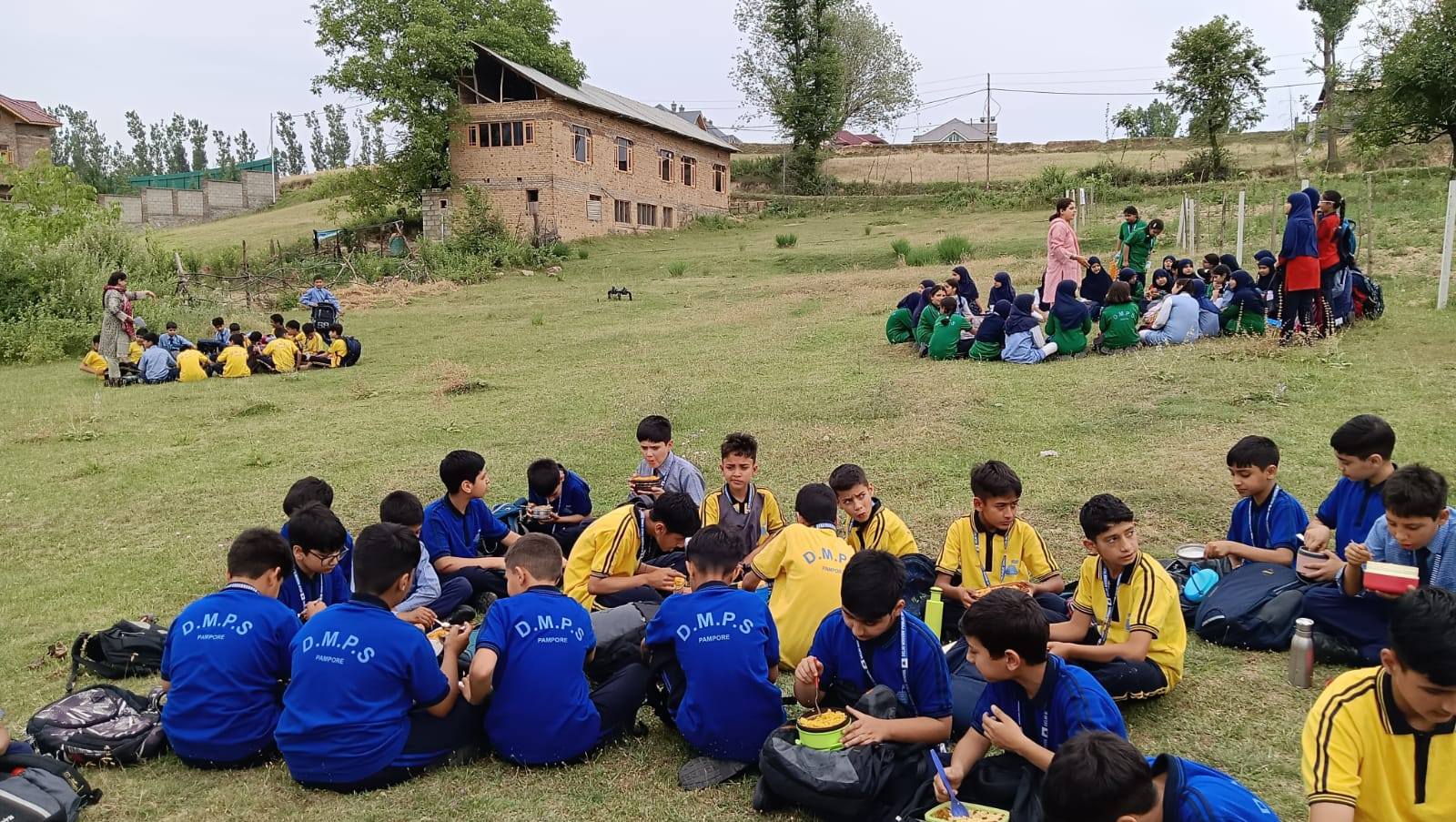 The Nature School, Pampore, Kashmir
The Sikh tradition combined spiritual devotion with principles of equality, service, and social justice. Christian educational institutions contributed significantly to modern schooling, literacy, and social reform movements, while indigenous and tribal communities preserved ecological knowledge systems and oral histories that remain essential for sustainable living.
Across these traditions, culture functioned as pedagogy, shaping ethical consciousness, artistic creativity, and collective identity.
Bringing Culture to Life in the Classroom
Globalisation and digital transformation have expanded horizons, but also risk disconnecting young learners from local identities and shared histories. Integrating culture into education provides grounding without isolation, enabling students to engage globally while remaining rooted in civilizational awareness.
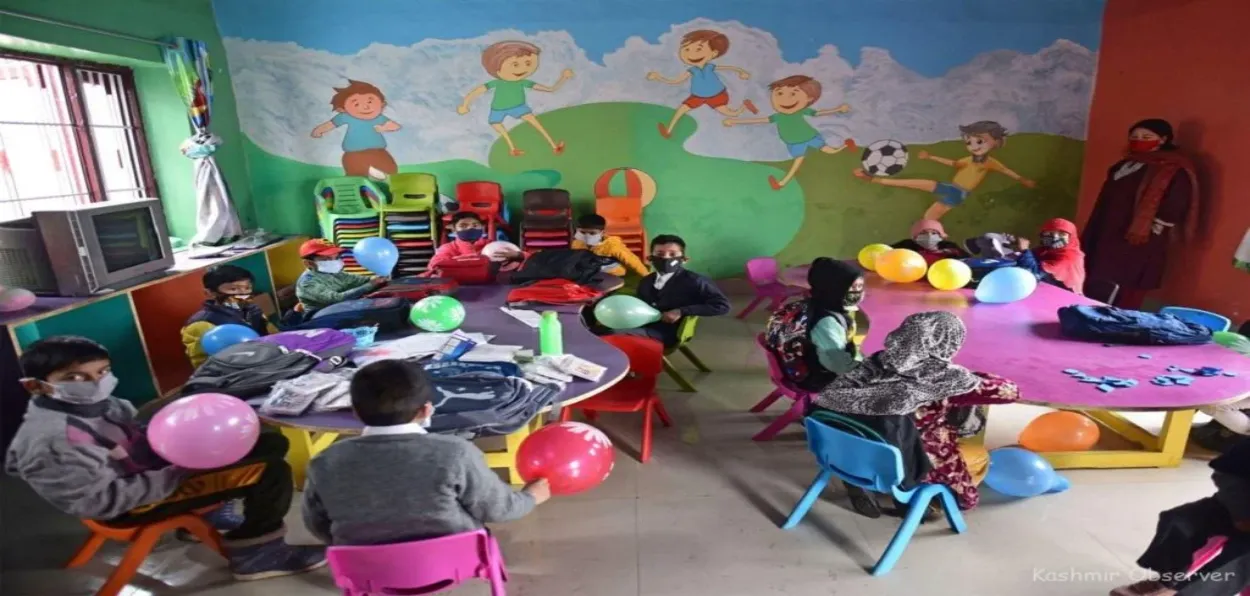
Across India, inspiring examples demonstrate how cultural integration is transforming education. In the village Gundi-Khaleel of District Budgam, Kashmir, a government primary school has transformed itself into a cultural ecosystem. Here, students still practice writing on traditional takhti (slates), a method that teachers affirm helps build fine motor skills, creativity, and focus in an age of smartphones.
More importantly, the school has created a "cultural corner" filled with objects collected from the village: wooden shoes once used to walk over snow, a stone grinder, a kangri (the traditional fire pot), and a strip of handwoven Kashmiri carpet.
The reclaimed connection to heritage is also visible in The Nature School in Pampore, Kashmir, founded by environmentalist Nadeem Qadri. The unique learning space merges ancestral wisdom with modern education. Children learn sustainability as a lived experience, observing migratory birds in the wetlands, sketching trees, and practising the three R's (Reduce, Reuse, Recycle).
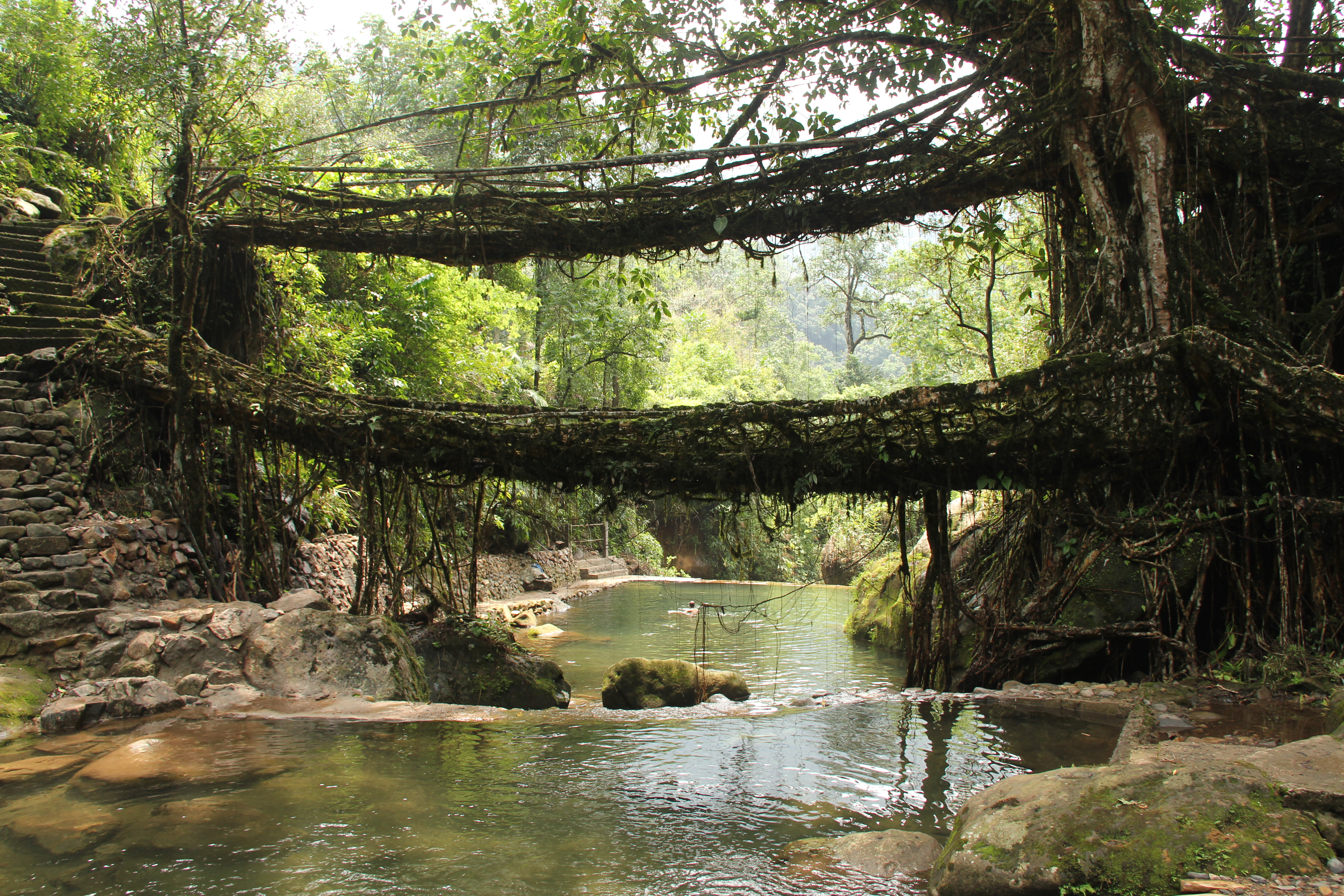 Double Living Bridges of Meghalaya in East Khasi Hills (Wikepedia)
In Maharashtra's Nandurbar district, over 300 students at Kanaiyalal Ravjibhai Public School recently participated in eco-friendly Ganapati idol-making workshops, learning traditional pottery and sculpture while absorbing lessons in environmental consciousness. They crafted miniature clay bulls to celebrate agricultural festivals and prepared diyas for Diwali using traditional materials. Each activity represents a gateway to understanding India's agrarian and artisanal heritage.
The Living root bridges of Meghalaya, locally known as Jingkieng Jri, are an extraordinary example of ancient bioengineering created by the indigenous Khasi and Jaintia tribes. It offers living lessons in indigenous ecological wisdom. Notably, these extraordinary cultural landscapes have been recommended for inclusion in the UNESCO World Heritage List.
I am aspiring for a day when students of a classroom in Lucknow learn geometry through Mughal jali screens, or a Kerala school discussing monsoon patterns through Onam traditions, or a Rajasthan school using Kathputli puppet theatre to teach historical narratives.
When children encounter culture through lived experience rather than abstract description, heritage ceases to be a museum artefact and becomes living knowledge. Teachers must evolve into cultural ambassadors, guiding learners to appreciate diversity while cultivating critical thinking. Schools must transform from examination-driven spaces into cultural ecosystems, establishing clubs, organising heritage visits, inviting artisans, and integrating arts into everyday pedagogy.
Policy Imperatives
The National Education Policy 2020 provides a significant opportunity to integrate culture into education. By emphasising holistic development, multidisciplinary learning, experiential pedagogy, and Indian Knowledge Systems (IKS), the policy acknowledges that education must reflect India's civilizational depth. Indian Knowledge Systems encompass philosophical traditions, classical arts, scientific contributions, linguistic diversity, ecological wisdom, and ethical frameworks that evolved across centuries.
Culture, Unity in Diversity
Integrating culture into education strengthens the foundational idea of India as a shared civilizational space shaped by many communities. When learners understand how Hindu, Buddhist, Jain, Islamic, Sikh, Christian, and indigenous traditions influenced each other, they recognise diversity as enrichment. The shared cultural synthesis between Hindu and Islamic traditions expressed through architecture, music, literature, and everyday social practices demonstrates that India's history is one of interaction and mutual influence.
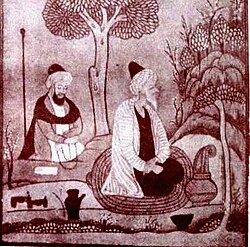 A Painting of Sufis
In Kashmir, the reverence for Sufi saints like Sheikh-ul-Alam (Nund Rishi), whose 14th-century teachings on compassion and nature preservation, like his famous saying “Ann posh teli yeli wan poshi", translating to "Food will last only as long as the forests last", resonates across communities, exemplifying a living syncretic culture. In Mewat, the shared shrines of Laldas and Shah Chokha, where both Hindus and Muslims historically paid homage, testify to a pluralistic past that continues to inspire.
Education rooted in cultural awareness fosters empathy and reduces stereotypes by presenting history as interconnected rather than fragmented. Such understanding promotes social harmony, communal trust, and emotional belonging, reinforcing the spirit of Unity in Diversity that underpins national unity and integrity. It prepares young citizens not merely to tolerate differences but to appreciate how differences have historically enriched Indian civilisation.
Integrating culture into education is not a nostalgic return to the past; it is a forward-looking endeavour rooted in civilizational wisdom. In reclaiming culture as curriculum, India does more than preserve heritage; it strengthens the foundations of unity, integrity, and social harmony, preparing future generations to carry forward a civilizational legacy built on dialogue, coexistence, and shared humanity. The classroom becomes not just a space for transmitting information, but a living link in an unbroken chain of cultural conversation, one that has defined this civilisation for millennia and will continue to shape its future.
Mir Altaf is a Kashmir-based educator.