 Aditi Bhaduri
The ongoing protests in Iran may be at an inflexion point right now. Continuing for more than two weeks now (beginning on 28 December 2025), they are unlike anything the Islamic Republic has witnessed so far.
Beginning with protests by disgruntled merchants over price rise and inflation, they quickly spread to other cities, towns, and villages, engulfing the entire country. Law enforcement officials have been attacked, buildings, including mosques, torched, pictures of Supreme Leader Ayatollah Khomeini burnt, accompanied by calls for overthrowing the regime.
Reports say that foreign agents had also infiltrated the protests. Israel's Mossad spy agency issued a direct call urging Iranians to press on with protests, saying it was supporting them "on the ground" as demonstrations spread in Tehran and other Iranian cities.
Unarmed Iranians pushed regime security forces to flee. Despite more than 30 deaths over 11 days, protesters are back in the streets from Mashhad to Shiraz, Tehran, and across 100 cities. This isn’t about prices or paychecks, it’s about a nation fed up with the entire regime. pic.twitter.com/8XgbQLpqA6
— Masih Alinejad 🏳️ (@AlinejadMasih) January 7, 2026
"Go out into the streets together. The time has come. We are with you," Mossad wrote in a post on its Farsi-language X account, Israel's army radio reported a couple of days after the protests broke out. "Not just from a distance or through words. We are also with you on the ground."
Compounding this was US President Donald Trump's threat of military action against the regime if it used violence against the protestors. Iranian authorities have claimed to have found instigators trying to slip in through the borders with Iraq. President Mahmoud Pezeshkian claimed that "....the same people that struck this country” during Israel’s 12-day war last June were now “trying to escalate the unrest concerning the economic discussion”, alluding to Israel and the US after Iran fought a 12-day war with it in July last year.
Iran, however, defiantly announced it would strike back if any foreign power intervened militarily. Protests, for now, seem to have been quelled, but only after more than 2000 people were reported dead, after authorities used unprecedented force, with a clampdown and internet blackout. Back-channel talks between Iran, Israel, and the US have been ongoing, while America's Gulf allies have also strongly objected to any American attacks on Iran.
President Trump's latest posts on social media praising and commending the Iranian authorities for not using capital punishment against any of the protestors give reasons to believe that the threat of external intervention may have dissipated, at least for now.
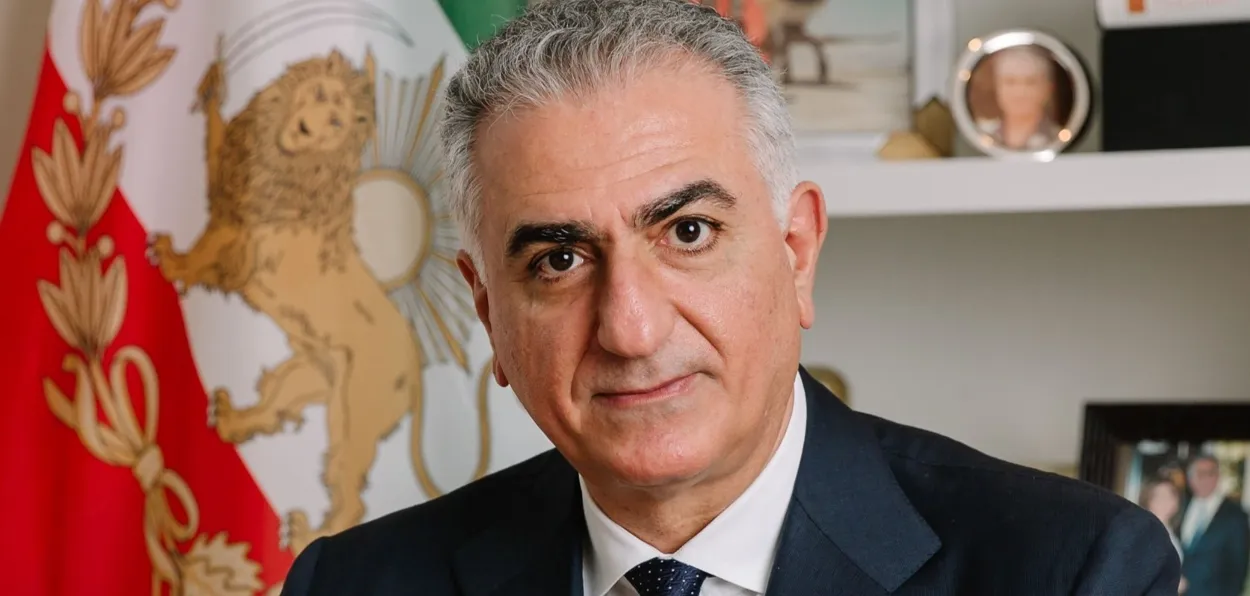
Yet, amidst all the changes that can be anticipated, it is doubtful if the son of Iran's deposed Shah, Reza Pahlavi, often called "Crown Prince" (without any legal basis), can be the panacea for Iranians desiring change.
Living in the US, he has suddenly gained enormous visibility on both Western and social media. He has also been positioning himself as the only alternative to Iran's theocracy, the only person capable of leading a democratic Iran, voicing support for efforts to overthrow Iran’s current leadership, and urging the US to help Iranians do so.
Raza Pahalvi speaking to a German Podcaster:
Mr. Pahlavi, as the son of the Shah – an authoritarian ruler – are you the right person to bring freedom to Iran?
— Paul Ronzheimer (@ronzheimer) July 29, 2025
Watch my interview with Reza Pahlavi on the instability of the Islamist regime, his fight for freedom, and criticism of his father. pic.twitter.com/Il1fv2FBA7
However, to observers of West Asian politics, this is unsurprising. For more than a decade, Reza Pahlavi has been promoted on Israeli media as the rightful leader of the Iranians. And he does indeed have some following amongst the Iranian diaspora.
More recently, he outlined the main policies he says he would pursue if he were ever to return to power. He stated that he would recognise Israel and bring Iran’s nuclear programme to an end. He has, most recently, promised good relations with India, though India and Iran already share cordial relations.
Despite his plans and pronouncements, the Pahlavis remain a virtual outsider who has been living outside Iran since even before the Iranian revolution of 1979. While he has supporters amongst the Iranian Monarchists, they are all diasporic Iranians; moreover, the Iranian opposition groups are divided, united perhaps only in their opposition to the current regime.
Next, there is a reason to believe that Iran's ruling regime is shaken, weak, even fragile, but not out. It has institutions in place, as well as a mass supporter base; the Western media has not been showing the entire picture. Protests are not new to Iran, but the current ones are unprecedented. However, if the authorities act judiciously, they can bring things under control within a reasonable time.
Third, Iranian opposition to the current government does not automatically translate into support for a Western and Israel-backed entity with no experience in statecraft. Many Iranians, who have been against their government's funding of militant groups in other countries, including that of Hamas, remain sincere supporters of the Palestinian cause. Momentary passion should not be taken as political allegiance.
Most importantly, however, is the fact that many from the generation that witnessed and even participated in the 1979 revolution are still living. They have a memory of the deposed Shah and the excesses of his rule - the very reason for the 1979 revolution. Much is made of the highly westernised and free society that Iran had before the revolution.
However, it was also simultaneously a police state, with thousands of secret police and millions of informers; highly dependent on the US, where westernisation was often forced. The economy was mismanaged despite Iran's oil wealth, leading to inflation, growing unemployment and poverty while the Iranian elite lived lavish lives. Disillusioned and disenchanted as Iranians are with their current government, many do not desire a return to the old order - something inevitable if Reza Pahlavi takes charge in Tehran, as he can do so only if the US enables it.
Even Trump has expressed doubts about how acceptable Pahlavi would be to Iranians, following a meeting between Pahlavi and Steve Whitkoff, the US Special Envoy to the Middle East.
Finally, history has shown that regime changes do work when effected organically from within, not when imposed through external intervention. The latter leads to chaos and anarchy. The Arab Spring is a good example. Reza Pahlavi would neither be Bangladesh's Mohammed Yunus nor Afghanistan's King Zahir Shah.
ALSO READ: Kabir Khan's film on the Taj Mahal turns into India's soft power
His return on a Western crutch may free Iran of its theocracy but would probably make it once more dependent on the US and Israel, like his father once had. It is doubtful if Iranians would wish for that.

.webp "Union Home Minister Amit Shah")