Uzma Khatoon
The world is witnessing a deeply troubling development in Afghanistan as the Taliban formalises a legal system that appears to push society backwards by centuries. A recent 90-page document titled the “Criminal Procedure Code for Courts” (Mahakumu Jazaai Osulnama), reportedly signed by Taliban Supreme Leader Hibatullah Akhundzada, has raised serious alarm among human rights observers. While the Taliban presents this code as a step toward legal order, many independent organisations warn that it instead institutionalises discrimination and weakens protections for women.
From the perspective of a Muslim scholar, the central concern is not only the harshness of the law but also the claim that these measures represent Islamic principles. When religion is invoked to justify injustice, scholars must carefully examine both the legal flaws and the theological arguments behind such policies. This article highlights key weaknesses in the Afghan legal approach and explains how they can be corrected in light of broader Islamic teachings and contemporary legal ethics.
Key Weaknesses
One of the most disturbing aspects of the new code is its narrow definition of domestic violence. Reports suggest that a husband becomes criminally liable only when his violence causes visible wounds or broken bones. This effectively normalises everyday physical abuse, such as slapping or kicking. By setting the legal threshold so high, many forms of harm fall outside punishment. From a legal ethics standpoint, this is a major failure because modern criminal law recognises both physical and psychological abuse as serious harms.
Another weakness lies in the evidentiary burden placed on women. Even when a serious injury occurs, the victim must prove abuse in a court system where her testimony may carry less weight. This creates what legal scholars call “structural impunity,” meaning the law exists on paper, but justice remains practically unreachable. A fair system must ensure accessible reporting mechanisms, victim protection, and equal evidentiary value.
The reported classification of society into rigid social tiers-ulama, elites, middle class, and lower class-represents another serious flaw. Equal citizenship is a foundational principle of modern governance. When punishment varies by status, the rule of law collapses into rule by hierarchy. Islamic legal history, despite its imperfections, contains strong egalitarian impulses that contradict such stratification.
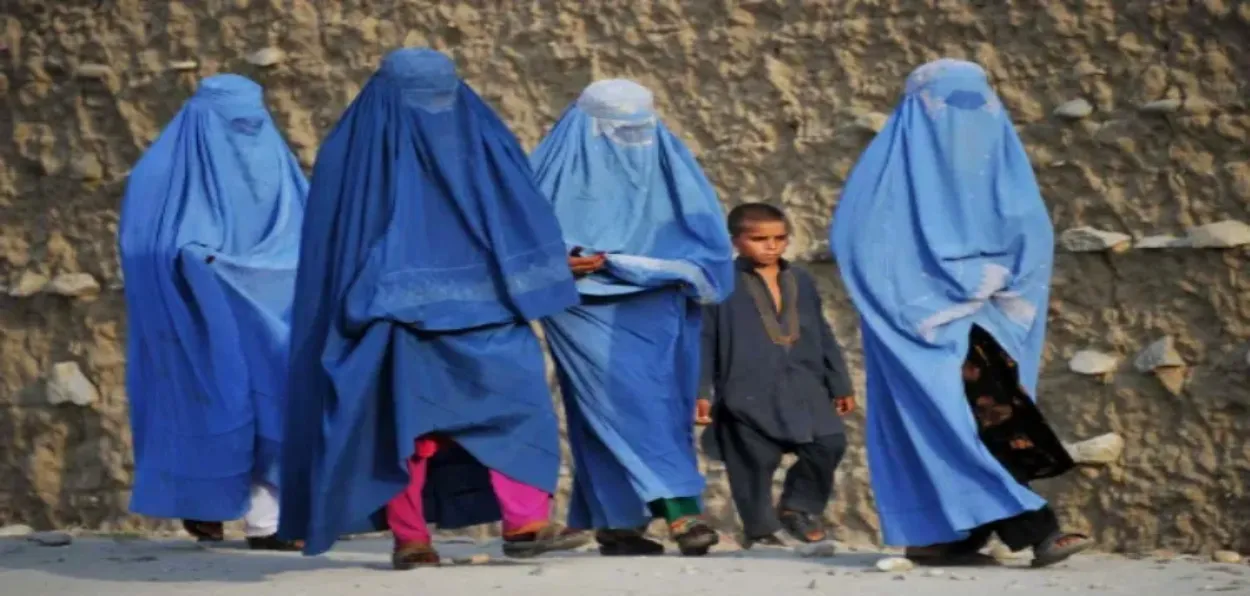
“I wish God hadn’t created women, if we are going to be so unlucky and treated worse than animals ” says an Afghan girl lives under Taliban.
— Azat (@AzatAlsalim) February 20, 2026
Taliban rules Afghanistan with Sharia.
Taliban made a law which allows men to beat women in case of disobedience!
pic.twitter.com/KPXUdLzKpY
Equally troubling is the code’s allowance for men or “masters” to personally discipline dependents. This blurs the line between legal authority and private power. In any functional justice system, punishment must remain the exclusive domain of courts, not individuals. Allowing private discipline creates conditions ripe for abuse, especially against women and children.
Beyond the penal code itself, broader Taliban policies since late 2022 show a consistent pattern: restrictions on women’s university education, limits on mobility without a mahram, and bans from many public spaces. Viewed together, these measures suggest not isolated decisions but a systematic narrowing of women’s social participation.
Another analytical weakness in the Taliban’s position is the conflation of Islam with tribal customs. Many observers note the strong influence of Pashtunwali, the traditional Pashtun honour code. Concepts like nang (honour) and namus (protection of women) are interpreted through rigid male guardianship.
Presenting these tribal norms as universally Islamic overlooks the historical diversity of Muslim societies—from Baghdad to Cordoba to Cairo—where women participated in education, commerce, and scholarship.
What Needs Correction
Correcting these distortions requires returning to core Islamic principles. Islamic jurisprudence has always recognised pluralism of interpretation (ikhtilaf). The classical tradition developed through multiple schools of thought, not a single frozen reading. Any claim that one rigid interpretation represents the only Islamic position contradicts this intellectual heritage.
Equally important is the distinction between Shari’ah and fiqh. Shari’ah represents divine ethical guidance rooted in justice, mercy, and human dignity. Fiqh, however, is a human interpretive effort that has always evolved with context. Treating one historical fiqh position as eternal divine law is methodologically unsound. Meaningful reform in Afghanistan would require reopening the space for juristic reasoning (ijtihad) rather than closing it.
The issue of women’s education clearly illustrates the gap between Taliban policy and Islamic precedent. The Qur’an’s first revealed command, “Read,” was addressed broadly, not to men alone. The Prophet Muhammad stated that seeking knowledge is obligatory for every Muslim. Islamic history records numerous female scholars of hadith and law. Therefore, blanket bans on women’s higher education are extremely difficult to justify within the broader Islamic intellectual tradition.
The debate around Qur’an 4:34 also requires careful interpretation. The phrase “men are qawwamun over women” has often been read as permanent male superiority. However, the Arabic root q-w-m relates to responsibility, maintenance, and support. The verse itself links this role to financial responsibility. Many contemporary scholars therefore understand qawwamun as functional responsibility within a specific socio-economic context, not inherent superiority.
Similarly, the term daraba in the same verse has long been debated. Even classical scholarship placed strict limitations on its interpretation. Importantly, the Prophet Muhammad never struck his wives and strongly discouraged harmful behaviour.
His well-known teaching, “The best of you is the best to his wives,” establishes an ethical benchmark that prioritises kindness. When Qur’an 30:21 speaks of affection and mercy between spouses, and Qur’an 4:19 commands men to live with women in kindness, the broader Qur’anic framework clearly moves toward compassion, not violence. Any legal system that normalises domestic harm contradicts this moral trajectory.
#Heartbroken: Afghan women have the “right” to beg in the freezing cold, but not the right to education or work under the Taliban. Millions are raised in their name, yet hunger and suffering continue. Where is the accountability? Where is the UN?#EndGenderApartheid #FreeWomen pic.twitter.com/IjBOcLJHD8
— Jahanzeb Wesa (@jahanzebwesa) February 20, 2026
Modern Muslim-majority countries provide useful examples of constructive reform. Tunisia’s personal status laws and Morocco’s Moudawana family code have used the tools of Islamic jurisprudence to strengthen protections against domestic violence while remaining within an Islamic legal vocabulary. Similar reform efforts can also be seen in countries like Pakistan, Bangladesh, the United Arab Emirates, Iran, and, more recently, Saudi Arabia, though with varying degrees of success.
Pakistan and Bangladesh have passed domestic violence laws and expanded women’s access to education, even if implementation challenges remain. The UAE has introduced legal protections and institutional mechanisms aimed at family welfare and women’s safety within an Islamic framework. Iran, despite significant internal debates and restrictions, continues to show how Muslim legal systems negotiate between tradition and reform.
In recent years, Saudi Arabia has also taken steps such as easing women’s mobility restrictions and expanding their participation in education and the workforce, even though serious human rights concerns still persist. Together, these examples demonstrate that protecting women’s rights is not a Western imposition but a legitimate and ongoing outcome of dynamic fiqh within the Muslim world.
From an Islamic ethical perspective, the governing values remain justice (‘adl) and mercy (rahma). Qur’an 4:58 commands those in authority to rule with justice, and the Prophet’s Farewell Sermon described women as partners and trusts (amanah). Any policy framework that systematically removes women from education, safe mobility, and legal protection raises serious moral concerns when measured against these principles.
The new Afghan penal code, therefore, represents a critical moment for Muslim legal thought. When religion is used to legitimise harm, scholars have a responsibility to respond through rigorous, evidence-based interpretation. Several corrective steps are necessary: domestic violence must be criminalised in all forms; courts must ensure equal evidentiary weight and accessible reporting for women; the justice system must abandon social hierarchy in punishment; and women’s education must be fully restored in line with both Islamic precedent and contemporary human development needs.
At the intellectual level, Muslim scholars must reassert the distinction between divine principles and human interpretations. Reviving ijtihad, promoting maqasid al-shari‘ah, and encouraging cross-madhhab dialogue can help prevent the fossilisation of Islamic law into rigid codes. It is also vital that Muslim voices, especially of women scholars, remain central in this conversation.
As a liberal Muslim academic trained in Islamic Studies, I believe the path forward lies not in abandoning tradition but in engaging it honestly and courageously.
Islam’s ethical core-human dignity, knowledge, justice, and compassion provides ample resources for reform. The Taliban’s current legal trajectory reflects a narrow and selective reading of Islam rather than the full richness of its legal tradition.
READ MORE: Darakhshan Andrabi - first woman to head Waqf Board proved her mettle
Recognising this distinction is essential for building a legal order that protects women, upholds justice, and preserves the moral credibility of the faith.
Dr Uzma Khatoon, former faculty at Aligarh Muslim University, is a writer, columnist, and social thinker.

.webp "Union Home Minister Amit Shah")