




Jameel Ahmed
They say sports and politics shouldn't mix, but history tells us they are inseparable. Some of the world’s most enduring conflicts haven't just been fought in trenches—they’ve been contested on the pitch, the court, and the track. But when the diplomats hit a wall, it’s often the athletes who find a way over it. Two Decades of Silence: The Ping-Pong Bridge in 1971, the United States and the People’s Republic of China hadn't spoken for over 20 years.
Following the 1949 Communist Revolution, the two superpowers were locked in a diplomatic "deep freeze." There were no embassies, no trade, and certainly no shared games. In the eyes of the world, China was a locked door, and the U.S. was the one holding the latch shut. The crack in that door didn't come from a secret agent, but from a 19-year-old American hippie with a paddle.
During the 1971 World Table Tennis Championships in Japan, American player Glenn Cowan missed his team bus and was offered a ride by the Chinese team. When Cowan stepped onto the shuttle, he didn't just find a seat—he found a bridge. While the world watched in shock, Chinese star Zhuang Zedong stepped forward to gift Cowan a silk-screened scarf.
Realising the PR potential, Mao Zedong issued a shock invitation for the U.S. team to visit Beijing. The "Ping-Pong Diplomacy" had begun. The American players became the first U.S. group to enter the Chinese capital since 1949, playing "friendship matches" where the score mattered far less than the handshake.
The success of the trip was the "green light" President Richard Nixon needed to make his historic 1972 visit, ending decades of isolation.
Today, that 1971 tournament remains the blueprint for how a simple gesture by athletes can bypass the stalemates of high-level politics.
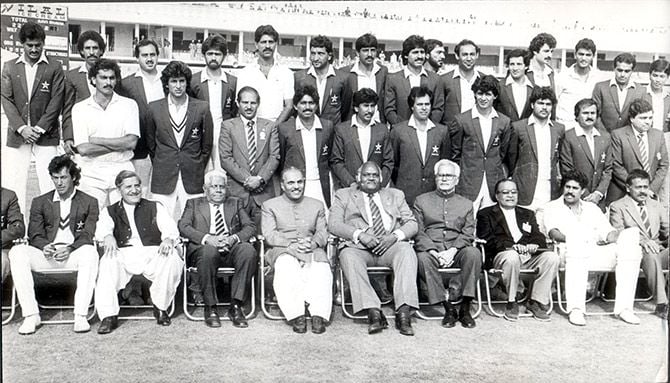 Pakistani President Zia ul haq and Rajasthan Chief Minister Bhairon Singh Shekhawat, with cricket board officials of India and Pakistan in Jaipur in 1987
In South Asia, the cricket pitch has often replaced the summit room. Historically, when relations hit rock bottom, leaders have reached for a bat to break the ice. In 1987, Pakistan’s Gen. Zia-ul-Haq travelled to Jaipur to watch a Test match, a visit that effectively de-escalated a massive military standoff. Eighteen years later, President Pervez Musharraf’s 2005 visit to New Delhi led to a joint statement that the peace process was "irreversible."
This was followed by the "Mohali Diplomacy" of 2011, when PM Manmohan Singh invited PM Yousaf Raza Gilani to the World Cup Semi-Final. Perhaps the most effective "people-to-people" step was the 2004 "Friendship Series." Pakistan issued over 20,000 visas to Indian fans, leading to extraordinary scenes of hospitality that humanised "the enemy."
As the Indian team departed, Prime Minister Atal Bihari Vajpayee gave them a mandate that resonated for years: "Khel hi nahi, dil bhi jitiye" (Don't just win the game, win the hearts too).
Even when governments stop talking, the players often refuse to. In April 2017, following Shahid Afridi’s retirement, the Indian team sent him a match-worn Virat Kohli jersey. It wasn't just a shirt; it was a collective tribute signed by stars like Yuvraj Singh and Ashish Nehra, among others. Kohli’s handwritten note—"To Shahid Bhai, best wishes"—served as a reminder that personal respect persists even when bilateral tours are suspended.
However, the "Spirit of Cricket" is currently facing its toughest test. As of the ongoing 2026 T20 World Cup, the "no-handshake" policy between India and Pakistan has shifted from a one-off incident to an institutionalised protocol. Triggered by the Pahalgam massacre by a Pakistan-based terrorist organisation, the refusal to exchange pleasantries at the toss or post-match has polarised fans. For some, it is a necessary show of national solidarity; for others, it is the erosion of the game’s core values.
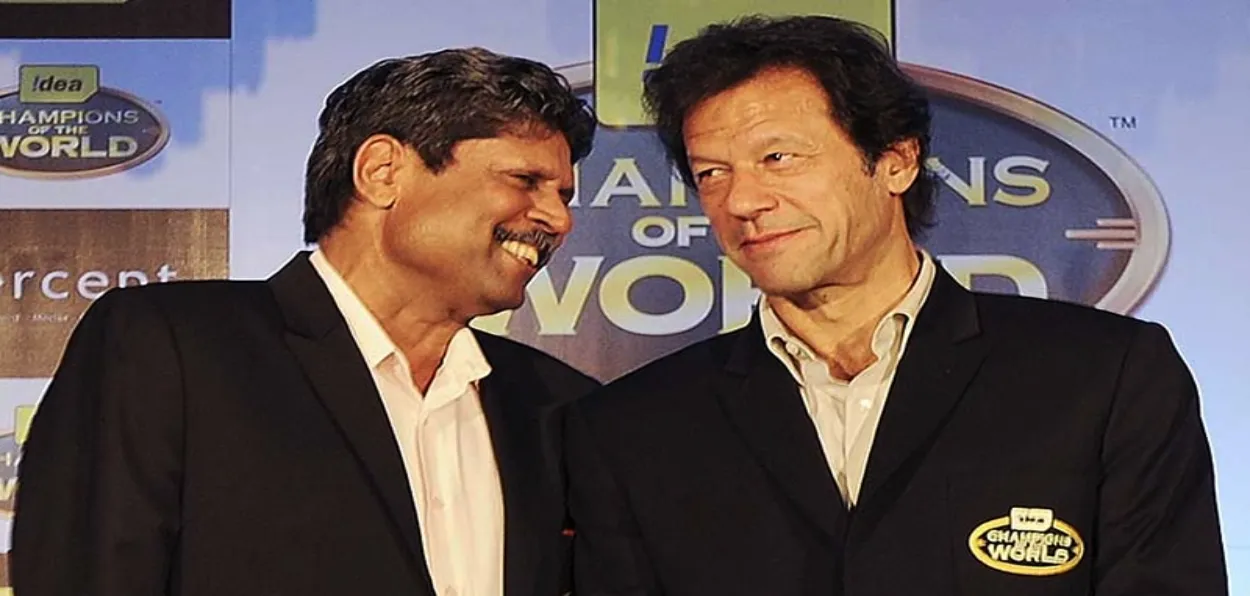
Kapil Dev and Sunil Gavaskar, along with 14 former international captains, have written to the Shehbaz Sharif Govt seeking fair medical care and a fair trial for Imran Khan.
— News Algebra (@NewsAlgebraIND) February 17, 2026
Notably, no former Pakistani cricketer is among the signatories. pic.twitter.com/kQBvqP5Sou
The most recent example of sport’s enduring bond occurred just days ago. On February 17, 2026, a group of 14 legendary former captains—led by Australia's Greg Chappell—signed a joint appeal for the fair treatment of Imran Khan.
The 73-year-old former Pakistan Prime Minister and 1992 World Cup hero has been in Adiala Jail since 2023, with reports claiming he has lost 85% of vision in his right eye due to medical neglect. Most notably, Indian legends Sunil Gavaskar and Kapil Dev signed the petition. Their involvement signalled that their respect for a fellow "titan of the game" outweighed the current political deep freeze. The captains’ letter focused purely on humanitarian pillars—medical care and dignified conditions—reminding the world that "rivalry ends when the stumps are drawn—and respect endures."
The most recent example of sport’s enduring bond occurred just days ago. On February 17, 2026, a group of 14 legendary former captains—led by Australia's Greg Chappell—signed a joint appeal for the fair treatment of Imran Khan. Imran Khan, the 1992 World Cup hero, has been in Adiala Jail since 2023, with reports claiming he has lost 85% of vision in his right eye due to medical neglect. Most notably, Indian legends Sunil Gavaskar and Kapil Dev signed the petition.
ALSO READ: Bengaluru cleric asks Muslims to help NIA in tracing a Lashkar terrorist
Their involvement signalled that their respect for a fellow "titan of the game" outweighed the current political deep freeze. The captains’ letter focused purely on humanitarian pillars—medical care and dignified conditions—reminding the world that "rivalry ends when the stumps are drawn—and respect endures."
_(1)_(1).webp "Jagannath Rath Yatra")







_(1)_(1).webp)
.webp)
_(1).webp)
.webp)
