 Aditi Bhaduri
It is that time of the year, when the sun, in the constellation of Aquarius, slowly begins its transition to Pisces. As it sits at the cusp of these two constellations, the magical time in-between wraps the globe in its embrace. The sun, though still mellow, seems to shine a little brighter, the days gently stretch out longer, the swallow begins to sing again, little shoots appear on branches of plants and trees as Mother Earth starts waking up after a long slumber.
And a kaleidoscope of celebrations bursts upon us. Shivratri, the Lunar New Year, Holi, Now Ruz - all are an acknowledgement of the celestial cycle of winter and spring, darkness and light, rest and movement. And each is celebrated with joyous gratitude.
This year I had the opportunity to celebrate one such celebration little known in India - the happy Russian festival of Maslenitsa.
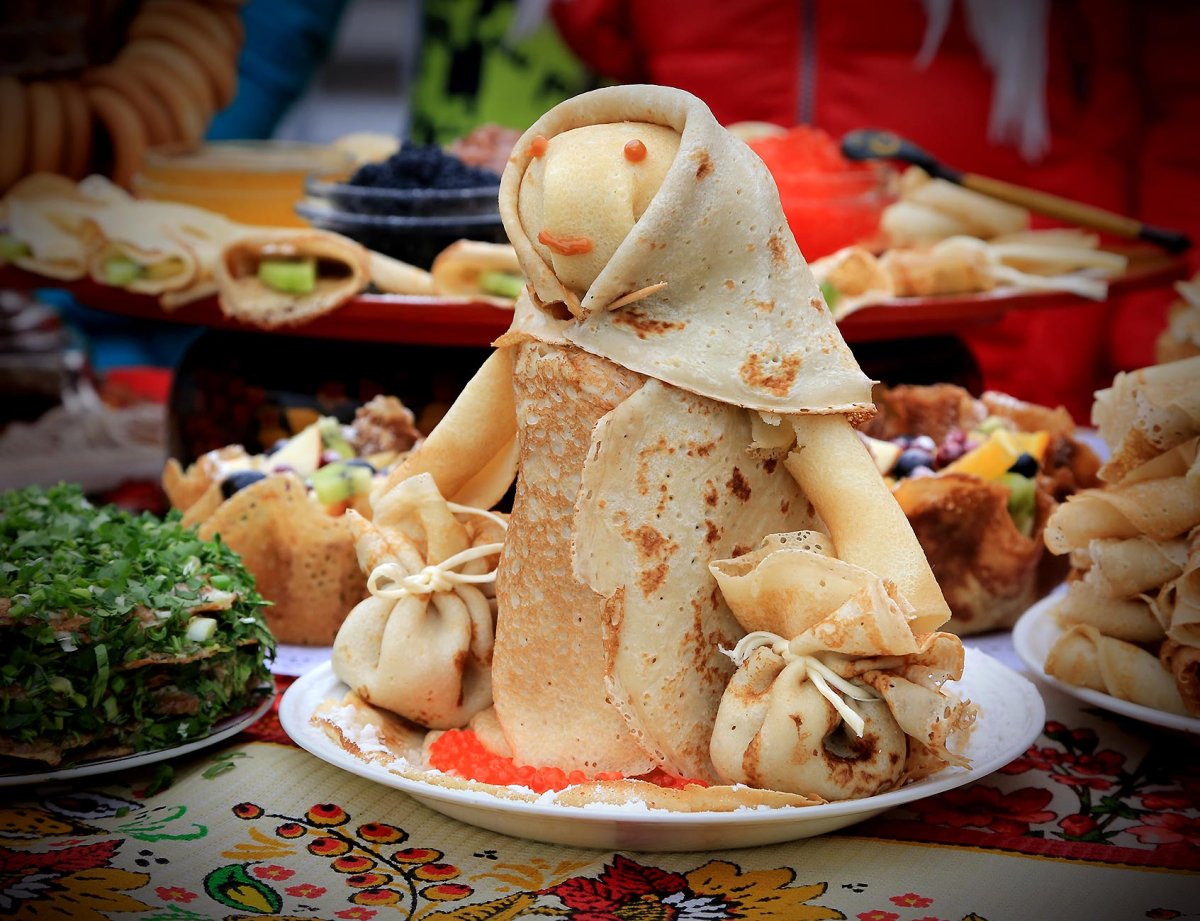
Lady Maslenita made of pancakes
Maslenitsa, literally meaning "a sweet cream butter time," and is a vibrant, week-long folk holiday. It is an ancient eastern Slavic, pre-Christian festival, symbolising the two seasons of winter and spring. How significant is it in the lives of Russians, so enmeshed with nature and the cycles of life, that it was retained even after they embraced Orthodox Christianity.
Maslenitsa celebrates the end of winter, the onset of spring and is a salutation to the sun whose light and warmth sustains all life. Considering the severity of the Russian winter - almost four months of subzero temperatures and a few hours of sunlight each day, The onset of spring and reverence for the sun cannot be over-stressed.
The festival transforms towns and villages with bursts of colour, music, and spectacle.
Given this, it is not surprising that Maslenitsa is the only pre-Christian festival recognized by the Orthodox Church. It is held the week before Great Lent, Seven weeks before Easter. Since Lent excludes parties, secular music, dancing, and other distractions from spiritual life, Maslenitsa represents the last chance to take part in social activities that are not appropriate during the more prayerful, sober, period of Lent; serving as a time of joy before the seven-week fasting period of Lent.
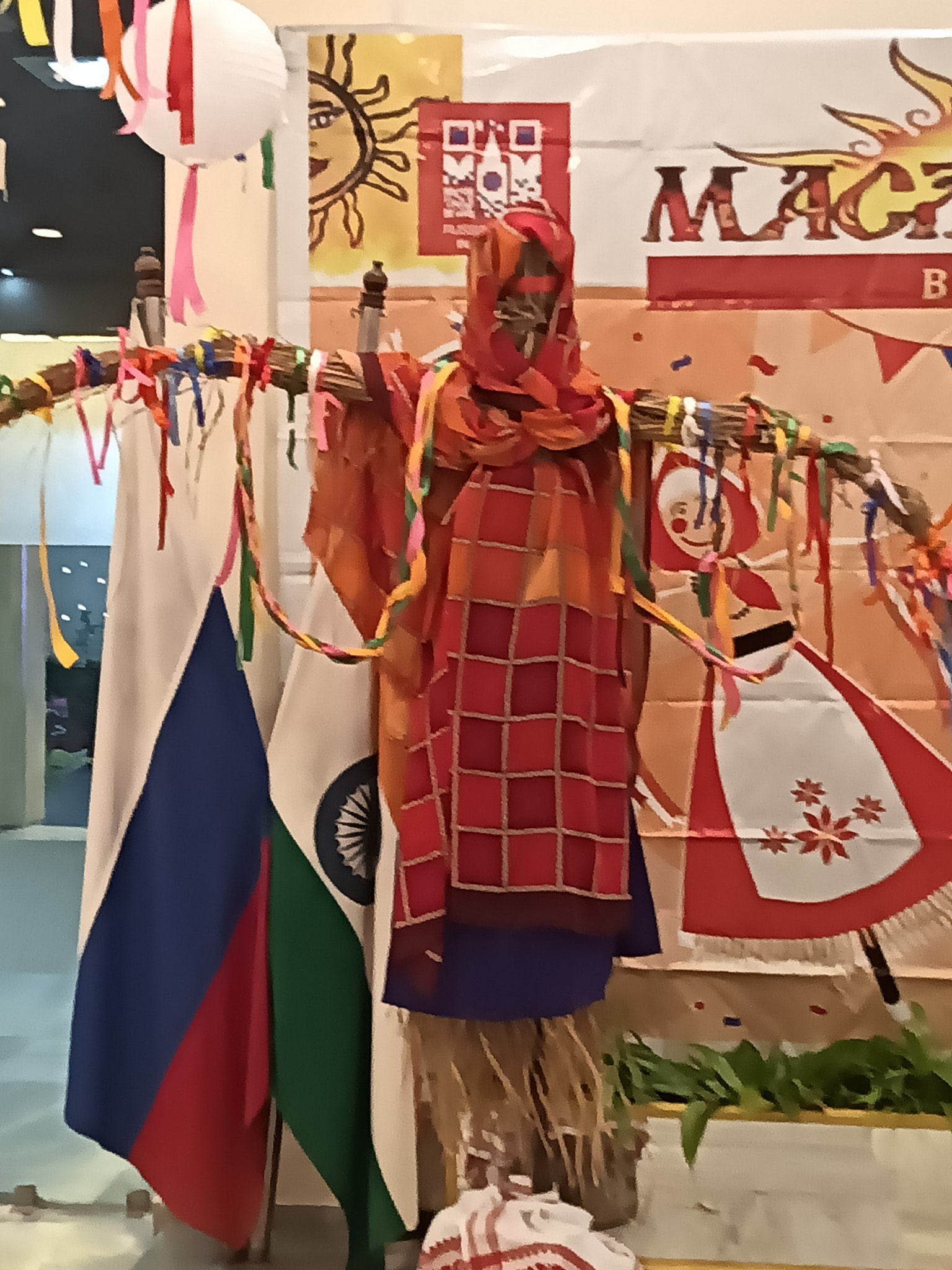
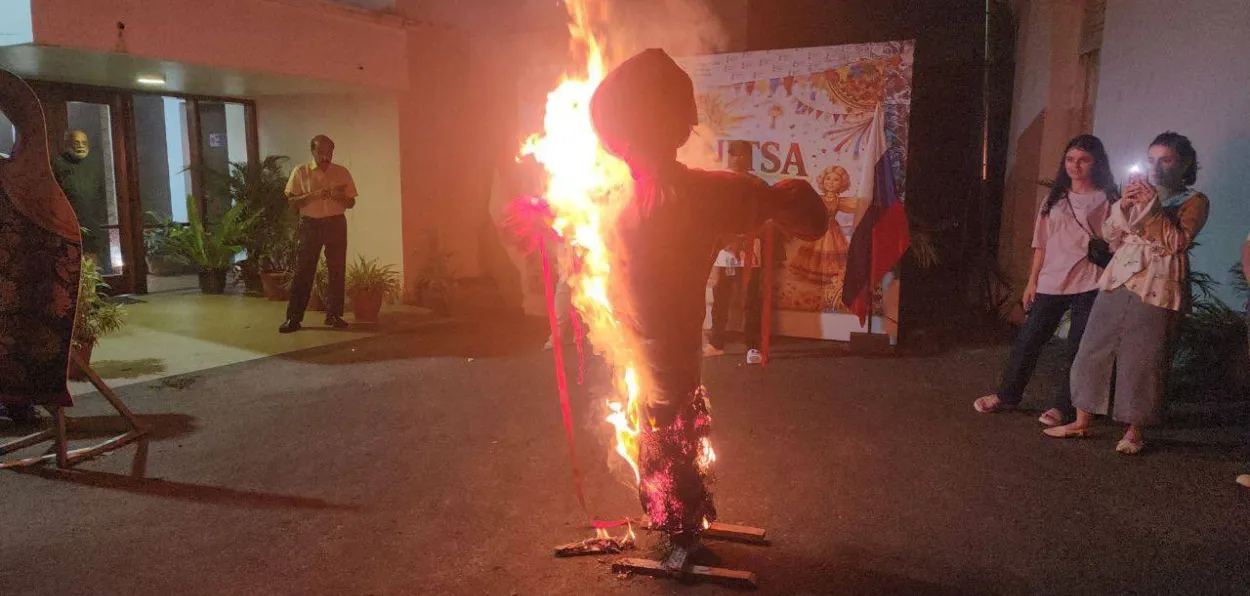
The Effigy of Lady Maslenitsa at the Russian counslate in Kolkata
In Kolkata, the Russian House, together with the Russian Consulate General here, mounted a vibrant evening of Maslenitsa celebrations with Indians participating in it enthusiastically. A cloth and straw effigy of Lady Maslenitsa had been meticulously prepared. Children enthusiastically gave the final touches to the effigy by weaving in ribbons.
Then everyone tied straw ribbons to the effigy, wishing silently for one thing to leave their lives which the ribbon would signify. Then an evening of laughter and gaity followed with songs, dances, and even a tug of war ensuing.
Finally, it was time to burn the effigy. This ritual is central to the festival, and represented the departure of winter, and the arrival of spring with its season of fertility. The warmth of the fire in a Russian winter landscape must be so invaluable!
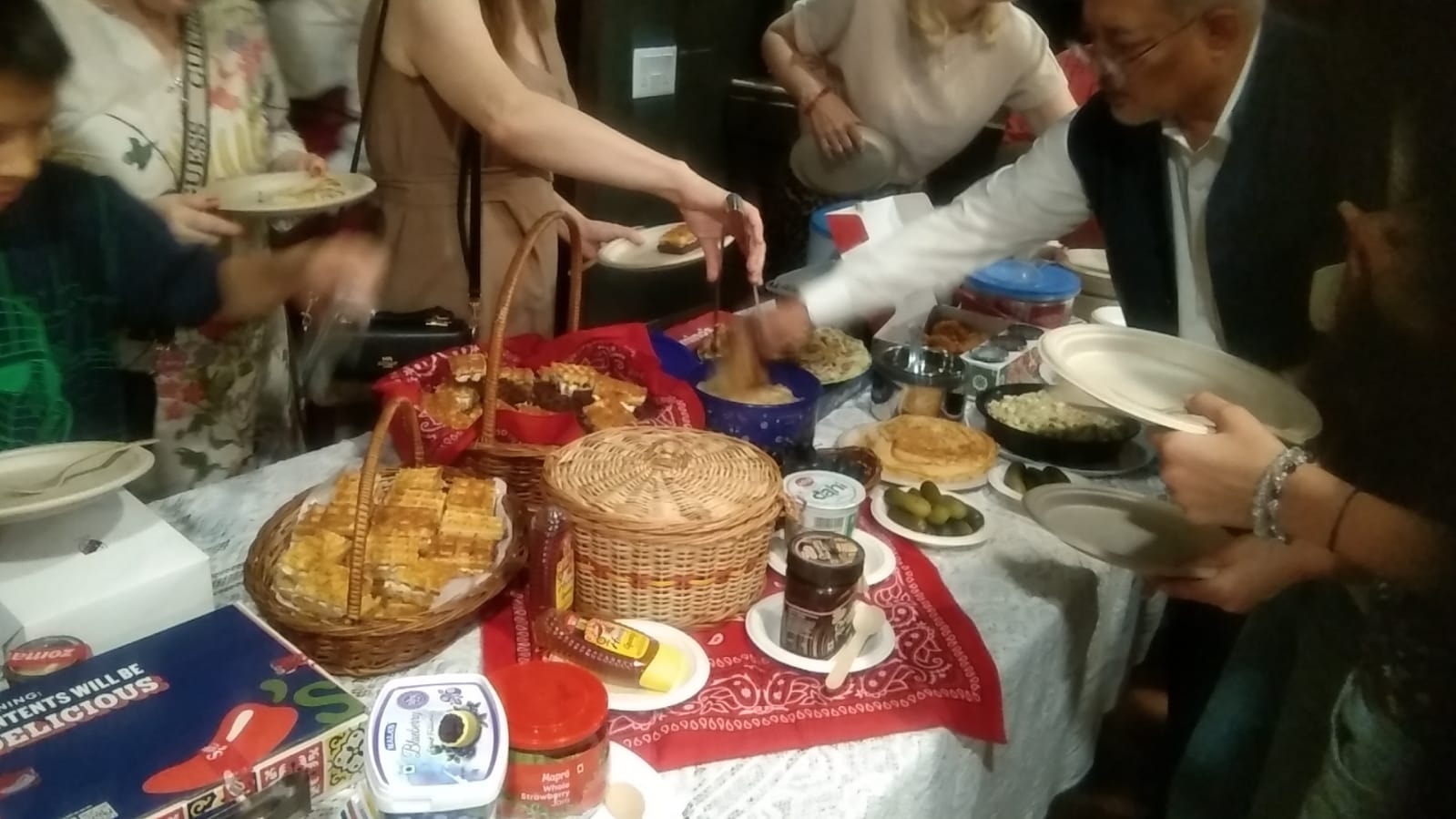 The Maslenitsa food spread
The dancing flames leapt high, casting its light all around, devouring the effigy, spreading the warmth of Russian friendship in a corner of India. We saw our ribbons dissappear, carrying with it the remenants of a yesterday that no longer served us. We bid farewell to winter, understanding its importance, which made the spring we now greeted all the more special.
Another core of the festival is culinary - the eating of pancakes. This is compulsory.
🇷🇺🇮🇳 On February 20, the traditional celebration of #Maslenitsa was organized in #Trivandrum by the Office of the Honorary Consul of #Russia in the city in cooperation with the International Russophile Movement.
— Russia in India 🇷🇺 (@RusEmbIndia) February 26, 2026
👉🏻 https://t.co/dABNTFSSSY#RussiaIndia #DruzhbaDosti pic.twitter.com/yPxW5FfPiW
Maslenitsa is also often called the "Pancake Week" because it features consuming large amounts of pancakes, called "blini" in Russian. thin golden pancakes that represent the sun itself. In ancient times people baked unleavened flatbreads. However, when they learned to make leavened dough, they began making pancakes. Families and friends gather to share them with honey, sour cream, caviar, or jam, while the streets come alive with games, snowball fights and the thrill of sleigh rides.
It was no different in Kolkata. The festive Maslenitsa table features an unending stream of pancakes, accompanied by different jams,some home made, and sourcream brought all the way from Russia. Besides there was the famed Russian salad, and a host of other goodies including a large variety of cakes and pastries, all made according to traditional Russian recipes, bringing a touch of Slavic warmth and flavous to India, renewing the deep bonds of friendship and trust.
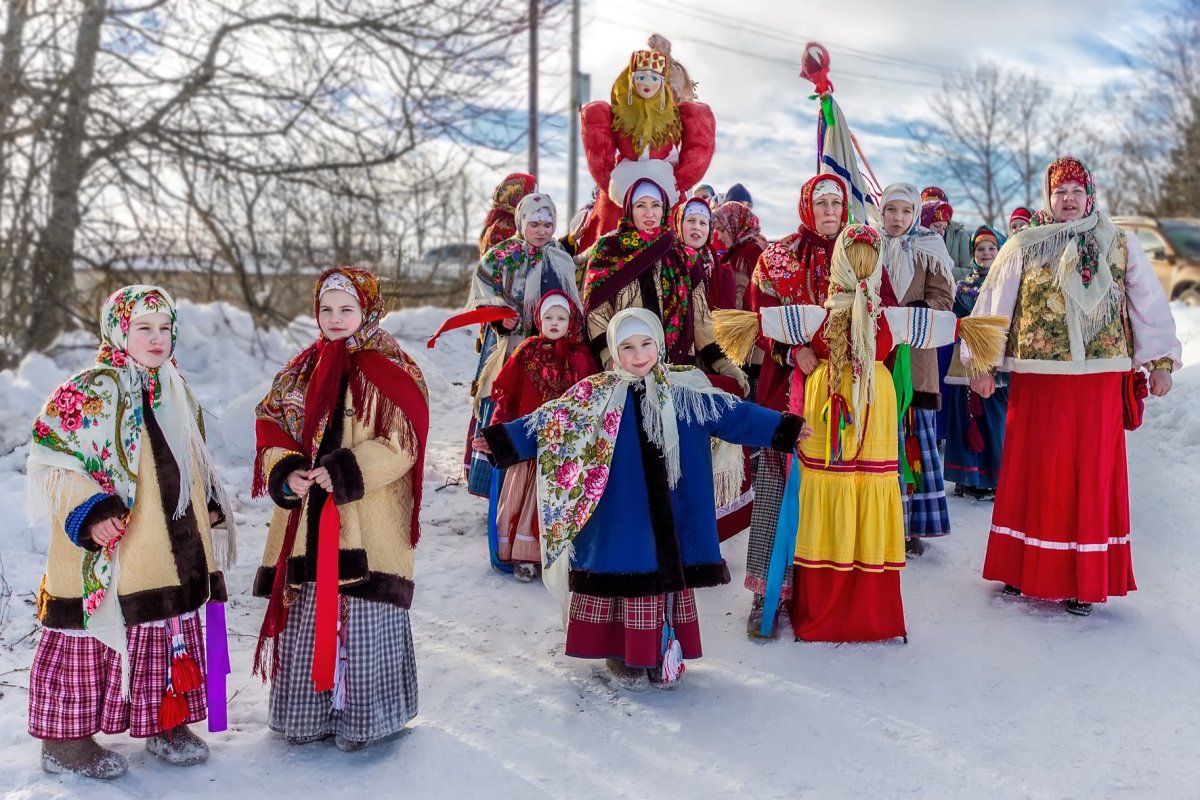
Winter in Russia
The similarities with Vedic rites is unmistakable. Hindus have revered the Sun since the dawn of their civilization. The scriptures are full of hymns to the Sun; many practicing Hindus even today begin their day by saluting the sun and chanting prayers to it. But then both Indians and Russians have a common ancestry. Dven their respective words for the sun - "surya" in Sanskrit and "solntse" have common Indo-European roots.
The ritual cremation of winter reminded me of both Lohri and Holika Daman, which we will very celebrating in a few days. Lohri, widespread in northern India, occurs earlier in keeping with the climatic conditions of the place, vastly different from Russia. But it is also about bidding farewell to winter and anticipating the arrival of spring, and harvest. Bonfires are lit in keeping with ancient traditions, which again reflect the sun, light, and is believed to reignite the return of longer days.
The tradition of Holi on the other hand is to welcome spring and the renewal of life. What is old fades away, the new season symbolizes the divine promise, that every winter, no matter how long and dark, will always be followed by spring. Holika's effigy epitomizes all that is dark in us, and when it is burnt on the eve of Holi it is a psychological and metaphorical purification that we perform for ourselves. The burning of Maslenitsa's effigy mirrored this.
The pancakes too find a parallel here. In Bengal this is also the season of Pancake eating, in the form of "patishapta" - crepes stuffed with kheer or a sweet coconut mixture!
READ MORE: Temple serves Sehri to Muslim Mahout
The parallels are striking and no wonder Indians took to Maslenitsa so quickly, grasping its esoteric meaning easily. It testifies, in cultural and spiritual terms, the linkages between Russians and Indians, which underpins the deep friendship between us.
For me, Maslenitsa is also about faith: no matter how long and dark the night is, it will always be followed by the sun rise.

.webp "Union Home Minister Amit Shah")






_(1).webp)