Amir Suhail Wani
Among the nights venerated within the Islamic sacred calendar, the fifteenth night of Shaʿbān—commonly known as Shab-e-Barāt—occupies a distinctive and complex position. Neither a festival nor a legally mandated observance, it has nevertheless endured across centuries as a night of heightened moral consciousness, spiritual accounting, and communal remembrance.
Its persistence within Muslim devotional life, particularly in South Asia, reveals how Islamic piety often unfolds not only through jurisprudential prescription but through collective memory, ethical intuition, and metaphysical hope. Shab-e-Barāt stands as a luminous example of how Islam negotiates the space between doctrine and devotion, law and love, certainty and longing.
The term Barāʾah itself gestures toward release and absolution—freedom from the weight of past transgressions and the anxiety of future uncertainty. Linguistically and spiritually, it implies a divine turning toward the servant, an act of mercy that precedes and exceeds human effort.
The night thus arrives not as an occasion of self-congratulation but of vulnerability, calling believers to confront their moral condition with honesty and humility. In this sense, Shab-e-Barāt belongs to a broader Qur’anic economy of mercy in which divine forgiveness is not rationed but offered, provided the human heart is not sealed by arrogance, idolatry, or resentment.
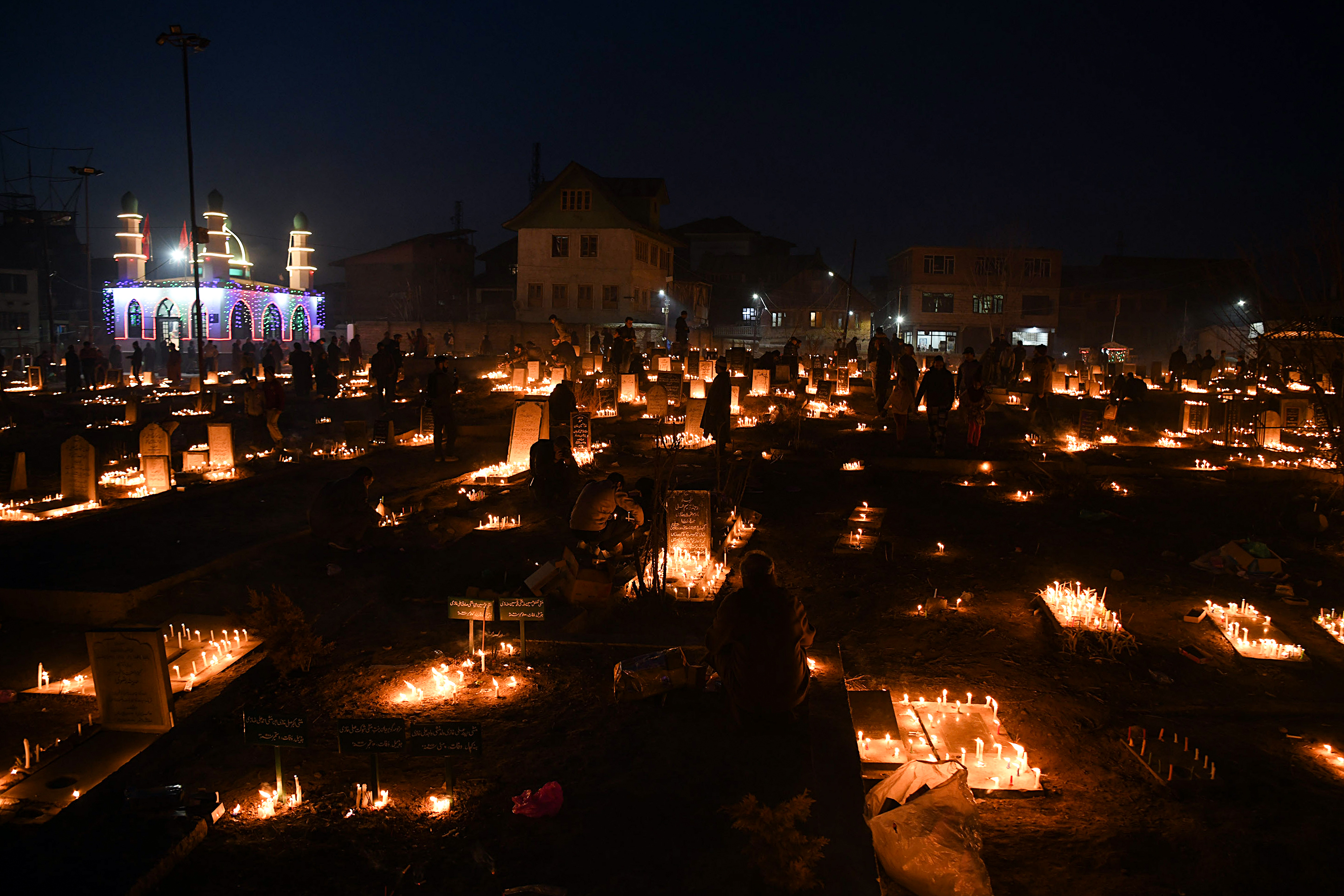 A Muslim cemetery on Shab-e-baraat in Srinagar
The scriptural foundations of Shab-e-Barāt rest primarily upon a corpus of prophetic traditions that, while individually varied in strength, collectively establish the night’s spiritual significance. Among the most frequently cited narrations is the hadith reported from ʿĀʾishah, wherein the Prophet states that Allah looks upon His creation on the middle night of Shaʿbān and forgives all except the one who associates partners with Him and the one who harbours rancour in his heart.
This narration, transmitted through multiple channels including Ibn Mājah and al-Ṭabarānī, offers a striking moral hierarchy: divine forgiveness is withheld not for lapses in ritual precision but for the deeper spiritual maladies of theological betrayal and ethical corruption.
Another narration, recorded in Musnad Aḥmad and Sunan al-Tirmidhī, describes forgiveness on this night as exceeding numerical comprehension, surpassing even the hairs on the sheep of Banū Kalb—an image meant not to be counted but to overwhelm.
Hadith scholars historically approached these narrations with methodological caution yet theological openness. While some individual chains were deemed weak (ḍaʿīf), the cumulative presence of multiple reports led major scholars to affirm the faḍīlah (virtue) of the night. Imām al-Shāfiʿī recognised the fifteenth of Shaʿbān as one of the nights in which supplications are answered, while Imām Aḥmad ibn Ḥanbal permitted individual acts of worship on this night without prescribing communal ritual. Even Ibn Taymiyyah—often invoked by those sceptical of popular religious practices—acknowledged that this night's virtue is supported byvarious reports and that many from the early generations honoured it through worship and reflection.
The classical scholarly position, therefore, neither absolutises nor dismisses Shab-e-Barāt, but situates it within Islam’s broader ethos of spiritually meaningful time.
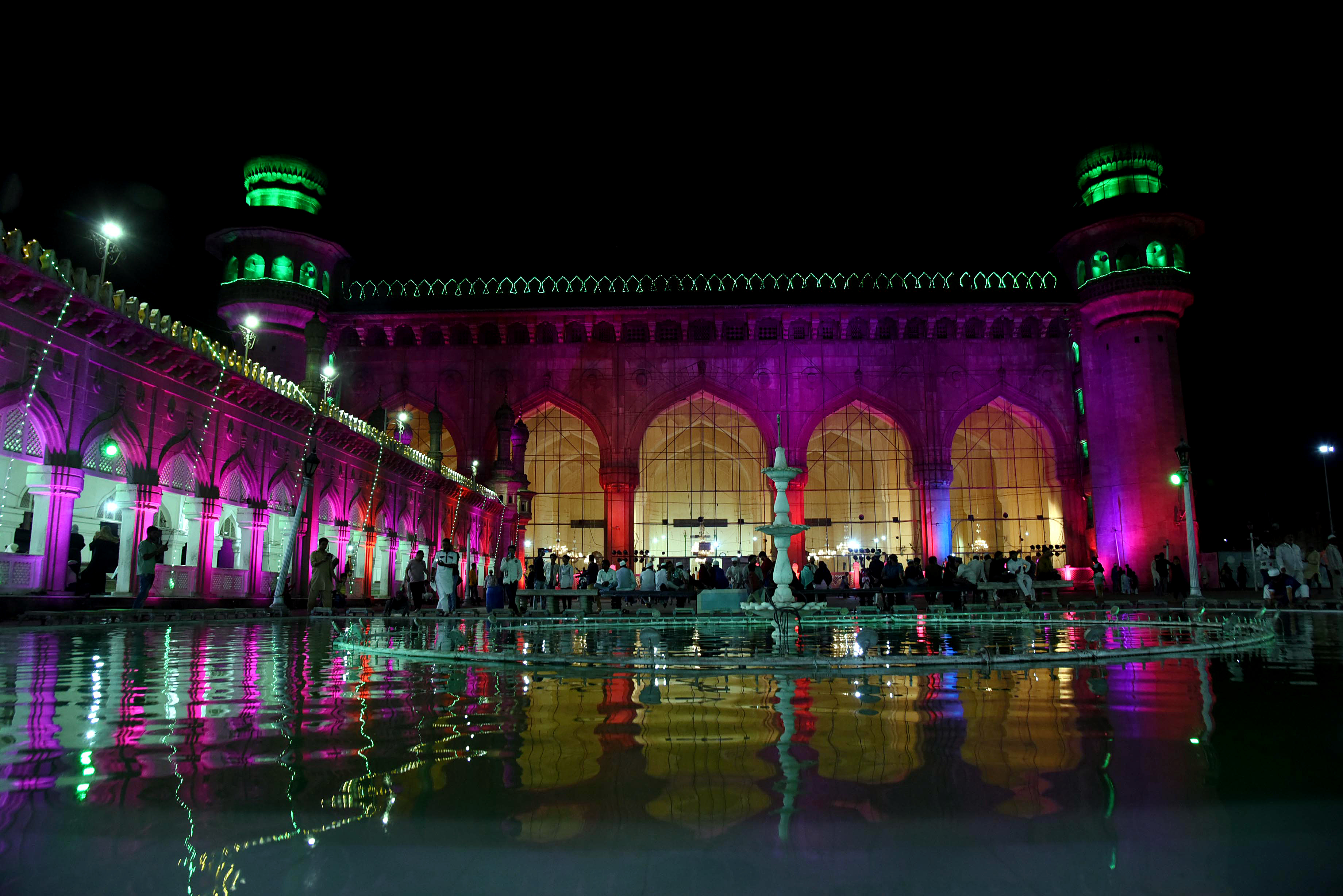 Makkah Masjid in Hyderabad illuminated on Shab-e-Baraat
Beyond juridical debates, Shab-e-Barāt acquired profound metaphysical resonance within Islamic spirituality. It came to be associated with divine decree—not in the sense of immutable fatalism, but as a symbolic moment of existential clarity. Drawing upon Qur’anic language such as “Therein every wise matter is apportioned” (Qur’an 44:4), scholars and mystics alike understood this night as an invitation to conscious moral recalibration. Fate, in this reading, is not rewritten through spectacle but softened through repentance; destiny bends not to demand but to surrender. Sufi thinkers often described Shab-e-Barāt as a night when the servant stands at the threshold of divine knowledge, aware that what unfolds in the coming year is shaped as much by the state of the heart as by the inscrutable will of God.
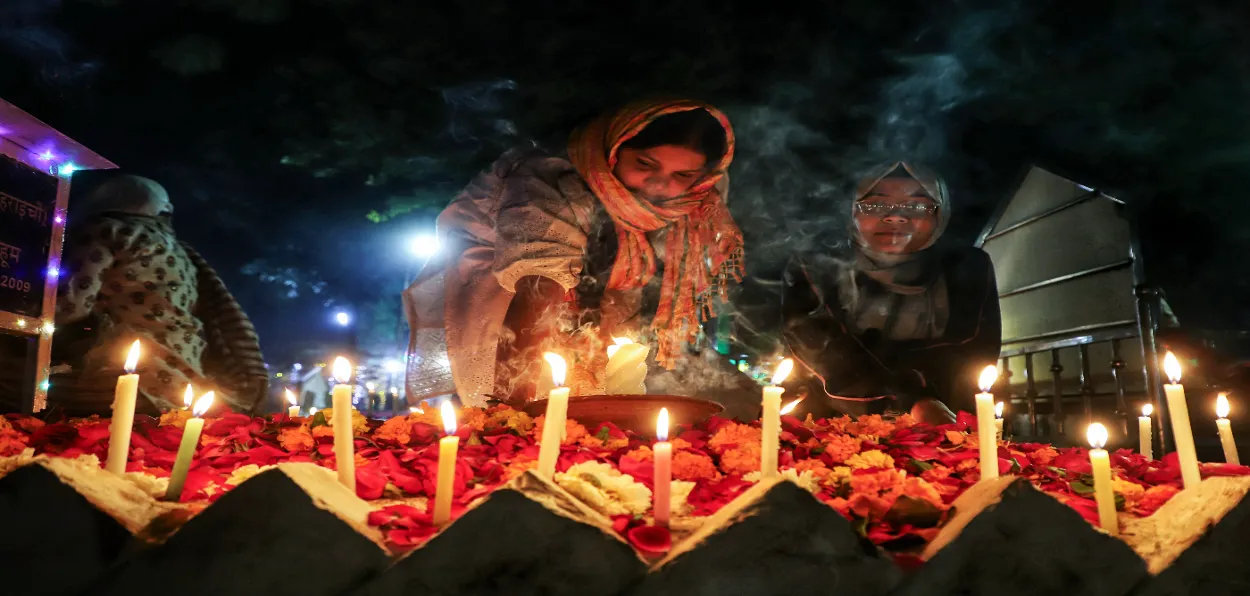
This inward orientation found powerful expression within the Indo-Islamic spiritual landscape, where Shab-e-Barāt evolved into a deeply embodied tradition. In the Indian subcontinent, Islam developed not merely as a system of belief but as a civilizational presence, interweaving law, mysticism, poetry, and community life. Shab-e-Barāt, in this context, became a night of collective memory and ethical intimacy. Mosques glowed with subdued light, Qur’anic recitations echoed into the night, and supplications rose not as performance but as whispered confession. The widespread practice of visiting graveyards on this night—often criticised in polemical discourse—finds precedent in the Prophet’s ﷺ own visit to Jannat al-Baqīʿ, and reflects a deeply Islamic consciousness of mortality as a teacher rather than a terror.
Culturally, Shab-e-Barāt in South Asia expresses theology through hospitality. The preparation and distribution of simple foods—halwa, kheer, bread—functioned not as ritual obligation but as moral enactment. To feed others on a night associated with divine forgiveness was to acknowledge that mercy must circulate or it withers.
Thinkers such as Shah Waliullah Dehlawi recognised that these practices, though seemingly modest, cultivated communal empathy and anchored abstract theology in lived experience. Even children, accompanying elders to graveyards or sharing sweets with neighbours, absorbed a tacit lesson: faith is inherited not only through instruction but through atmosphere.
At a deeper level, Shab-e-Barāt articulates an Islamic anthropology that refuses despair. It insists that human beings are neither irredeemably fallen nor self-sufficiently righteous, but perpetually in need of return. The Qur’anic injunction “Do not despair of the mercy of Allah” becomes, on this night, not a verse to be recited but a posture to be inhabited. In a religious climate increasingly polarised between rigid legalism and empty spiritualism, Shab-e-Barāt offers a third way—one that affirms accountability without extinguishing hope, and devotion without abandoning reason.
ALSO READ: Zahoor Lone-led Team India wins bronze in world snow sculpting championship
Shab-e-Barāt endures not because it is commanded, but because it is needed. It answers a perennial human hunger: to be forgiven without being humiliated, to be judged without being abandoned, and to be remembered by God even when one has forgotten oneself. Its survival across centuries and cultures testifies to Islam’s capacity to hold together law and longing, precision and poetry. As long as hearts continue to fracture under the weight of regret and resentment, this night will continue to arrive—quietly, insistently—offering release not from responsibility, but from despair.

.webp "Representational Image")







.webp)