Zeeba Naseem/Mumbai
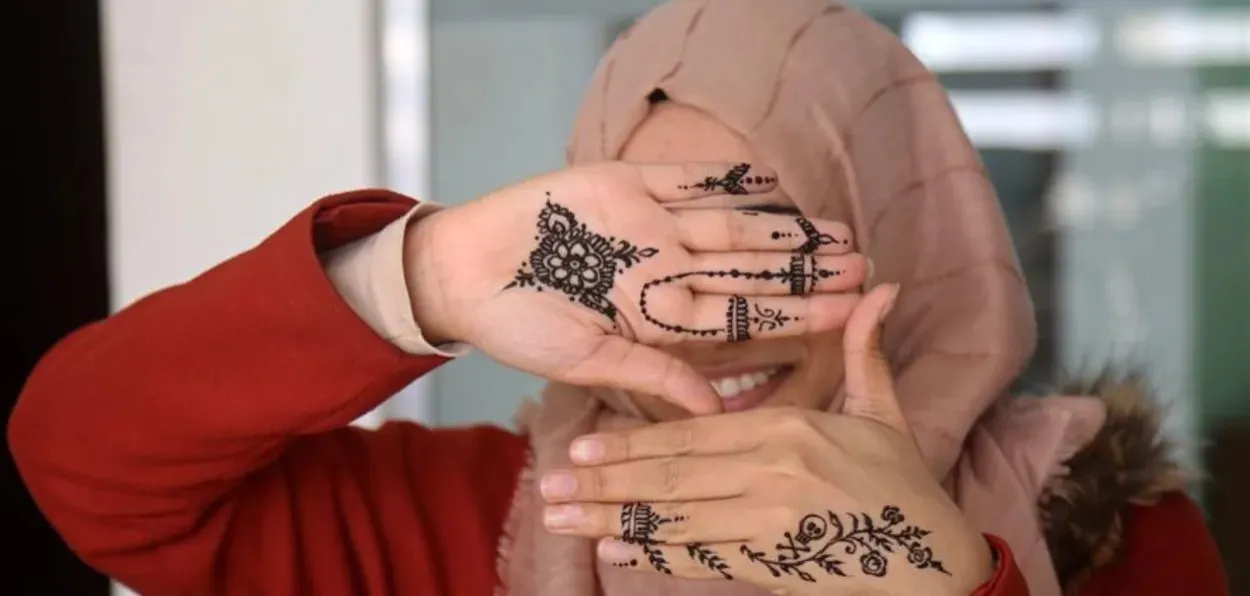
After Ramzan, the joy of Eid feels incomplete until the hands of women are adorned with the colour of mehndi. Mehndi is not just a form of decoration but like a piece of jewelry. The designs drawn on hands and the richness of their colour are no less than a form of artistic competition. Regardless of religion, mehndi designs are part of many Indian festivals cutting across religions and cultures.
Along with Eid and weddings, mehndi is also applied on occasions like Karva Chauth, Diwali, and Teej. Mehndi, (henna). It is a symbol of joy, beauty, feminine expression and spiritual protection across many Eastern countries, especially in South Asia, the Middle East, and North Africa. This beautiful tradition connects ancient customs with modern celebrations.
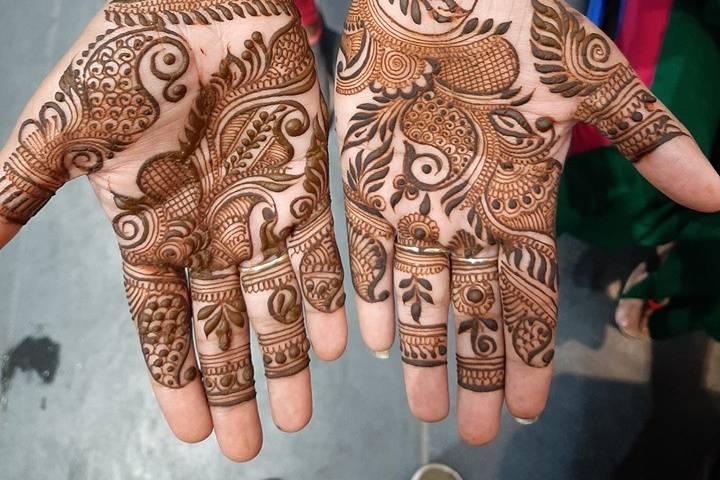
Applying mehndi on Eid is not merely an act of adornment but also a social ritual. Women gather together, sing traditional songs, and create a festive atmosphere. In this way, the tradition strengthens social bonds and shared happiness.
Over time, mehndi designs and techniques have evolved, yet its cultural essence remains intact. Thus, mehndi is not just an art form but a symbol of cultural heritage, love, and celebration.
Let us take a look at the history of mehndi—where its journey began and how it has evolved into an industry today.
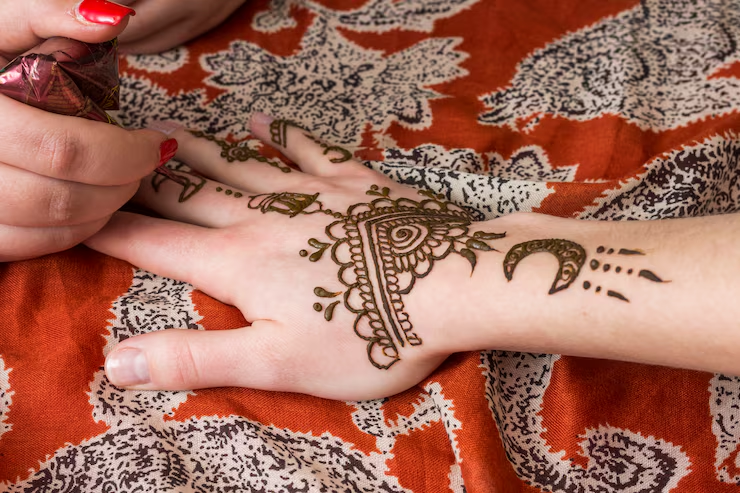
There are different claims and estimates regarding its origins. Mehndi as an art form is roughly 9,000 year-old custom. According to one claim, it is linked to ancient Egypt, where people used mehndi to dye their hair and nails to enhance beauty.
Historical evidence suggests that Queen Cleopatra also used mehndi for beautification. Interestingly, it was a custom in Egypt to colour the nails of mummies with mehndi before burial.
Some historians believe mehndi originated in India. Another opinion states that the Mughals introduced it to the subcontinent in the 12th century. Some experts also argue that mehndi application began in the Middle East and North Africa and later spread to other regions.
It is said that this tradition traveled from Egypt to India through trade routes and cultural exchanges, eventually becoming an integral part of local traditions. From ancient Egypt to South Asia and the Middle East, its journey reflects its lasting appeal and deep cultural importance.
Today, mehndi is regarded as a representation of art, culture, and beauty, having secured its place in fashion and special occasions worldwide.
In Islamic culture, mehndi is considered a Sunnah because it was encouraged by the Prophet, giving it a religious significance. It is commonly applied during festivals such as Eid al-Fitr and Eid al-Adha, as well as at weddings.
It is especially popular among women, who adorn their hands with it to enhance their beauty. However, men may also use mehndi on their hair and beards. A hadith mentions that the best things to change white hair are mehndi and katam.
The methods and designs of mehndi also reflect history and culture. Different regions have distinct styles based on their traditions.
These designs usually include floral and paisley patterns and are highly intricate and detailed. Bridal mehndi in this style often features the most complex and elaborate patterns, with fingers also filled to create a complete look.
Arabic designs typically include floral and arch-like patterns and are simpler compared to South Asian styles. Often, a single finger is highlighted, reflecting a minimal yet elegant appearance.
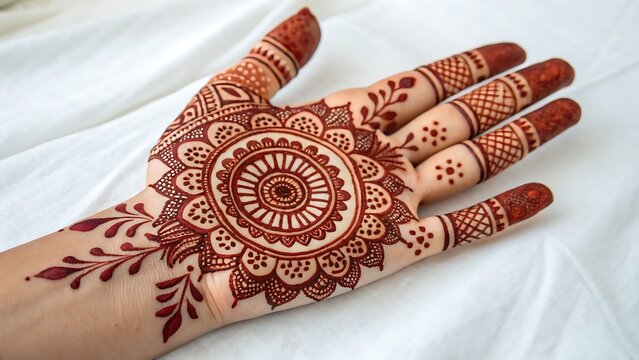
These designs include geometric patterns such as squares, triangles, and linear motifs. They share some similarity with South Asian styles due to their detailed work but are known for their symmetry and balance.
There was a time when applying mehndi was a time-consuming and labour-intensive process. It was applied simply on hands, and to achieve a deep colour, it's left overnight. Over time, designs evolved significantly. Today, people explore modern designs online and apply them creatively.
In the 1980s, intricate designs were not common. People would apply wet mehndi on their palms at night and wake up to a rich color in the morning. Later, simple patterns such as dots and circles were made using fingers.
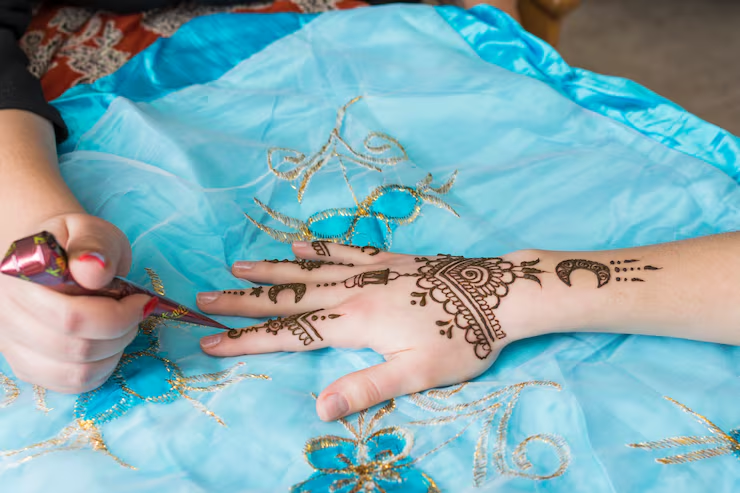
Between 1987 and 1990, cone mehndi became popular, making design application easier. Between 1995 and 2000, floral patterns gained popularity, followed by larger and bolder floral designs. Today, mehndi has developed into a complete art form featuring intricate patterns and creative expressions.
READ MORE: Colonel Ishrat Ahmed is the pride of Kayamkhanis and Rajasthan
Today, mehndi designs are also used as temporary tattoos, and their popularity is growing rapidly in the Western world. In the 1990s, this tradition reached the West through migrant communities and gradually gained recognition.
Soon, it became popular among celebrities. Global stars like Beyoncé, Madonna, Catherine Zeta-Jones, and Naomi Campbell helped popularize mehndi in the West. Madonna’s public appearances with mehndi, in particular, received significant attention and sparked a new trend.