Malick Asghar Hashmi
Bushra Bano's story reads like a film script. She rose from the narrow lanes of Kannauj, UP, to clear one of the country’s toughest examinations and be part of India's administrative system. Her story is one of courage and faith, and that of a mother who nurtured her dreams even after giving birth to her child.
Born in the village of Saurikh in Uttar Pradesh’s Kannauj district, Bushra Bano was brilliant in her studies.
At the age of four, she was in the second grade. She stood first in every class and completed a BSc in Mathematics at a time when awareness about girls’ education in the village was limited. Later, she did her MBA.
Her speed of learning was fast to the level that she completed her post-graduation before turning 20.
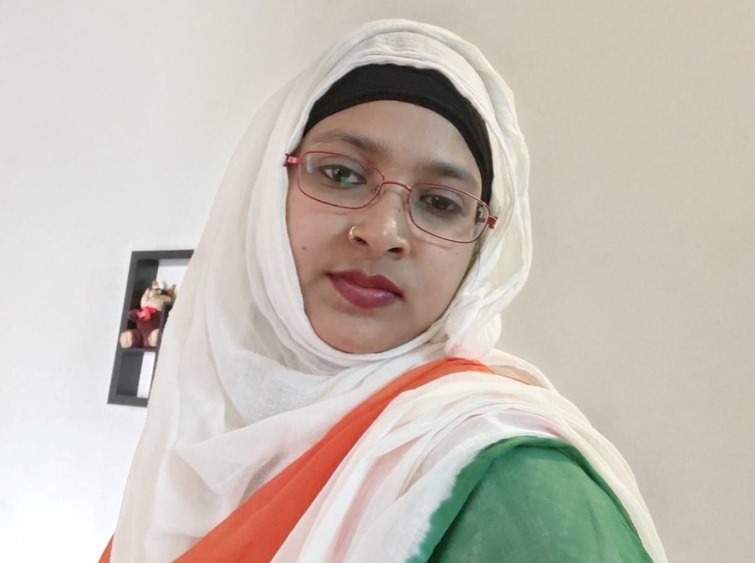 Bushra Bano
For higher studies, she enrolled in a PhD in Management at Aligarh Muslim University. Next Year, she qualified for the NET-JRF examination.
Alongside her research, she began teaching and worked as a lecturer at a private institution in Agra. Her hard work paid off, and she completed her PhD in a short span of time. For her, education was not just about degrees; it was a path to self-reliance.
In an interview, she recalls, “Around this time, I got married to Asmar Hussain, an Assistant Professor at Jazan University in Saudi Arabia. After marriage, I also got the opportunity to teach at the same university. Both of us taught there together. Life was stable and comfortable. There was respect and security. But there was also an emptiness in my heart. I missed my country. The fragrance of India’s soil would not let me sit peacefully.”
She says, “After four years, I made a big decision. I resigned from my job and returned to India. It was not easy. My husband continued working in Saudi Arabia. By then, I had become the mother of a son. After returning to India, I joined a post-doctoral programme and also began preparing for the civil services examination. I had family responsibilities and a small child to raise, but my determination was clear.”
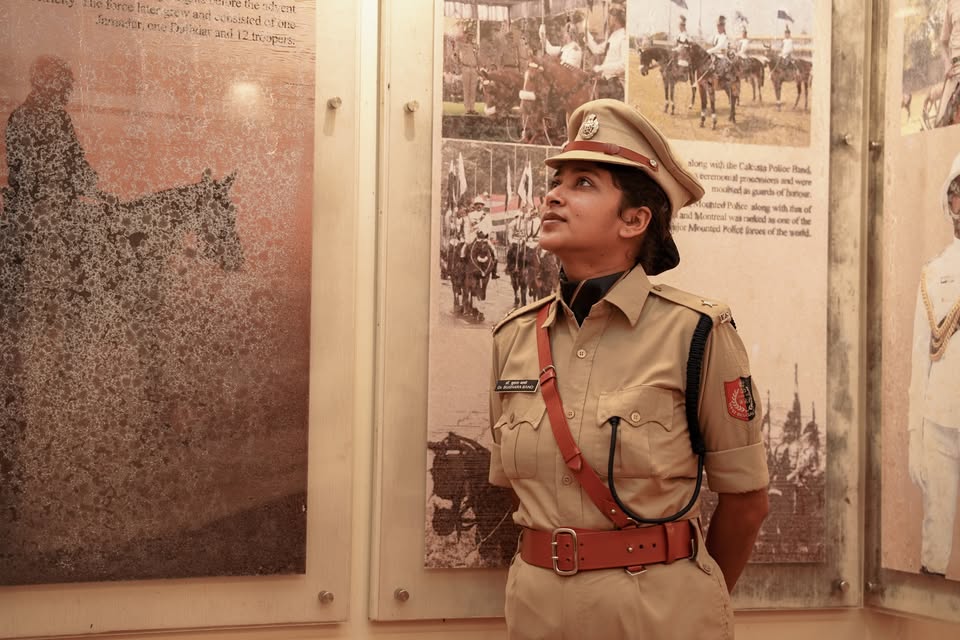 Bushra Bano at a museum
She appeared for the Union Public Service Commission examination for the first time but did not succeed. Around the same time, she secured a job as an Assistant Manager in a company under Coal India and was posted in Sonbhadra, UP.
She continued studying alongside her job.
In June 2018, she cleared the UPSC Civil Services examination. At that time, she was pregnant with her second child. By the time of the interview, she was in the final stage of pregnancy.
She had undergone surgery, her body was weak, but her mind was strong. She appeared for the interview. When the results came, she secured the 277th rank and was allotted the Indian Railway Traffic Service.
Meanwhile, in the Uttar Pradesh PCS examination, she secured the 6th rank, which meant she could become a Deputy Collector. In 2020, she took charge as Sub-Divisional Magistrate (SDM) in Firozabad Sadar. While carrying out administrative responsibilities, she took strict action against illegal mining, focused on maintaining law and order, and listened to the problems of the poor.
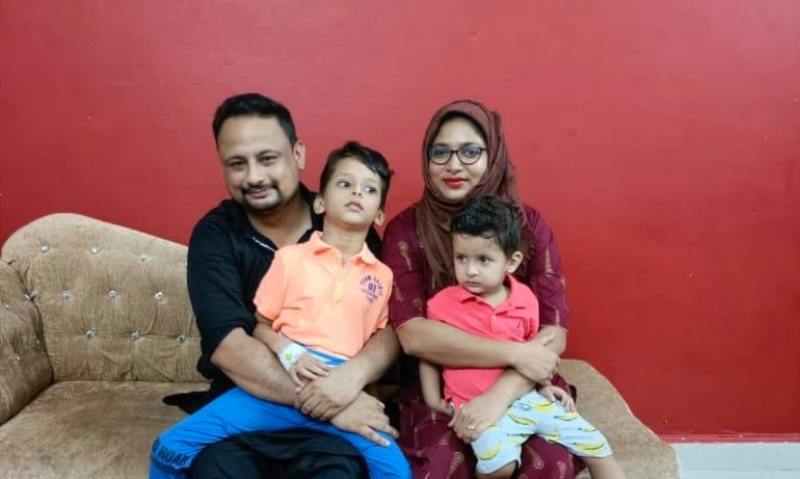 Bushra Bano with her family
She went to the office wearing a hijab. Initially, some people were surprised, but her work answered every question.
Those who knew her closely admired her simplicity and clarity of thought. She says that people first judge you by your identity, but later, your work defines you. In Firozabad, she became a popular officer.
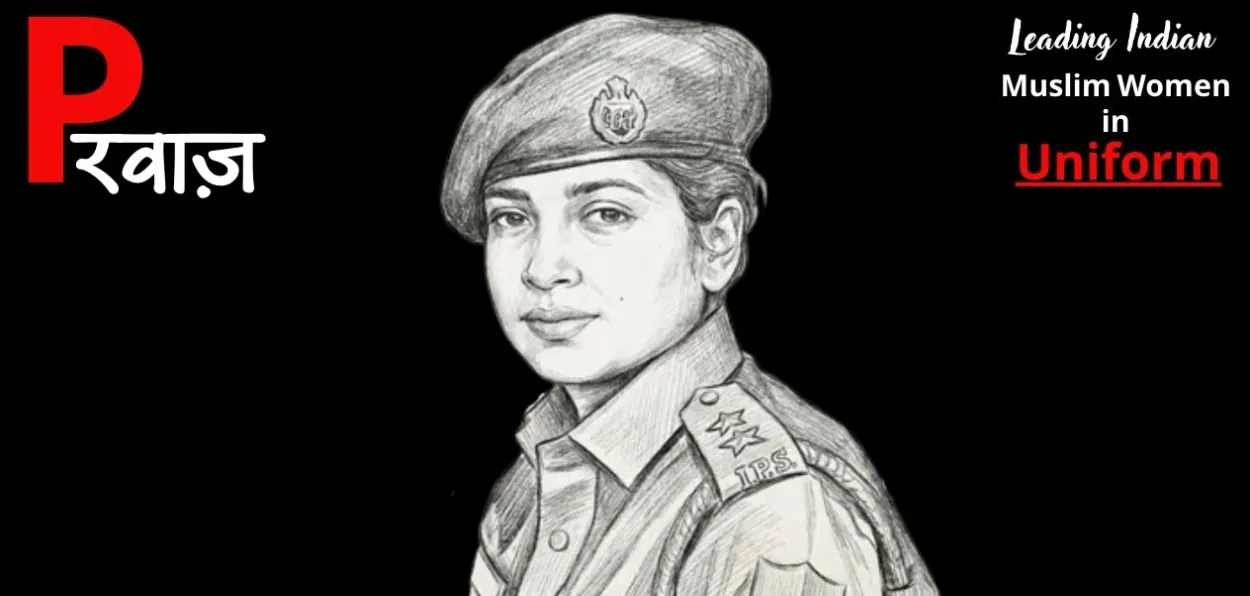
During this period, she appeared for the UPSC examination once again. This time, she secured the 234th rank and was selected for the Indian Police Service. She became an officer of the 2021 batch and was allotted the West Bengal cadre. Today, she serves as Assistant Superintendent of Police in Hooghly Rural District. A new chapter of her career has begun in a police uniform, where she is working both to enforce the law and to connect with the community.
Her family has played a major role in her success. She herself says that it is often said that behind every successful man, there is a woman. In her case, the opposite happened. When it was decided that she would serve in India and the children would stay with her, her husband resigned from his job in Saudi Arabia and returned to India. He now runs a business and is also pursuing his own PhD.
.jpeg) Bushra Bano at Jalianwalla Bagh memorial
Bushra Bano at Jalianwalla Bagh memorial
Raising two children, nursing her surgeries, academic pressure, preparation for competitive examinations, and her work in the office were all happening simultaneously.
She says that becoming a mother does not end one’s dreams; it increases responsibility—and courage as well.
Her message is clear, especially for Muslim girls and their families: Give daughters an opportunity. Let them study. Let them make their own decisions. If the family stands by them, no destination is too far.
Dr Bushra Bano’s story also teaches us that life is not a straight line. At different times, she was an assistant professor, a corporate employee, an SDM, and now an IPS officer. At every turn, she chose a new path. Each time the challenge was bigger, but each time she proved herself stronger.
Today, when she steps into the field wearing the police uniform, she is not just an officer. She represents hope for millions of girls from small towns who dream big. She is the voice of mothers who think it is too late for them. She shows that it is never too late.
ALSO READ: Colonel Ishrat Ahmed is the pride of Kayamkhanis and Rajasthan
From the lanes of Kannauj to the administrative services and then the Indian Police Service, this journey reminds us that no matter how difficult the circumstances may be, clear determination creates its own path. Dr Bushra Bano has proved that dreams have no deadline—and courage has no substitute.

.webp "Representational Image")









.webp)