 Shankar Kumar
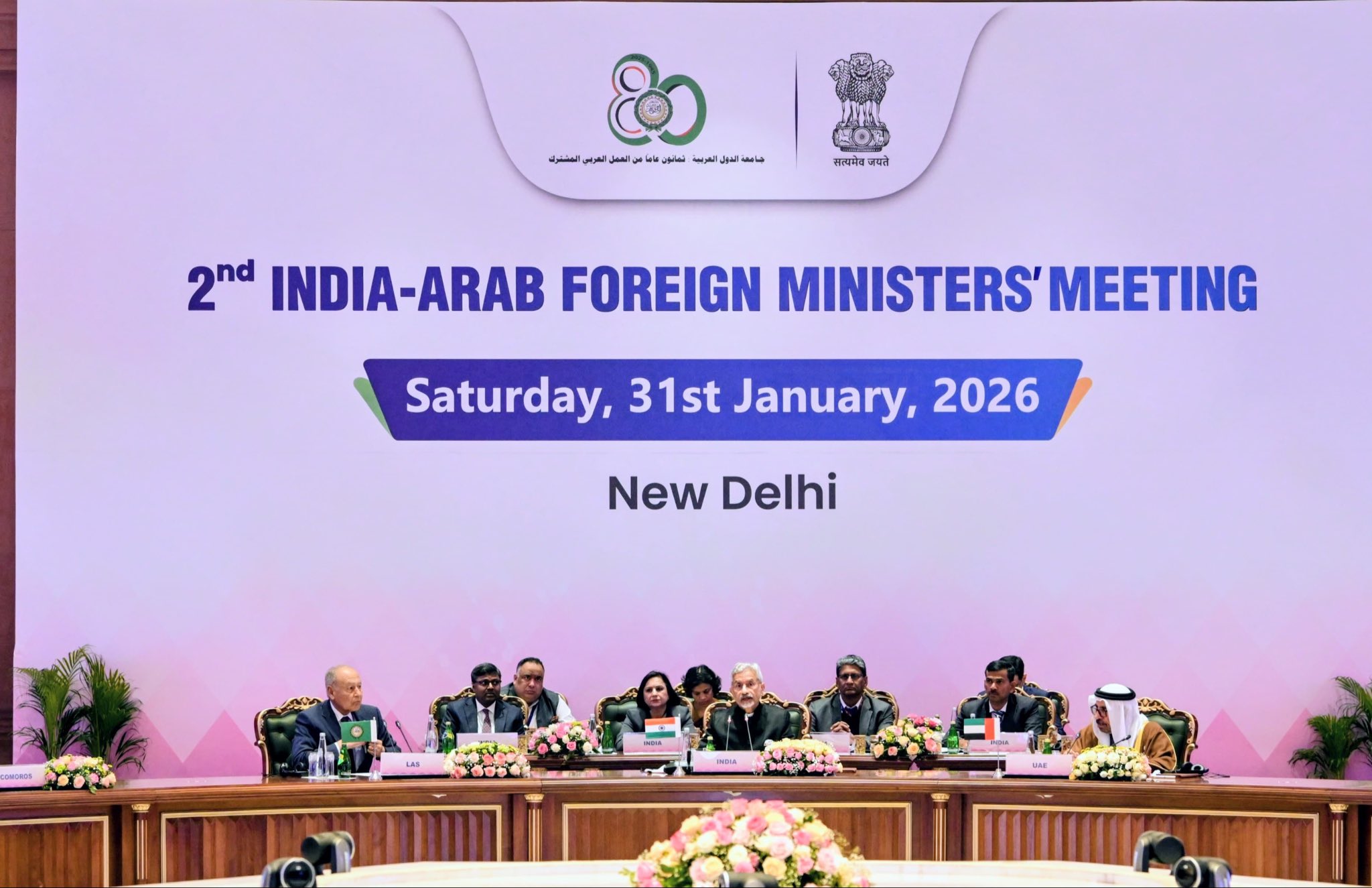
Close on the heels of hosting European leaders and signing internationally buzz-creating economic, defence and security agreements, New Delhi recently hosted the second India-Arab Foreign Ministers’ Meeting, signalling the South Asian country’s smart diplomatic and strategic move to position itself as a key global player.
The meeting of Foreign Ministers of Arab States and the Secretary-General of the League of Arab States was conducted after a decade, alluding to New Delhi's commitment to injecting a new political, diplomatic and strategic momentum into its ties with the region, which is witnessing rapid changes on all fronts in the shifting global geopolitics.
The meeting happened at a time when all attention was focused on the Donald Trump-led ‘Board of Peace’ which, as per the US President’s claim, would seek to “solidify peace in the Middle East.” On the other hand, Pakistan, together with Turkey and Saudi Arabia, is making all efforts to deepen defence and strategic engagements to expand its influence across the region.
Analysts are not optimistic about the Pakistan-Turkey-Saudi Arabia mechanism in the region, which is moving towards a multipolar security environment. The region is likely to be shaped by shifting great-power alignments, strategic autonomy, and the presence of non-traditional security actors. They are, however, sure that India’s Arab momentum is not for a hollow projection marked merely by symbolism, but a calibrated and substantive engagement full of commitment for cooperation on all necessary fronts, including economic, energy, healthcare and technology.
🚨🇮🇳 'Zero tolerance for terrorism must be an uncompromising universal norm': Jaishankar https://t.co/er8P3RrUoQ pic.twitter.com/Me72PZ746K
— Sputnik India (@Sputnik_India) January 31, 2026
The US’s goods trade with the Middle East and North Africa region, as per the US Trade Representative (USTR), was estimated at approximately $141.7 billion in 2024. During the first quarter of 2025, the total value of trade between the US and the Gulf Cooperation Council countries was $18.8 billion.
It clearly means that a sustained and strategic push in India’s outreach to the Arab world would serve the country in good stead, especially when global economic alignments are shifting, and competition for influence in the region is intensifying.
This is apparent on the investment front. Both India and Arab countries are steadily strengthening their engagement. Beyond traditional fields, they are focusing their investments in new and emerging technologies, infrastructure, renewable energy, startups and innovation.
For example, during the recent visit of UAE President Sheikh Mohamed bin Zayed Al Nahyan, both countries agreed to collaborate on the establishment of a supercomputing cluster and data centres in India. They also agreed to collaborate in the field of artificial intelligence (AI) and emerging technologies.
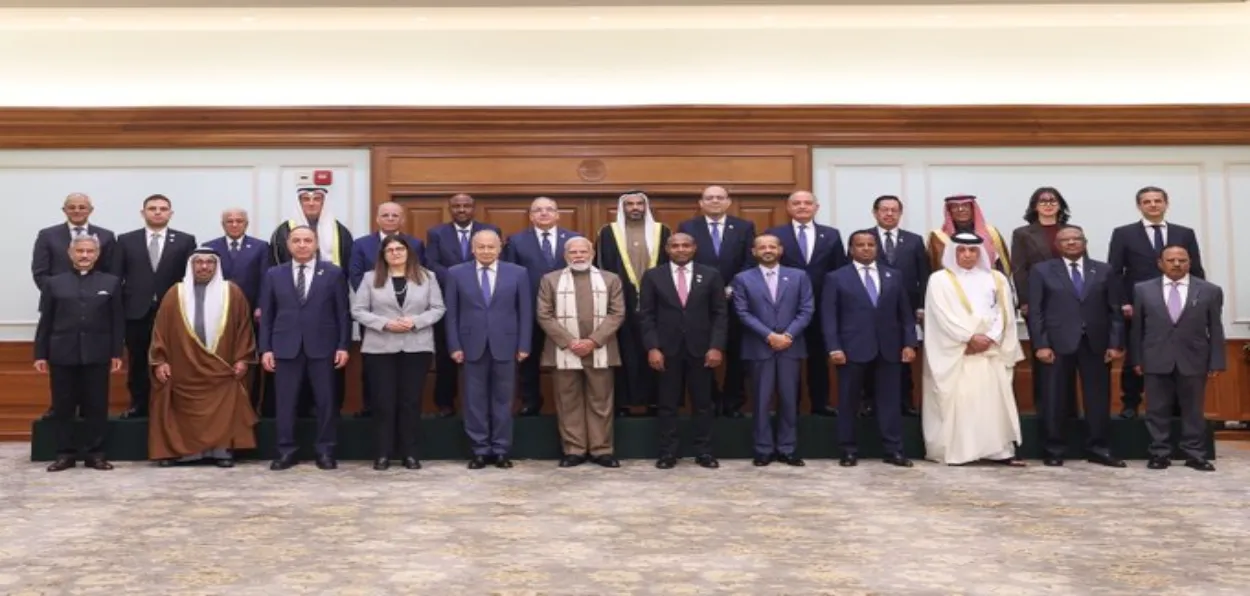
This intent was reiterated by Prime Minister Narendra Modi during his interaction with Arab foreign ministers when they called on him on January 31. Outlining his vision for the India-Arab partnership, the Prime Minister said India is committed to further deepen cooperation with the region in trade and investment, energy, technology, healthcare and other priority areas, “for the mutual benefit of our people.”
His emphasis on a development-centric approach highlighted India’s attempt to emerge not merely as a strategic interlocutor but as a reliable long-term partner in the region’s evolving geopolitical and economic landscape.
India’s trade with the Arab countries currently stands at over $240 billion. According to the India-Arab League’s Delhi Declaration, the two sides will double their trade to $500 billion by 2030.
In contrast, China, which wields significant influence across the Arab world, had around $241.61 billion in trade with the members of the Arab League during the first seven months of 2025.
#NewDelhi | On behalf of HH the Foreign Minister, Deputy Minister for International Multilateral Affairs, Dr. Abdulrahman Al-Rassi heads the Kingdom’s delegation participating in the 2nd Arab-Indian Foreign Ministers’ Meeting. pic.twitter.com/qLUVFwcS7S
— Foreign Ministry 🇸🇦 (@KSAmofaEN) January 31, 2026
Significantly, under the Bilateral Investment Treaty, which was signed by India and the UAE in 2024, the Gulf country has committed to invest $75 billion in India’s infrastructure. The Gulf country is planning to develop a Special Investment Region in Dholera in Gujarat. This Special Investment Region envisions the development of an international airport, a pilot training school, a maintenance, repair and overhaul (MRO) facility, a greenfield port, a smart urban township, railway connectivity, and energy infrastructure.
Undoubtedly, such trajectories of the ongoing trade and investments point to a decisive recalibration of India’s relations with Arab states, and it is no less pronounced on the peace and security front.
In light of the growing menace of cross-border terrorism, India wants Arab states to be on board with it while addressing this shared security challenge. It wants not just condemnation of terrorism in all its forms and manifestations, but also wants Arab states to work with it to dismantle infrastructure and terror financing while bringing the perpetrators of terrorist acts to justice without any delay.
Yet, what India did not forget to reiterate before 22 foreign ministers of Arab states during the one-day meet was its unwavering support for a sovereign and viable Palestine state living side-by-side with Israel. “Taking forward the comprehensive plan to end the Gaza conflict is today a widely shared priority. Various countries have made policy declarations on the peace plan, individually or collectively,” External Affairs Minister Dr S Jaishankar said in his remarks at the second India-Arab Foreign Ministers’ meeting in New Delhi.
During the meeting, both India and Arab states discussed the current situation in Lebanon, Libya, Sudan, Somalia and Yemen. In the context of Lebanon, they called for respecting the West Asian country’s territorial integrity and internationally recognised borders, and for the cessation of all violations of Lebanese sovereignty.
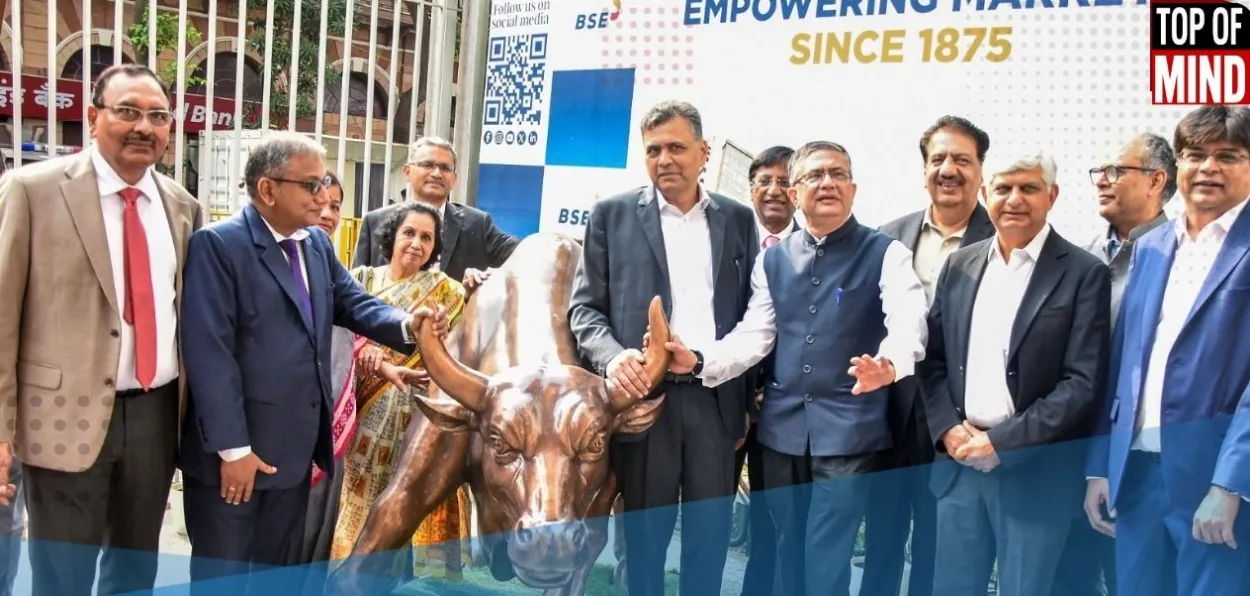
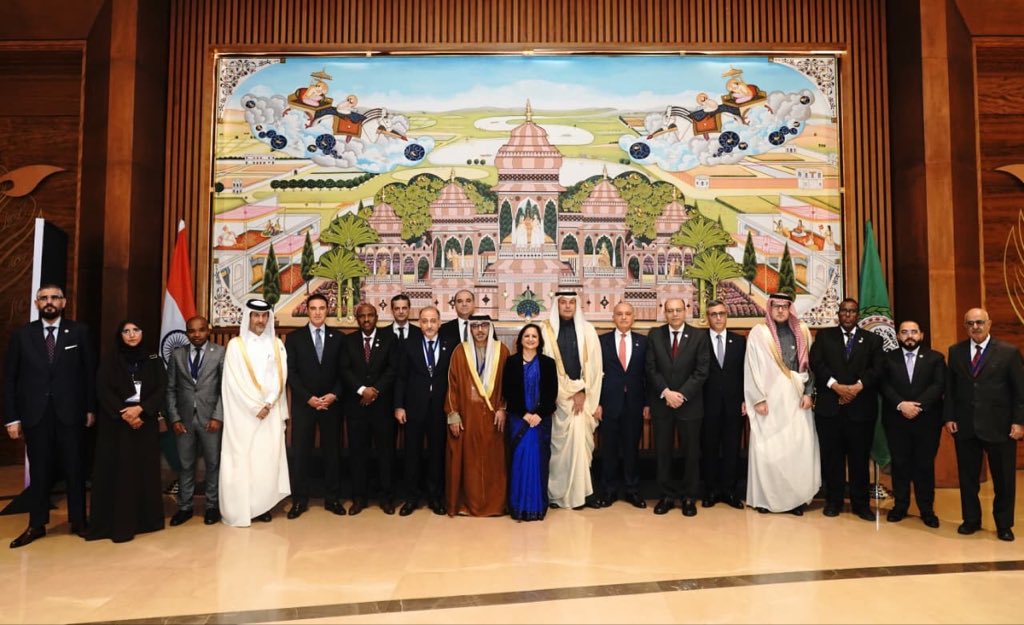 Top officials of India and Arab countries who participated in the Foreign Ministers' meeting in New Delhi
About Libya, they welcomed efforts made towards holding presidential and parliamentary elections at the earliest possible opportunity. Libya has started preparations for holding presidential and parliamentary elections in mid-April 2026. Last year in December, the High National Election Commission of Libya said it was drafting the regulations governing nominations for prospective candidates.
Similarly, Sudan has been amid a civil war since April 2023. According to a UN report, more than 150,000 people have died in the conflict, and around 12 million have fled their homes as the vicious fight for power between the army and the powerful paramilitary group, the Rapid Support Forces (RSF), continues.
Both India and Arab states, however, reaffirmed their steadfast support for the sovereignty, unity, and territorial integrity of Sudan, and rejected any interference in its internal affairs. They also expressed their support for Somalia and respecting its unity, territorial integrity and internationally recognised borders. They voiced their concern over the situation in Yemen and emphasised the importance of preserving its sovereignty, unity and integrity.
In all, India’s outreach towards Arab states reflects a broader convergence of strategic priorities. Amid sharp changes in international geopolitics, while it has reaffirmed its determination to work with Arab states as constructive forces for peace, equity and sustainable development, it has not given way to complacency in realising the core objective of its approach towards the 22 Arab League members.
For instance, together with Arab states, it has set up ‘Executive Programme’ to take forward its cooperation with the latter in areas such as counter-terrorism, politics, diplomacy, trade and economy, energy, environment, agriculture and food security, water conservation, digital, innovation and startups, space, housing, tourism, human resource development, culture and education, media, healthcare and pharmaceuticals, youth and sports and parliamentary cooperation. Collaboration in these areas will be taken forward between 2026 and 2028.
ALSO READ: Islam does not need to rule the world to be true
The message is clear: India no longer wants its engagement with the Arab world to be merely symbolic; it seeks to make its ties with the 22-member Arab League nations outcome-oriented, structured and strategic.










.webp)