




Amir Suhail Wani
The modern political imagination of Islam, articulated most forcefully by Abul A‘la Maududi, Syed Qutb, and a long line of their ideological descendants, represents one of the most consequential intellectual distortions in Muslim history. What makes this project not merely flawed but deeply absurd is its attempt to retrofit Islam—a moral, spiritual, and civilizational tradition—into the mould of modern political ideology.
Weekly Essay
In seeking to rescue Muslim dignity from colonial humiliation and historical decline, political Islam ended up imprisoning Islam within the very grammar of modern power it claimed to resist, reducing transcendence to governance, faith to ideology, and moral depth to political assertion.
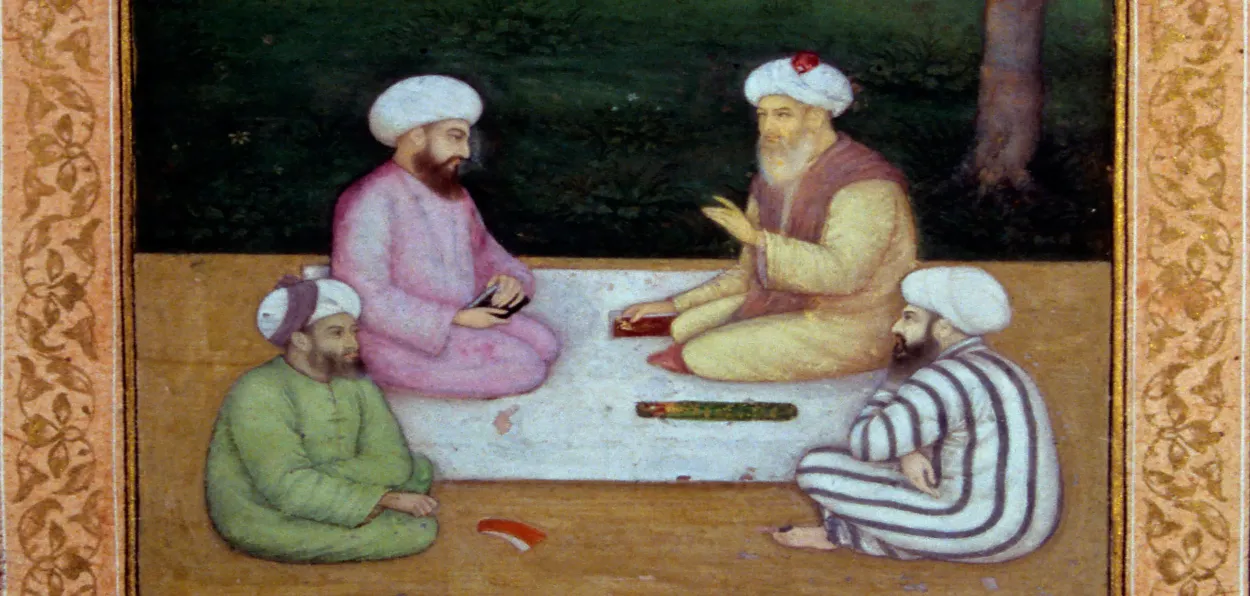
At its core, political Islam is not a return to tradition but a profoundly modern invention. Classical Islam never conceived of itself as an “ism,” a closed system competing with rival ideologies. It functioned instead as a moral orientation, a spiritual path, and a civilizational ethos capable of inhabiting diverse political forms. Pre-modern Muslim jurists, theologians, and mystics were remarkably restrained in their political claims.
They spoke at length about justice, ethical responsibility, mercy, and human fallibility, but showed striking reluctance to sacralise any particular political structure. The modern Islamist project shattered this restraint by declaring that Islam is, in essence, a political system whose realisation requires state power.
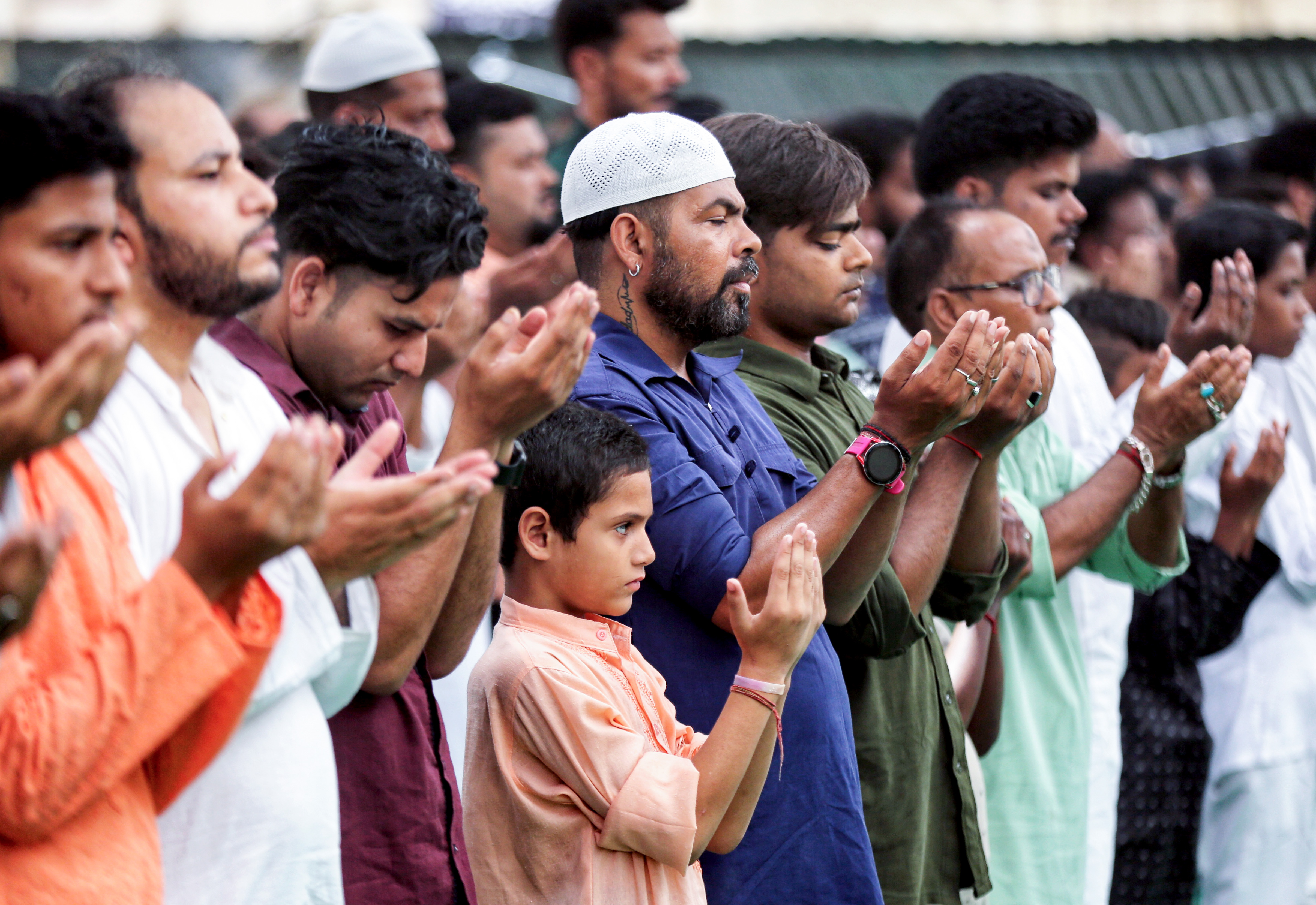
Muslims praying in Lucknow
Philosophically, this move belongs squarely within what Hannah Arendt diagnosed as the pathology of ideological thinking. For Arendt, ideology is not merely a set of political beliefs; it is a totalizing mental structure that claims to explain all of reality from a single premise. Once accepted, ideology eliminates the need for moral judgment, replacing ethical reasoning with deductive certainty.
Maududi’s doctrine of hakimiyyah—divine sovereignty translated into an all-encompassing political principle—functions precisely in this manner. From this single concept flows an entire worldview: law, society, culture, economics, and even personal conscience are subordinated to a predetermined political logic. Islam is no longer a lived moral struggle oriented toward God; it becomes an ideological system that demands submission not only to divine authority, but to a specific human interpretation of it.
Syed Qutb radicalised this ideological closure by weaponising the concept of jahiliyyah. Historically, jahiliyyah referred to a moral and spiritual condition of ignorance before prophetic guidance. Qutb transformed it into a sweeping political diagnosis of modern society itself. Entire civilisations—Muslim and non-Muslim alike—were declared illegitimate because they did not conform to his vision of divine sovereignty.
This division mirrors what Arendt described as the ideological bifurcation of humanity into the enlightened vanguard and the morally fallen masses. Once such a division is accepted, exclusion becomes virtue, coercion becomes duty, and violence becomes redemptive.
Islam’s universal moral address is thus inverted into a politics of permanent antagonism.
Eric Voegelin’s critique of modern political movements sharpens this diagnosis further. Voegelin argued that many modern ideologies represent attempts to “immanentise the eschaton”—to force transcendent salvation into historical and political form. Political Islam exemplifies this error with disturbing clarity.
The Qur’an’s moral vision, oriented toward the Hereafter and accountability before God, is reengineered into a project of worldly domination. Salvation is no longer a divine mystery shaped by ethical striving; it becomes a political outcome contingent upon the establishment of a particular state. Divine judgment is collapsed into human administration. In theological terms, this is a category error of the highest order.
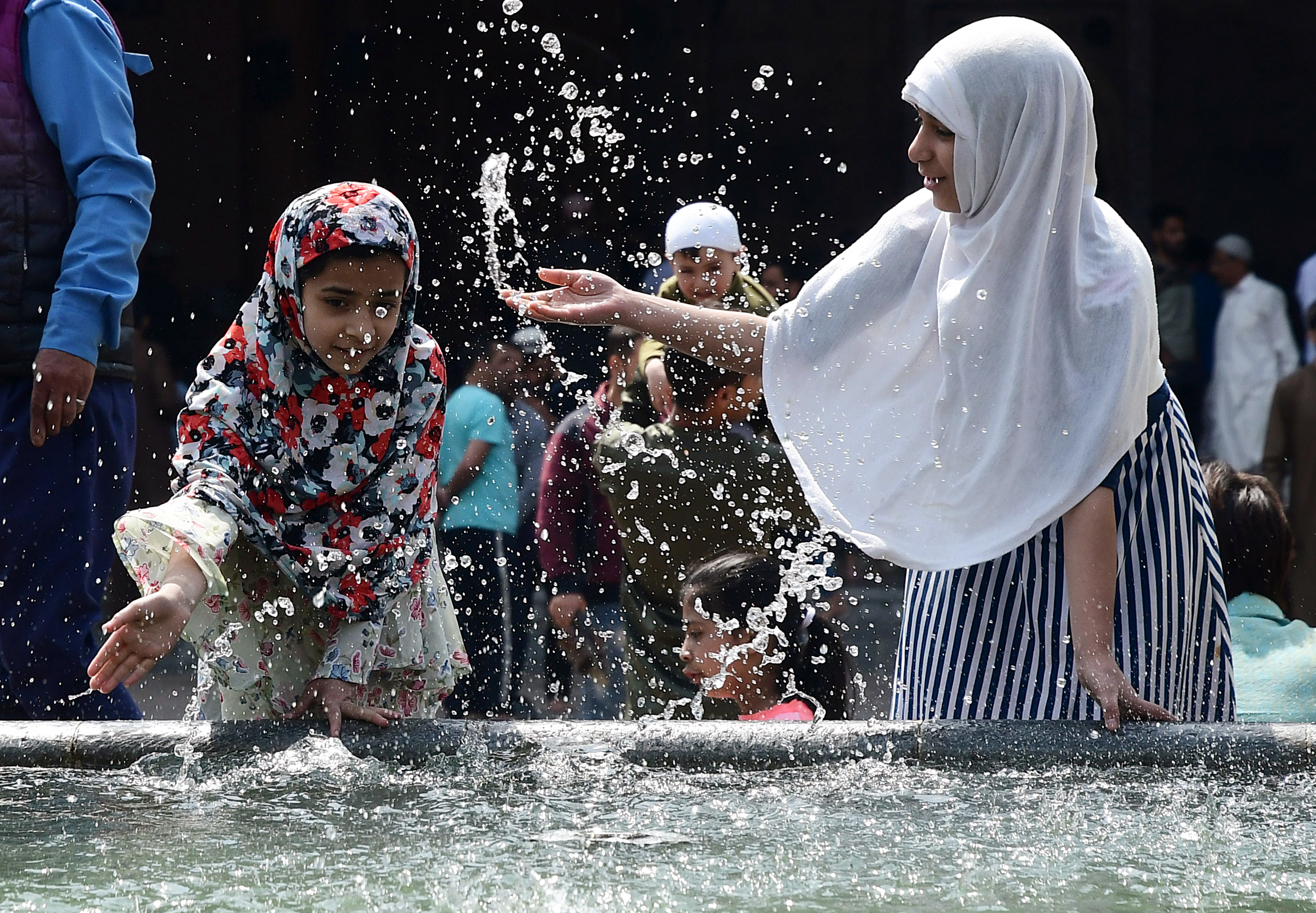 Young girls in Srinagar's Jama Masjid
Classical Islam instinctively resisted this temptation. Al-Ghazali, writing in a period of political fragmentation and moral anxiety, refused to sacralize power. For him, political authority was a pragmatic necessity to prevent chaos, not a vehicle for salvation. He repeatedly warned that the corruption of religion begins when scholars confuse coercion with guidance and mistake outward conformity for inner transformation. Ethical refinement, not political control, was the axis of religious life.
In Ghazali’s vision, the state could restrain injustice, but it could never manufacture virtue.
Ibn Taymiyyah—often selectively cited by modern Islamists—was even more explicit on this point. He famously argued that God may sustain a just non-Muslim polity longer than an unjust Muslim one. Justice, not ideological purity, was the criterion of divine favour. Political Islam, however, reverses this logic, privileging formal sovereignty over substantive justice.
Voegelin would recognise this as the collapse of transcendence: when divine standards are absorbed into political systems, injustice becomes sanctified rather than corrected.
The mystical–philosophical tradition of Islam offers an even more devastating counter-narrative to political Islam’s claims. Ibn ʿArabi dissolved the metaphysical foundations upon which ideological absolutism depends. His vision of divine unity (wahdat al-wujud) emphasised that God discloses Himself in infinite forms and that human access to truth is always partial, situated, and morally demanding. Any claim to monopolise truth—especially through political power—was, for Ibn ʿArabi, a sign of spiritual immaturity. Where Qutb divided the world into hakimiyyah and jahiliyyah, Ibn ʿArabi saw divine signs scattered across humanity, irreducible to political allegiance.
Rumi translated this metaphysical openness into a profoundly human ethical vision. His Islam was expansive, joyful, and suspicious of rigid boundaries. Love, not law, was the centre of spiritual life; transformation, not domination, was its goal. Rumi’s refusal to absolutise identity—religious, cultural, or political—was not relativism, but an insistence that moral depth cannot be reduced to institutional conformity. Political Islam, by contrast, begins with control and ends with spiritual barrenness.
Shah Waliullah of Delhi stands as a particularly important counterpoint in the Indian context. Deeply committed to Islamic law and prophetic tradition, he nonetheless understood law as a moral ecology rather than an ideological weapon. He recognised historical change, cultural diversity, and contextual reasoning as integral to Islamic thought. His concern was ethical balance, social harmony, and spiritual renewal—not the construction of a uniform political order. To read Maududi into Shah Waliullah is to mistake moral philosophy for political engineering.
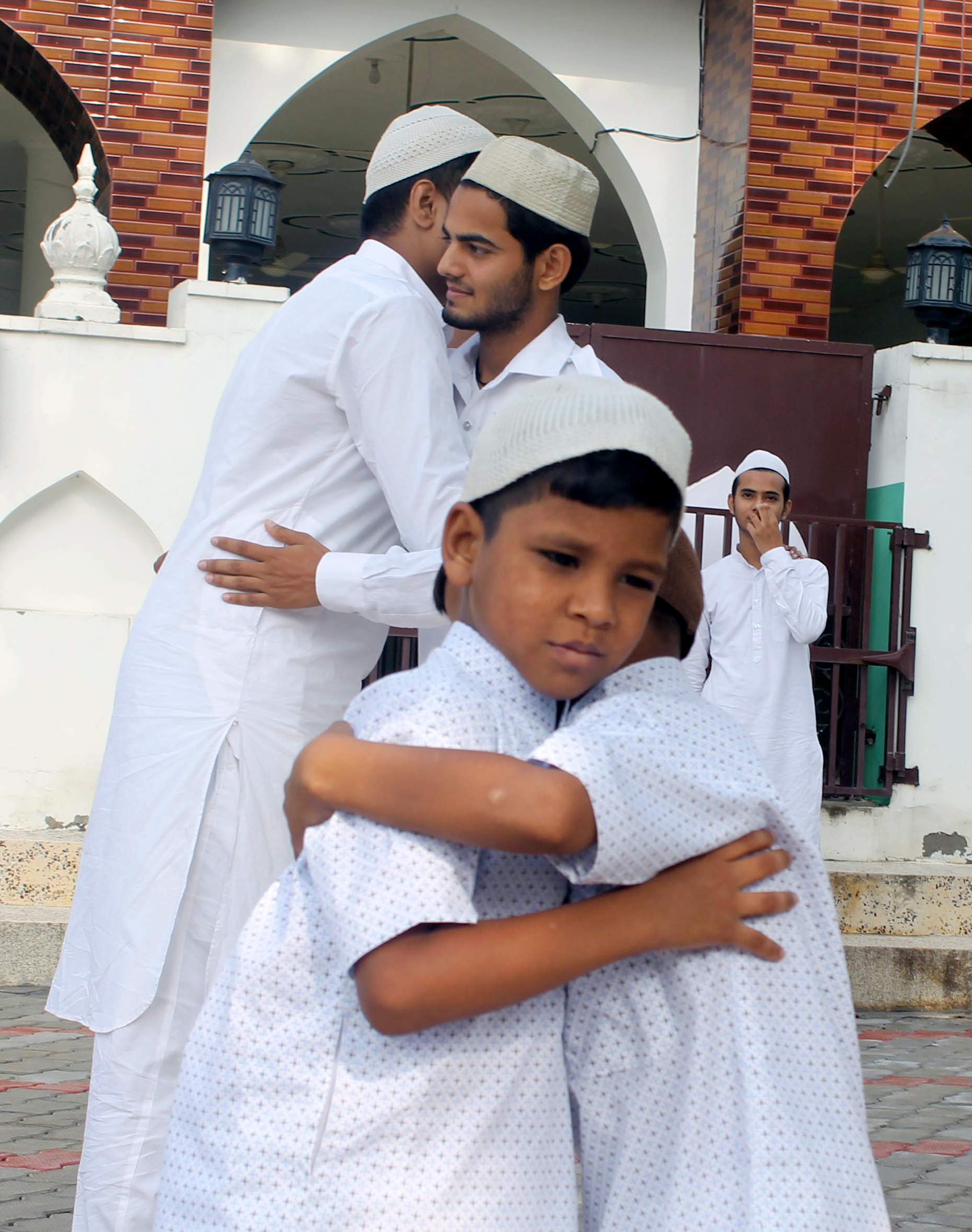
Muslims greeting each other on Eid
The Qur’an itself decisively supports this classical restraint. It persistently refuses to turn faith into a political litmus test. “There is no compulsion in religion” (2:256) is not a tactical concession, but a foundational theological principle. “Had God willed, He could have made you one community” (5:48) affirms plurality as divine intent, not historical failure. The Qur’an speaks insistently about justice, mercy, trust, and consultation, yet remains conspicuously silent on prescribing a specific political system. This silence reflects a moral vision that prioritises ethical orientation over institutional form.
Talal Asad’s anthropology of Islam clarifies why political Islam represents a rupture rather than a revival. Islam historically functioned as a lived, discursive, ethical tradition—shaped by pedagogy, ritual, interpretation, and moral cultivation. Political Islam abstracts this living tradition into a codified system, stripping it of spiritual thickness. Law becomes enforcement rather than formation; belief becomes ideological allegiance; community becomes a political bloc. Far from resisting modernity, political Islam mirrors the bureaucratic logic of the modern nation-state.
In India, the consequences of this ideological turn have been particularly devastating. Indian Islam historically evolved as a deeply rooted, culturally fluent tradition shaped by Sufism, vernacular languages, shared social life, and ethical coexistence. It was an Islam of taʿaruf—mutual knowing—rather than permanent opposition.
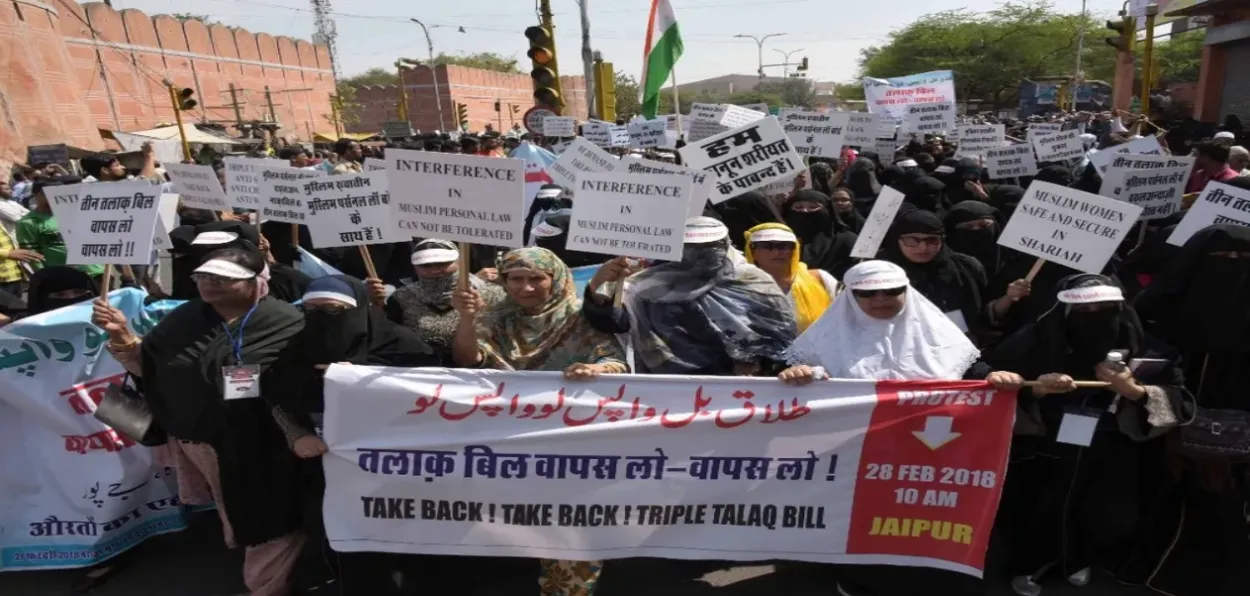
The importation of Maududian and Qutbian thought disrupted this organic synthesis, encouraging Muslims to imagine themselves as an embattled ideological minority rather than moral participants in a plural civilisation. The result has been social alienation without empowerment and political anxiety without spiritual depth.
Globally, political Islam has been equally catastrophic. It has furnished extremist movements with theological justification, authoritarian regimes with religious cover, and Islamophobes with ready-made caricatures. When Islam is framed primarily as a political ideology, Muslims inevitably appear as political suspects. The cruel irony is that thinkers who sought to restore Muslim dignity ended up reinforcing global suspicion toward Islam itself.
Ultimately, the failure of political Islam is metaphysical before it is political. It confuses power with truth, control with guidance, and ideology with faith. Arendt warned that ideology destroys moral judgment; Voegelin warned that immanentising transcendence leads to spiritual catastrophe; Asad reminds us that traditions survive through lived practice, not abstraction. Classical Islam understood this intuitively.
It left politics deliberately under-theorised and ethics richly elaborated.
Islam does not need to rule the world to be true. It needs to illuminate conscience, cultivate virtue, and accompany human beings in their fragile moral striving.
ALSO READ: Zahoor Lone-led Team India wins bronze in world snow sculpting championship
Recovering Islam’s dignity—especially in India—requires abandoning ideological captivity and reclaiming a faith confident enough to live without dominating, and deep enough to belong without excluding.










.webp)
